AQA · A-Level · Business
Operational management
Operational management is the engine room of a business, transforming inputs into outputs. Mastering this topic is crucial for the exam, as examiners frequently ask candidates to calculate productivity, interpret inventory charts, and evaluate the trade-offs between cost, quality, and speed.
- 6 min read
- 3 worked examples
- 5 practice questions
- 6 key terms
Study Notes
Overview
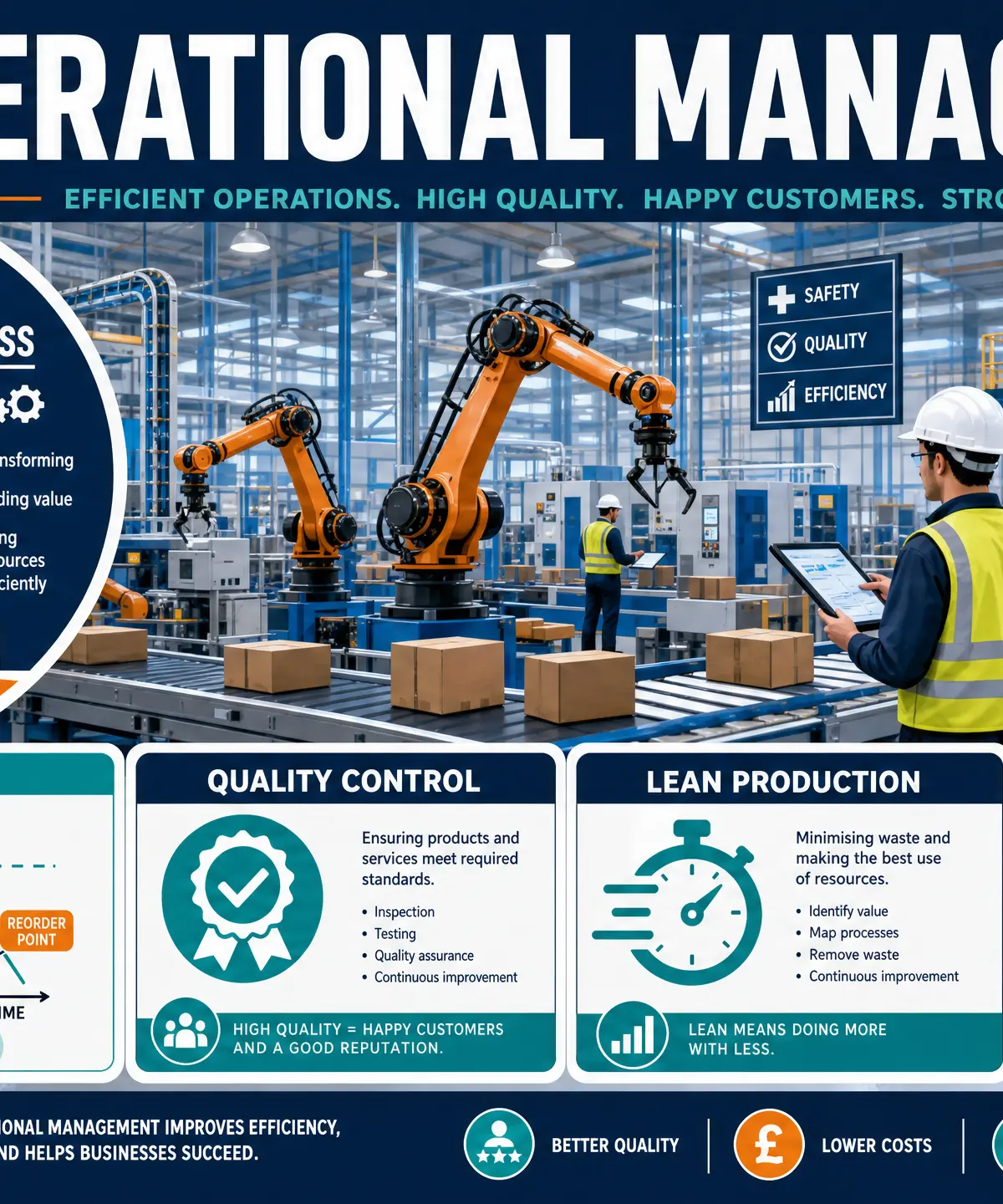
Operational management focuses on the processes and activities involved in the production of goods and services. It is where a business turns its strategy into reality. For GCSE Business Studies, this topic covers setting operational objectives, analysing performance, and making decisions to improve efficiency, productivity, quality, and supply chain management. Examiners expect candidates to understand that operational decisions do not happen in isolation; they are deeply connected to marketing, finance, and human resources. You must be able to evaluate the trade-offs involved—for instance, how improving quality might increase costs, or how increasing speed might reduce flexibility.

Setting Operational Objectives
A business sets operational objectives to guide its production processes. The key objectives include:
- Costs: Minimising the unit cost of production to improve profit margins.
- Quality: Ensuring products meet customer expectations and reducing defect rates.
- Speed of response: Reducing the time it takes to fulfil customer orders.
- Flexibility: The ability to adapt to changes in demand or customer requirements.
- Environmental objectives: Reducing the environmental impact of operations, such as cutting emissions or waste.
- Added value: Increasing the difference between the cost of inputs and the selling price of the output.
Examiner Tip: Always consider the tension between these objectives. A common exam question asks candidates to evaluate whether a business should prioritise cost or quality. Top-tier answers will explain that while cutting costs can improve short-term profits, a drop in quality may damage the brand's reputation and long-term competitiveness.
Analysing Operational Performance
To understand how well operations are running, a business must measure its performance. A crucial metric is labour productivity.
Labour Productivity
Formula: Total Output / Number of Workers
This measures how much each worker produces over a given period. High labour productivity means the business is getting more output from its staff, which lowers the unit cost of production. A business can improve labour productivity by investing in training, introducing new technology (automation), or improving worker motivation.
Increasing Efficiency and Lean Production
Efficiency means maximising output while minimising inputs (such as time, materials, and labour). Lean production is a philosophy aimed at reducing waste and improving efficiency.
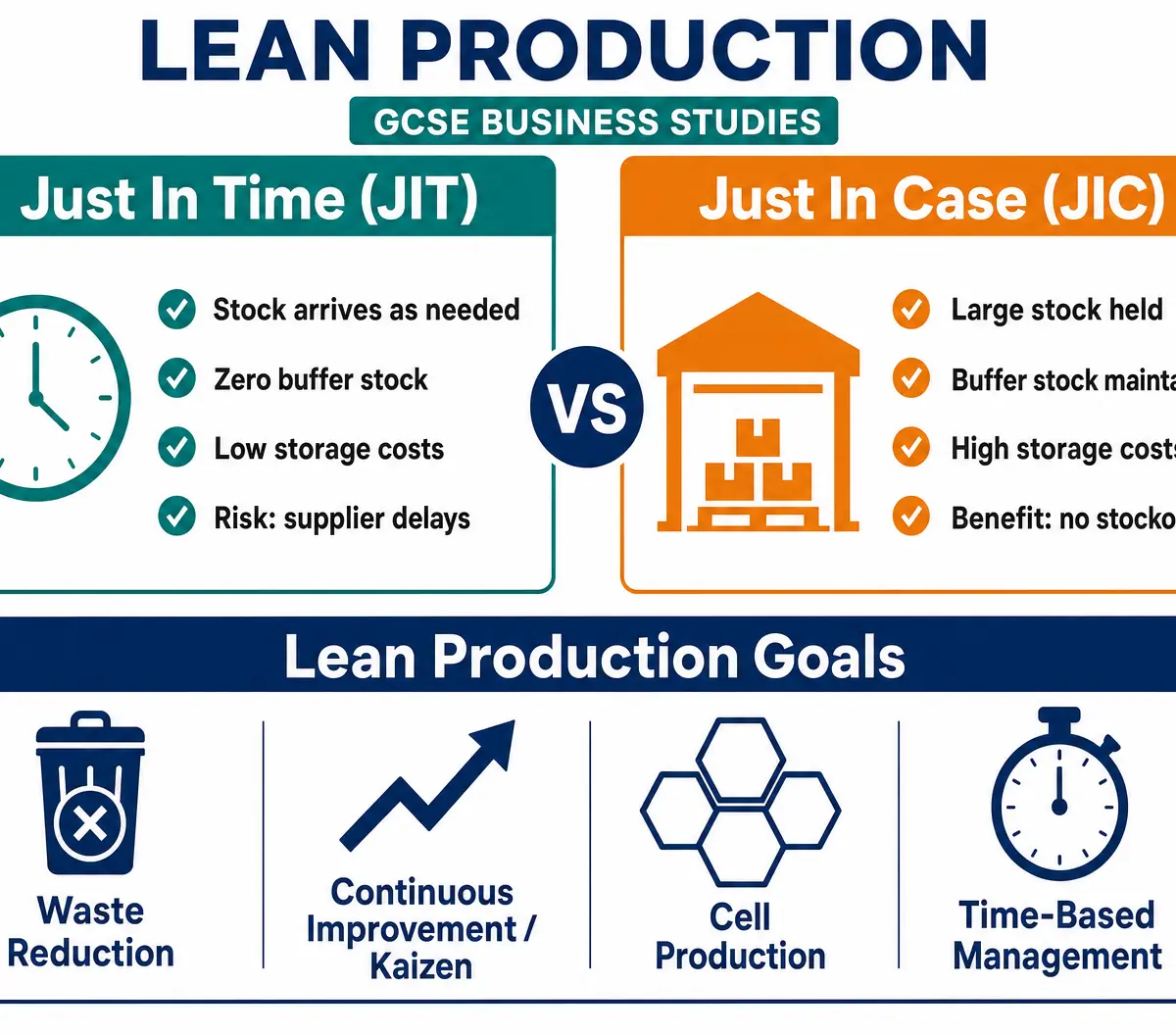
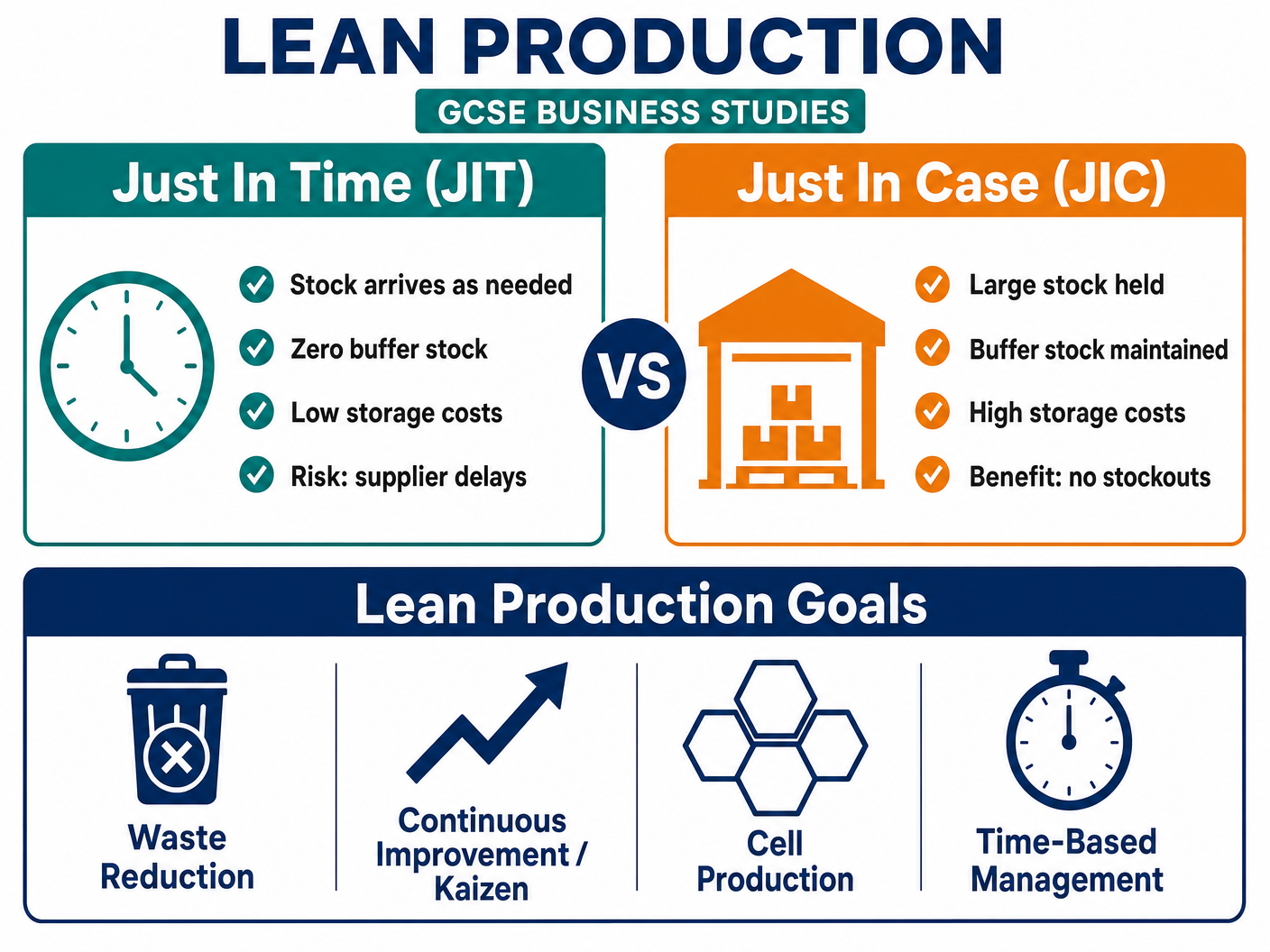
Just In Time (JIT) vs Just In Case (JIC)
- Just In Time (JIT): Stock arrives exactly when it is needed for production. There is zero buffer stock. This drastically reduces storage costs and waste. However, it relies heavily on reliable suppliers. If a delivery is late, production stops immediately.
- Just In Case (JIC): The business holds large amounts of buffer stock as a safety net. While storage costs are high, the business is protected against supply chain disruptions or sudden spikes in demand.
Other lean production techniques include:
- Kaizen: Continuous improvement, where workers suggest small, regular changes to improve efficiency.
- Cell Production: Organising workers into small teams responsible for a complete unit of work.
- Time-Based Management: Focusing on reducing the time taken to develop and deliver products.
Quality Management
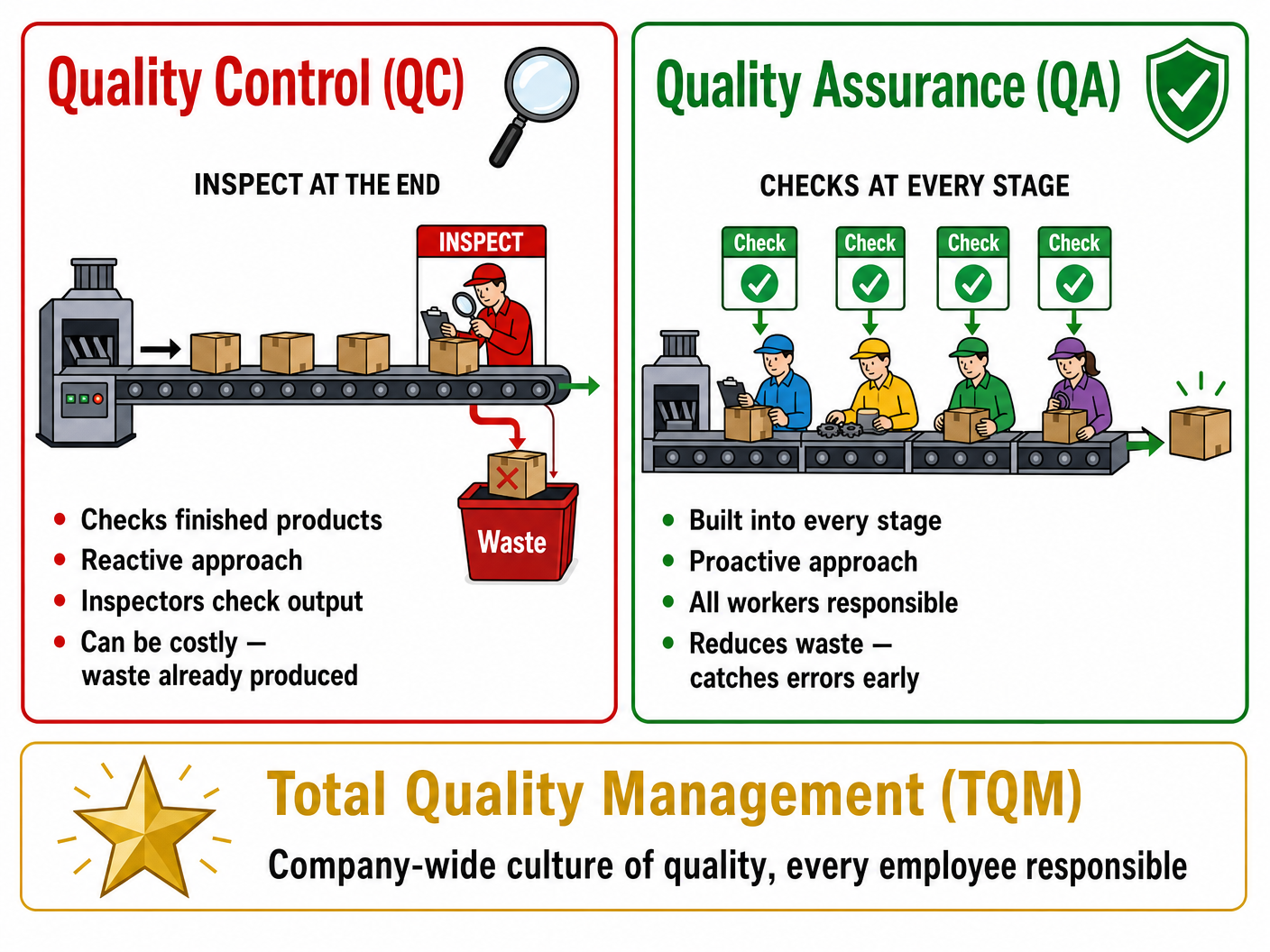
Quality is vital for customer satisfaction and brand reputation. Candidates must understand the difference between Quality Control and Quality Assurance.
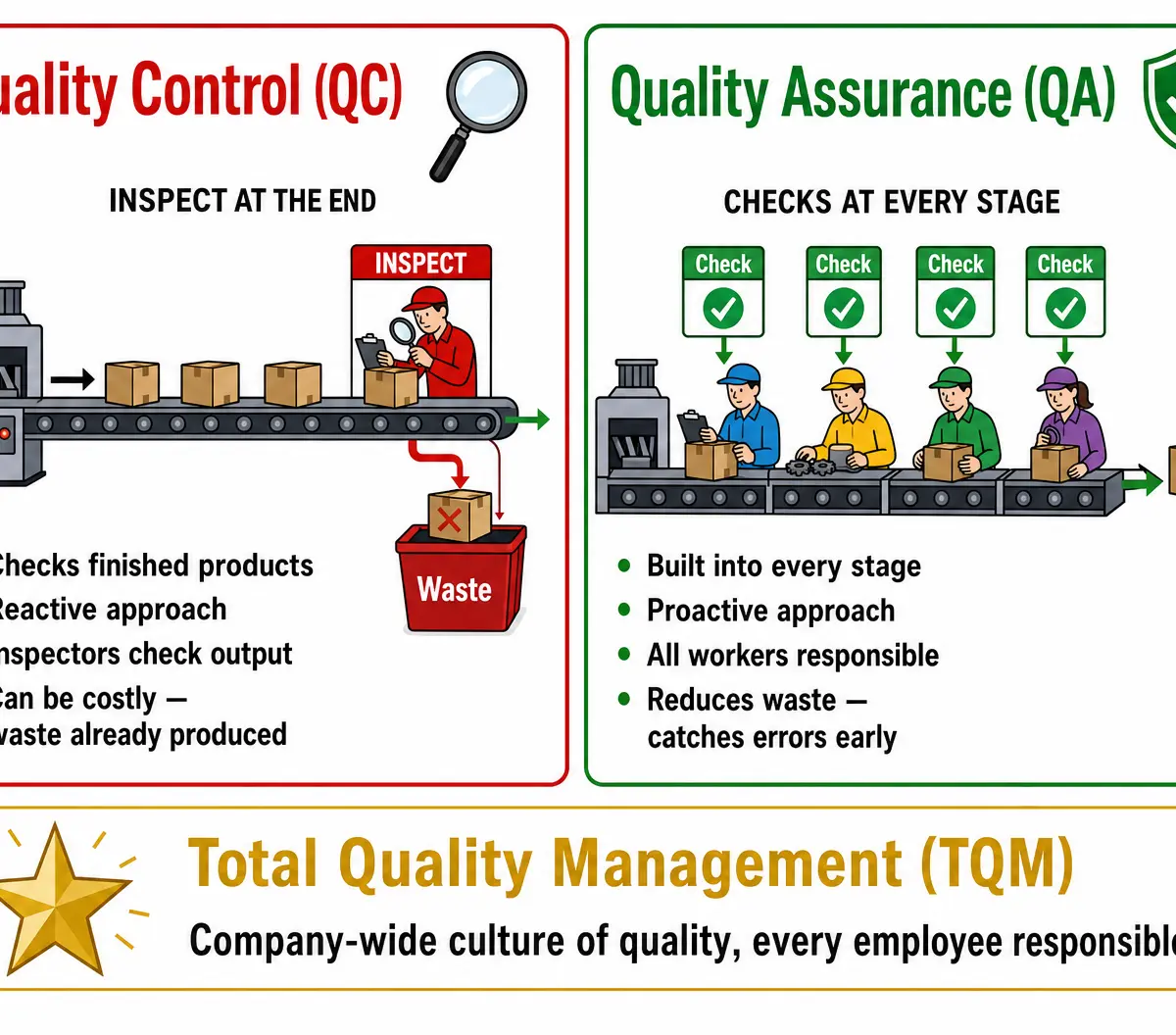
- Quality Control (QC): Checking for defects at the end of the production process. A dedicated team of inspectors checks the finished goods. This is a reactive approach and can be costly, as defective products must be scrapped or reworked.
- Quality Assurance (QA): Built into every stage of the production process. Every worker is responsible for checking quality as they work. This proactive approach reduces waste by catching errors early.
- Total Quality Management (TQM): A company-wide culture where every employee is committed to improving quality.
Managing Inventory
Effective inventory (stock) management ensures a business has enough materials to meet demand without holding too much stock, which ties up cash.
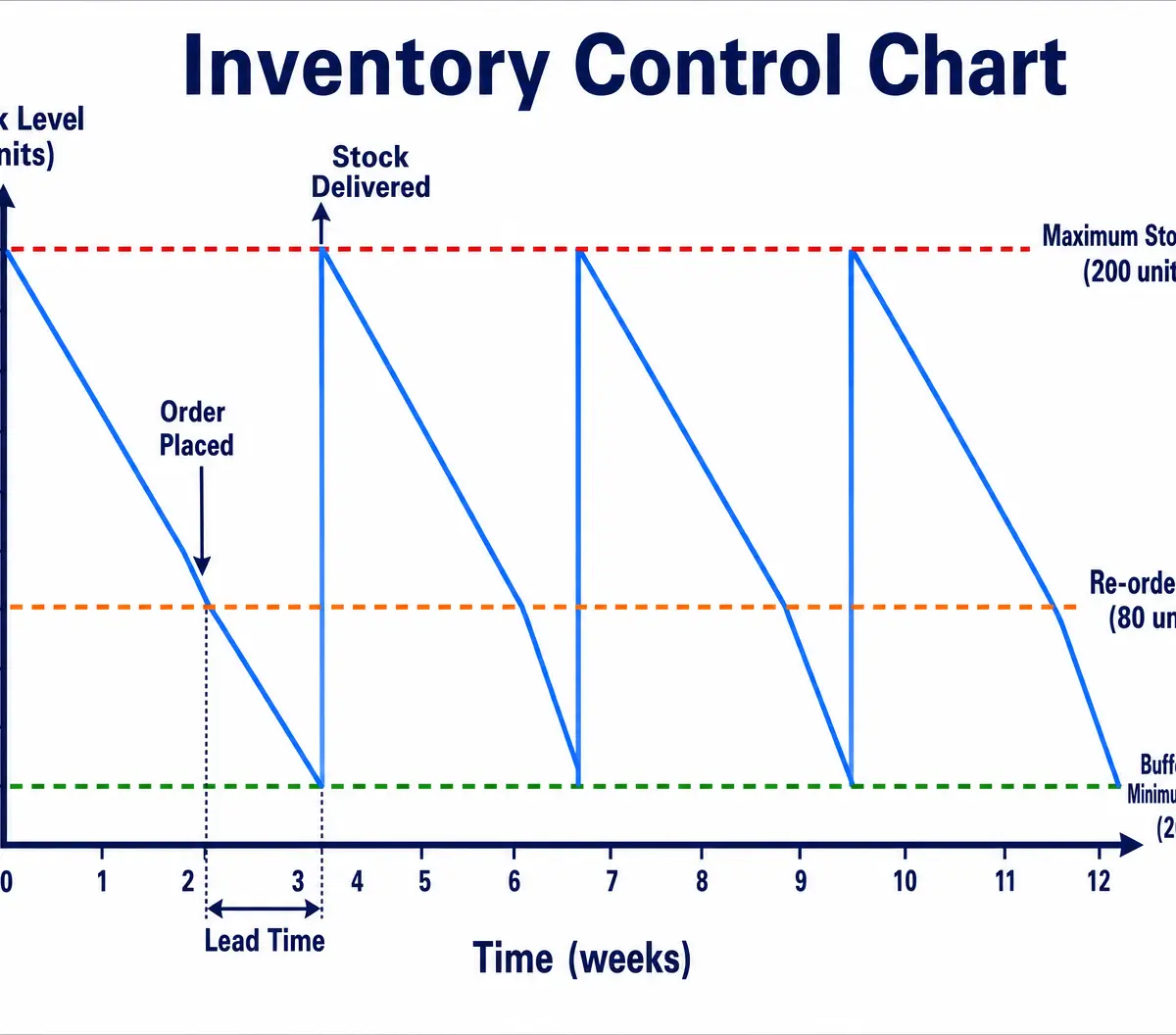
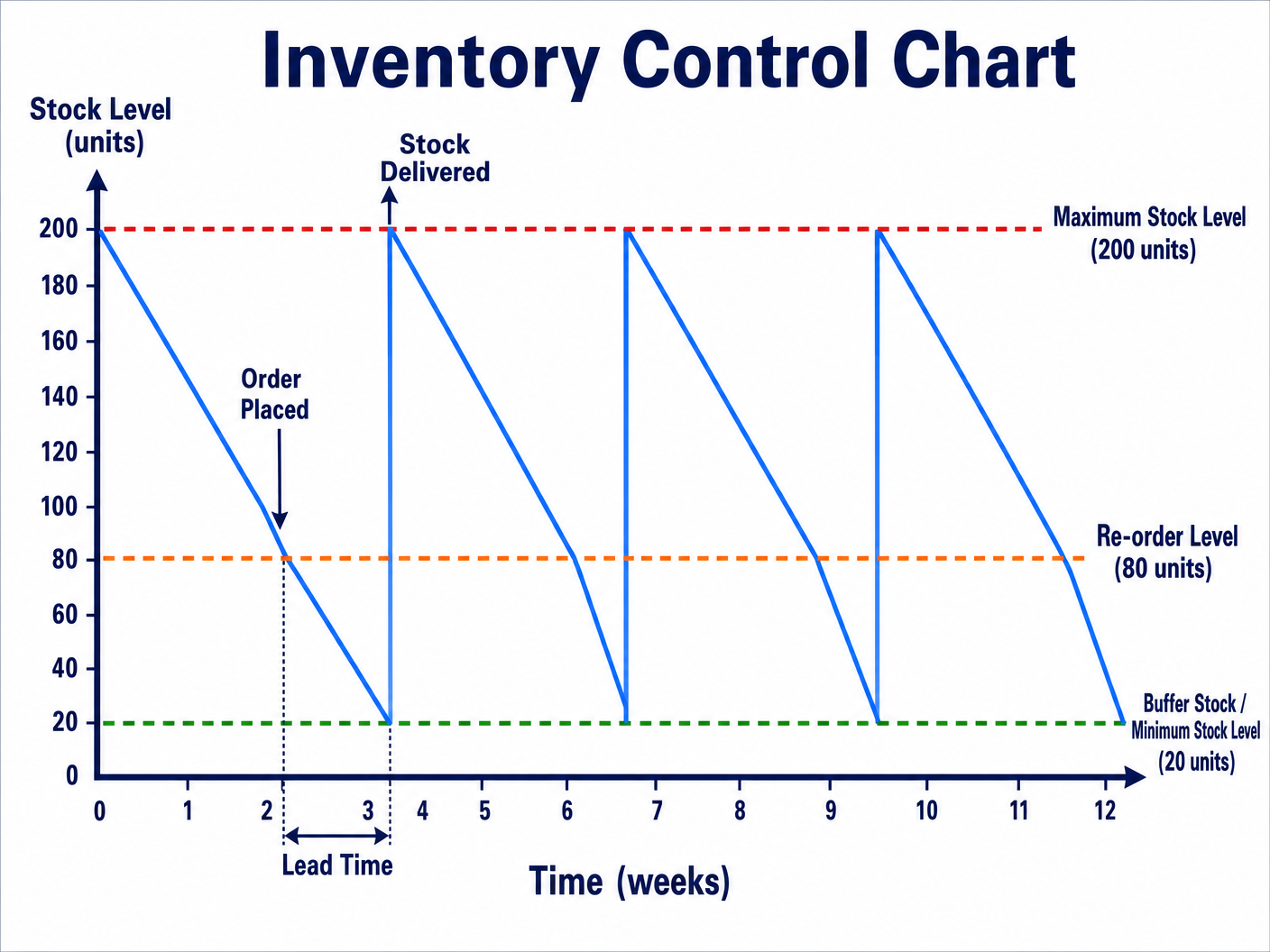
The Inventory Control Chart
Examiners frequently use inventory control charts in data response questions. You must be able to identify:
- Maximum Stock Level: The highest amount of stock a business can hold.
- Re-order Level: The point at which a new order for stock is placed.
- Buffer Stock (Minimum Stock Level): The safety net of stock held in case of emergencies.
- Lead Time: The time between placing an order and receiving the delivery.
Supply Chain Management and Outsourcing
Supply chain management involves coordinating the flow of materials from suppliers, through production, to the final customer. A strong supply chain improves efficiency and reduces risk.
Outsourcing is when a business pays another company to perform a task (e.g., manufacturing or IT support).
- Benefit: It can reduce costs and allow the business to focus on its core strengths.
- Drawback: The business loses direct control over quality and delivery times.
Matching Supply to Demand
Businesses must adapt to fluctuating demand. Strategies include:
- Temporary Staff: Hiring extra workers during peak periods (e.g., Christmas).
- Producing to Order: Only manufacturing a product once a customer has ordered it, which reduces stockholding costs but increases delivery time.
Visual Resources
3 diagrams and illustrations
Interactive Diagrams
1 interactive diagram to visualise key concepts
Conceptual Flow Outline
A simplified operational flow from supplier to customer.
Worked Examples
3 worked examples — open one to explore the question and available guidance.
Practice Questions
Test your understanding — click to reveal model answers
State two operational objectives a business might set. (2 marks)
Hint: Think about what a business wants to achieve regarding its costs, speed, or the environment.
Explain how the introduction of automation could improve labour productivity. (4 marks)
Hint: Define labour productivity, explain what automation does, and link the two.
Using an inventory control chart, explain the purpose of buffer stock. (3 marks)
Hint: What happens if a delivery is late? What does buffer stock prevent?
Analyse the impact on a business of outsourcing its manufacturing to a foreign country. (6 marks)
Hint: Provide a chain of reasoning for both a positive impact (costs) and a negative impact (control/quality).
Evaluate whether a small, custom furniture maker should use Just In Time (JIT) stock control. (12 marks)
Hint: Consider the specific context: 'small, custom furniture maker'. How does this affect their need for stock?