AQA · GCSE · Business
Course version: 8132 · Version from Sept 2017
Business planning: The purpose of business planning
Business planning sets out the aims, target market, operations, finances and risks of a new or expanding business.
Checked against the AQA 8132 specification (opens in a new tab) on .
- Point 1 of 9
Study notes
From the checked teaching notes for this specification point.
The idea
Business planning sets out the aims, target market, operations, finances and risks of a new or expanding business. Its purpose is to clarify the business idea, test whether it is viable, and provide a roadmap for start-up and growth. A plan helps secure finance because lenders and investors want evidence that the business can generate sufficient cash flow and repay debts. It also helps the owner anticipate problems such as cash shortages, and set targets for sales, costs and profit. For example, a plan might show that a café needs £20,000 to refurbish and will break even after selling 500 coffees per week. However, plans are based on forecasts and may need revising as market conditions change.
What earns the marks
- Business planning clarifies the business idea and helps the owner decide whether the idea is viable.
- A plan provides a roadmap for start-up and growth, setting out aims, target market, operations and finances.
- Planning helps identify and anticipate risks and problems, such as cash shortages or strong competition.
- A plan sets targets for sales, costs and profit, which can be used to monitor performance.
- Plans are forecasts and may need to be revised as circumstances change.
Common mistakes and how to put them right
Thinking a business plan guarantees success.
Put it right: Recognise that it is a forecast and may need revision.
Confusing the purpose of a plan with the contents of a plan.
Put it right: The purpose is why it is created, while contents are what it includes.
Assuming only start-ups need plans.
Put it right: Existing businesses may also plan when launching a new product or entering a new market.
Ignoring the role of planning in securing finance.
Put it right: Lenders often require a plan before approving a loan.
Exam tips
- Link the purpose of planning to specific benefits, such as helping to secure a loan or avoid cash flow problems.
- Use examples to show how a plan helps a business, such as a plan showing a break-even level of sales.
- For higher marks, evaluate the limitations of planning, such as the difficulty of forecasting accurately.
Try the lesson
The start of the Business planning: The purpose of business planning lesson, made from checked teaching notes for this specification point.
Have a go first
What is the main purpose of writing a business plan before starting a new business?
Listen
Business planning sets out the aims, target market, operations, finances and risks of a new or expanding business. Its purpose is to clarify the business idea, test whether it is viable, and provide a roadmap for start-up and growth. A plan helps secure finance because lenders and investors want evidence that the business can generate sufficient cash flow and repay debts. It also helps the owner anticipate problems such as cash shortages, and set targets for sales, costs and profit. For example, a plan might show that a café needs £20,000 to refurbish and will break even after selling 500 coffees per week. However, plans are based on forecasts and may need revising as market conditions change. A strong answer earns marks for these points. Business planning clarifies the business idea and helps the owner decide whether the idea is viable. A plan provides a roadmap for start-up and growth, setting out aims, target market, operations and finances. Planning helps identify and anticipate risks and problems, such as cash shortages or strong competition. A plan sets targets for sales, costs and profit, which can be used to monitor performance. A common slip: Thinking a business plan guarantees success. Instead, recognise that it is a forecast and may need revision. Exam tip: Link the purpose of planning to specific benefits, such as helping to secure a loan or avoid cash flow problems.
See it
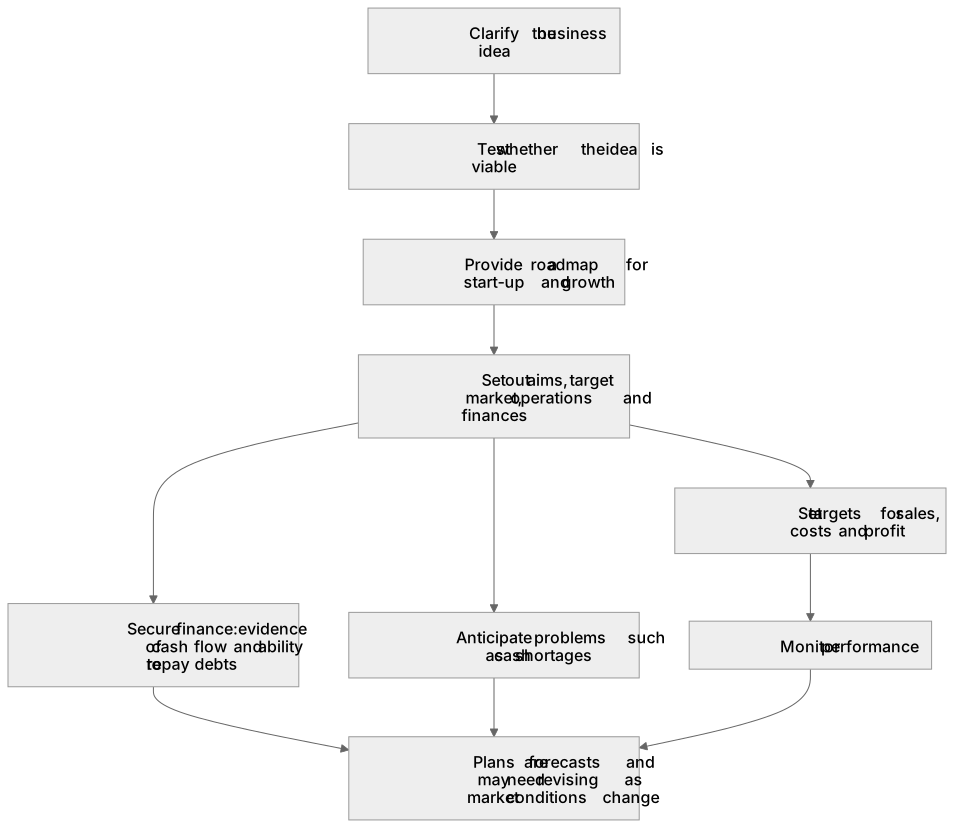
Label the diagram
Some boxes have lost their names. Pick the right name for each number.
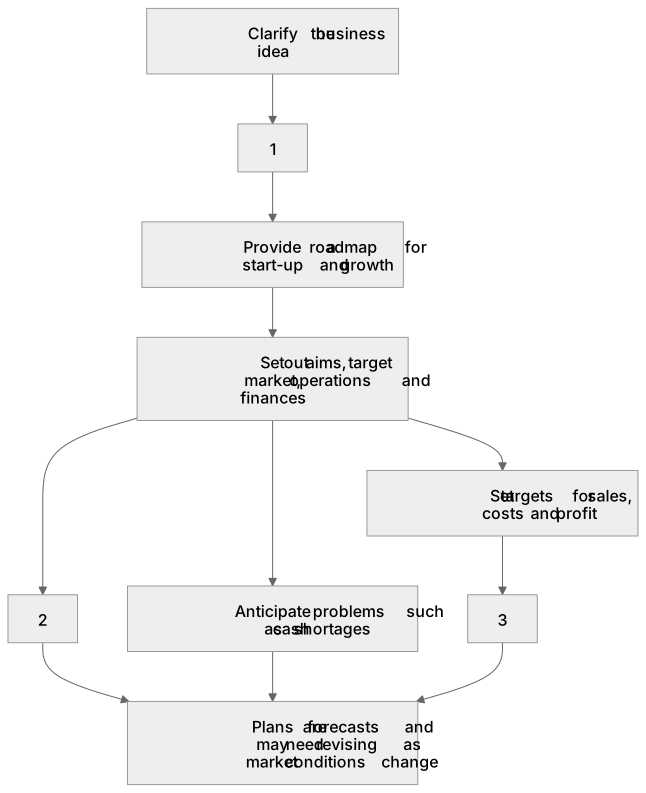
1Box 1
2Box 2
3Box 3
There is more to this lesson
The full lesson goes on to check your understanding and help you earn the marks. Create a free account to carry on, with your progress saved.
A week of Premium from your first lesson · Then the free plan continues · No card, no charge
Test your understanding of Business planning: The purpose of business planning
Active recall beats re-reading. Take an instant quiz now to test what you’ve learned and lock it into long-term memory.
A week of Premium from your first lesson · Then the free plan continues · No card, no charge