AQA · GCSE · Business
Course version: 8132 · Version from Sept 2017
Good customer services: Methods of good service:
Good service is the consistent delivery of what a customer expects, so that they feel valued and are willing to return.
Checked against the AQA 8132 specification (opens in a new tab) on .
- Point 1 of 19
- 4 key terms
Study notes
From the checked teaching notes for this specification point.
The idea
Good service is the consistent delivery of what a customer expects, so that they feel valued and are willing to return. Methods include: recruiting and training staff in product knowledge and courteous communication; setting and publishing service standards, such as answering calls within a stated time; using customer feedback, complaints and review data to identify and fix recurring problems; offering convenient contact channels and clear returns or refund policies; and empowering front-line staff to resolve issues quickly without unnecessary escalation. A small retailer might train two staff to handle refunds on the spot, cutting waiting time and turning a complaint into repeat custom. Good service raises satisfaction, loyalty and reputation, but it costs money and staff time, so managers must judge which methods give the best return.
What earns the marks
- Explains that good service means meeting or exceeding customer expectations consistently, not just being polite on one occasion.
- Identifies at least two distinct methods, such as staff training, service standards, feedback systems, convenient contact channels or clear refund and returns policies.
- Links a chosen method to a business benefit, for example repeat purchase, positive word of mouth, higher prices being accepted or fewer complaints.
- Recognises a cost or limitation, such as training expense, staff time, or difficulty maintaining standards across every shift and channel.
- Applies a method to a named business context and explains why it suits that business, rather than listing methods generically.
Common mistakes and how to put them right
Treating good service as simply being friendly.
Put it right: It also covers reliability, speed, accuracy and fair complaint handling.
Listing methods without any consequence.
Put it right: State what each method changes, such as fewer refund disputes or higher repeat custom.
Assuming good service is always free.
Put it right: Acknowledge training, staffing and monitoring costs and to weigh them against expected gains.
Exam tips
- Use a real or invented small business and name the method in its context, for example a café introducing a table-service app.
- For each method, add one sentence on the effect on the customer and one on the effect on the business.
- If asked to evaluate, give one benefit and one drawback of the method before reaching a judgement.
Try the lesson
The start of the Good customer services: Methods of good service: lesson, made from checked teaching notes for this specification point.
Have a go first
Which of the following is a method of good customer service?
Listen
Good service is the consistent delivery of what a customer expects, so that they feel valued and are willing to return. Methods include: recruiting and training staff in product knowledge and courteous communication; setting and publishing service standards, such as answering calls within a stated time; using customer feedback, complaints and review data to identify and fix recurring problems; offering convenient contact channels and clear returns or refund policies; and empowering front-line staff to resolve issues quickly without unnecessary escalation. A small retailer might train two staff to handle refunds on the spot, cutting waiting time and turning a complaint into repeat custom. Good service raises satisfaction, loyalty and reputation, but it costs money and staff time, so managers must judge which methods give the best return. A strong answer earns marks for these points. Explains that good service means meeting or exceeding customer expectations consistently, not just being polite on one occasion. Identifies at least two distinct methods, such as staff training, service standards, feedback systems, convenient contact channels or clear refund and returns policies. Links a chosen method to a business benefit, for example repeat purchase, positive word of mouth, higher prices being accepted or fewer complaints. Recognises a cost or limitation, such as training expense, staff time, or difficulty maintaining standards across every shift and channel. A common slip: Treating good service as simply being friendly. Instead, it also covers reliability, speed, accuracy and fair complaint handling. Exam tip: Use a real or invented small business and name the method in its context, for example a café introducing a table-service app.
See it
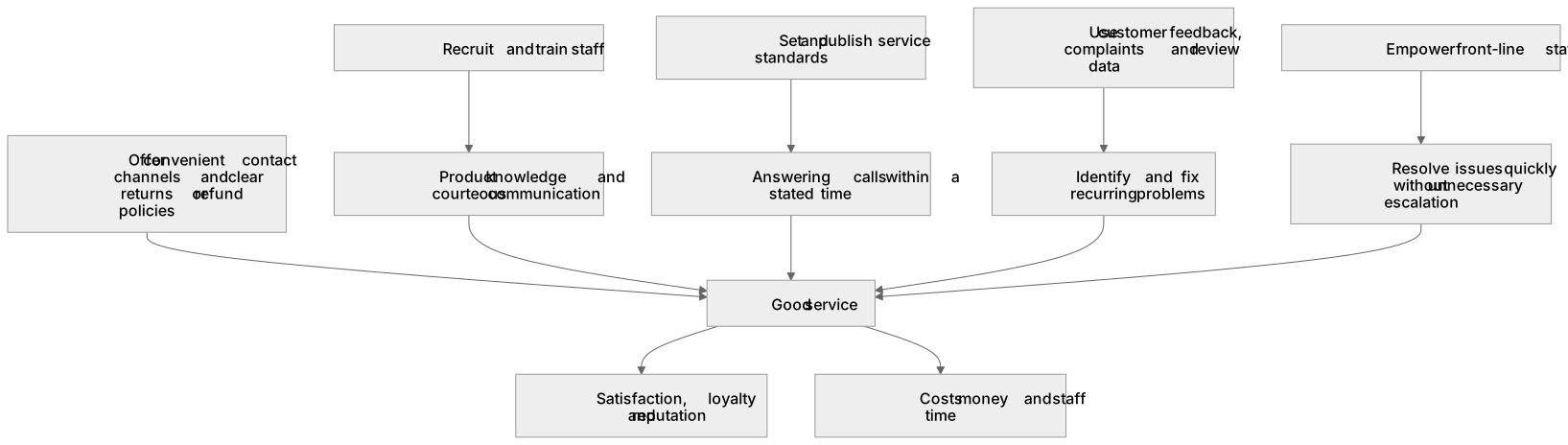
Key words
Say what each word means before you turn the card.
Customer expectations and satisfaction
Try answering aloud or in your head before turning the card.
Staff training and empowerment
Try answering aloud or in your head before turning the card.
Service standards and consistency
Try answering aloud or in your head before turning the card.
Feedback, complaints and continuous improvement
Try answering aloud or in your head before turning the card.
See every definition
- Customer expectations and satisfaction
- Good service means consistently delivering what a customer expects, so that they feel valued and are willing to return.
- Staff training and empowerment
- Staff can be recruited and trained in product knowledge and courteous communication, and front-line staff can be empowered to resolve issues quickly without unnecessary escalation.
- Service standards and consistency
- Service standards, such as answering calls within a stated time, can be set and published to support the consistent delivery of what a customer expects.
- Feedback, complaints and continuous improvement
- Customer feedback, complaints and review data can be used to identify and fix recurring problems.
Label the diagram
Some boxes have lost their names. Pick the right name for each number.
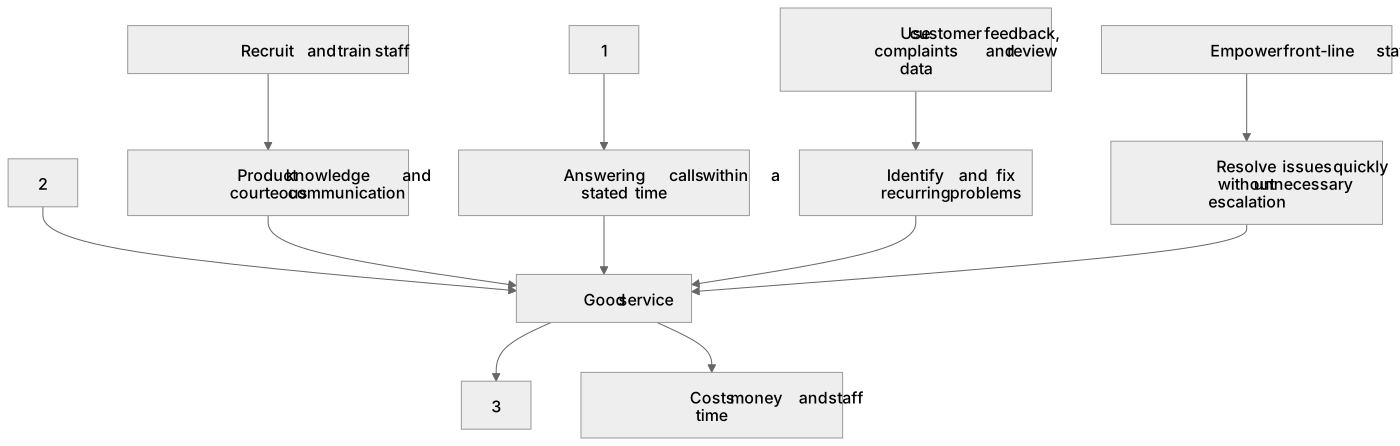
1Box 1
2Box 2
3Box 3
There is more to this lesson
The full lesson goes on to check your understanding and help you earn the marks. Create a free account to carry on, with your progress saved.
A week of Premium from your first lesson · Then the free plan continues · No card, no charge
Test your understanding of Good customer services: Methods of good service:
Active recall beats re-reading. Take an instant quiz now to test what you’ve learned and lock it into long-term memory.
A week of Premium from your first lesson · Then the free plan continues · No card, no charge