AQA · GCSE · Business
Course version: 8132 · Version from Sept 2017
Good customer services: social media.
Social media covers the online platforms and apps where businesses and customers interact publicly, such as Facebook, Instagram, X and TikTok.
Checked against the AQA 8132 specification (opens in a new tab) on .
- Point 19 of 19
Study notes
From the checked teaching notes for this specification point.
The idea
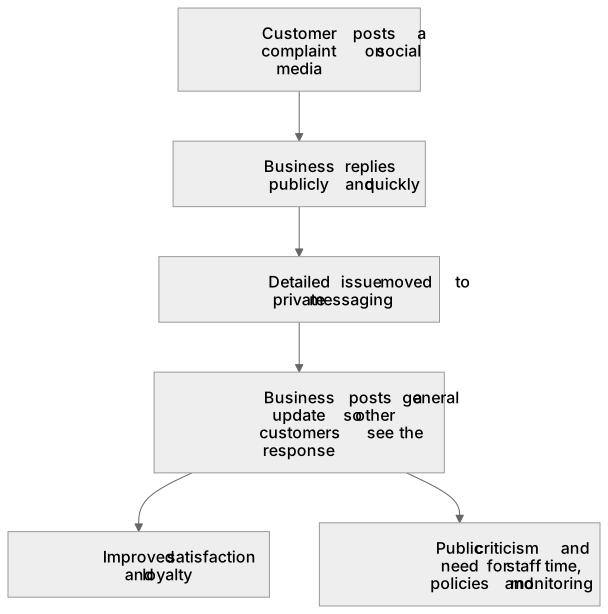
Social media covers the online platforms and apps where businesses and customers interact publicly, such as Facebook, Instagram, X and TikTok. In good customer service, social media is used to answer questions quickly, resolve complaints, share updates and build relationships. A business might reply to a complaint within hours, move a detailed issue to private messaging, then post a general update so other customers see the response. This can improve satisfaction and loyalty, but it also exposes the business to public criticism and needs staff time, clear policies and monitoring. Effective use means choosing suitable platforms, responding politely and promptly, and measuring outcomes such as response times and sentiment.
What earns the marks
- Identifies social media as a customer service channel used for answering queries, handling complaints and sharing information with customers.
- Explains how quick, polite public replies can resolve individual issues and reassure other customers who see the exchange.
- Analyses benefits such as wider reach, lower cost than some call-centre contacts, faster feedback and stronger customer relationships.
- Analyses drawbacks such as public negative comments, staff time, training needs, risk of inconsistent replies and difficulty controlling messages.
- Applies social media use to a business context, for example a restaurant replying to a booking complaint or a retailer posting delivery updates.
- Evaluates whether social media improves customer service by weighing speed and reach against loss of control and resource demands.
Common mistakes and how to put them right
Treating social media only as advertising.
Put it right: Recognise its two-way customer service role in answering and resolving customer contact.
Assuming every complaint should be handled publicly.
Put it right: Reply publicly where appropriate but move personal details to private messaging.
Ignoring the cost of monitoring and staffing social media.
Put it right: Include staff time, training and policy costs in the analysis.
Exam tips
- Link each point to customer service outcomes such as satisfaction, loyalty or reputation rather than describing platforms generally.
- Use a short business example to show how a reply or update affects the customer and the business.
- For evaluation, state a judgement and support it with both a benefit and a limitation of using social media.
Try the lesson
The start of the Good customer services: social media. lesson, made from checked teaching notes for this specification point.
Have a go first
A small bakery wants to respond quickly to customer complaints. Which use of social media best supports good customer service?
Listen
Social media covers the online platforms and apps where businesses and customers interact publicly, such as Facebook, Instagram, X and TikTok. In good customer service, social media is used to answer questions quickly, resolve complaints, share updates and build relationships. A business might reply to a complaint within hours, move a detailed issue to private messaging, then post a general update so other customers see the response. This can improve satisfaction and loyalty, but it also exposes the business to public criticism and needs staff time, clear policies and monitoring. Effective use means choosing suitable platforms, responding politely and promptly, and measuring outcomes such as response times and sentiment. A strong answer earns marks for these points. Identifies social media as a customer service channel used for answering queries, handling complaints and sharing information with customers. Explains how quick, polite public replies can resolve individual issues and reassure other customers who see the exchange. Analyses benefits such as wider reach, lower cost than some call-centre contacts, faster feedback and stronger customer relationships. Analyses drawbacks such as public negative comments, staff time, training needs, risk of inconsistent replies and difficulty controlling messages. A common slip: Treating social media only as advertising. Instead, recognise its two-way customer service role in answering and resolving customer contact. Exam tip: Link each point to customer service outcomes such as satisfaction, loyalty or reputation rather than describing platforms generally.
See it
Label the diagram
Some boxes have lost their names. Pick the right name for each number.
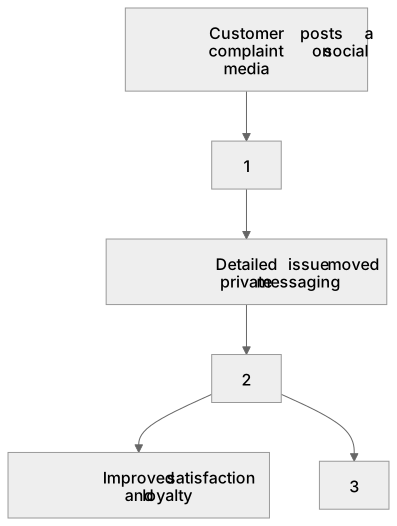
1Box 1
2Box 2
3Box 3
There is more to this lesson
The full lesson goes on to check your understanding and help you earn the marks. Create a free account to carry on, with your progress saved.
A week of Premium from your first lesson · Then the free plan continues · No card, no charge
Test your understanding of Good customer services: social media.
Active recall beats re-reading. Take an instant quiz now to test what you’ve learned and lock it into long-term memory.
A week of Premium from your first lesson · Then the free plan continues · No card, no charge