AQA · GCSE · Business
Course version: 8132 · Version from Sept 2017
Good customer services: websites
A business website is an online presence that lets customers find information, contact the firm and buy at any time.
Checked against the AQA 8132 specification (opens in a new tab) on .
- Point 17 of 19
- 4 key terms
Study notes
From the checked teaching notes for this specification point.
The idea
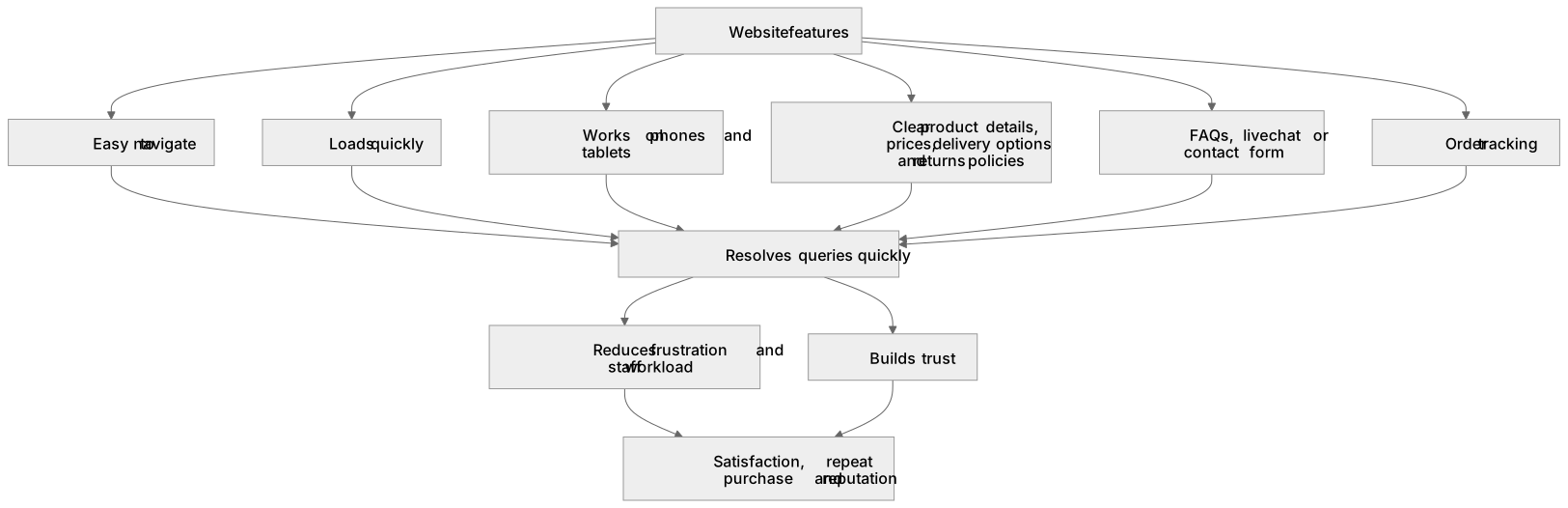
A business website is an online presence that lets customers find information, contact the firm and buy at any time. Good customer service means the site is easy to navigate, loads quickly, works on phones and tablets, and gives clear product details, prices, delivery options and returns policies. A well-designed site can answer common questions through FAQs, offer live chat or a contact form, and let customers track orders, which reduces frustration and staff workload. For example, a small clothing retailer that adds size guides, real customer reviews and a visible returns page cuts the number of complaint emails and builds trust. Poor design, such as broken links, hidden contact details or slow pages, drives customers to competitors, so the website directly affects satisfaction, repeat purchase and reputation.
What earns the marks
- Explains that a website provides 24/7 access to product information, prices and contact details, improving convenience for customers.
- Analyses how easy navigation, fast loading and mobile-friendly design raise customer satisfaction and reduce abandoned enquiries.
- Assesses how features such as FAQs, live chat, order tracking and clear returns policies resolve queries quickly and lower staff workload.
- Evaluates the link between website quality and repeat custom, brand reputation and competitiveness against rival businesses.
- Applies website examples to a given business context, such as a local retailer adding click-and-collect information.
Common mistakes and how to put them right
Treating a website as only a selling tool.
Put it right: It also supports customer service through information, contact routes and after-sales help.
Assuming all customers have reliable internet access or prefer digital contact.
Put it right: Good service keeps phone and in-person options available alongside the website.
Ignoring maintenance, so outdated prices or broken links remain live.
Put it right: Regular updates keep information accurate and protect trust.
Exam tips
- Link each website feature to a specific customer-service benefit, such as live chat reducing waiting time, rather than listing features.
- Use the case-study business throughout; name the firm and explain how the website change affects its customers.
- For evaluation questions, weigh benefits such as lower call volumes against costs such as setup, hosting and staff training.
Try the lesson
The start of the Good customer services: websites lesson, made from checked teaching notes for this specification point.
Have a go first
How can a business most directly use its website to improve customer service?
Listen
A business website is an online presence that lets customers find information, contact the firm and buy at any time. Good customer service means the site is easy to navigate, loads quickly, works on phones and tablets, and gives clear product details, prices, delivery options and returns policies. A well-designed site can answer common questions through FAQs, offer live chat or a contact form, and let customers track orders, which reduces frustration and staff workload. For example, a small clothing retailer that adds size guides, real customer reviews and a visible returns page cuts the number of complaint emails and builds trust. Poor design, such as broken links, hidden contact details or slow pages, drives customers to competitors, so the website directly affects satisfaction, repeat purchase and reputation. A strong answer earns marks for these points. Explains that a website provides 24/7 access to product information, prices and contact details, improving convenience for customers. Analyses how easy navigation, fast loading and mobile-friendly design raise customer satisfaction and reduce abandoned enquiries. Assesses how features such as FAQs, live chat, order tracking and clear returns policies resolve queries quickly and lower staff workload. Evaluates the link between website quality and repeat custom, brand reputation and competitiveness against rival businesses. A common slip: Treating a website as only a selling tool. Instead, it also supports customer service through information, contact routes and after-sales help. Exam tip: Link each website feature to a specific customer-service benefit, such as live chat reducing waiting time, rather than listing features.
See it
Key words
Say what each word means before you turn the card.
Customer convenience and accessibility
Try answering aloud or in your head before turning the card.
Communication channels
Try answering aloud or in your head before turning the card.
Cost efficiency and staff workload
Try answering aloud or in your head before turning the card.
Brand reputation and repeat custom
Try answering aloud or in your head before turning the card.
See every definition
- Customer convenience and accessibility
- An online presence lets customers find information, contact the firm and buy at any time, and a well-designed site is easy to navigate, loads quickly and works on phones and tablets.
- Communication channels
- A well-designed site can answer common questions through FAQs, offer live chat or a contact form, and let customers track orders.
- Cost efficiency and staff workload
- Answering common questions and letting customers track orders reduces frustration and staff workload.
- Brand reputation and repeat custom
- Poor design, such as broken links, hidden contact details or slow pages, drives customers to competitors, so the website directly affects satisfaction, repeat purchase and reputation.
Label the diagram
Some boxes have lost their names. Pick the right name for each number.
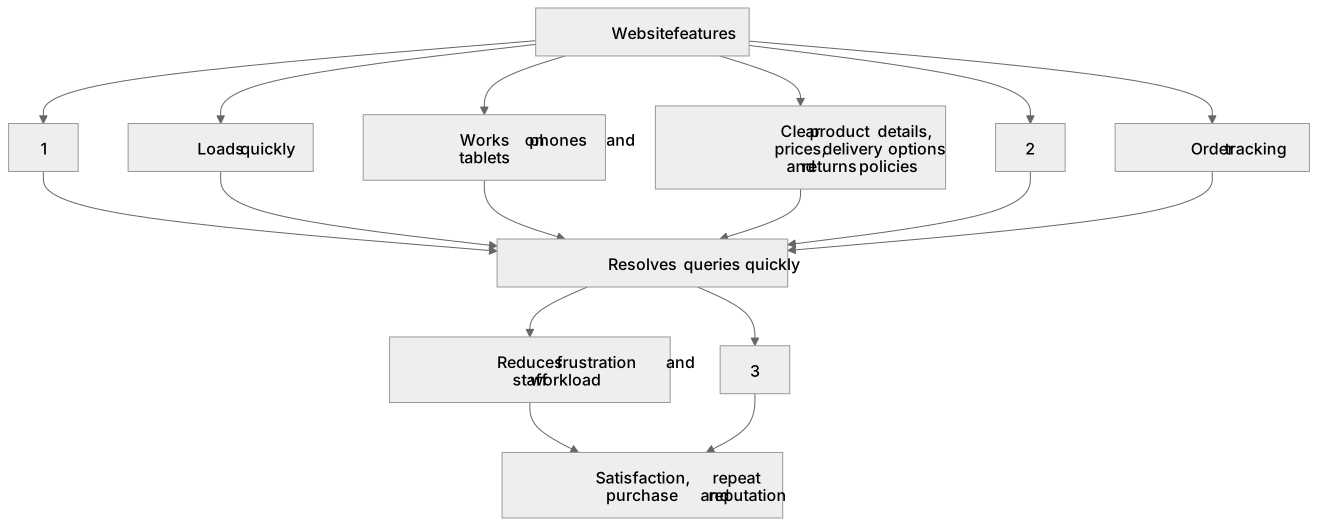
1Box 1
2Box 2
3Box 3
There is more to this lesson
The full lesson goes on to check your understanding and help you earn the marks. Create a free account to carry on, with your progress saved.
A week of Premium from your first lesson · Then the free plan continues · No card, no charge
Test your understanding of Good customer services: websites
Active recall beats re-reading. Take an instant quiz now to test what you’ve learned and lock it into long-term memory.
A week of Premium from your first lesson · Then the free plan continues · No card, no charge