AQA · GCSE · Business
Course version: 8132 · Version from Sept 2017
Price, product, promotion and place (4Ps): Students should understand the…
Full specification wording
The elements of the marketing mix: price, product, promotion and place (4Ps): Students should understand the importance of product design, image and the needs of the target market when designing new products.
When designing a new product, a business must consider three connected ideas.
Checked against the AQA 8132 specification (opens in a new tab) on .
- Point 16 of 80
- 3 key terms
Study notes
From the checked teaching notes for this specification point.
The idea
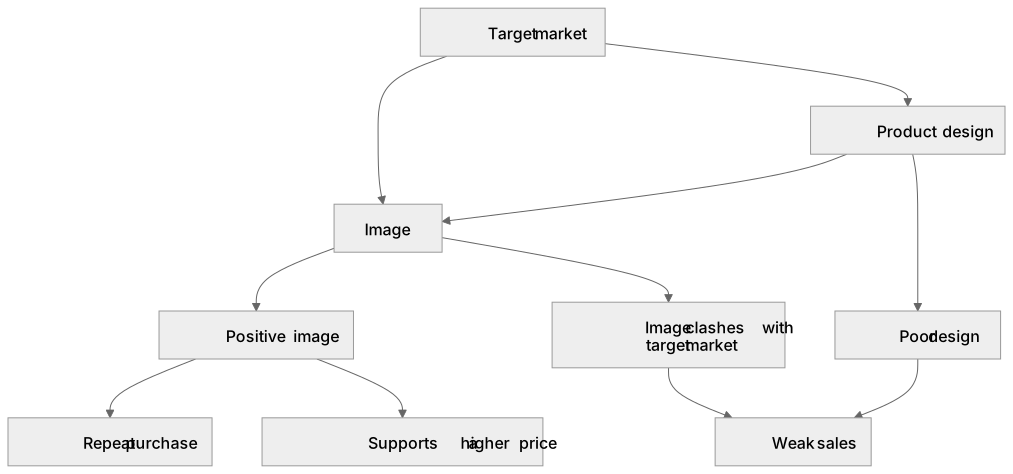
When designing a new product, a business must consider three connected ideas. Product design covers how well the item works, its appearance, materials, safety, durability and ease of use. Image is the impression customers form of the product and brand, created through styling, packaging, name and quality cues. The target market is the specific group of customers the business aims to sell to, defined by age, income, lifestyle or location. Good design that matches the target market builds a positive image, encourages repeat purchase and supports a higher price. Poor design, or an image that clashes with the target market, leads to weak sales. A phone maker targeting teenagers, for example, might prioritise camera quality, battery life and colourful styling, while a business targeting professionals might emphasise security and a plain finish.
What earns the marks
- Explains how product design features such as function, appearance, materials, safety and ease of use affect customer appeal.
- Explains how image, including branding, styling, packaging and quality perception, influences customer decisions.
- Identifies a target market by relevant characteristics such as age, income, lifestyle or location and links design choices to that group's needs.
- Shows the connection between the three ideas, for example that design choices shape image and that both must fit the target market.
- Applies the ideas to a specific business or product and explains the likely effect on sales or competitiveness.
Common mistakes and how to put them right
Treating design as only about appearance.
Put it right by including function, safety, materials and ease of use.
Defining the target market as 'everyone'.
Put it right by naming specific characteristics such as age, income or lifestyle.
Discussing design, image and target market separately without linking them.
Put it right by explaining how a design choice affects image and meets target market needs.
Exam tips
- Name the target market explicitly and use its characteristics to justify each design feature you mention.
- Link each design point to image or customer needs rather than describing the product in isolation.
- Use case study details such as price, location or customer type to support your answer.
Try the lesson
The start of the The elements of the marketing mix: price, product, promotion and place (4Ps): Students should understand the importance of product design, image and the needs of the target market when designing new products. lesson, made from checked teaching notes for this specification point.
Have a go first
Why is it important for a business to consider the needs of the target market when designing a new product?
Listen
When designing a new product, a business must consider three connected ideas. Product design covers how well the item works, its appearance, materials, safety, durability and ease of use. Image is the impression customers form of the product and brand, created through styling, packaging, name and quality cues. The target market is the specific group of customers the business aims to sell to, defined by age, income, lifestyle or location. Good design that matches the target market builds a positive image, encourages repeat purchase and supports a higher price. Poor design, or an image that clashes with the target market, leads to weak sales. A phone maker targeting teenagers, for example, might prioritise camera quality, battery life and colourful styling, while a business targeting professionals might emphasise security and a plain finish. A strong answer earns marks for these points. Explains how product design features such as function, appearance, materials, safety and ease of use affect customer appeal. Explains how image, including branding, styling, packaging and quality perception, influences customer decisions. Identifies a target market by relevant characteristics such as age, income, lifestyle or location and links design choices to that group's needs. Shows the connection between the three ideas, for example that design choices shape image and that both must fit the target market. A common slip: Treating design as only about appearance. Instead, including function, safety, materials and ease of use. Exam tip: Name the target market explicitly and use its characteristics to justify each design feature you mention.
See it
Key words
Say what each word means before you turn the card.
Product design
Try answering aloud or in your head before turning the card.
Image
Try answering aloud or in your head before turning the card.
Target market
Try answering aloud or in your head before turning the card.
See every definition
- Product design
- Covers how well the item works, its appearance, materials, safety, durability and ease of use.
- Image
- The impression customers form of the product and brand, created through styling, packaging, name and quality cues.
- Target market
- The specific group of customers the business aims to sell to, defined by age, income, lifestyle or location.
Label the diagram
Some boxes have lost their names. Pick the right name for each number.
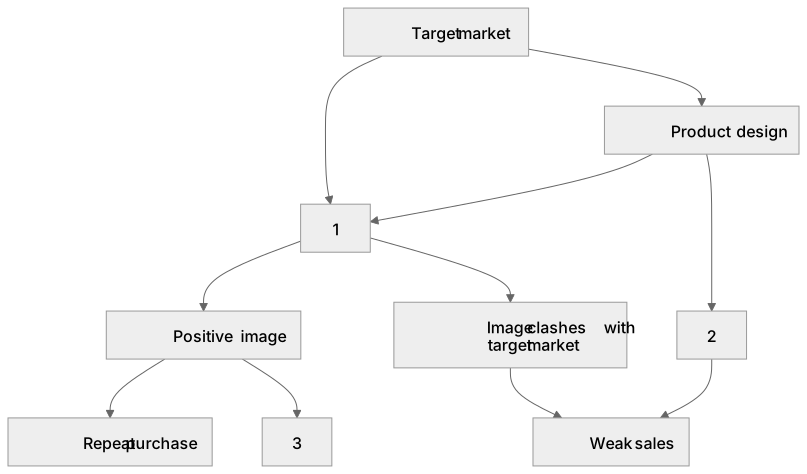
1Box 1
2Box 2
3Box 3
There is more to this lesson
The full lesson goes on to check your understanding and help you earn the marks. Create a free account to carry on, with your progress saved.
A week of Premium from your first lesson · Then the free plan continues · No card, no charge
Test your understanding of The elements of the marketing mix: price, product, promotion and place (4Ps): Students should understand the importance of product design, image and the needs of the target market when designing new products.
Active recall beats re-reading. Take an instant quiz now to test what you’ve learned and lock it into long-term memory.
A week of Premium from your first lesson · Then the free plan continues · No card, no charge