Pearson Edexcel · A-Level · Business
External influences
External influences are the powerful economic, legal, and competitive forces that shape business decisions and determine success or failure. Understanding these factors is crucial for GCSE Business, as examiners test your ability to apply them to real-world scenarios.
- 5 min read
- 3 worked examples
- 5 practice questions
- 6 key terms
Study Notes
Overview
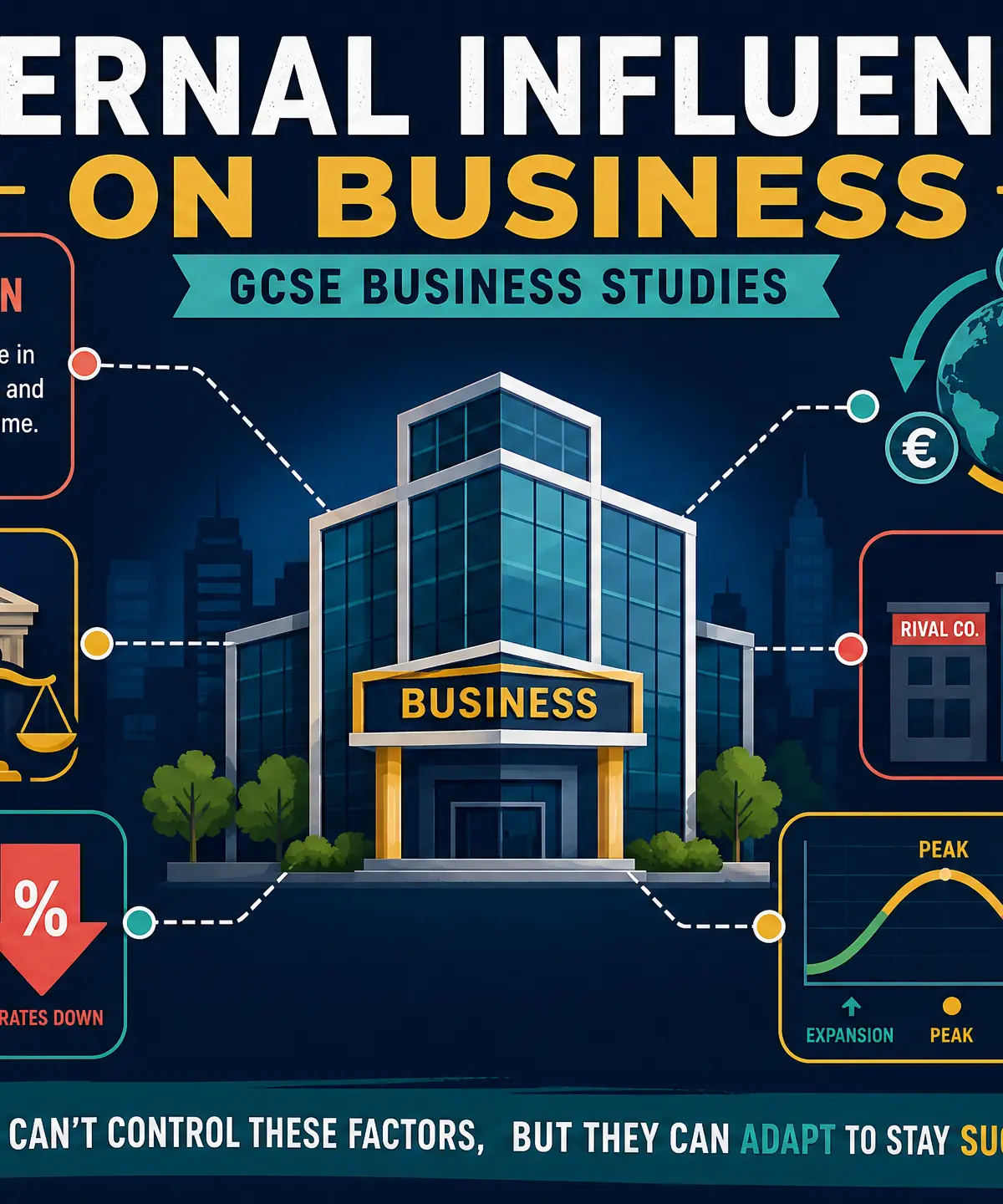
Businesses do not operate in a vacuum. They exist in a dynamic environment where external factors—those outside the direct control of the business—can have profound impacts on their costs, revenues, and overall strategy. This topic covers the key external influences: the economic climate (inflation, interest rates, exchange rates, and the business cycle), legislation, and the competitive environment. Examiners expect candidates to not only define these terms but to analyse their specific impact on different types of businesses. The highest marks are awarded for showing how these factors interconnect and evaluating how a business might respond to them.
Economic Influences
Inflation
Definition: The general rise in the price level of goods and services over time.
Impact on Business: High inflation increases the cost of raw materials, energy, and wages (as employees demand higher pay to meet the rising cost of living). This squeezes profit margins. Businesses must decide whether to absorb these costs or pass them on to consumers through higher prices, which could reduce demand.
Specific Knowledge: In the UK, inflation is primarily measured by the Consumer Price Index (CPI). The Bank of England has a target inflation rate of 2%.
Interest Rates
Definition: The cost of borrowing money and the reward for saving it.
Impact on Business:
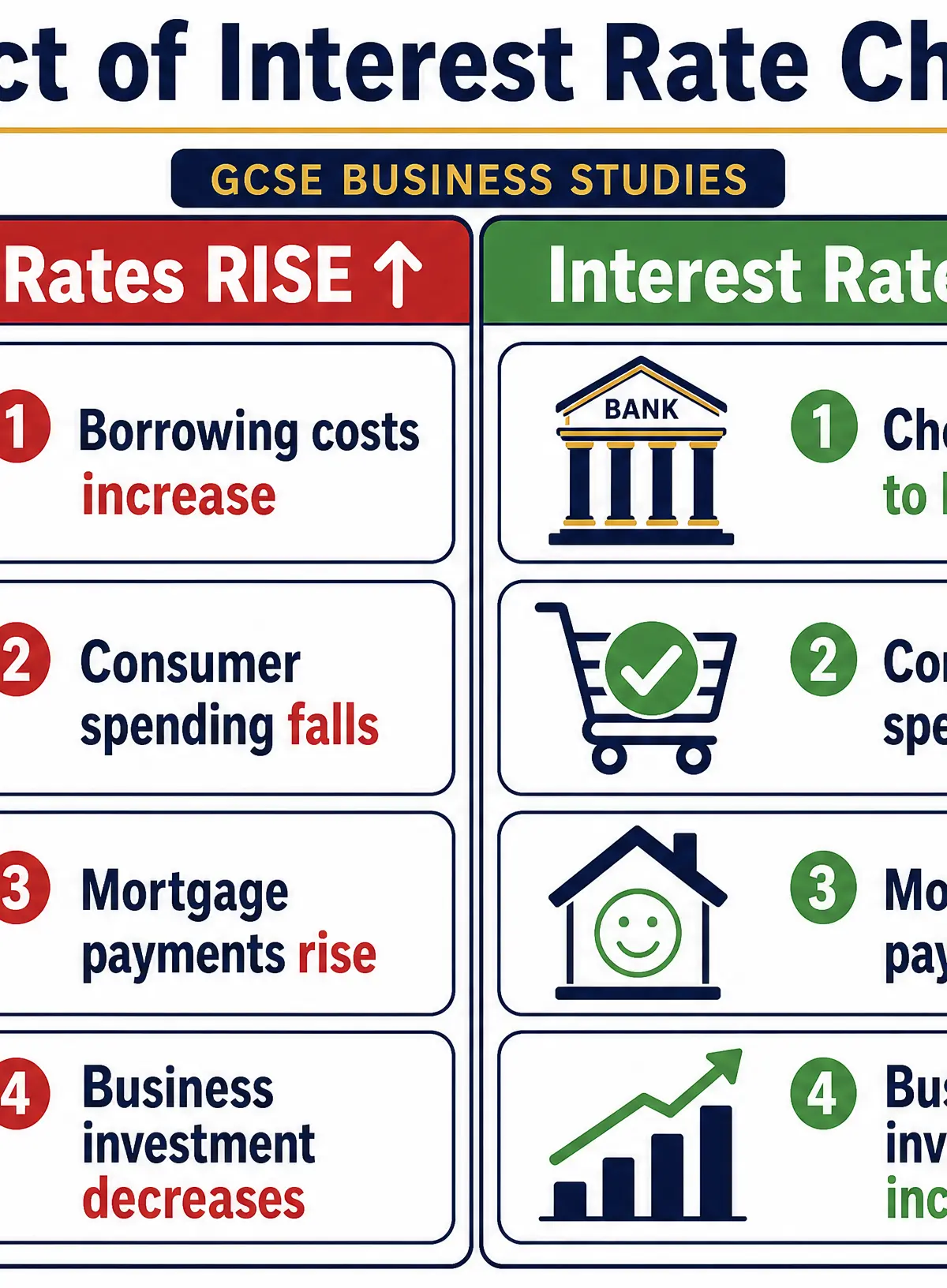
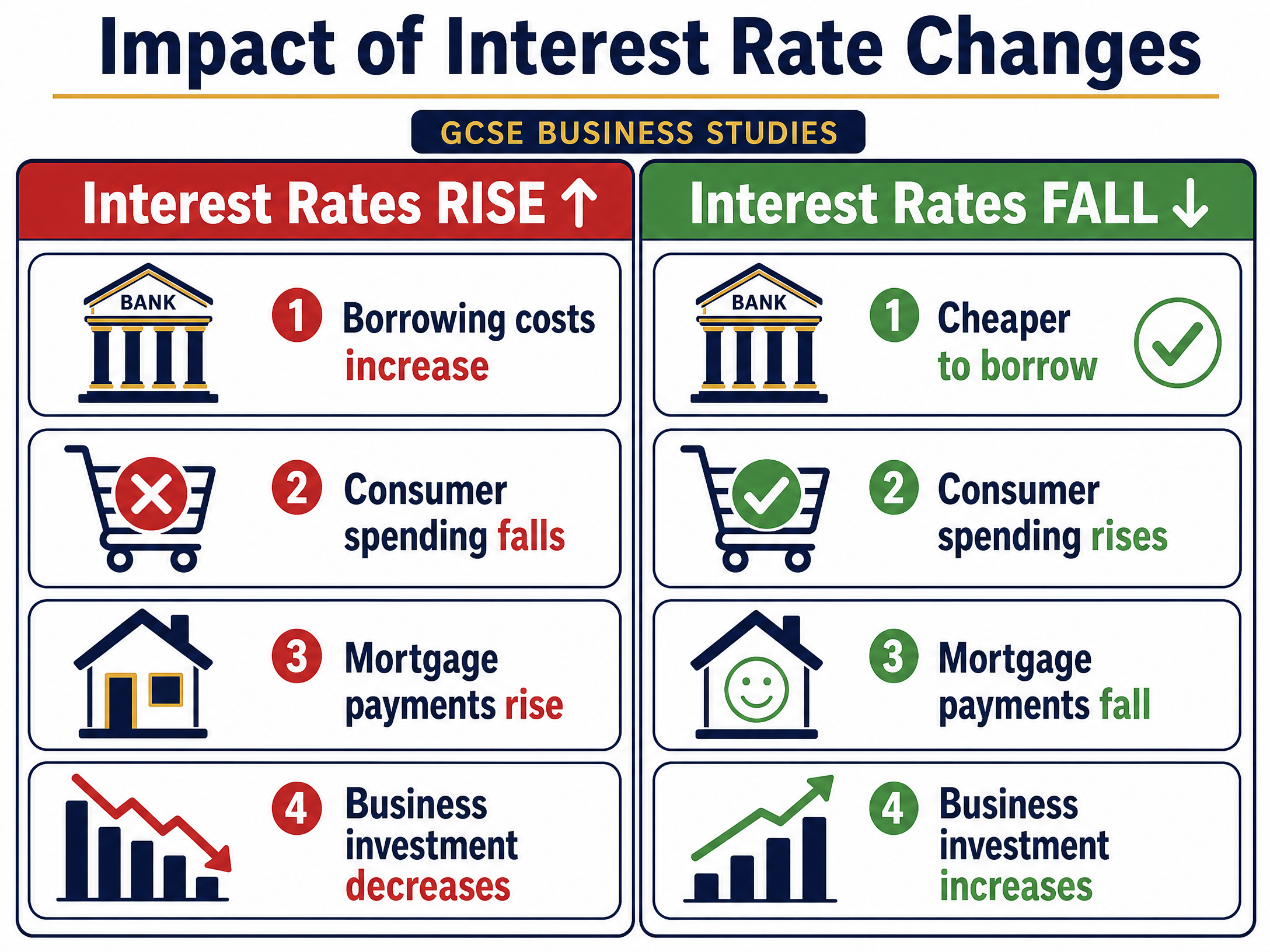
- Rising Rates: Increase the cost of borrowing for businesses, reducing investment. They also increase mortgage and loan repayments for consumers, reducing their disposable income and leading to a fall in consumer spending (especially on luxury or non-essential goods).
- Falling Rates: Make borrowing cheaper, encouraging business expansion. Consumers have more disposable income, boosting demand.
Specific Knowledge: Interest rates are set by the Bank of England's Monetary Policy Committee (MPC).
Exchange Rates
Definition: The value of one currency compared to another.
Impact on Business:
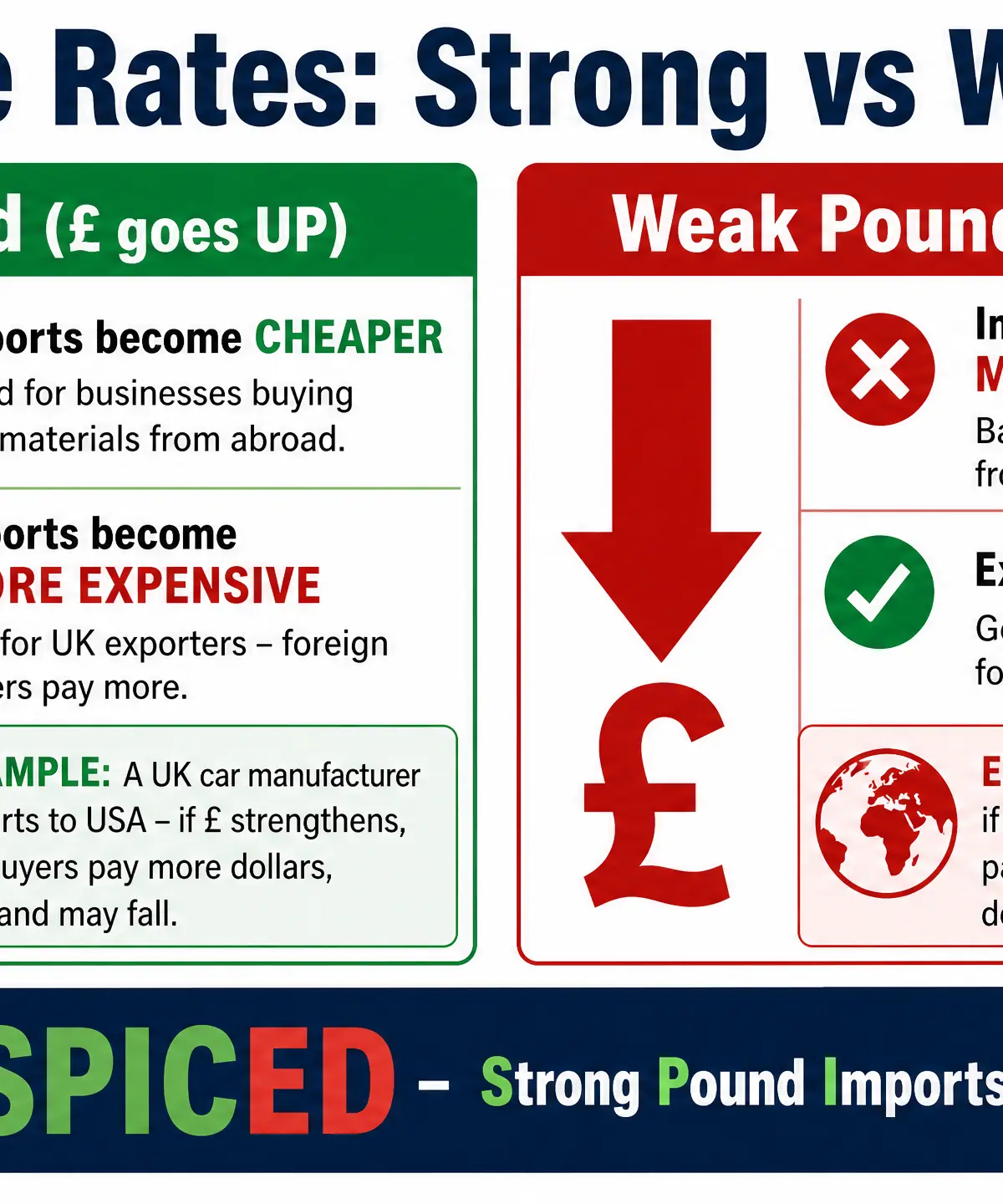
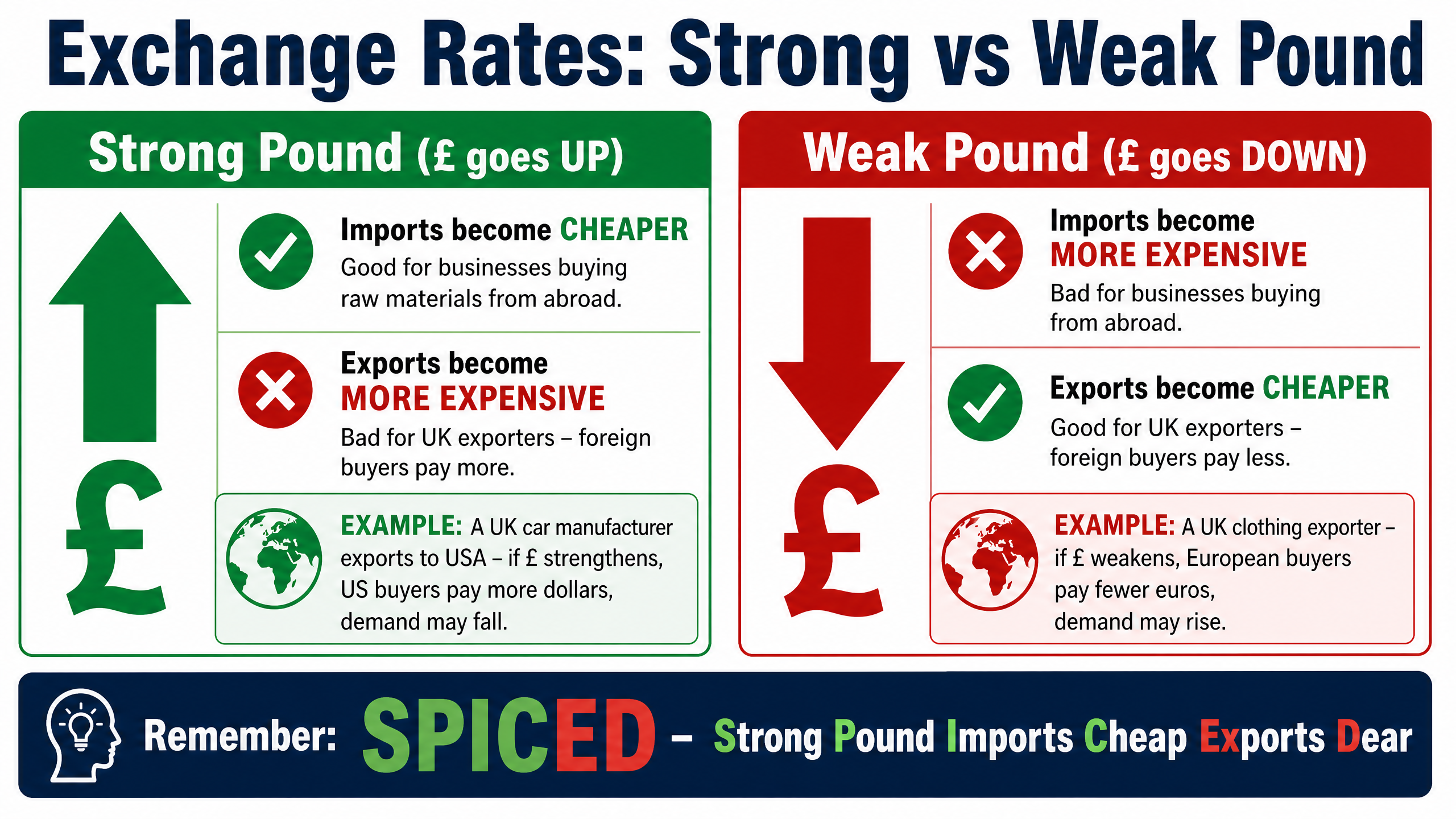
Exchange rates affect businesses that import raw materials or export finished goods. A strong pound makes imports cheaper but exports more expensive for foreign buyers. A weak pound makes imports more expensive but exports cheaper.
Specific Knowledge: Use the mnemonic SPICED (Strong Pound Imports Cheap Exports Dear).
The Business Cycle
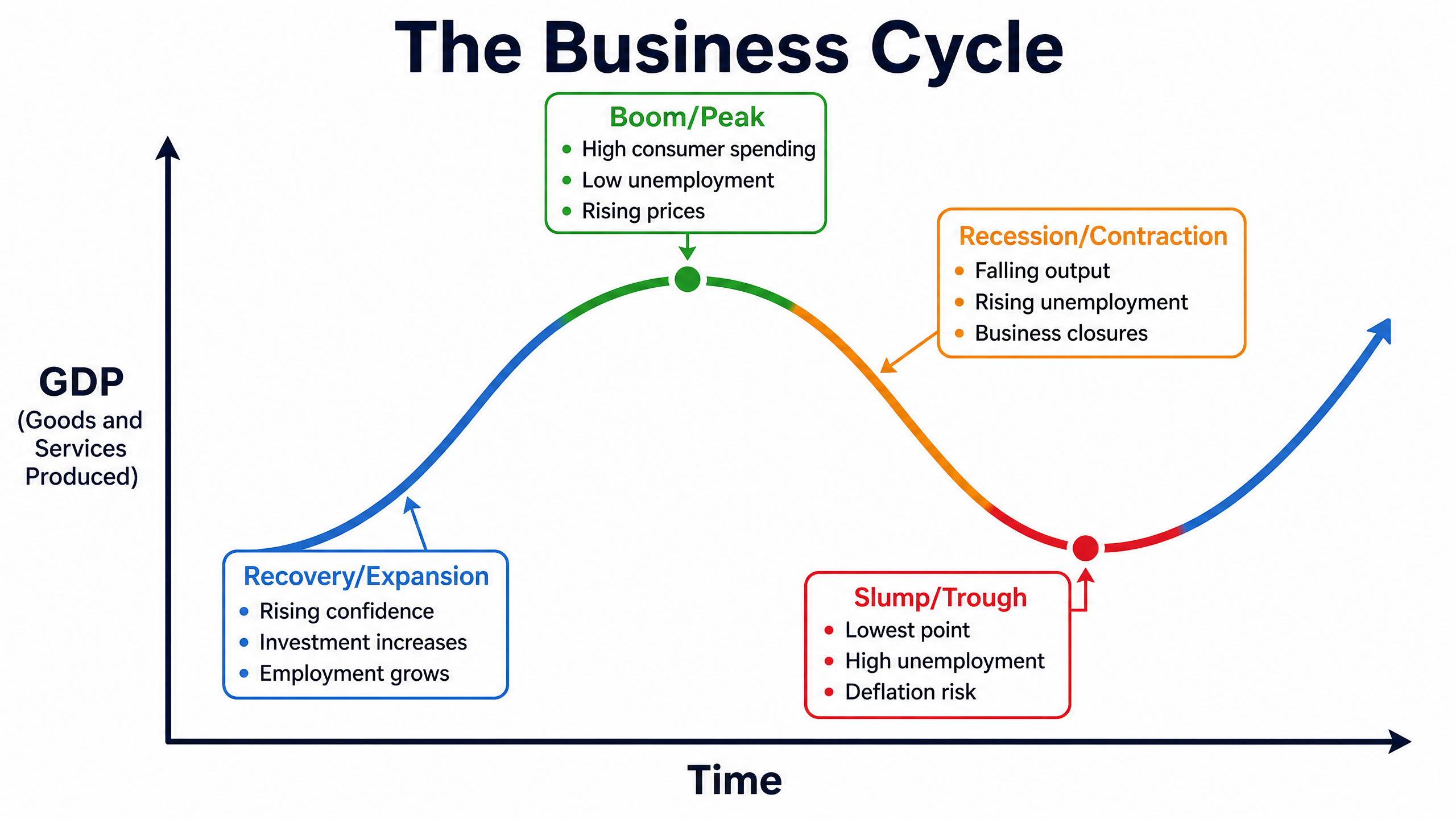
Definition: The natural pattern of economic growth and contraction over time.
Impact on Business:
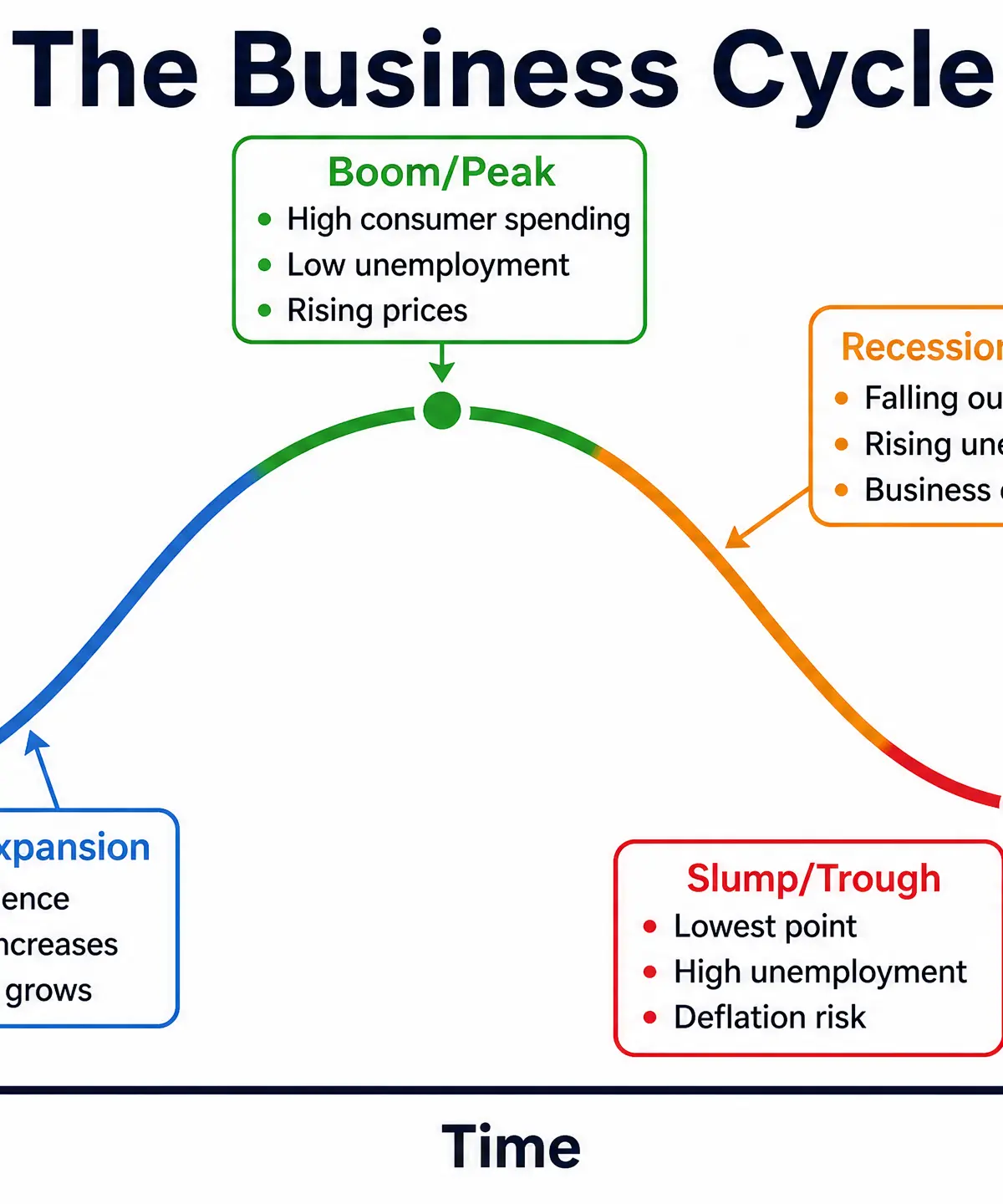
- Boom: High consumer confidence and spending. Businesses experience rising revenues and may expand.
- Recession: Technically defined as two consecutive quarters of negative GDP growth. Falling consumer spending, rising unemployment. Businesses may cut costs, reduce staff, or close.
- Slump: The lowest point of economic activity.
- Recovery: Confidence returns, spending and investment begin to rise.
Legislation
Governments pass laws that businesses must comply with. While this often increases costs, it also creates a fair competitive environment.
Employment Law
Key Acts: National Minimum Wage Act, Equality Act 2010.
Impact: Increases wage costs and requires businesses to implement fair recruitment and workplace policies. Failure to comply can result in fines and tribunal cases.
Consumer Protection Law
Key Acts: Consumer Rights Act 2015.
Impact: Goods must be of satisfactory quality, fit for purpose, and as described. Businesses must bear the cost of returns or repairs for faulty goods, and non-compliance damages reputation.
Environmental Legislation
Impact: Regulations on emissions, waste disposal, and packaging force businesses to invest in cleaner technologies. This increases short-term costs but can be used as a unique selling point (USP) to attract environmentally conscious consumers.
The Competitive Environment
Competition refers to the rivalry between businesses in the same market. The level of competition depends on the market size and the number of competitors.
Impact: In highly competitive markets, businesses must work harder to attract customers. They may need to lower prices (reducing profit margins), invest heavily in advertising, or innovate to differentiate their products. A growing market attracts new entrants, while a shrinking market intensifies the battle for remaining customers.
Podcast Revision
Listen to our comprehensive revision podcast covering all these topics, with examiner tips and a quick-fire quiz:

Visual Resources
3 diagrams and illustrations
Interactive Diagrams
1 interactive diagram to visualise key concepts
Conceptual Flow Outline
The Impact of Inflation on Business Decisions
Worked Examples
3 worked examples — open one to explore the question and available guidance.
Practice Questions
Test your understanding — click to reveal model answers
State two stages of the business cycle. (2 marks)
Hint: Think of the BRSR acronym.
Explain how an increase in the National Minimum Wage might affect a supermarket's profits. (3 marks)
Hint: Link the law to costs, and costs to profits.
Analyse how a period of economic boom might affect a business selling budget, own-brand baked beans. (6 marks)
Hint: Consider how consumer incomes change during a boom and what that means for 'inferior' or budget goods.
Explain one reason why a business might choose to operate in a highly competitive market. (3 marks)
Hint: Why are there so many competitors in the first place? What does it say about customer demand?
Evaluate whether a significant rise in inflation is the biggest external threat to a UK restaurant chain. (9 marks)
Hint: Compare inflation to other threats like interest rates or competition. Use the 'It depends on...' rule for the conclusion.