Pearson Edexcel · GCSE · Business
Topic 1.5 Understanding external influences on business
Topic 1.5 focuses on the external factors that impact business activity, which are often outside the direct control of the business. It covers stakeholders, technology, legislation, and the economic environment, and how businesses must respond to these influences.
- 5 min read
- 3 worked examples
- 5 practice questions
- 6 key terms
Study Notes

Overview
Topic 1.5 focuses on the external factors that impact business activity, which are often outside the direct control of the business. It covers stakeholders, technology, legislation, and the economic environment, and how businesses must respond to these influences. Examiners expect candidates to demonstrate a clear understanding of how these external forces shape business decisions, costs, and profitability. You must be able to identify specific stakeholders and their conflicting objectives, analyse the impact of technological advancements on operations and marketing, and evaluate the consequences of consumer and employment legislation. Furthermore, a strong grasp of economic factors—such as inflation, interest rates, unemployment, exchange rates, and taxation—is essential. The key to high marks is not merely listing these factors, but applying them to specific business scenarios provided in the source booklet, showing the chain of cause and consequence.
Listen to the comprehensive podcast overview of this topic below:

Stakeholders
Definition: A stakeholder is any individual or group with an interest in the activities and performance of a business.
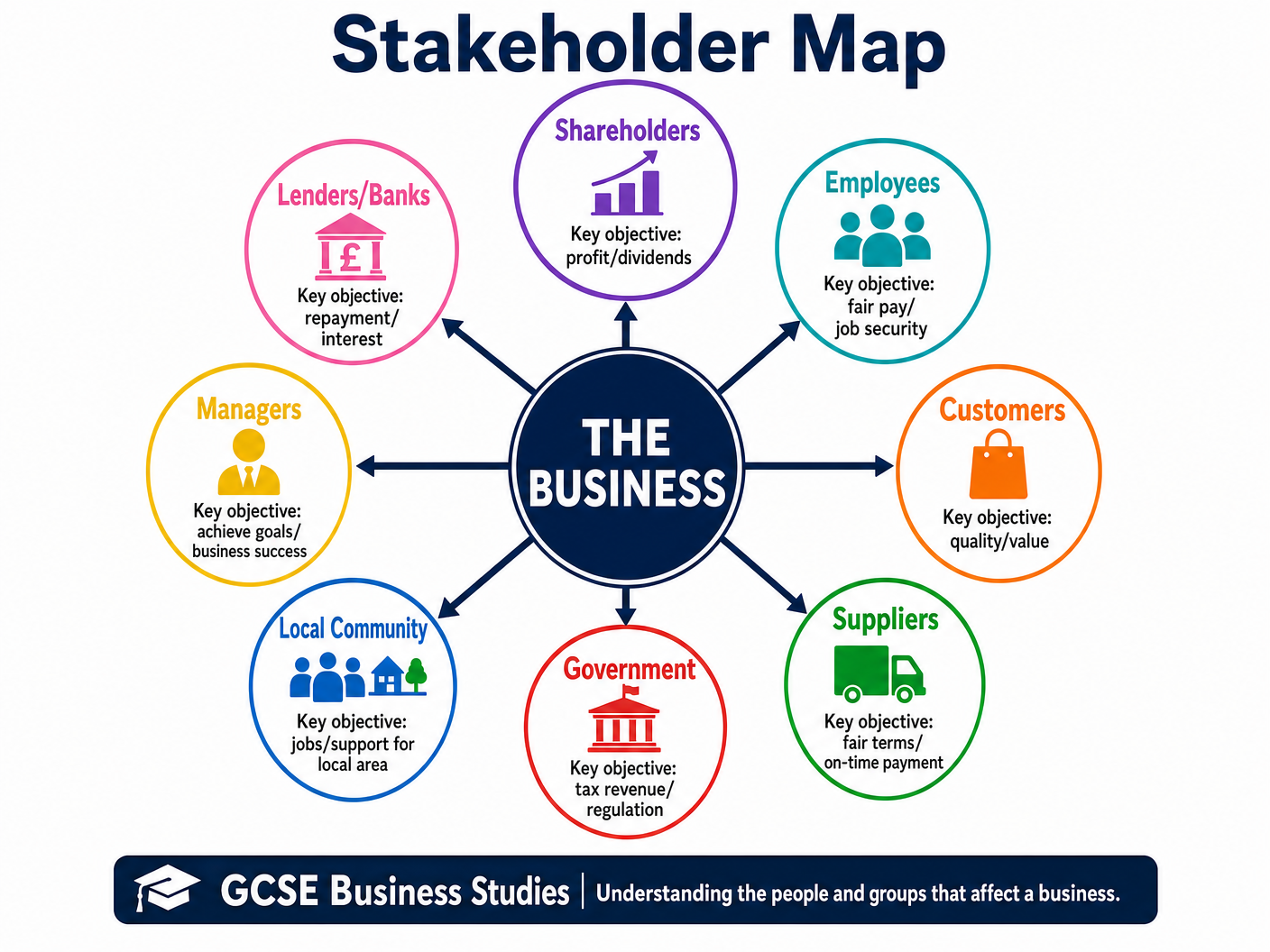
Key Stakeholder Groups: Shareholders, employees, customers, suppliers, managers, lenders (banks), government, and the local community.
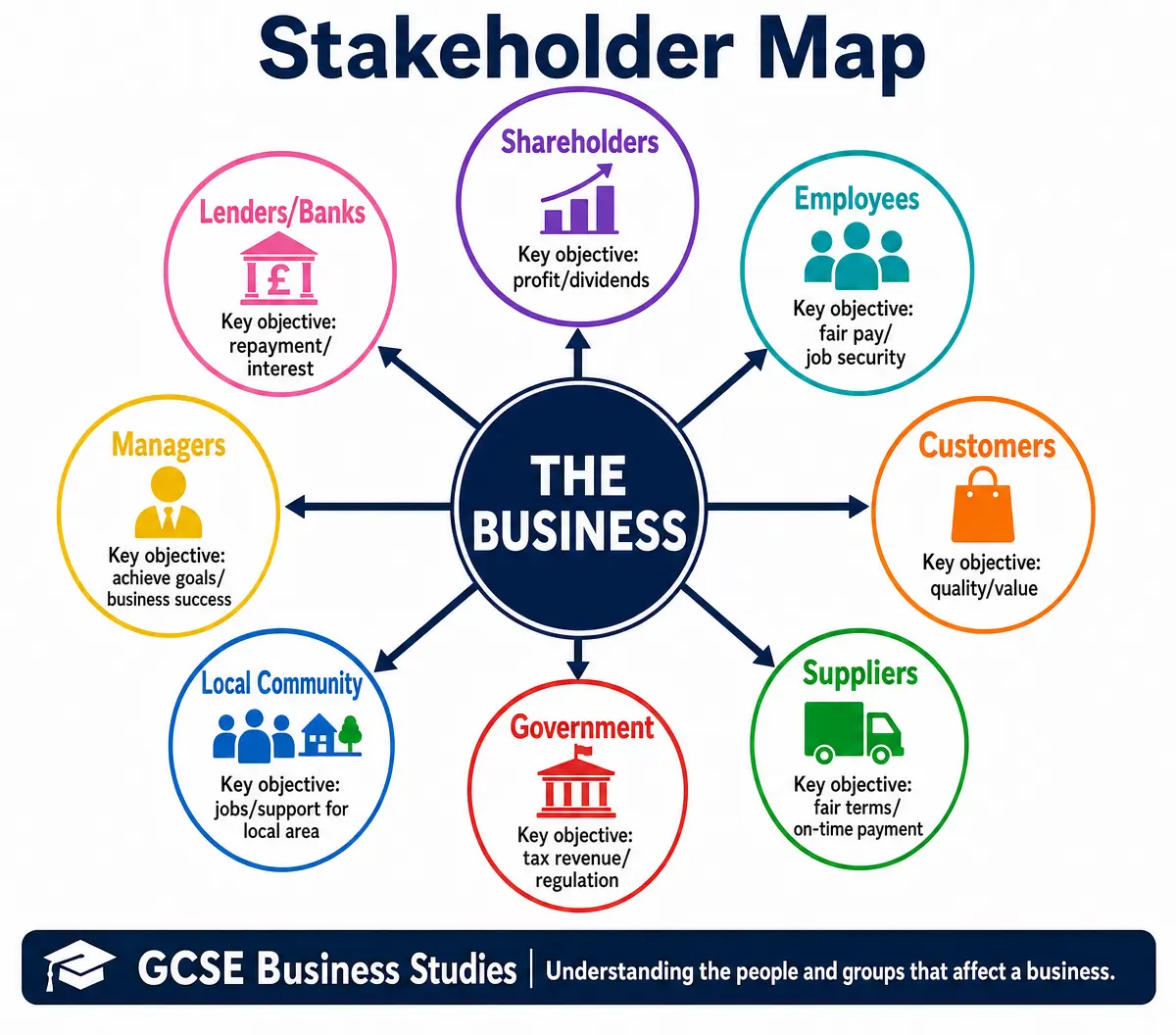
Conflicting Objectives: Examiners frequently test your understanding of how stakeholder needs clash. For example, shareholders desire maximum profit and high dividends, which might lead a business to reduce costs by cutting staff pay or making redundancies. This directly conflicts with employees, who seek job security and fair wages. Similarly, customers want high-quality products at low prices, while shareholders want high profit margins.
Specific Knowledge: Always name the specific stakeholders, state what each one wants, and explain why those objectives clash. Use the context of the business provided in the exam.
Technology
Impact on Business: Technology transforms how businesses operate, affecting costs, productivity, and the marketing mix.
E-commerce: Online selling expands the market, allowing small businesses to reach international customers, increasing potential revenue. However, it also intensifies competition.
Social Media: Platforms like Instagram and TikTok offer low-cost, targeted marketing, crucial for small businesses with limited budgets.
Automation: Using machines or software reduces long-term labour costs and improves consistency, though it requires significant initial investment.
Marketing Mix (4Ps): Technology creates digital products, enables dynamic pricing algorithms, shifts place from physical shops to online channels, and allows for highly targeted promotion.
Legislation
Definition: Laws passed by the government that businesses must comply with.
Consumer Legislation: Protects buyers. The Consumer Rights Act 2015 mandates that goods must be of satisfactory quality, fit for purpose, and as described. Non-compliance leads to refunds, repairs, or replacements.
Employment Legislation: Protects workers. Includes the National Minimum Wage, the Equality Act 2010 (preventing discrimination), and the Health and Safety at Work Act 1974.
The Examiner's Focus: You must discuss both the cost of compliance (training, equipment, administration) and the consequences of non-compliance (fines, legal action, reputational damage, closure).
The Economic Environment
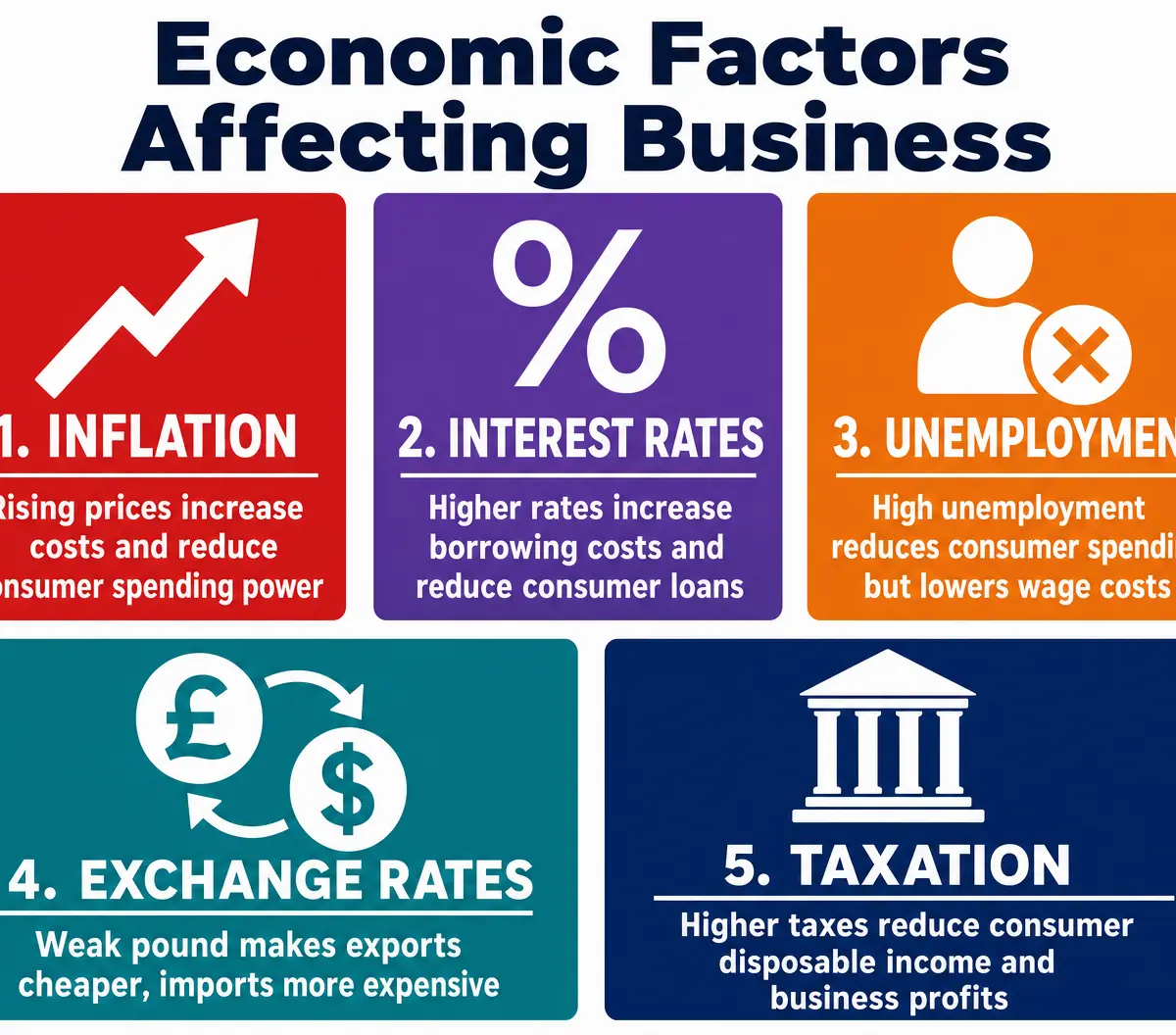
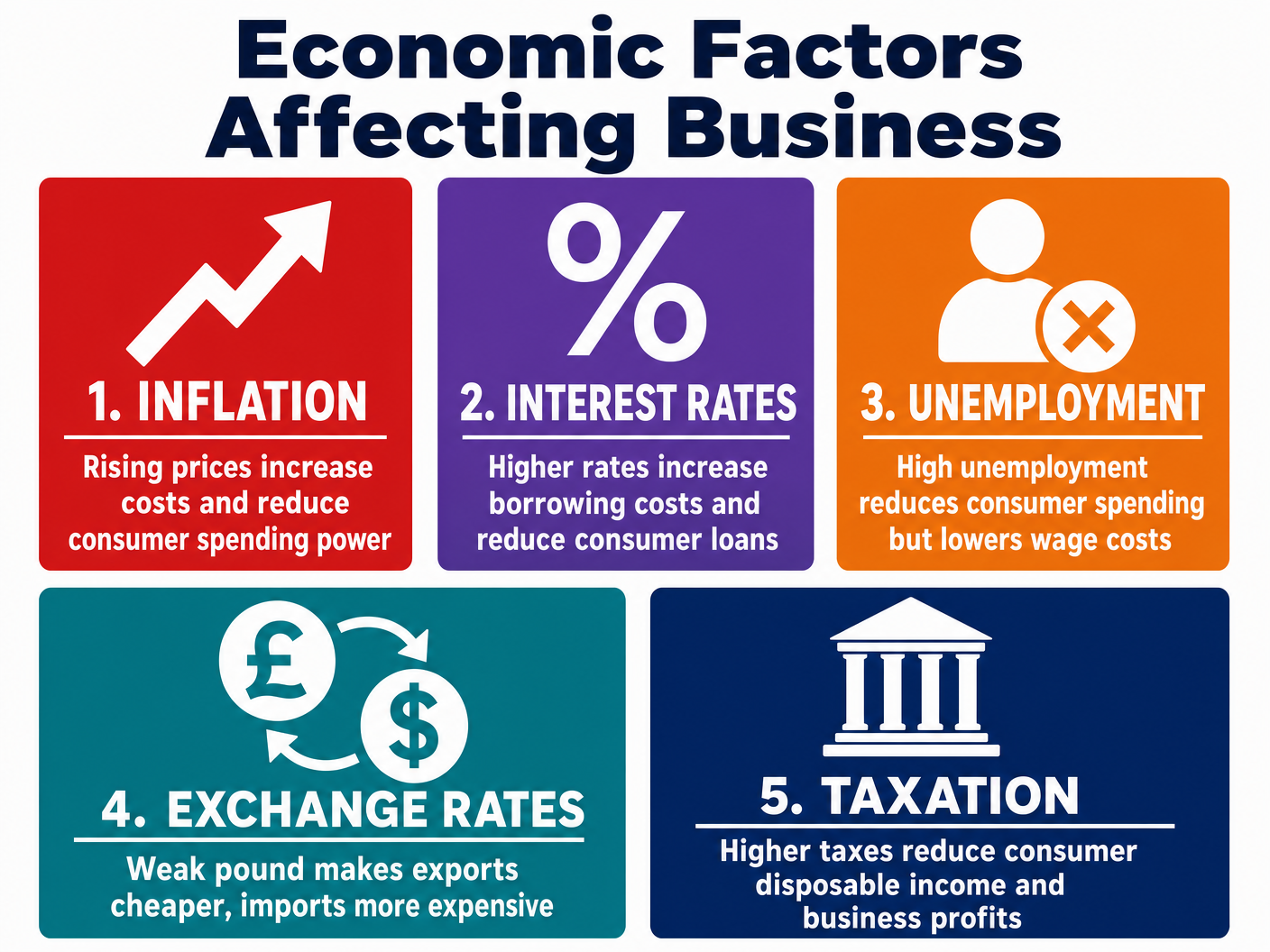
Inflation: A general rise in prices. Increases business costs (raw materials, energy, wages). If costs are passed to consumers, demand may fall.
Interest Rates: The cost of borrowing money. Higher rates increase loan repayments, reducing business investment and consumer spending (as mortgages and credit become more expensive).
Unemployment: High unemployment reduces consumer spending power (lower demand) but increases the pool of available workers, potentially keeping wage costs down.
Exchange Rates: Affects international trade. A weak pound makes UK exports cheaper for foreign buyers (boosting sales) but makes imported raw materials more expensive (increasing costs).
Taxation: Higher corporation tax reduces business profits. Higher income tax reduces consumers' disposable income, lowering demand for non-essential goods.
Interactive Diagrams
1 interactive diagram to visualise key concepts
Conceptual Flow Outline
Overview of External Influences
Worked Examples
3 worked examples — open one to explore the question and available guidance.
Practice Questions
Test your understanding — click to reveal model answers
A UK-based clothing retailer imports 80% of its materials from Europe. Explain the likely impact on the business if the value of the pound falls against the euro. (6 marks)
Hint: Think about WPIDEC. If the pound is weak, what happens to the cost of imports?
Evaluate the impact of new employment legislation, such as an increase in the National Minimum Wage, on a small independent restaurant. (12 marks)
Hint: Consider both the costs of compliance (higher wage bill) and potential benefits (motivated staff), and weigh them up.
State two stakeholder groups of a business. (2 marks)
Hint: Think of groups inside and outside the business who care about its success.
Explain one way a business could respond to an increase in inflation. (3 marks)
Hint: If costs are going up, what can the business do to protect its profit?
Analyse the benefits to a business of complying with consumer legislation. (6 marks)
Hint: Think beyond just avoiding fines. How does following the law help the brand?