Pearson Edexcel · GCSE · Business
Topic 2.1 Growing the business
Master the strategies and consequences of business expansion in Topic 2.1. This study guide covers everything from organic growth and franchising to economies of scale and the impacts of globalisation, ensuring you're fully prepared for those high-mark evaluation questions.
- 4 min read
- 3 worked examples
- 5 practice questions
- 6 key terms
Study Notes
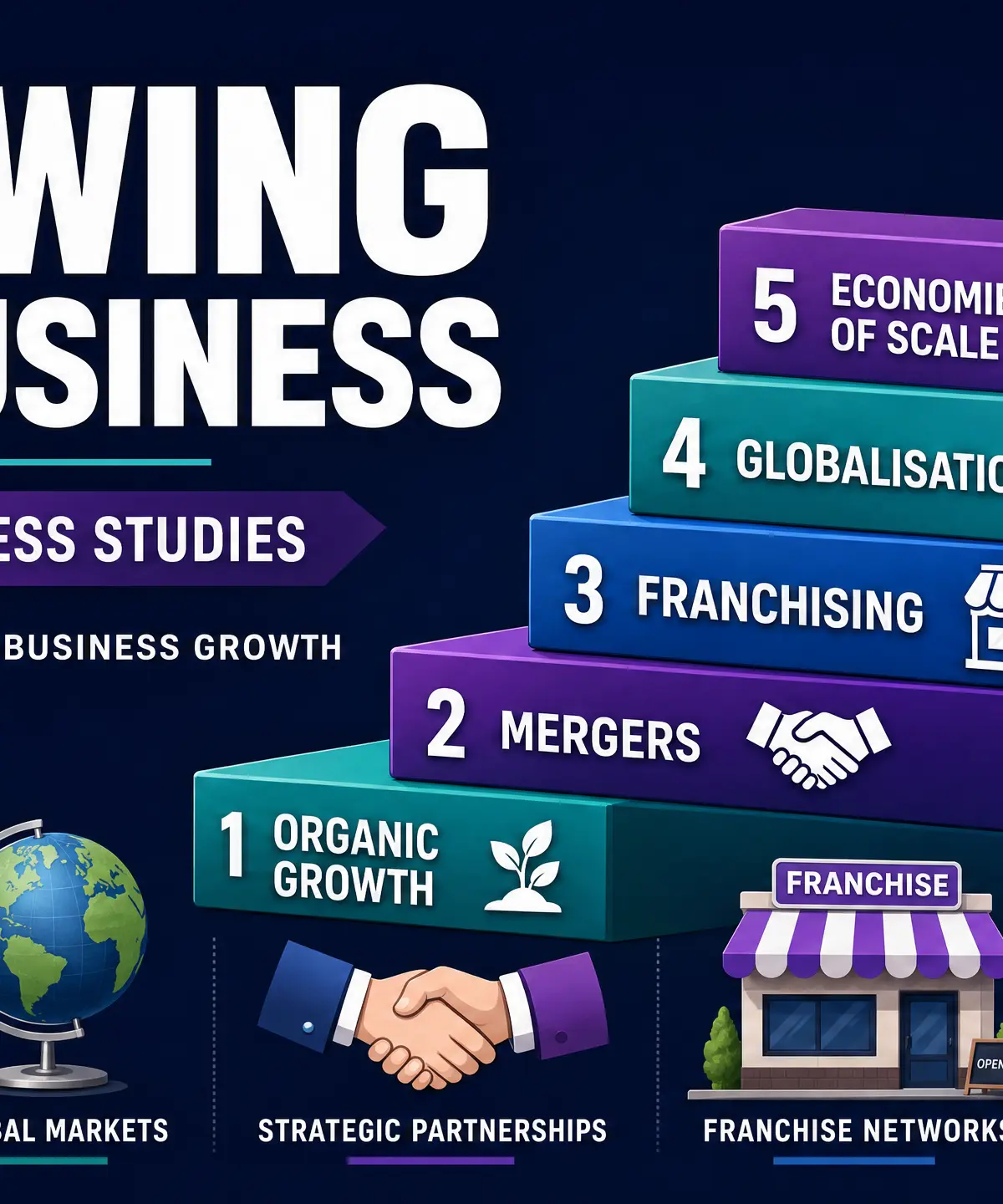
Overview
Topic 2.1, 'Growing the Business', is a cornerstone of the GCSE Business specification. Examiners frequently use this topic for higher-mark evaluation questions because it requires candidates to weigh the benefits of expansion against the significant risks and costs involved. You will need to understand the distinct routes to growth—organic (internal) and inorganic (external)—and be able to apply these concepts to specific business scenarios. Furthermore, mastering economies of scale and the drivers of globalisation will allow you to access the highest marking bands.

Key Concepts & Strategies
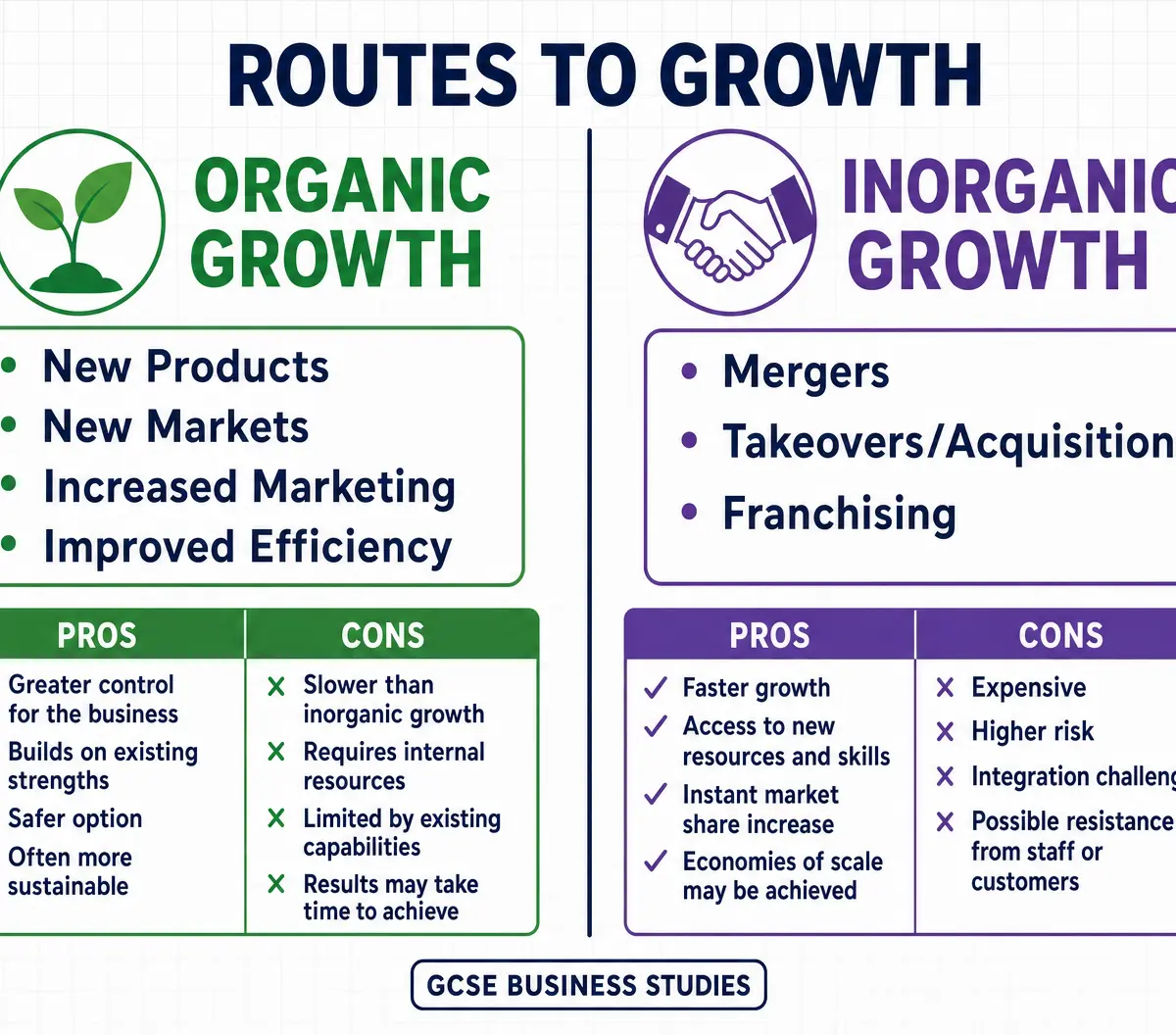
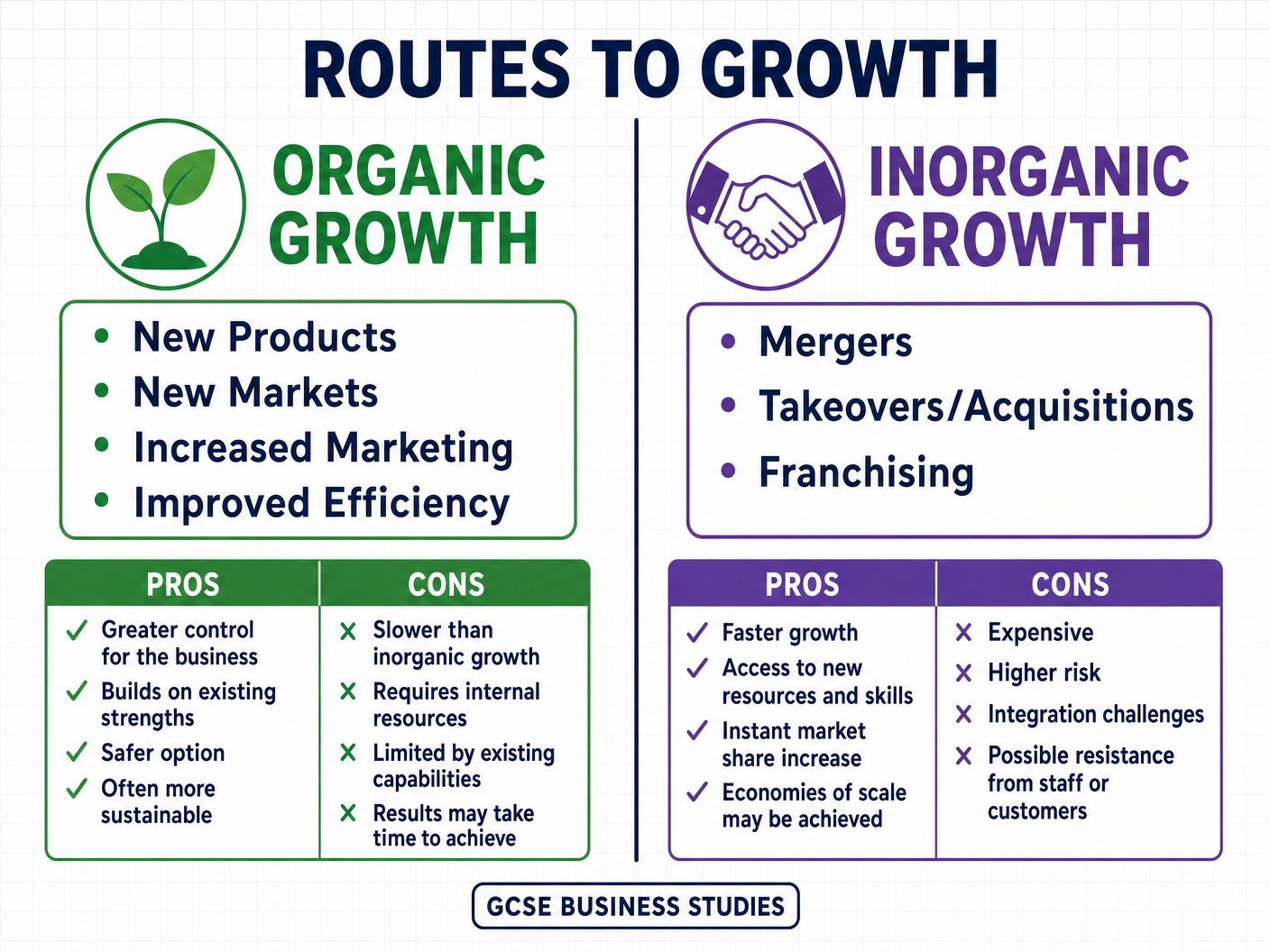
Organic Growth
What it is: Expansion from within the business, using internal resources without acquiring other firms.
Methods: Launching new products, entering new markets (e.g., exporting), increasing marketing, or expanding production capacity.
Exam Focus: Examiners reward candidates who recognise that while organic growth is lower risk and maintains corporate culture, it is often much slower than inorganic methods and limited by the firm's existing capabilities.
Inorganic Growth (Mergers & Takeovers)
What it is: Expansion by joining with or buying another business.
Methods:
- Merger: Two businesses voluntarily agree to join and form a new, single enterprise.
- Takeover/Acquisition: One business buys a controlling interest in another (can be hostile or friendly).
Exam Focus: The speed of growth and instant access to new markets are key benefits. However, candidates must evaluate the high costs, the risk of culture clashes, and the potential for diseconomies of scale.
Franchising
What it is: A business model where the franchisor grants a franchisee the right to operate using its brand, products, and systems in exchange for a fee and royalties.
Exam Focus: Always consider both perspectives. For the franchisor, it enables rapid, low-risk expansion. For the franchisee, it offers a proven model but limited control and shared profits.
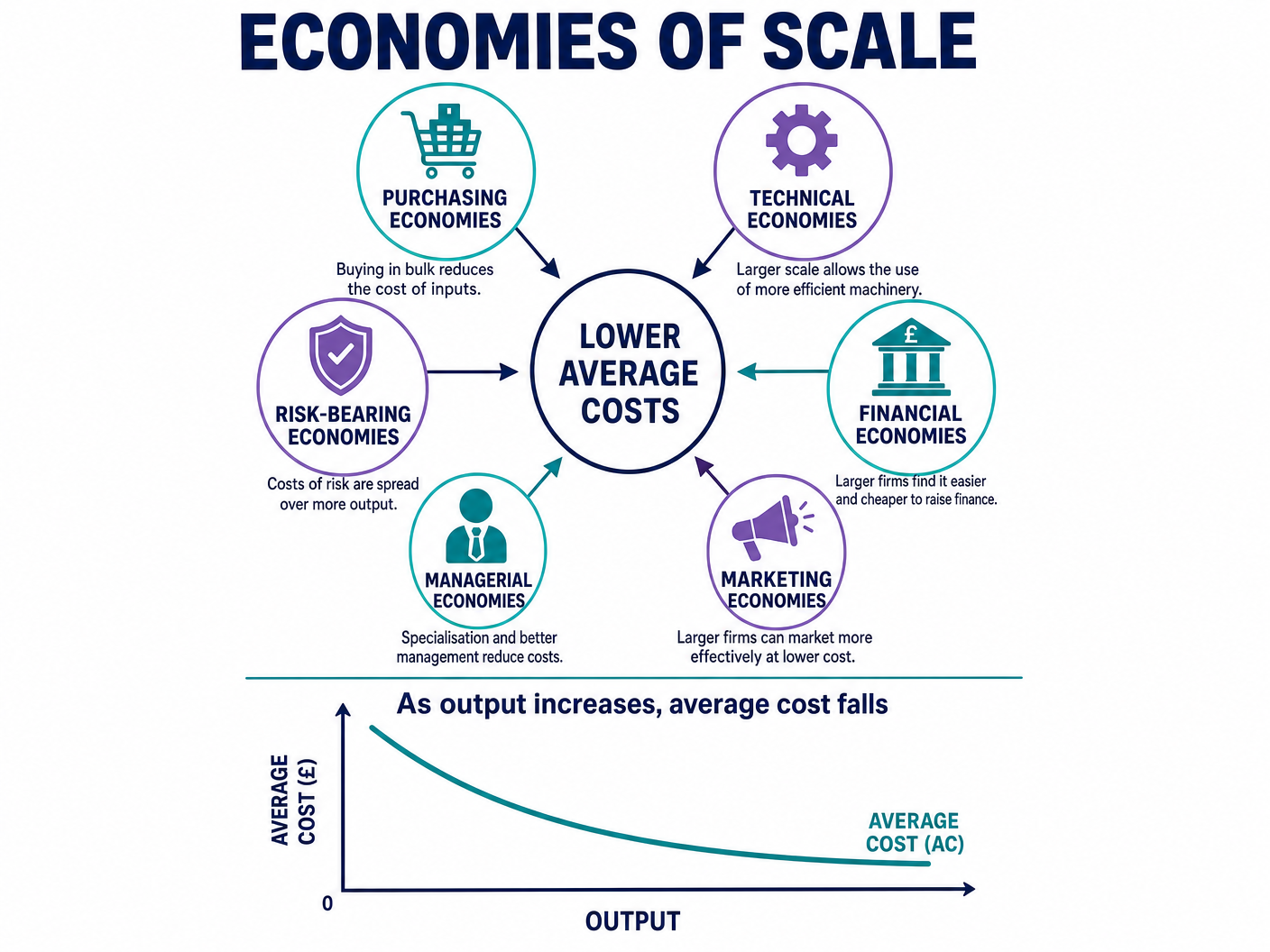
Economies of Scale
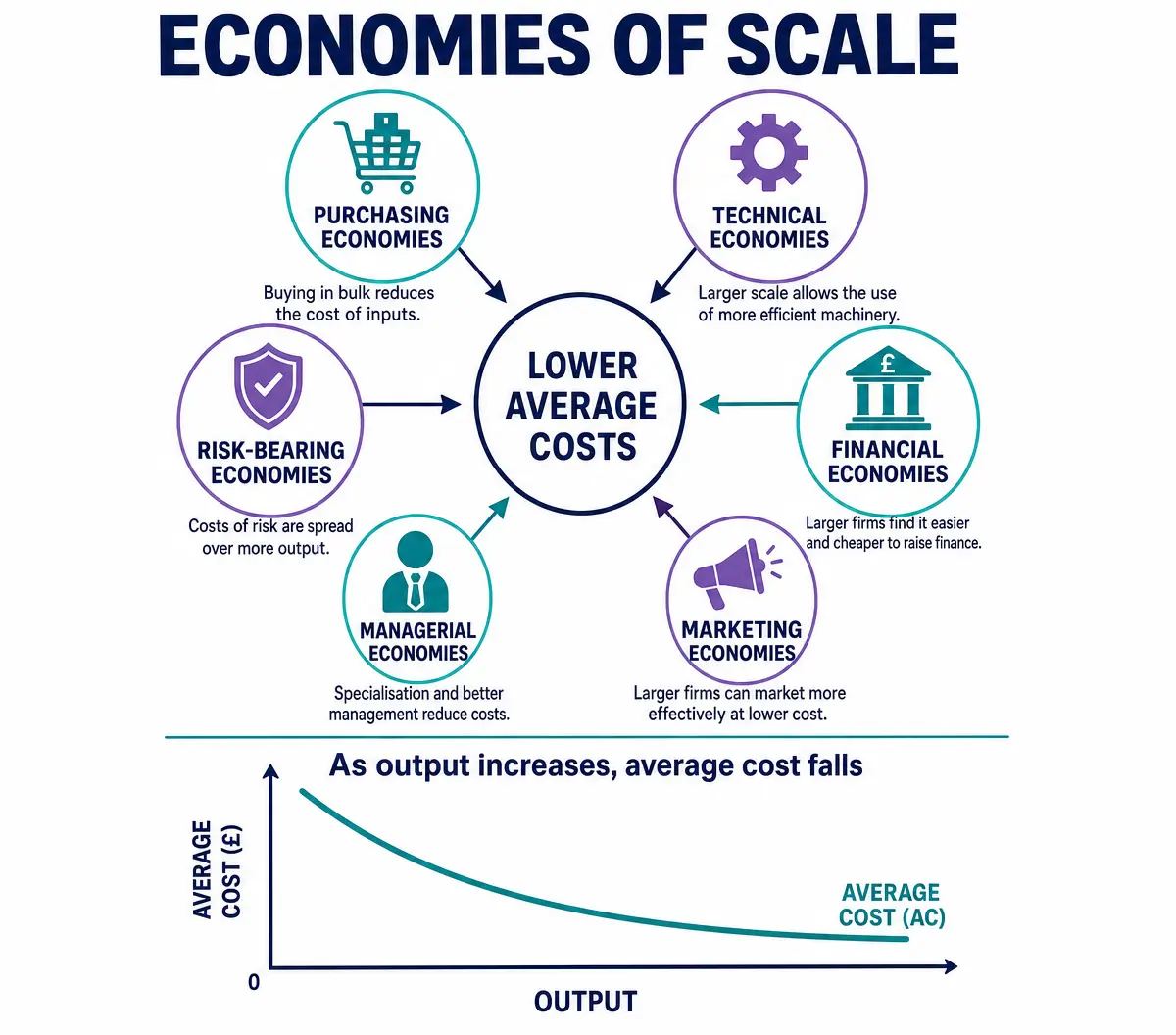
What it is: The reduction in average cost per unit as a business increases its scale of production.
Types: Purchasing (bulk buying), Technical (specialist machinery), Financial (cheaper borrowing), Managerial (specialist staff), Marketing (spreading advertising costs), Risk-bearing (diversification).
Exam Focus: Do not confuse total costs with average costs. Economies of scale lower the average cost. Top candidates will also evaluate diseconomies of scale—when a business becomes too large and average costs rise due to poor communication and coordination.
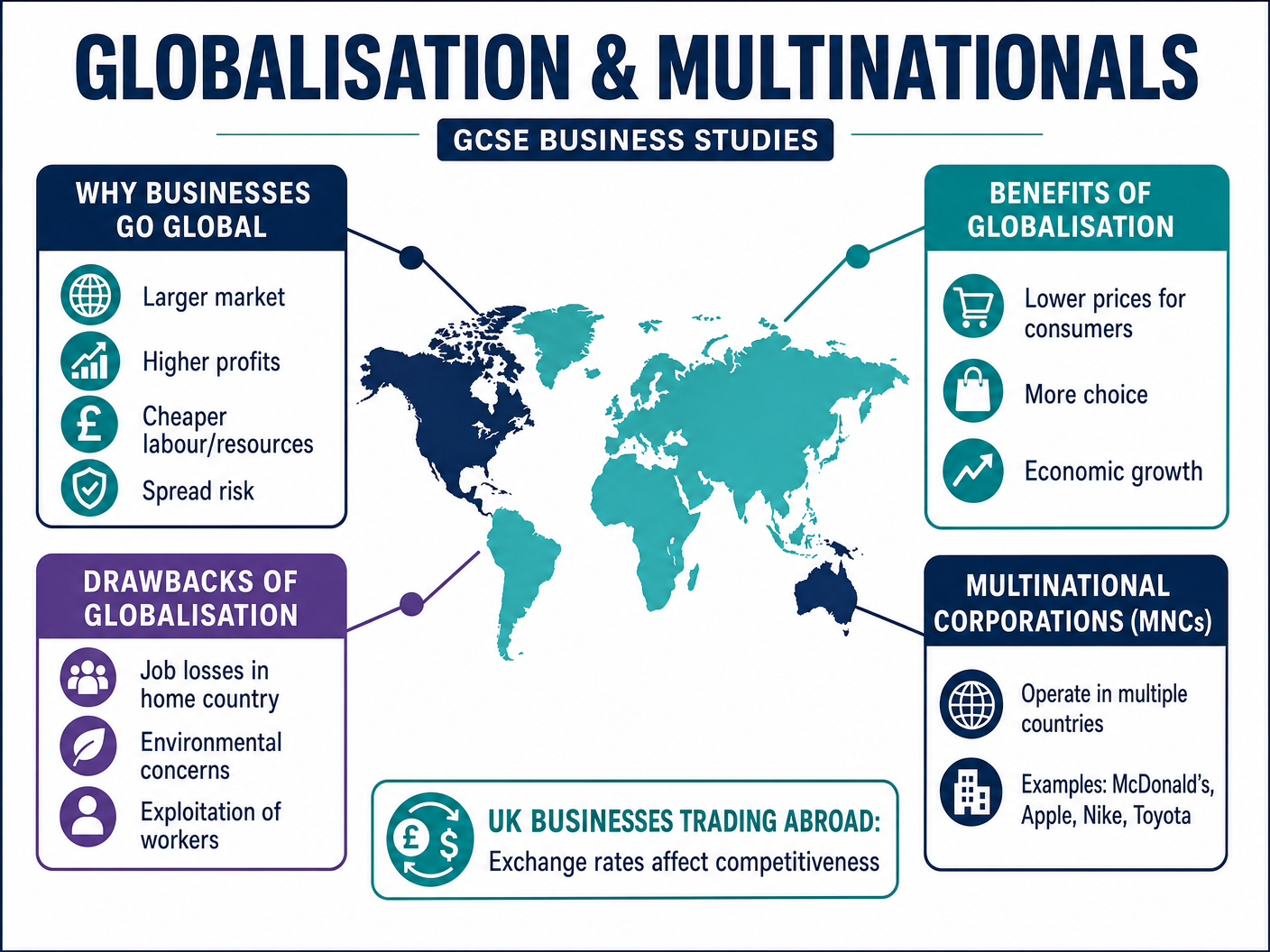
Globalisation and Multinational Corporations (MNCs)
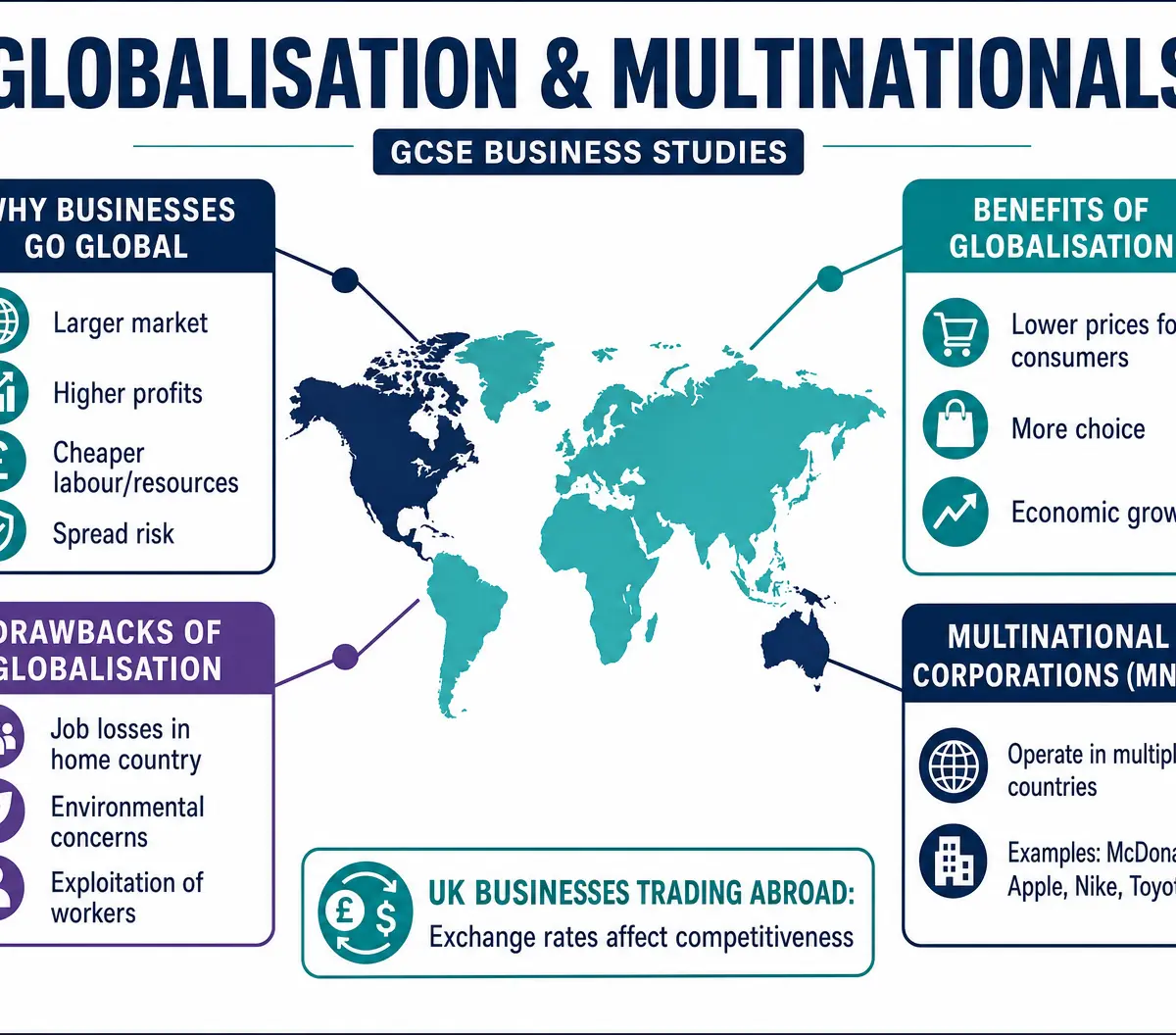
What it is: The increasing interconnectedness of global markets, driven by technology and reduced trade barriers. MNCs operate in multiple countries.
Exam Focus: Evaluate the impact of MNCs on host countries (job creation vs. exploitation) and understand how exchange rate fluctuations affect the competitiveness of businesses trading internationally.
Visual Resources
3 diagrams and illustrations
Interactive Diagrams
1 interactive diagram to visualise key concepts
Conceptual Flow Outline
Routes to Business Growth
Worked Examples
3 worked examples — open one to explore the question and available guidance.
Practice Questions
Test your understanding — click to reveal model answers
State two types of economies of scale. (2 marks)
Hint: Think of the mnemonic 'Please Tell Frank...'
Explain one disadvantage to a business of growing through a takeover. (3 marks)
Hint: Think about the employees and the systems of the two different companies.
Evaluate the impact of a multinational corporation (MNC) opening a new factory in a developing country. (9 marks)
Hint: Consider the impact on local employment, local businesses, and the environment.
Explain how purchasing economies of scale can lead to a competitive advantage. (3 marks)
Hint: Link bulk buying to average costs, and then to selling price.
A UK clothing retailer buys its stock from suppliers in the USA. Explain the impact on the retailer if the pound (£) depreciates against the dollar ($). (3 marks)
Hint: Use SPICED. If the pound is weak, what happens to imports?