OCR · GCSE · Business
Course version: J204 · Version from Sept 2019
Ethical and environmental considerations
Discover how modern businesses balance profit with principles. This essential guide covers the critical ethical and environmental decisions that shape corporate reputation, from Fairtrade sourcing to achieving Net Zero.
- 4 min read
- 3 worked examples
- 5 practice questions
- 6 key terms
Check what you remember
Read the wording for your board, then hide it and explain Ethics in your own words. Rough notes are fine. This is a self-check, with no mark or grade.
Reference: OCR
Moral principles that guide business behaviour, going beyond what is legally required.
Study Notes

Overview
This study guide explores the vital role of ethical and environmental considerations in modern business decision-making. As societal expectations evolve, businesses face increasing pressure to operate responsibly, not just profitably. Examiners expect candidates to understand the inherent conflict between ethical practices and short-term profit maximisation, and to evaluate how long-term benefits—such as brand loyalty and regulatory compliance—often justify these decisions. You will need to apply these concepts to real-world scenarios, understanding how businesses treat workers, source materials, and manage their carbon footprint.
Ethical Considerations
Treatment of Workers
Key Focus: Fair wages, safe conditions, and avoiding exploitation.
Business Impact: Ethical treatment often increases operational costs in the short term. However, it leads to higher employee retention, better motivation, and improved productivity. For example, fast fashion brands face severe reputational damage when exposed for using sweatshops.
Examiner Tip: Always link the treatment of workers back to business costs and staff turnover rates.
Treatment of Suppliers
Key Focus: Fair trade and responsible sourcing.
Business Impact: Using Fairtrade suppliers guarantees farmers a minimum price, protecting them from market volatility. While this raises raw material costs, businesses like Divine Chocolate use it as a unique selling point (USP) to attract ethically-minded consumers.
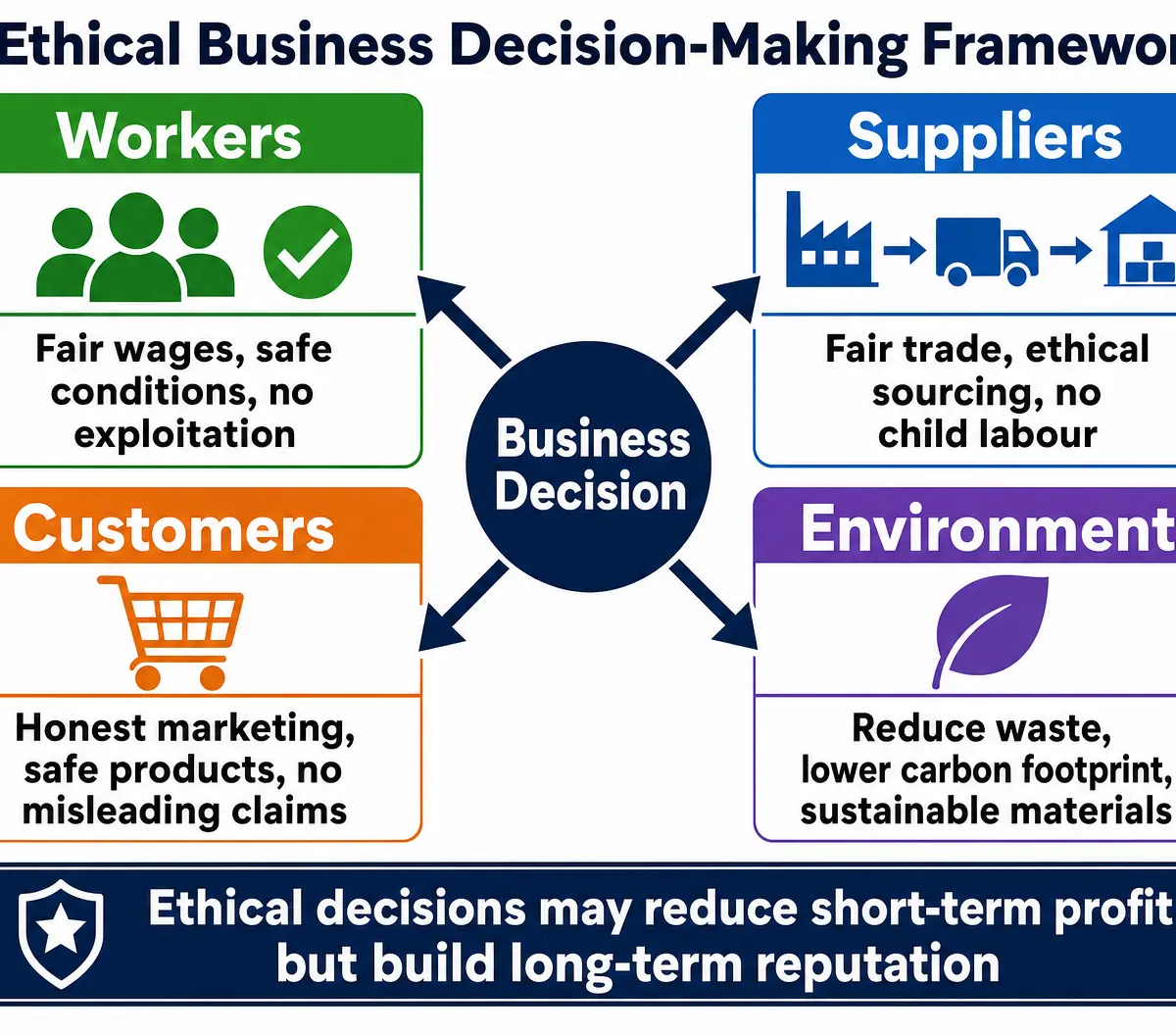
Treatment of Customers
Key Focus: Honest marketing and product safety.
Business Impact: The Advertising Standards Authority (ASA) penalises misleading claims. Ethical marketing builds long-term trust, which is crucial for repeat purchases and brand loyalty.
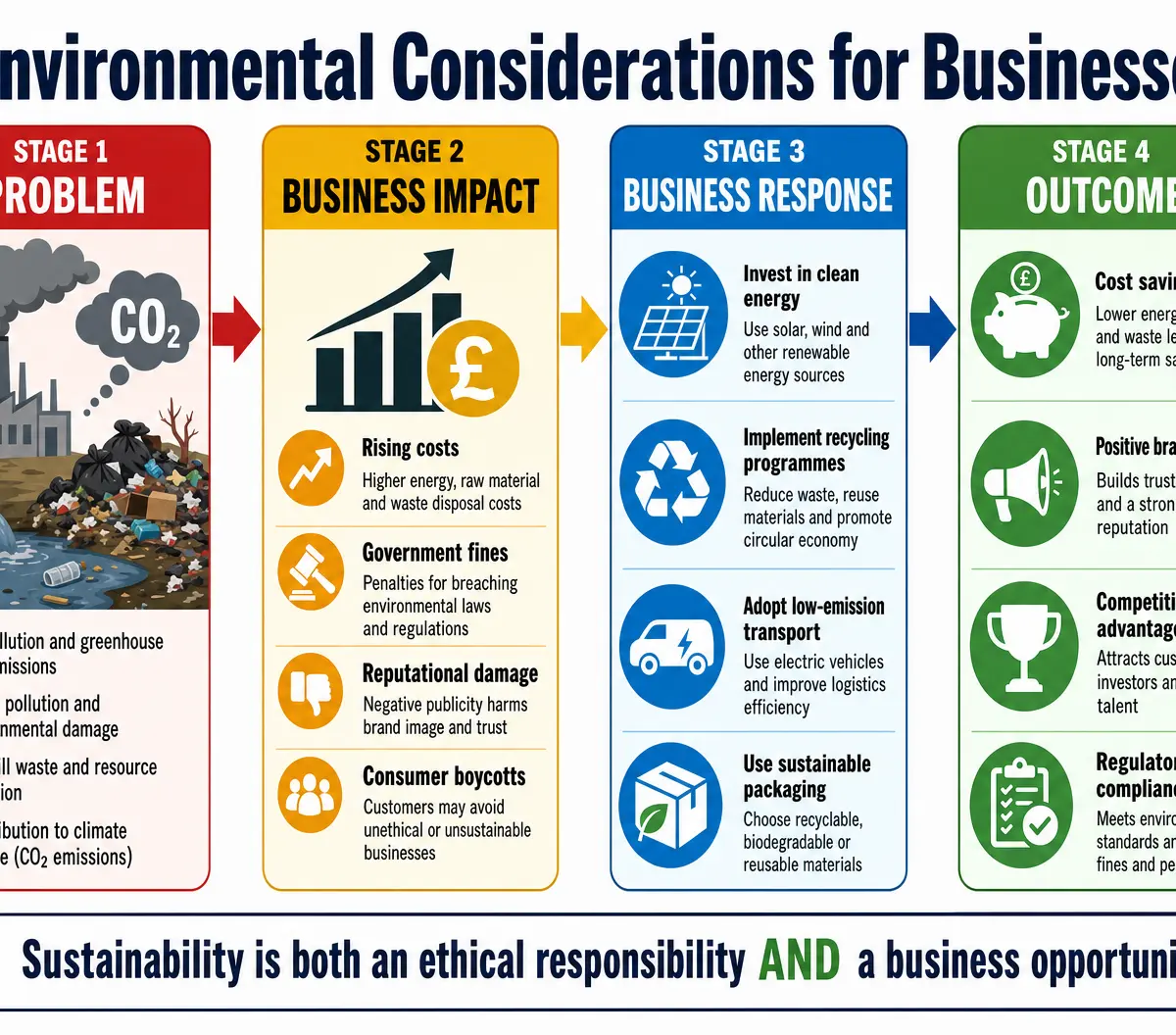
Environmental Considerations
Sustainability and Climate Change
Key Focus: Meeting today's needs without compromising future generations.
Business Impact: Businesses must reduce their carbon footprint to meet government Net Zero targets. This involves investing in renewable energy and sustainable materials. IKEA, for example, has committed to using only renewable and recycled materials by 2030.
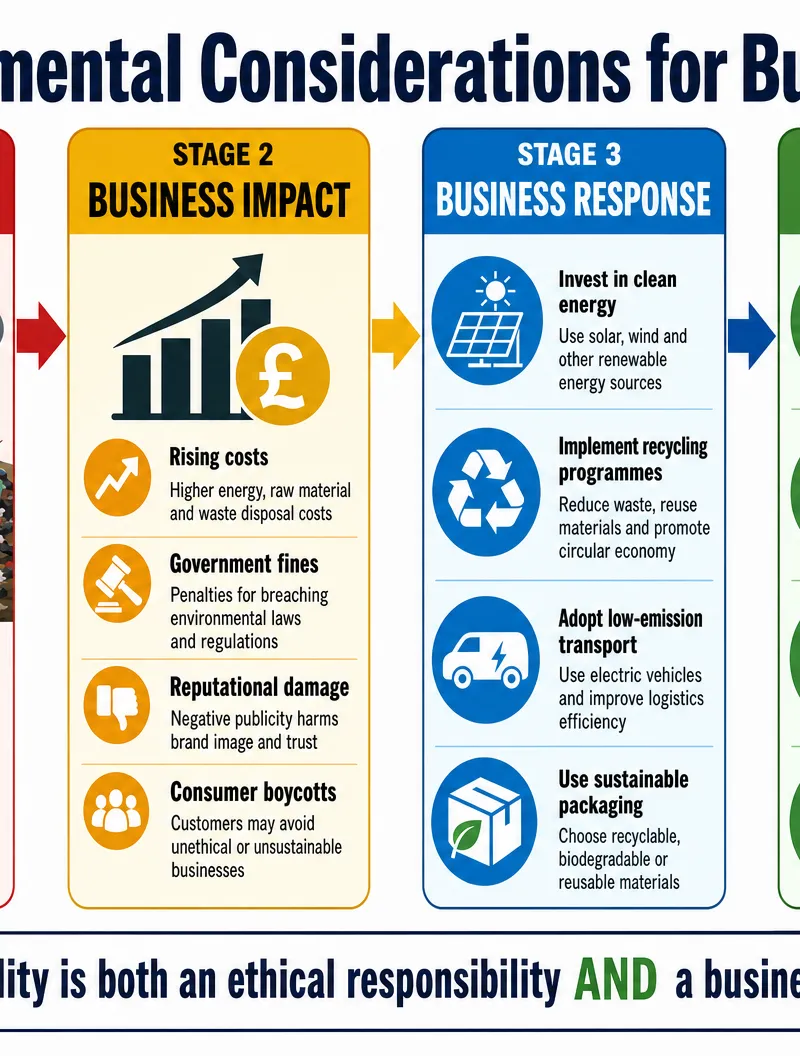
Waste Disposal and Pollution
Key Focus: The Three Rs (Reduce, Reuse, Recycle) and avoiding environmental damage.
Business Impact: Improper waste disposal can lead to hefty fines from the Environment Agency and severe public backlash. Conversely, reducing waste often leads to long-term cost savings through improved efficiency.
The Profit vs. Ethics Conflict
The Core Tension: The most common exam theme is the conflict between ethics and profit. Ethical decisions (like paying higher wages or using sustainable packaging) increase costs, potentially reducing short-term profit margins. However, examiners reward candidates who recognise that these decisions can build a strong brand reputation, attract investment, and ultimately lead to greater long-term profitability.
Audio Revision
Listen to our comprehensive podcast covering all these topics, complete with a quick-fire recall quiz:
Visual Resources
2 diagrams and illustrations

Interactive Diagrams
1 interactive diagram to visualise key concepts
Conceptual Flow Outline
The trade-off between ethical decisions, costs, and reputation.
Worked Examples
3 worked examples — open one to explore the question and available guidance.
Practice Questions
Try the question, then reveal an answer plan or example response
State two environmental considerations a manufacturing business should take into account.
Hint: Think about emissions and waste.
Explain how acting ethically can lead to a competitive advantage. (3 marks)
Hint: Link ethics to brand image and consumer choice.
Discuss the possible consequences for a business of being found to use child labour in its supply chain. (6 marks)
Hint: Consider both immediate and long-term consequences, focusing on reputation and sales.
Evaluate the impact of government environmental legislation on a delivery company. (9 marks)
Hint: Weigh the costs of compliance against the risks of non-compliance.
Explain one reason why a business might choose NOT to be ethical. (3 marks)
Hint: Focus on the financial implications.
Exam technique
How to turn what you know into marks
How to approach the question
Always link ethical/environmental actions back to business objectives (costs, revenue, profit, reputation).
How to structure your answer
- Essay questions
- Argument FOR → Argument AGAINST → Justified Conclusion weighing short-term vs long-term impacts.
- Source questions
- Apply the theory to the specific business mentioned in the case study.
- Explain questions
- Point → Evidence (Business Context) → Explanation → Impact on Business
Timing
Approximately 1 minute per mark, plus planning time for longer questions
Common pitfalls
- Giving vague examples instead of specific ones (e.g., Fairtrade, Net Zero).
- Failing to explain the trade-off with profit maximisation.
- Confusing ethical considerations (people) with environmental ones (planet).
What the command words want
- Discuss
- Look at both sides of an issue (advantages and disadvantages) (6 marks).
- Explain
- Provide a reason and develop it to show the consequence (3 marks).
- Evaluate
- Present a balanced argument and reach a supported judgement (9-12 marks).
- State/Identify
- Give a simple fact or reason (1 mark).
Watch or listen (optional)
Test your understanding of Ethical and environmental considerations
Active recall beats re-reading. Take an instant quiz now to test what you’ve learned and lock it into long-term memory.
A week of Premium from your first lesson · Then the free plan continues · No card, no charge