OCR · GCSE · Business
Course version: J204 · Version from Sept 2019
Finance
Master the numbers that keep businesses alive. This study guide breaks down the core concepts of Business Finance—from sources of funding and calculating profit, to understanding the critical difference between cash flow and profit.
- 5 min read
- 3 worked examples
- 5 practice questions
- 6 key terms
Check what you remember
Read the wording for your board, then hide it and explain Revenue in your own words. Rough notes are fine. This is a self-check, with no mark or grade.
Reference: OCR
The total amount of money brought in by a business's operations, measured over a set amount of time.
Study Notes

Overview
Finance is the lifeblood of any business. In your GCSE Business exam, the Finance topic is where you will pick up the majority of your quantitative skills marks (which make up 10% of the total marks across the paper). Examiners expect you to not only perform calculations accurately but to interpret what those numbers mean for a specific business context. This guide covers the role of the finance function, how businesses raise money, how they measure financial performance (revenue, costs, profit), break-even analysis, and the vital importance of cash flow management.
Listen to our revision podcast to reinforce these concepts:
Sources of Finance
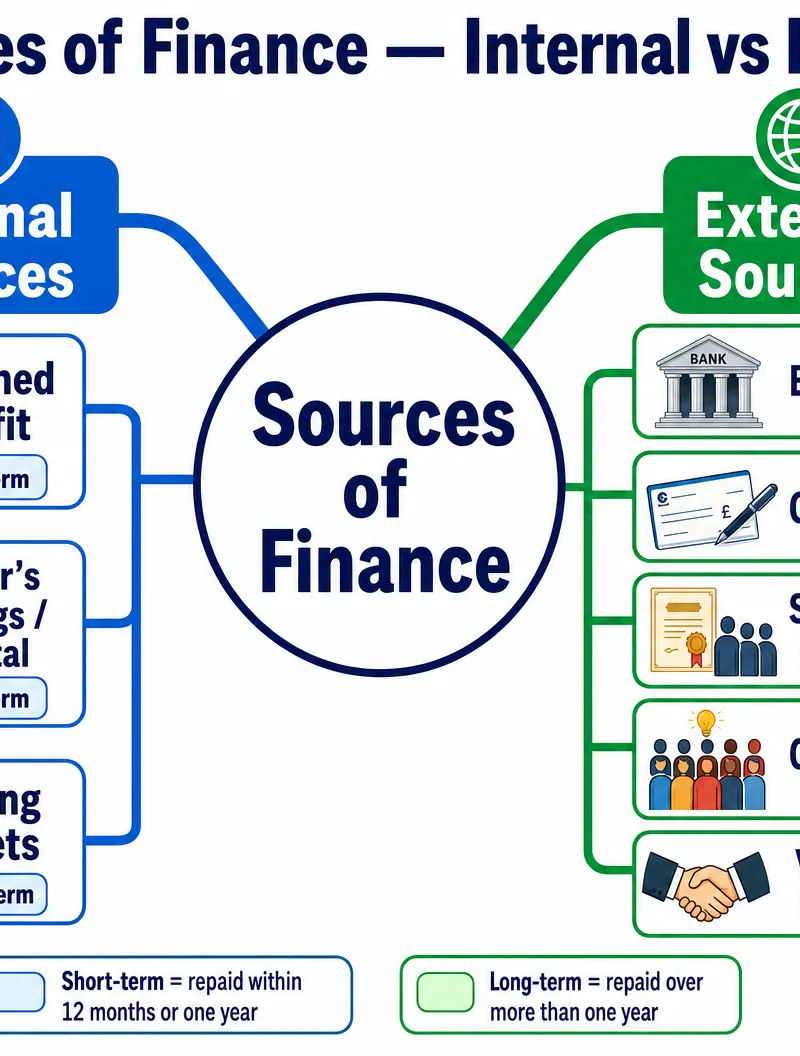
Businesses need finance for three main reasons: starting up, expanding, and managing day-to-day operations. Sources are split into internal (from within the business) and external (from outside).
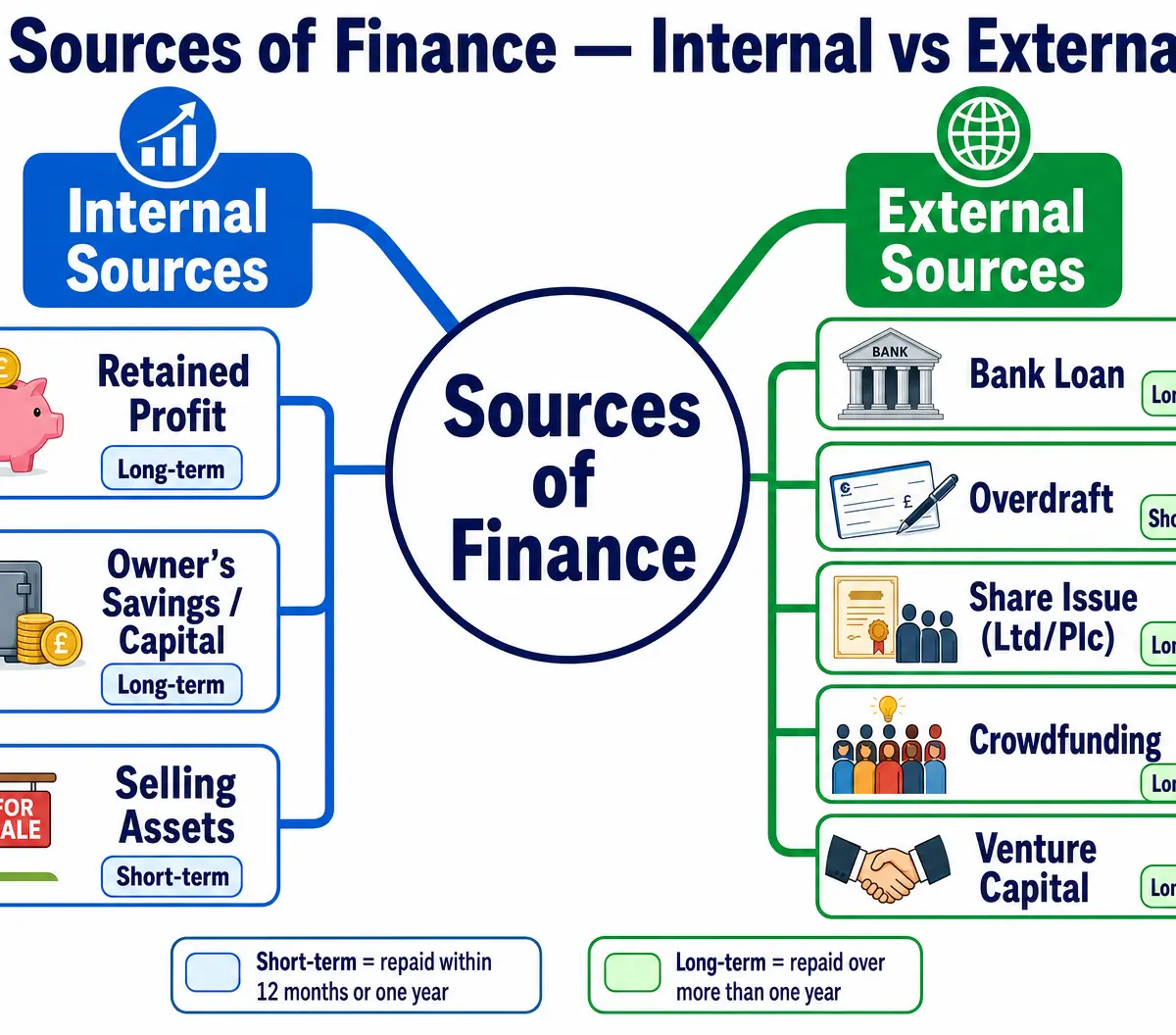
Internal Sources
Retained Profit: Profit kept in the business after paying owners and tax. It is cheap (no interest) and doesn't dilute control, but may not be sufficient for large projects.
Owner's Savings: Personal funds invested by the owner. Shows commitment, but risks personal loss.
Selling Assets: Raising cash by selling unneeded items (e.g., old machinery). Quick way to raise cash, but the business loses the asset.
External Sources
Bank Loan: A lump sum borrowed from a bank, repaid with interest over a set period. Good for long-term investments, but interest must be paid regardless of profit.
Overdraft: An agreement with the bank to spend more than is in the account, up to a limit. Highly flexible for short-term cash flow problems, but very expensive in interest if used long-term.
Share Issue: Selling shares in the business (only for Ltd and plc). Raises large amounts of capital without interest repayments, but dilutes ownership and control.
Crowdfunding: Raising small amounts of money from a large number of people, usually online. Good for testing the market, but requires a strong pitch and may not reach the target.
Venture Capital: Investment from specialist firms who provide funding and expertise in exchange for a share of the business. Excellent for high-growth startups, but involves giving up significant control.
Financial Performance
Revenue, Costs, and Profit
Revenue is the total money brought in by sales.
Formula: Revenue = Selling Price × Quantity Sold
Total Costs are the sum of fixed and variable costs.
Formula: Total Costs = Fixed Costs + (Variable Cost per Unit × Quantity Sold)
Profit is what remains after costs are deducted from revenue.
Formula: Profit = Total Revenue - Total Costs
Profitability Ratios
Examiners often ask you to calculate margins to compare performance over time or between businesses.
Gross Profit Margin: (Gross Profit ÷ Revenue) × 100
Net Profit Margin: (Net Profit ÷ Revenue) × 100
Average Rate of Return (ARR)
Used to evaluate investment projects by comparing the average annual profit to the initial cost.
Formula: ARR = (Average Annual Profit ÷ Cost of Investment) × 100
Break-Even Analysis
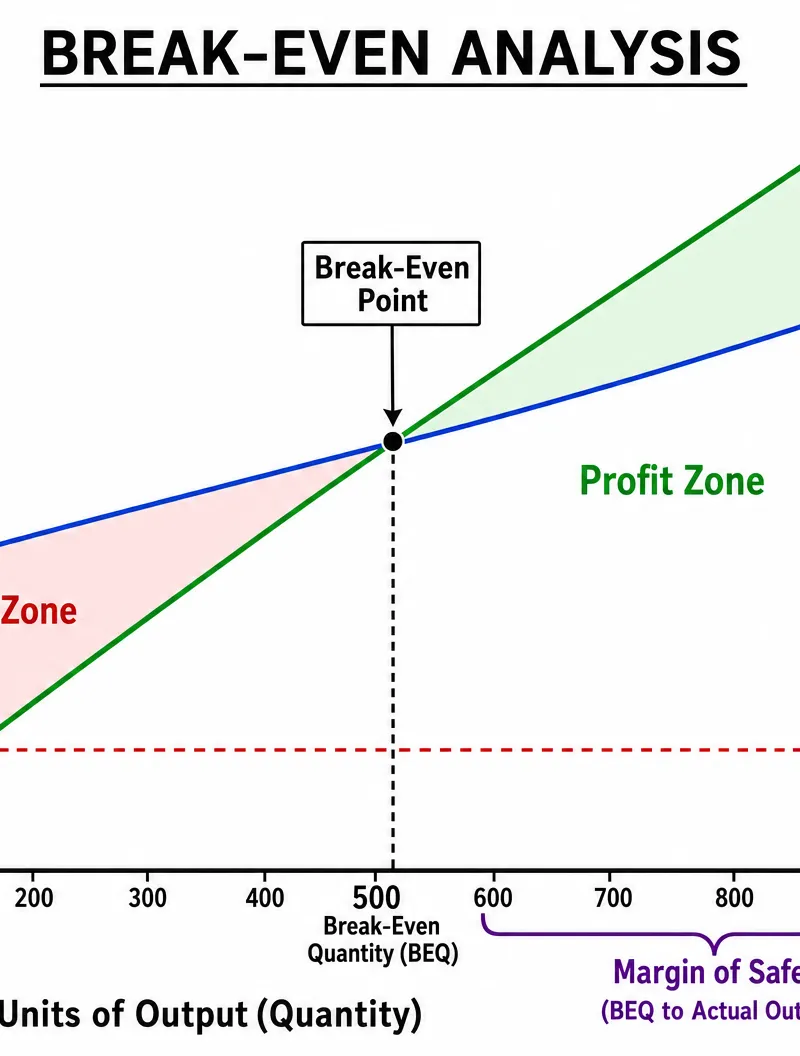
Break-even is the point where a business makes neither a profit nor a loss (Total Revenue = Total Costs).
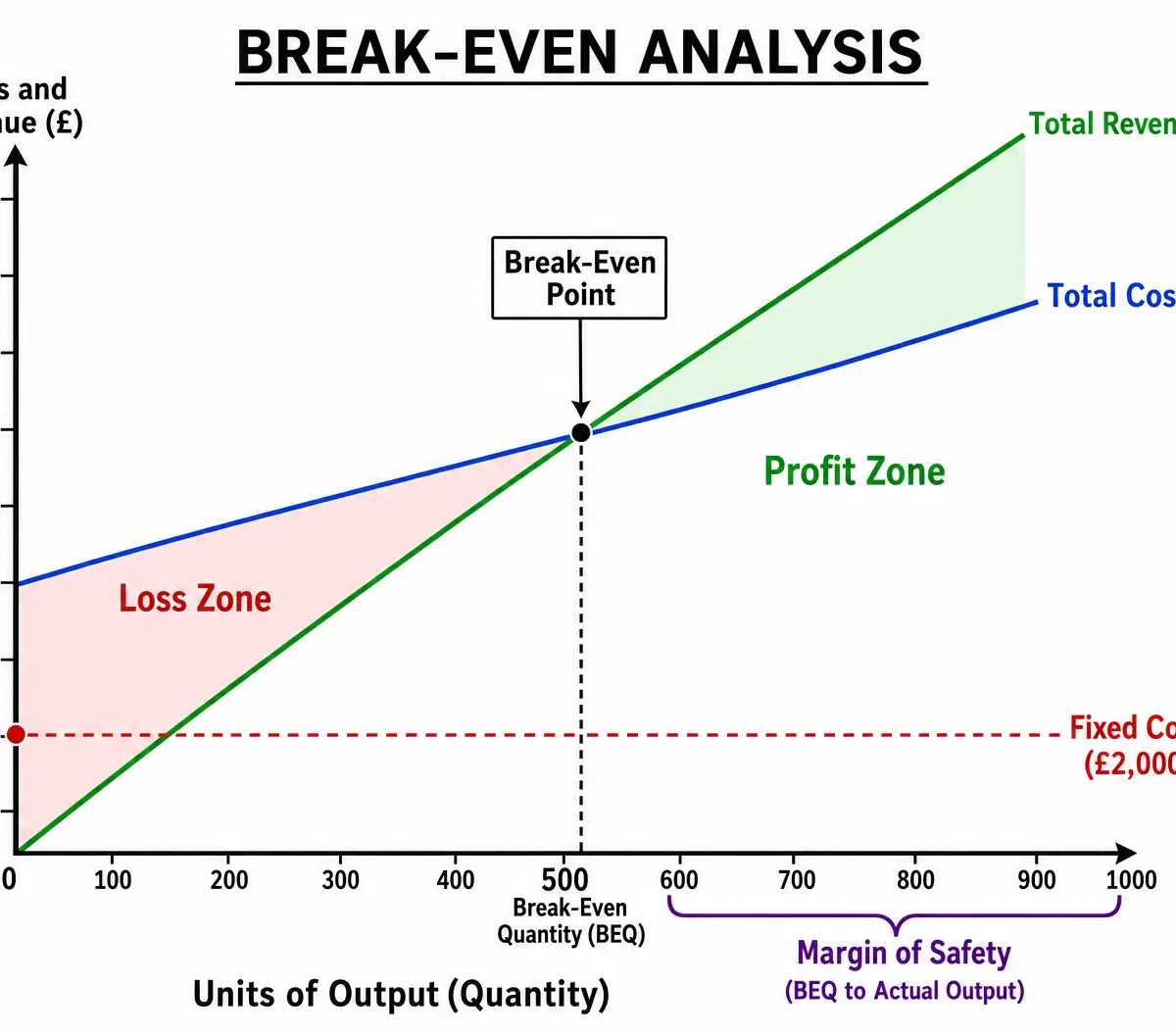
Formula: Break-Even Quantity = Fixed Costs ÷ Contribution per Unit
(Contribution per Unit = Selling Price - Variable Cost per Unit)
Margin of Safety: The difference between actual output and the break-even output. It shows how much sales can fall before the business makes a loss.
Cash Flow
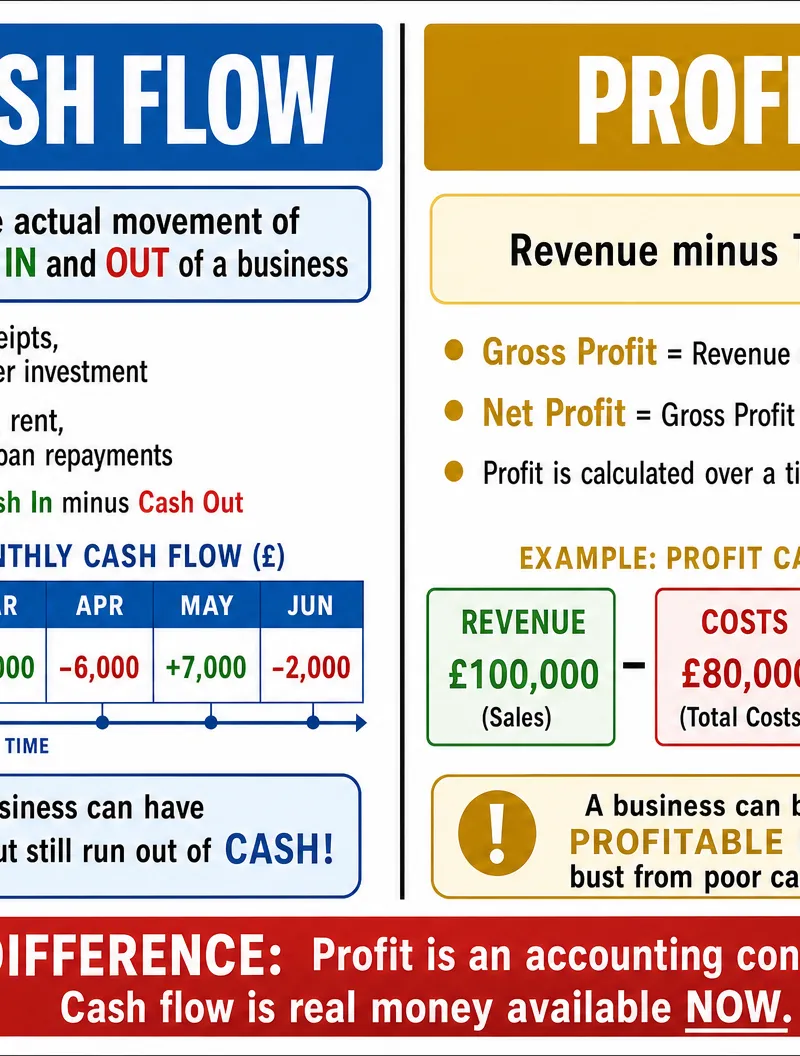
Cash flow is the movement of money in and out of the business. Cash flow is NOT the same as profit.
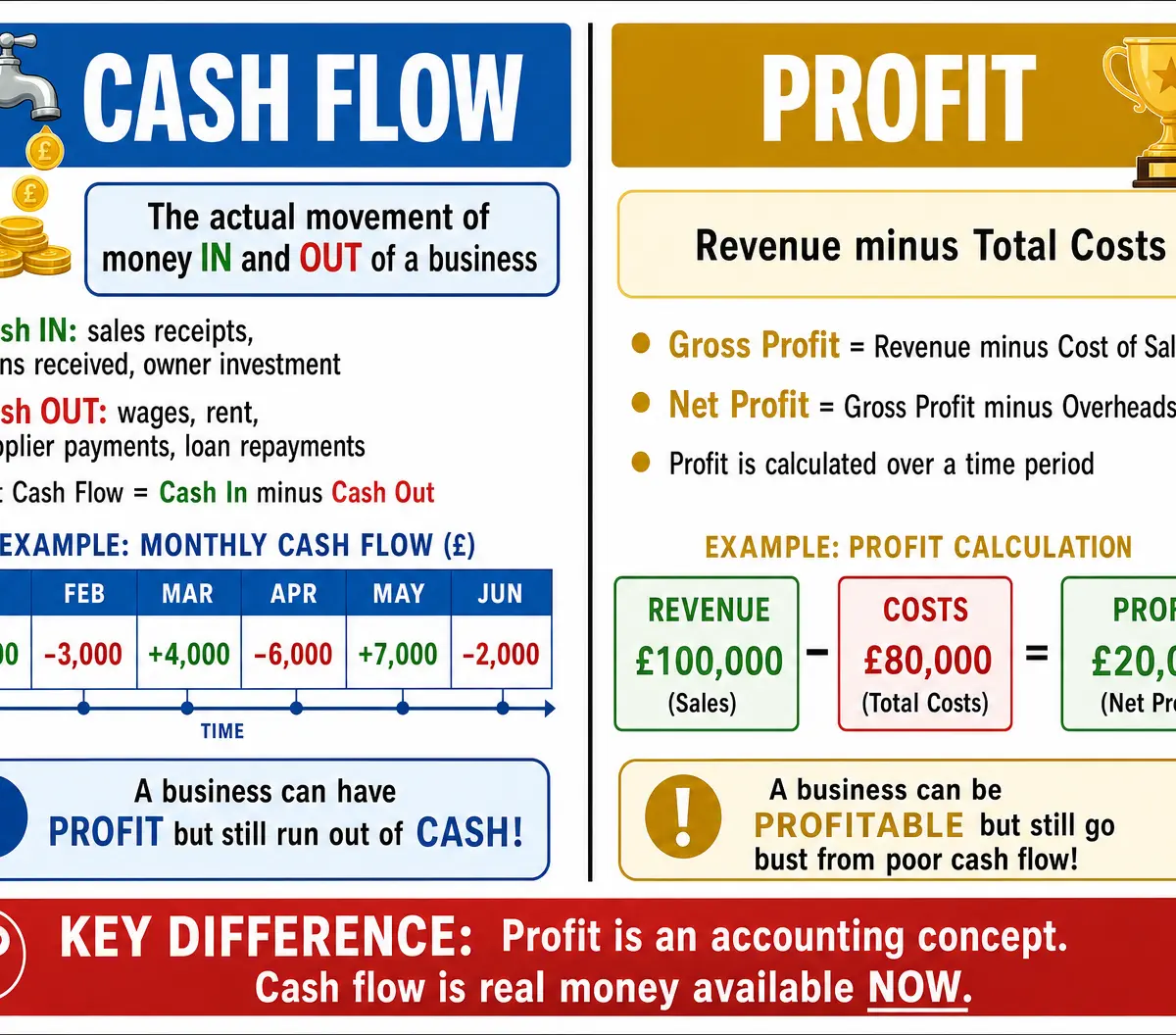
- Cash Inflows: Receipts, loans, owner investment.
- Cash Outflows: Wages, rent, supplier payments, loan repayments.
- Net Cash Flow:
Total Inflows - Total Outflows - Closing Balance:
Opening Balance + Net Cash Flow
Businesses fail due to poor cash flow (liquidity problems), even if they are profitable on paper. Cash flow forecasts help businesses predict future cash shortages and take action (e.g., arranging an overdraft, delaying payments to suppliers, or chasing debtors).
Visual Resources
3 diagrams and illustrations
Interactive Diagrams
1 interactive diagram to visualise key concepts
Conceptual Flow Outline
The relationship between Revenue, Costs, and Profit
Worked Examples
3 worked examples — open one to explore the question and available guidance.
Practice Questions
Try the question, then reveal an answer plan or example response
A local coffee shop has fixed costs of £2,000 per month. They sell coffees for £3 each, and the variable cost per coffee (beans, milk, cup) is £1. Calculate the break-even quantity per month. Show your working. (3 marks)
Hint: First calculate the contribution per unit, then divide fixed costs by the contribution.
Explain one reason why a cash flow forecast is important for a new business start-up. (3 marks)
Hint: Think about what a forecast helps a business spot in advance.
State two internal sources of finance. (2 marks)
Hint: Think of money generated from within the business itself.
A business invests £100,000 in new machinery. The machinery generates a total profit of £60,000 over 4 years. Calculate the Average Rate of Return (ARR). (4 marks)
Hint: Calculate the average annual profit first, then divide by the cost of investment.
Analyse the impact on a business of having a negative closing balance in its cash flow forecast. (6 marks)
Hint: Build a chain of reasoning: negative balance -> inability to pay -> consequences.
Exam technique
How to turn what you know into marks
How to approach the question
Always highlight the name, size, and type of business in the case study before answering.
How to structure your answer
- Explain questions
- Point, Context/Application, Explanation/Impact.
- Evaluate questions
- Option A (Pros/Cons in context) → Option B (Pros/Cons in context) → Justified Conclusion (It depends on...).
- Calculate questions
- Formula → Working → Final Answer with Units (£ or %).
Timing
Approximately 1 minute per mark, leaving time to read the stimulus material carefully.
Common pitfalls
- Confusing cash flow with profit.
- Failing to show working out for calculation questions.
- Giving generic answers without applying them to the specific business in the case study.
What the command words want
- Analyse
- Show the chain of events: 'This means that... which leads to...'
- Explain
- Make a point and develop it with a reason or consequence.
- Evaluate
- Look at both sides of an argument and make a supported judgement.
- Calculate
- Show working and state final answer clearly with correct units.
Watch or listen (optional)
Test your understanding of Finance
Active recall beats re-reading. Take an instant quiz now to test what you’ve learned and lock it into long-term memory.
A week of Premium from your first lesson · Then the free plan continues · No card, no charge