OCR · GCSE · Business
Course version: J204 · Version from Sept 2019
Influences on business
Master the external forces that shape business success or failure. This guide covers ethics, the environment, the economy, and globalisation — essential topics where examiners test your ability to apply knowledge to real-world scenarios.
- 4 min read
- 3 worked examples
- 5 practice questions
- 6 key terms
Check what you remember
Read the wording for your board, then hide it and explain Ethics in your own words. Rough notes are fine. This is a self-check, with no mark or grade.
Reference: OCR
The moral principles that guide how a business operates, going beyond what is strictly required by law.
Study Notes
Overview
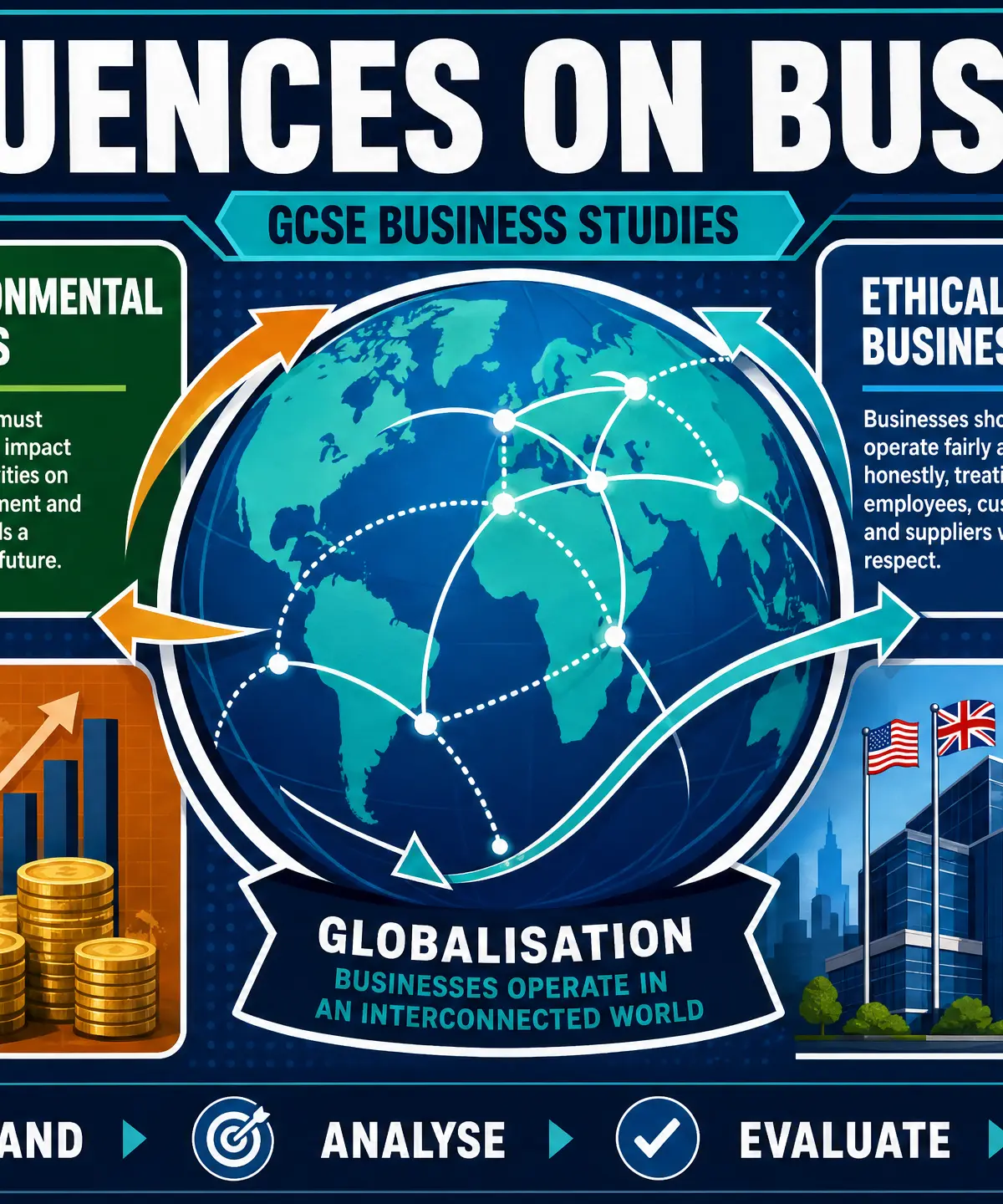
Businesses do not operate in a vacuum. They are constantly buffeted by external forces that they cannot control but must respond to. In this topic, examiners expect candidates to demonstrate a clear understanding of four key external influences: Ethical Considerations, Environmental Considerations, the Economic Climate, and Globalisation.
You will be assessed on your ability to not only identify these factors (AO1) but to explain their impact (AO2) and evaluate how businesses should respond (AO3). The most successful candidates are those who can balance the competing demands of these influences — for example, recognising that acting ethically may increase costs in the short term but build vital brand loyalty in the long term.
1. Ethical Considerations
Ethics in business refers to what is considered morally right and wrong. It goes beyond what is legally required. Examiners often reward candidates who recognise that ethical behaviour is a choice that carries both costs and benefits.
Treatment of Workers
Ethical businesses ensure fair pay (often above the minimum wage, such as the Real Living Wage), safe working conditions, and reasonable hours.
- Impact: Increases costs but reduces staff turnover, improves motivation, and boosts productivity.
Treatment of Suppliers
This involves paying a fair price and paying on time.
- Example: The Fairtrade movement ensures farmers in developing countries receive a guaranteed minimum price.
Marketing Decisions
Ethical marketing avoids misleading claims, targeting vulnerable groups (like children), or using offensive stereotypes.
2. Environmental Considerations
Businesses have a significant impact on the natural environment. Examiners expect candidates to understand how businesses can operate sustainably.
Key Areas of Focus
- Sustainability: Using resources in a way that does not deplete them for future generations (e.g., using renewable energy).
- Waste Disposal: Reducing packaging and ensuring waste is recycled or disposed of legally.
- Pollution: Minimising air, water, and noise pollution from manufacturing processes.
- Climate Change: Reducing carbon emissions to help combat global warming.
Examiner Tip: Always consider the trade-off. Becoming environmentally friendly often requires significant initial investment (e.g., installing solar panels), but it can lead to long-term cost savings and appeal to environmentally conscious consumers.
3. The Economic Climate
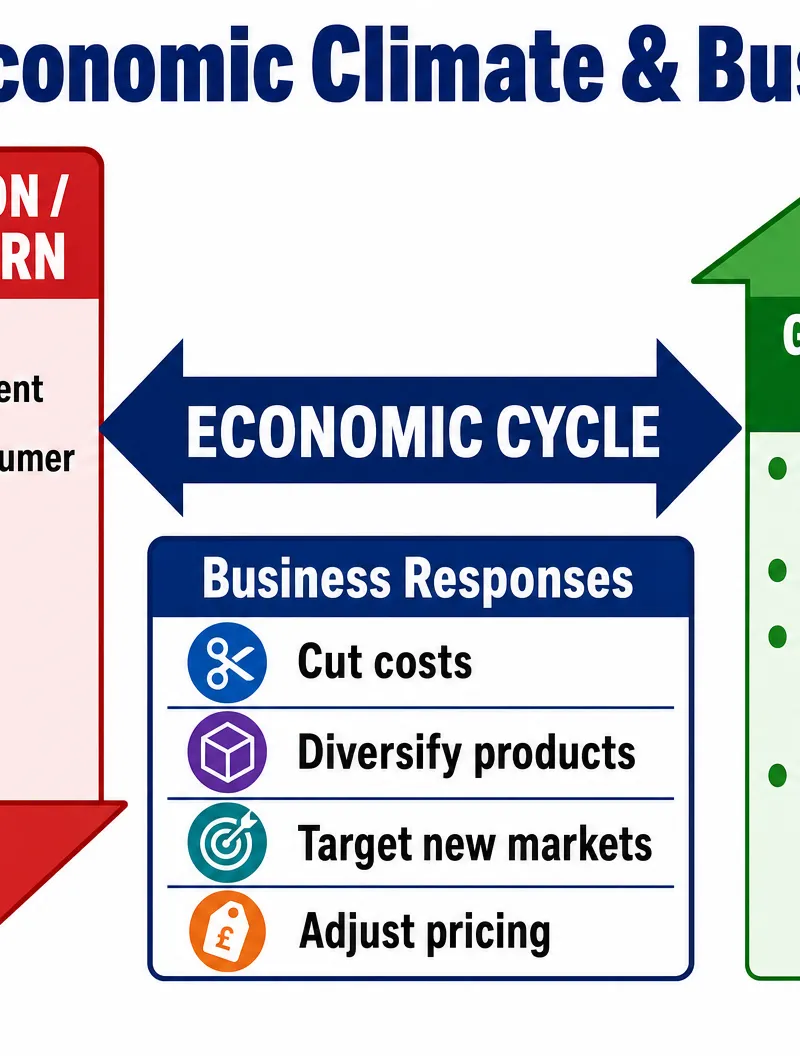
The economic climate refers to the overall state of the economy. The two most critical factors you must understand are consumer income and unemployment.
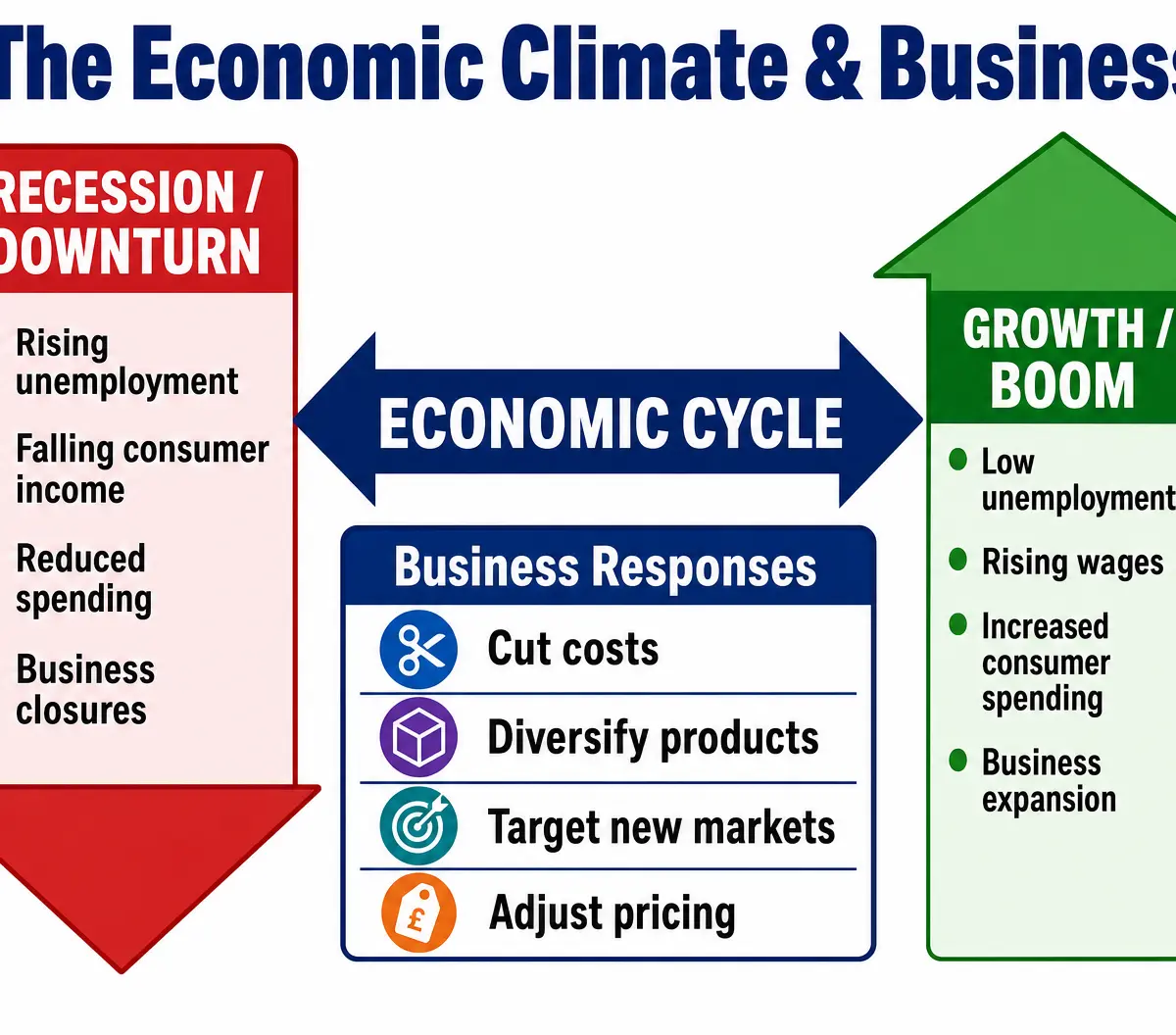
Economic Growth / Boom
- Characteristics: Low unemployment, rising wages, high consumer confidence.
- Business Impact: Consumers have more disposable income. Demand for luxury (income-elastic) goods rises. Businesses can expand, increase prices, and launch new products.
Economic Downturn / Recession
- Characteristics: Rising unemployment, falling wages, low consumer confidence.
- Business Impact: Consumers have less disposable income. They switch to cheaper alternatives (value brands). Businesses may need to cut costs, reduce prices, or offer promotions to survive.
4. Globalisation
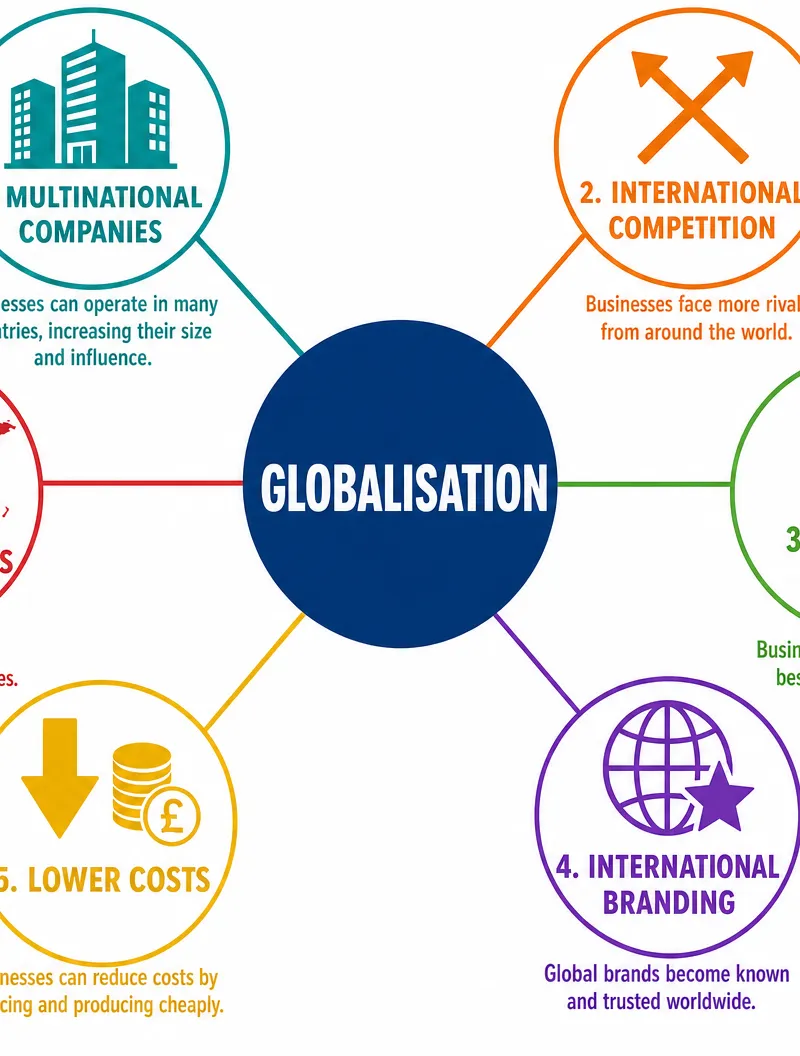
Globalisation is the process by which the world is becoming increasingly interconnected as a result of massively increased trade and cultural exchange.
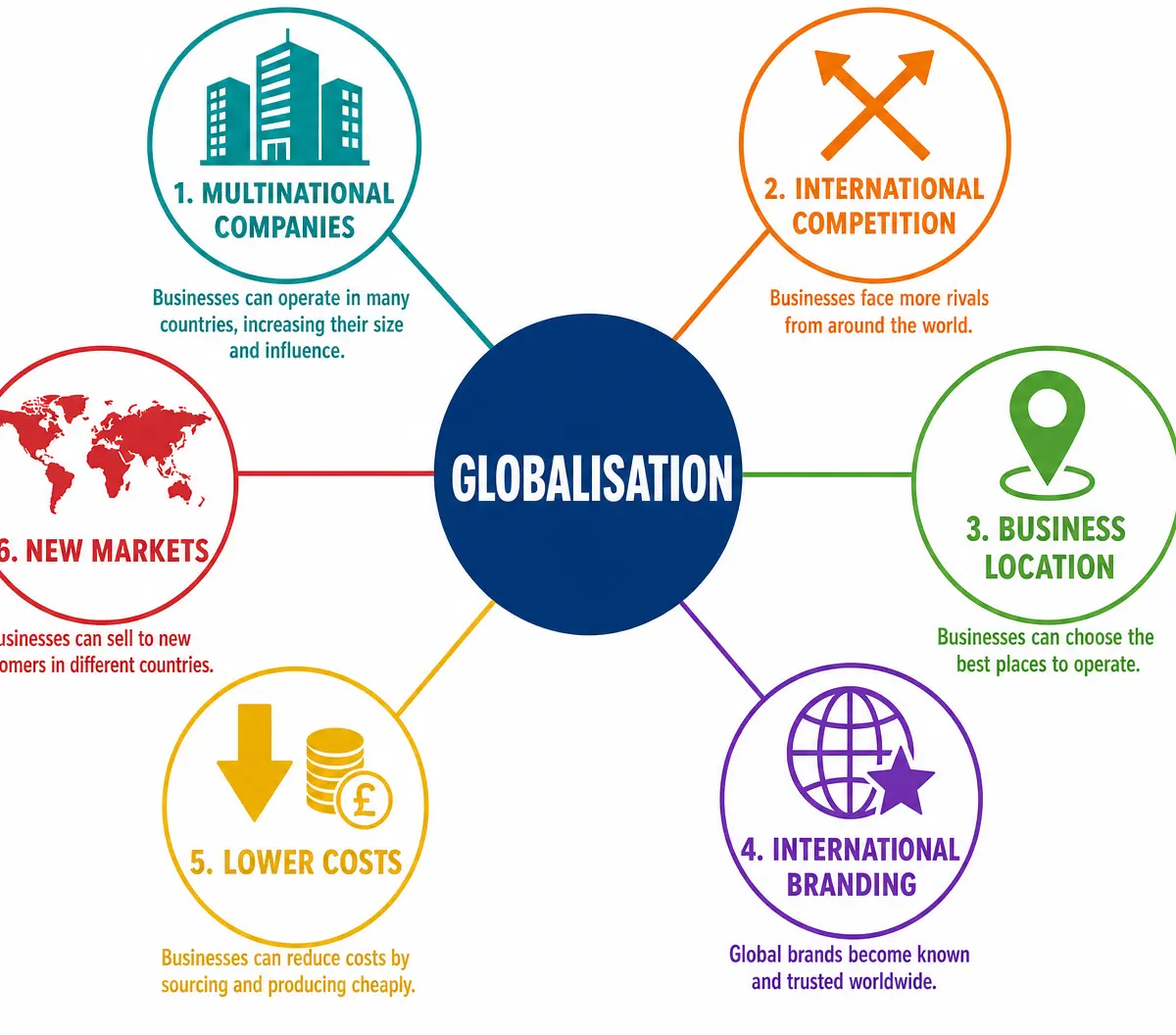
Key Features
- Multinational Companies (MNCs): Businesses that operate in more than one country (e.g., Apple, McDonald's).
- Business Location: Globalisation allows businesses to locate operations where costs are lowest (offshoring) or where market potential is highest.
- International Branding: Creating a brand identity that is recognised worldwide.
- International Competition: Domestic businesses face increased competition from foreign firms, forcing them to keep prices low and quality high.
Podcast Revision
Listen to our 10-minute revision podcast covering all these topics, including examiner tips and a quick-fire recall quiz.
Worked Examples
3 worked examples — open one to explore the question and available guidance.
Practice Questions
Try the question, then reveal an answer plan or example response
State two environmental issues a manufacturing business must consider. (2 marks)
Hint: Think about what comes out of a factory and what goes into it.
Explain how an increase in unemployment might affect a business selling luxury holidays. (3 marks)
Hint: Link unemployment to disposable income, and then to demand for luxury goods.
Analyse the benefits to a UK business of becoming a multinational company. (6 marks)
Hint: Think about both costs (production) and revenues (new markets).
Evaluate whether a supermarket chain should prioritise ethical suppliers over the cheapest suppliers. (9 marks)
Hint: Balance the reputational benefits against the cost implications, and consider the target market of the supermarket.
A smartphone manufacturer is deciding whether to relocate its factory from the UK to a country with fewer environmental regulations. Recommend whether they should make this move. (12 marks)
Hint: Consider short-term cost savings vs long-term reputational damage and global trends.
Exam technique
How to turn what you know into marks
How to approach the question
Always underline the command word and the specific business context in the question before writing.
How to structure your answer
- Analyse questions
- Provide a balanced view. Develop chains of reasoning showing cause and effect.
- Explain questions
- State the point, explain the reason (Because...), and explain the consequence for the business (Therefore...).
- Evaluate questions
- Introduction, Point for, Point against, Supported Conclusion with a 'It depends on...' judgement.
Timing
Aim for 1 minute per mark. For a 12-mark question, spend 2 minutes planning and 10 minutes writing.
Common pitfalls
- Failing to apply knowledge to the specific business mentioned in the scenario.
- Confusing ethical issues (people) with environmental issues (planet).
- Writing a conclusion that just repeats the previous paragraphs without adding a final judgement.
What the command words want
- Analyse
- Examine in detail, showing causes and consequences.
- Explain
- Make a point and develop it using connective words like 'leading to' or 'resulting in'.
- State / Identify
- Short, direct answer. No explanation needed.
- Evaluate / Justify
- Weigh up the pros and cons and make a final, supported decision.
Watch or listen (optional)
Test your understanding of Influences on business
Active recall beats re-reading. Take an instant quiz now to test what you’ve learned and lock it into long-term memory.
A week of Premium from your first lesson · Then the free plan continues · No card, no charge