OCR · GCSE · Business
Course version: J204 · Version from Sept 2019
Operations
Master the engine room of business! Operations covers everything from how products are made to how they reach the customer. This guide breaks down production methods, quality management, and supply chains to help you secure those crucial marks in your GCSE Business exam.
- 4 min read
- 3 worked examples
- 5 practice questions
- 6 key terms
Check what you remember
Read the wording for your board, then hide it and explain Job Production in your own words. Rough notes are fine. This is a self-check, with no mark or grade.
Reference: OCR
Producing one-off, bespoke items to meet the specific needs of a customer.
Study Notes
Overview
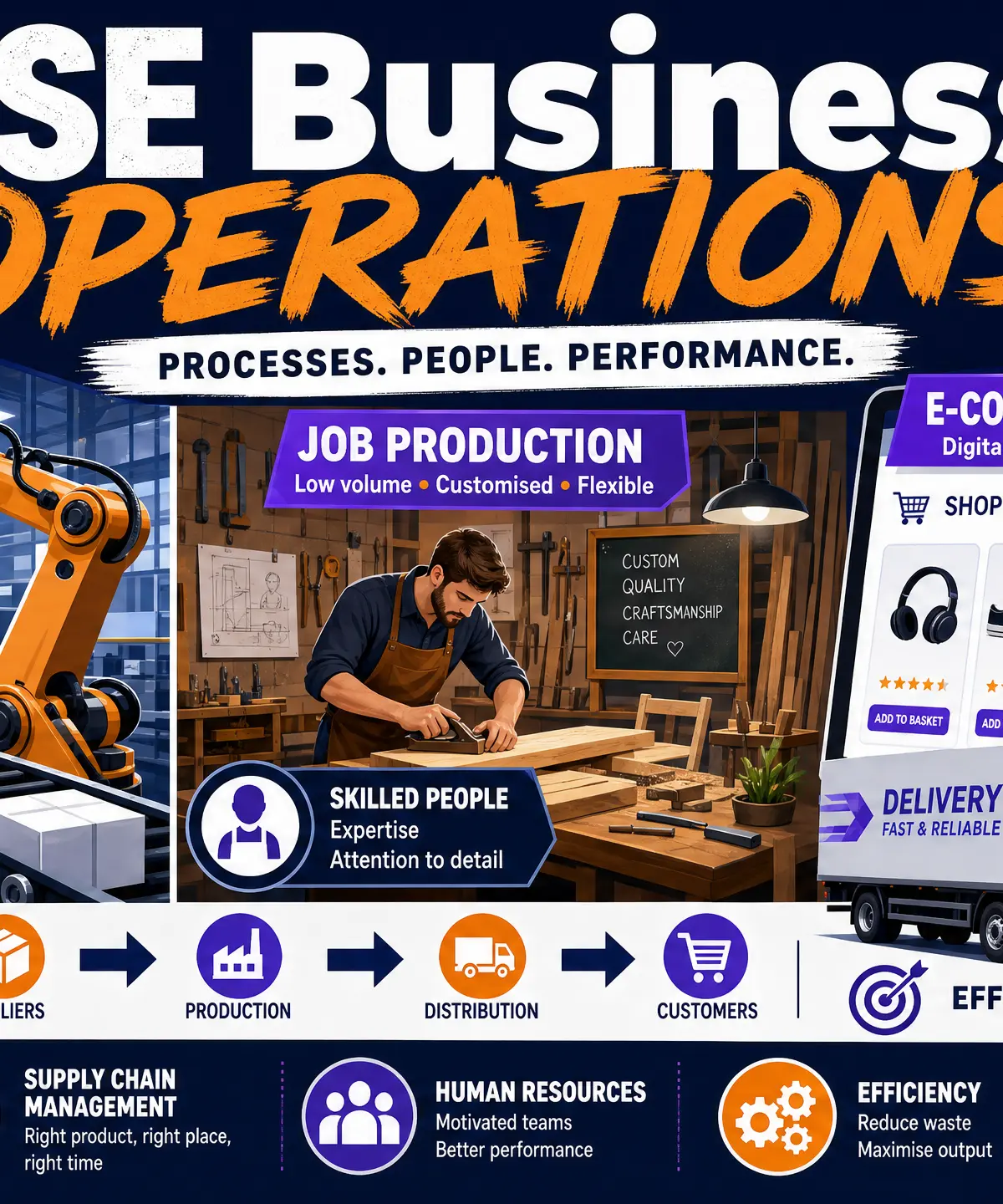
Operations is the functional area of a business responsible for producing goods and providing services. Examiners frequently test this topic because it connects deeply with other areas: efficient operations lower costs (Finance), high-quality products build reputation (Marketing), and new technology changes workforce needs (Human Resources). This study guide covers the core concepts you need to know, from choosing the right production method to managing quality and navigating the supply chain.
Listen to our revision podcast for a complete overview:
Production Methods
Businesses must choose the most appropriate way to produce their goods. Examiners expect you to understand the trade-offs between cost, flexibility, and scale.
Job Production
What it is: Producing one unique item at a time to a customer's specific requirements.
Key Features: Highly skilled labour, high unit cost, bespoke output.
Example: A custom-tailored suit or a unique wedding cake.
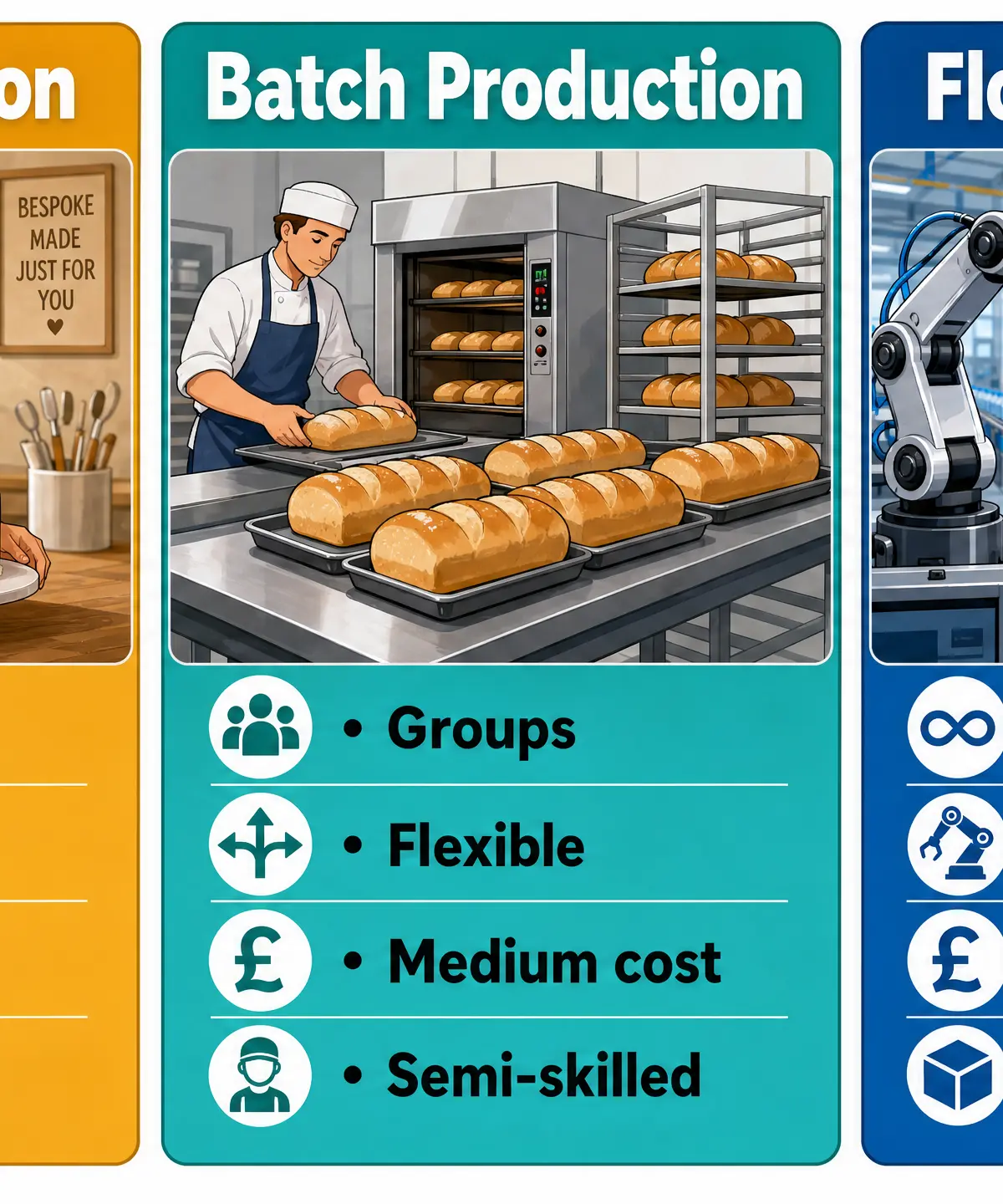
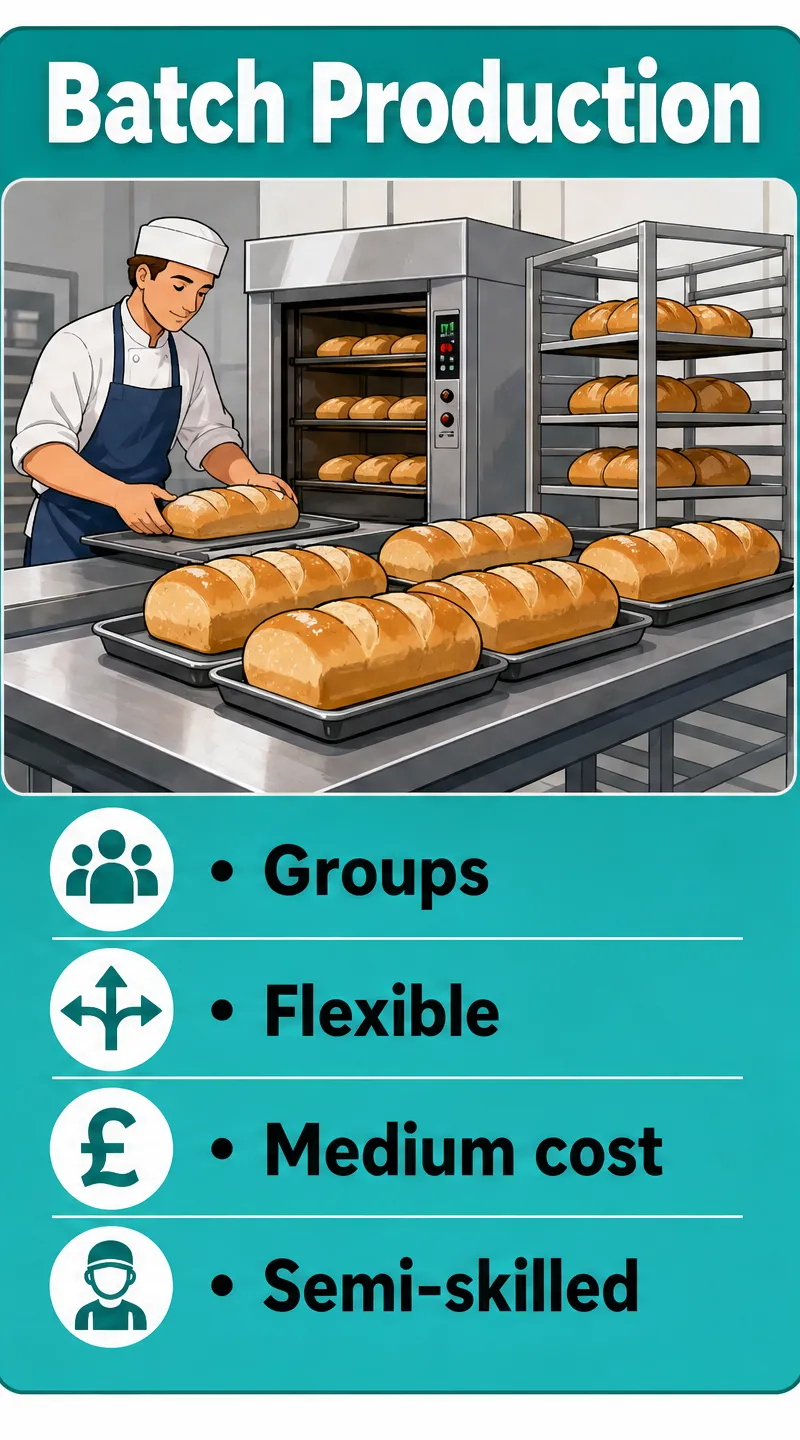
Batch Production
What it is: Producing a set number of identical items before switching to a different product.
Key Features: Semi-skilled labour, flexible, requires holding stock.
Example: A bakery making 100 white loaves, then switching to 100 wholemeal loaves.
Flow Production
What it is: Continuous, automated production of identical items on an assembly line.
Key Features: Low unit cost, high setup cost, inflexible.
Example: Car manufacturing or bottling plants.
Quality Management
Quality is essential for reputation and customer retention. You must understand the difference between controlling quality and assuring it.
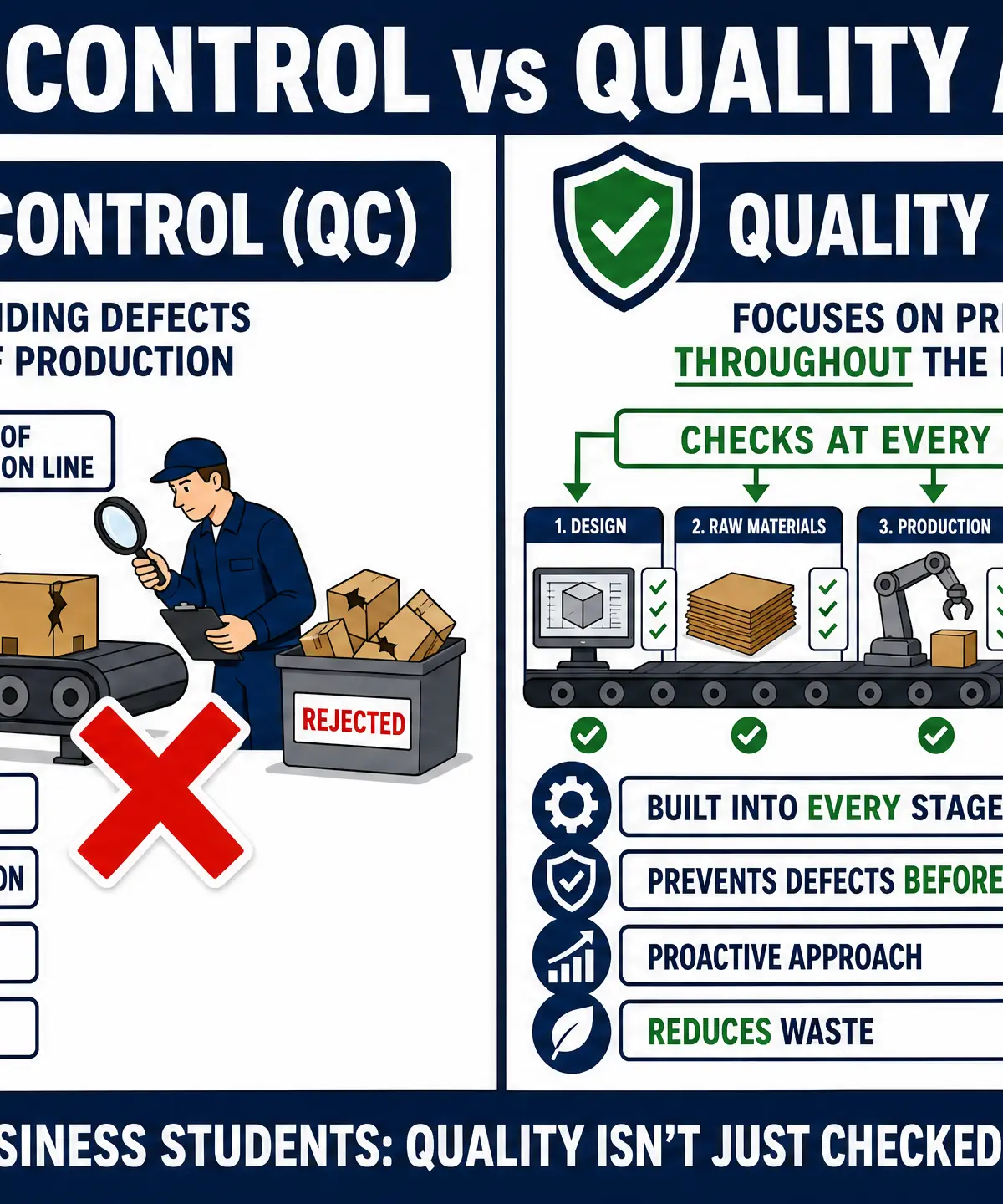
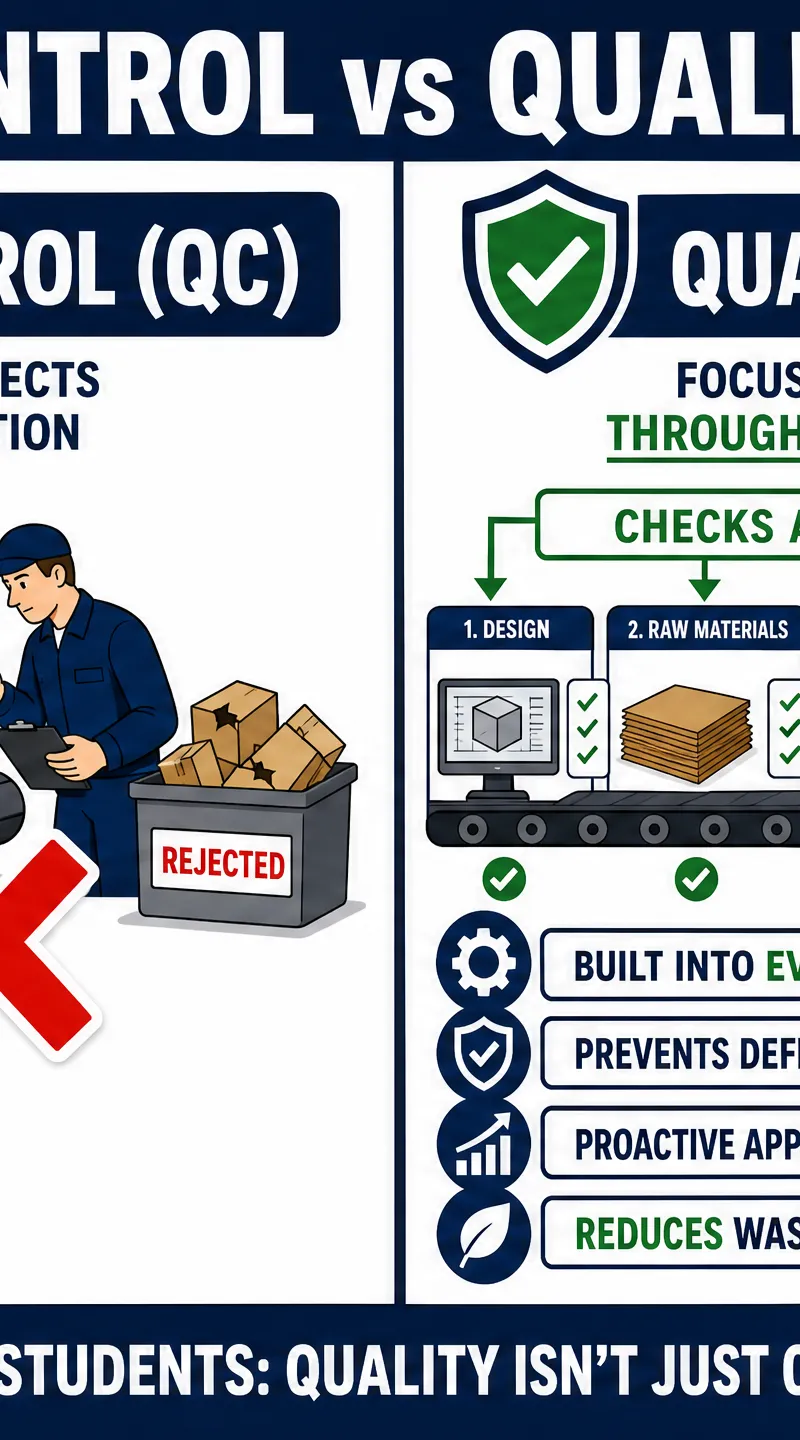
Quality Control (QC)
What it is: Checking finished products at the END of the production process.
Impact: Finds defects after they occur. Can lead to high waste as faulty products must be discarded or reworked.
Quality Assurance (QA)
What it is: Building quality checks into EVERY stage of the production process.
Impact: Prevents defects before they occur. Reduces waste and builds a culture of quality throughout the business.
Customer Service and Sales
How a business sells its products and supports its customers is a key operational decision.
Methods of Selling
- Face-to-face: Personalised but expensive.
- Telesales: Wider reach but often unpopular with consumers.
- E-commerce: Global reach, 24/7 sales, lower overheads, but highly competitive.
After-Sales Service
Why it matters: Retaining existing customers is cheaper than finding new ones. Excellent after-sales service (warranties, support, easy returns) builds brand loyalty and positive word-of-mouth.
Business Location
Choosing where to locate a business involves balancing several factors:
- Proximity to Market: Crucial for retail and services.
- Proximity to Raw Materials: Important for bulk-reducing industries (e.g., paper manufacturing).
- Labour Supply: Access to workers with the right skills.
- Infrastructure: Transport links and digital connectivity.
- Costs: Rent and rates vary significantly by location.
Supply Chain and Procurement
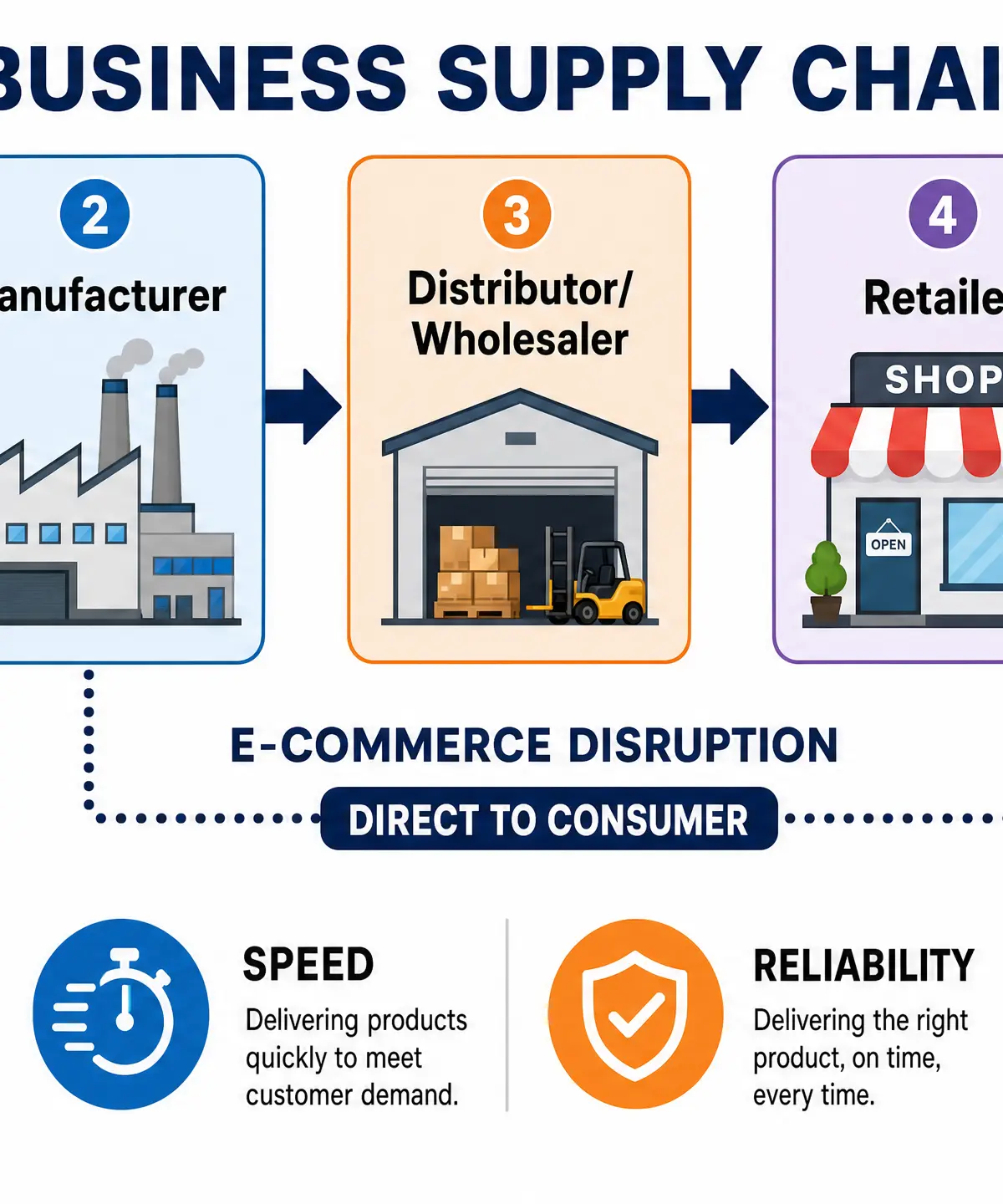
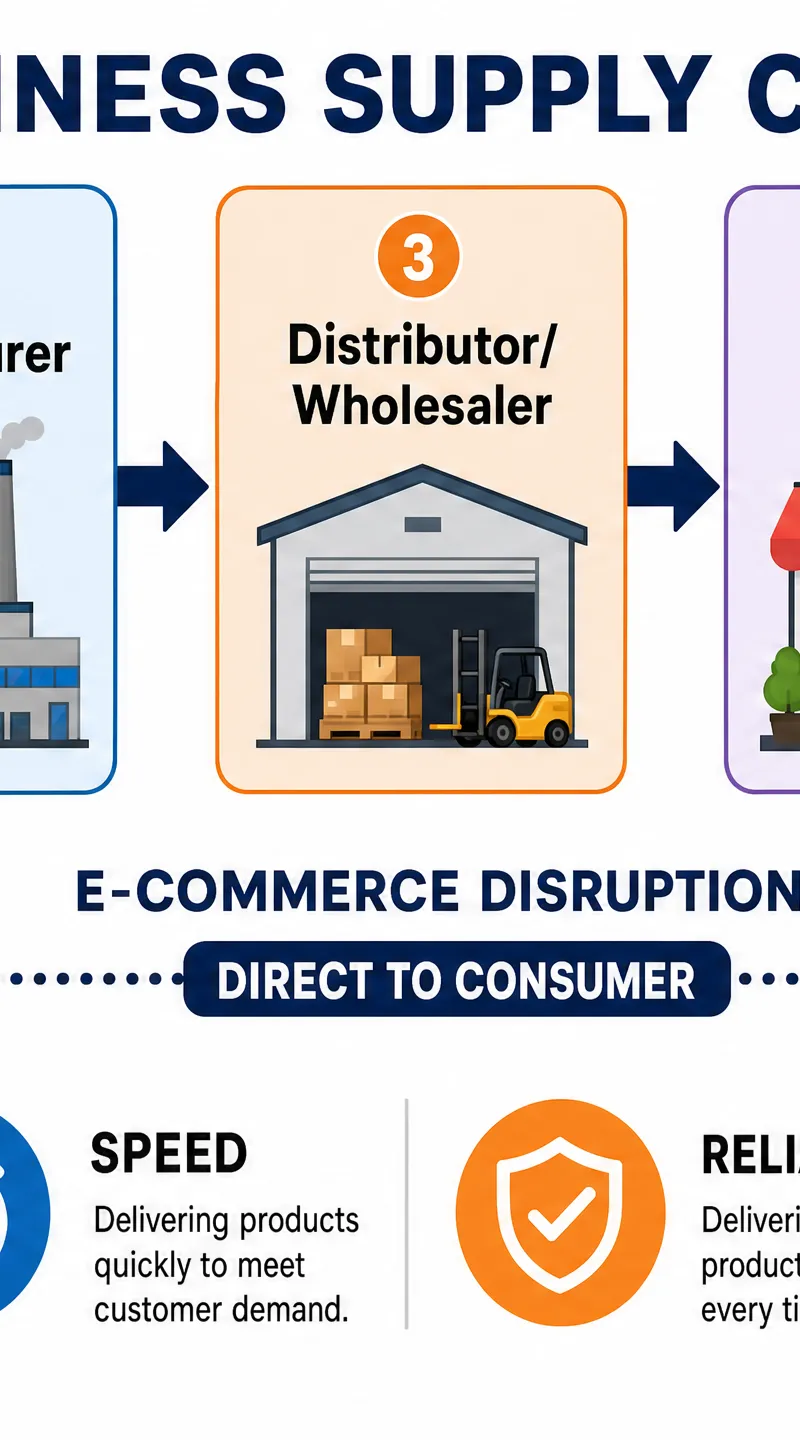
Supply Chain: The entire network of businesses involved in providing a product to the final consumer.
Procurement: The process of sourcing and purchasing inputs. Good procurement considers quality, reliability, and ethics, not just the lowest price.
Visual Resources
3 diagrams and illustrations
Interactive Diagrams
1 interactive diagram to visualise key concepts
Conceptual Flow Outline
The traditional supply chain vs direct-to-consumer e-commerce.
Worked Examples
3 worked examples — open one to explore the question and available guidance.
Practice Questions
Try the question, then reveal an answer plan or example response
A custom furniture maker currently uses job production. Explain one reason why they might struggle to compete on price with a large flat-pack furniture manufacturer like IKEA. (4 marks)
Hint: Think about economies of scale and unit costs.
Analyse the impact of introducing automation into a car manufacturing plant. (6 marks)
Hint: Look at both the positive impacts (efficiency, quality) and negative impacts (initial costs, worker morale).
State two rights a consumer has under the Consumer Rights Act 2015. (2 marks)
Hint: Think of the SAD acronym.
Evaluate the importance of proximity to market for a new online-only clothing retailer. (9 marks)
Hint: Consider how e-commerce changes traditional location factors.
Explain how good procurement can improve a business's reputation. (3 marks)
Hint: Think about ethical sourcing and quality of raw materials.
Exam technique
How to turn what you know into marks
How to approach the question
Always identify the command word first. 'State' means a simple fact. 'Explain' requires a linked consequence. 'Evaluate' requires both sides and a justified conclusion.
How to structure your answer
- Essay questions
- Introduction → Point For → Point Against → Justified Conclusion (It depends on...)
- Source questions
- Always refer back to the specific business in the case study. Don't write generic answers.
- Explain questions
- Use the BLT structure: Because, Leading to, Therefore. E.g., 'Unit costs fall BECAUSE of automation, LEADING TO higher profit margins, THEREFORE the business can lower prices to beat competitors.'
Timing
Approximately 1 minute per mark. For a 12-mark question, spend 2 minutes planning and 10 minutes writing.
Common pitfalls
- Confusing Quality Control and Quality Assurance.
- Writing generic answers that don't apply to the specific business in the scenario.
- Failing to reach a clear judgement in 'evaluate' questions.
What the command words want
- Analyse
- Examine a point in detail, showing multiple steps in a chain of reasoning.
- Explain
- Make a point, apply it to the context, and explain the consequence (cause and effect).
- State / Identify
- Short, direct answer. No explanation needed.
- Evaluate / Recommend
- Look at advantages and disadvantages, then make a final, justified decision based on the most important factor.
Watch or listen (optional)
Test your understanding of Operations
Active recall beats re-reading. Take an instant quiz now to test what you’ve learned and lock it into long-term memory.
A week of Premium from your first lesson · Then the free plan continues · No card, no charge