OCR · GCSE · Business
Course version: J204 · Version from Sept 2019
Working with suppliers
Mastering the supply chain is essential for any successful business, balancing cost, quality, and reliability. This guide explores the critical role of procurement and how strategic logistical decisions directly impact customer satisfaction and profitability.
- 4 min read
- 3 worked examples
- 5 practice questions
- 6 key terms
Check what you remember
Read the wording for your board, then hide it and explain Procurement in your own words. Rough notes are fine. This is a self-check, with no mark or grade.
Reference: OCR
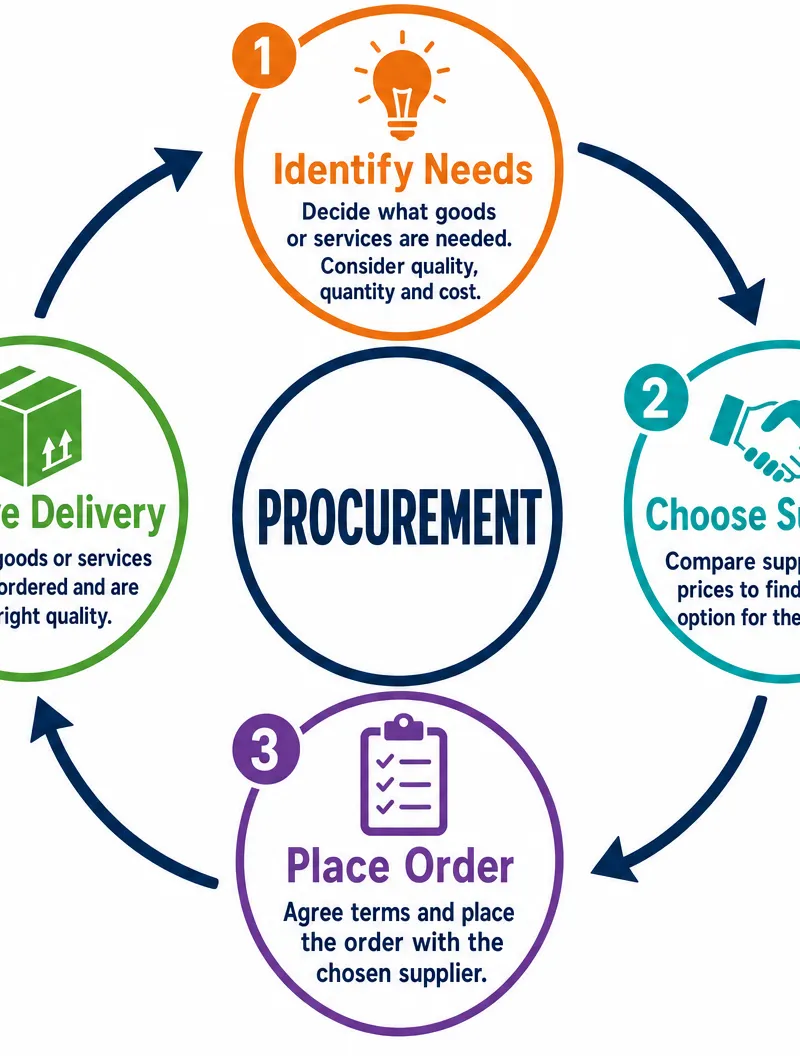
The process of identifying what a business needs to buy, choosing suppliers, placing orders, and receiving deliveries.
Study Notes
Overview
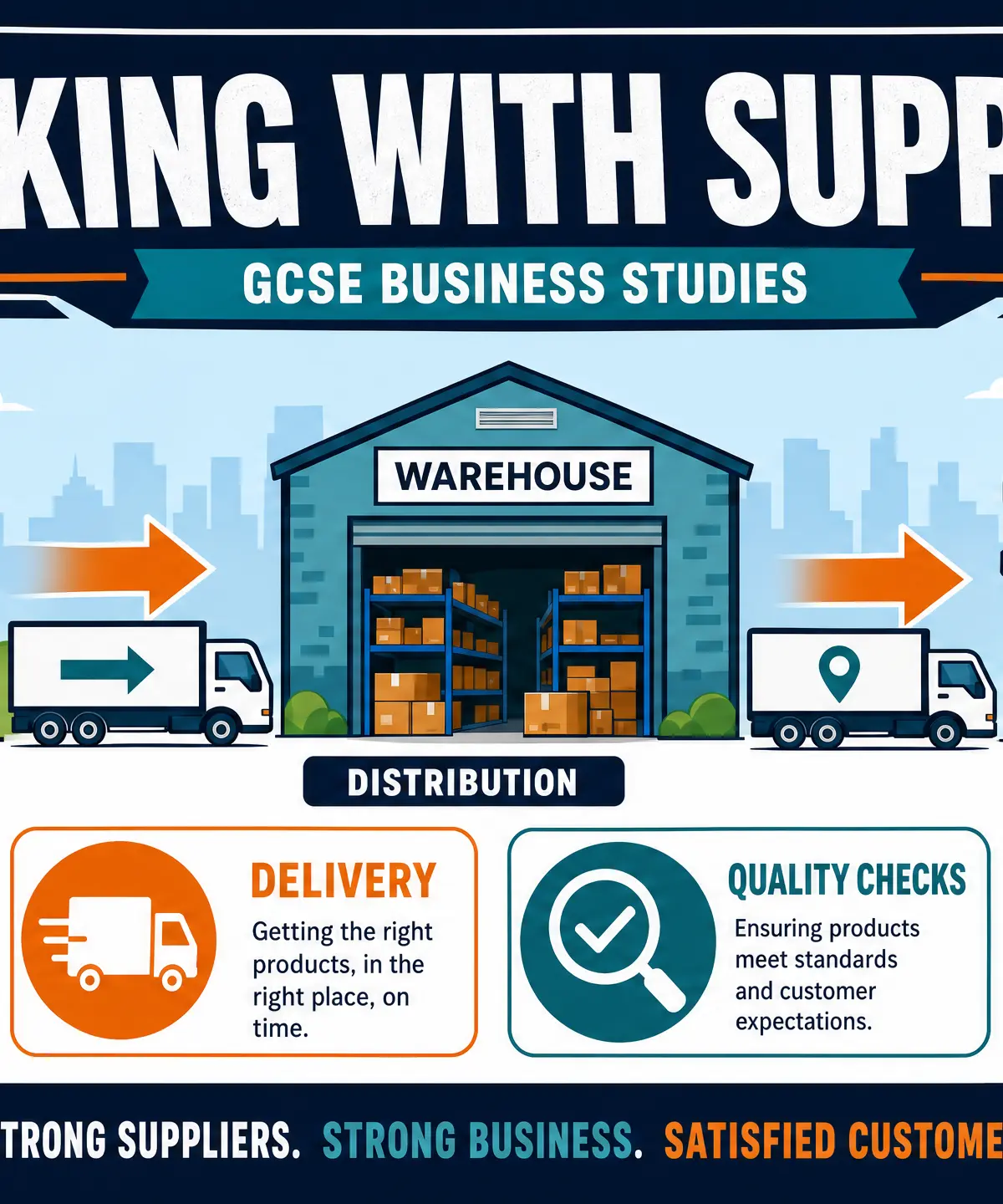
Working with suppliers is a fundamental operational activity for any business, whether it's a local bakery sourcing flour or a global tech giant securing microchips. This topic covers the vital role of procurement—the process of identifying needs, selecting suppliers, placing orders, and receiving goods. Examiners expect candidates to not only define these stages but to critically evaluate how supply chain and logistical decisions impact a business. You must be able to analyse the trade-offs between cost, quality, reliability, and time, and apply these concepts to specific business contexts provided in exam stimulus material.
The Role of Procurement
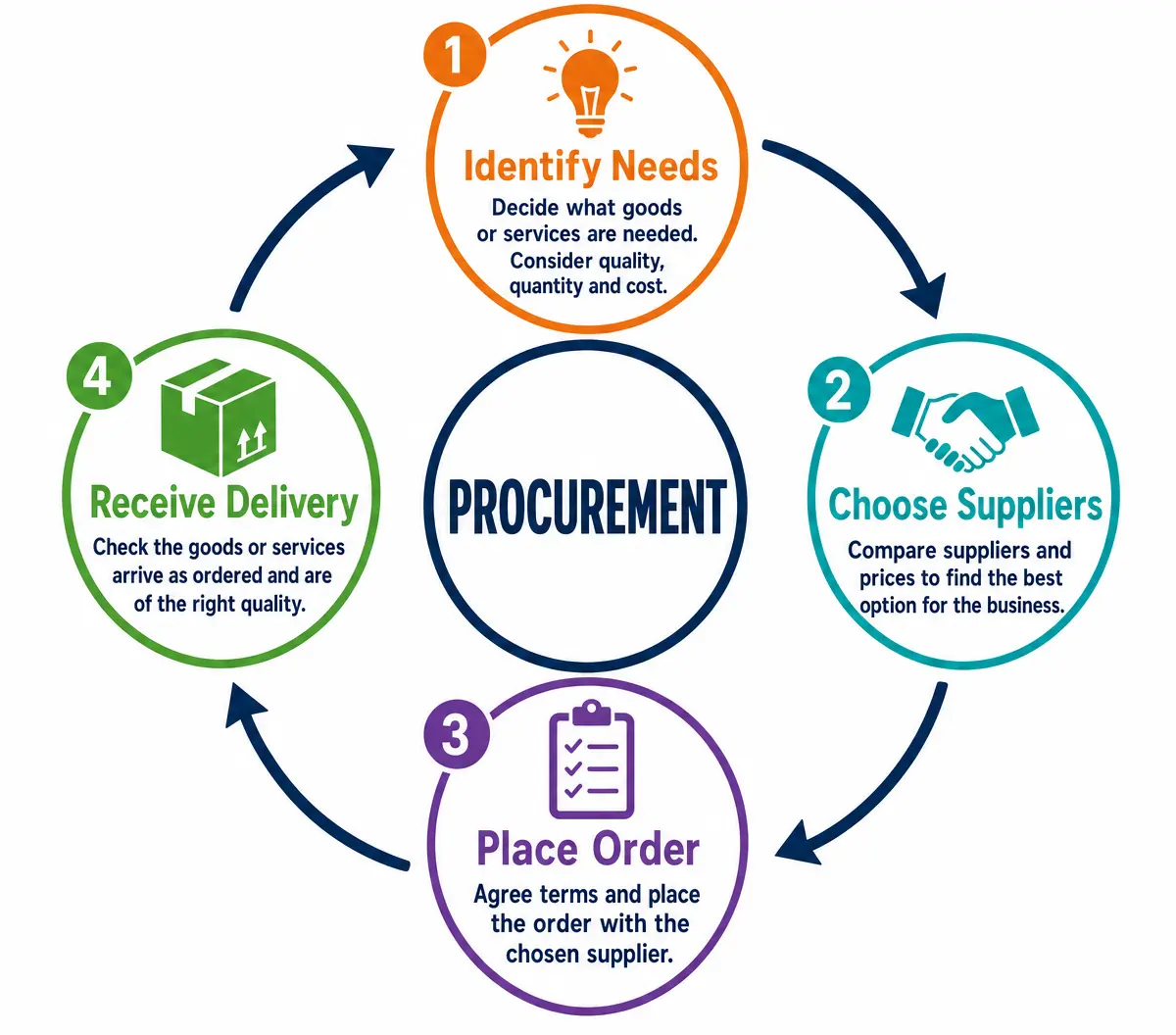
Procurement is the formal process of acquiring goods and services. It involves four key stages:
1. Identifying Goods and Services to Buy
Before purchasing, a business must accurately forecast its needs. Over-ordering ties up cash and risks stock obsolescence, while under-ordering halts production and damages customer relations.
2. Choosing Suppliers
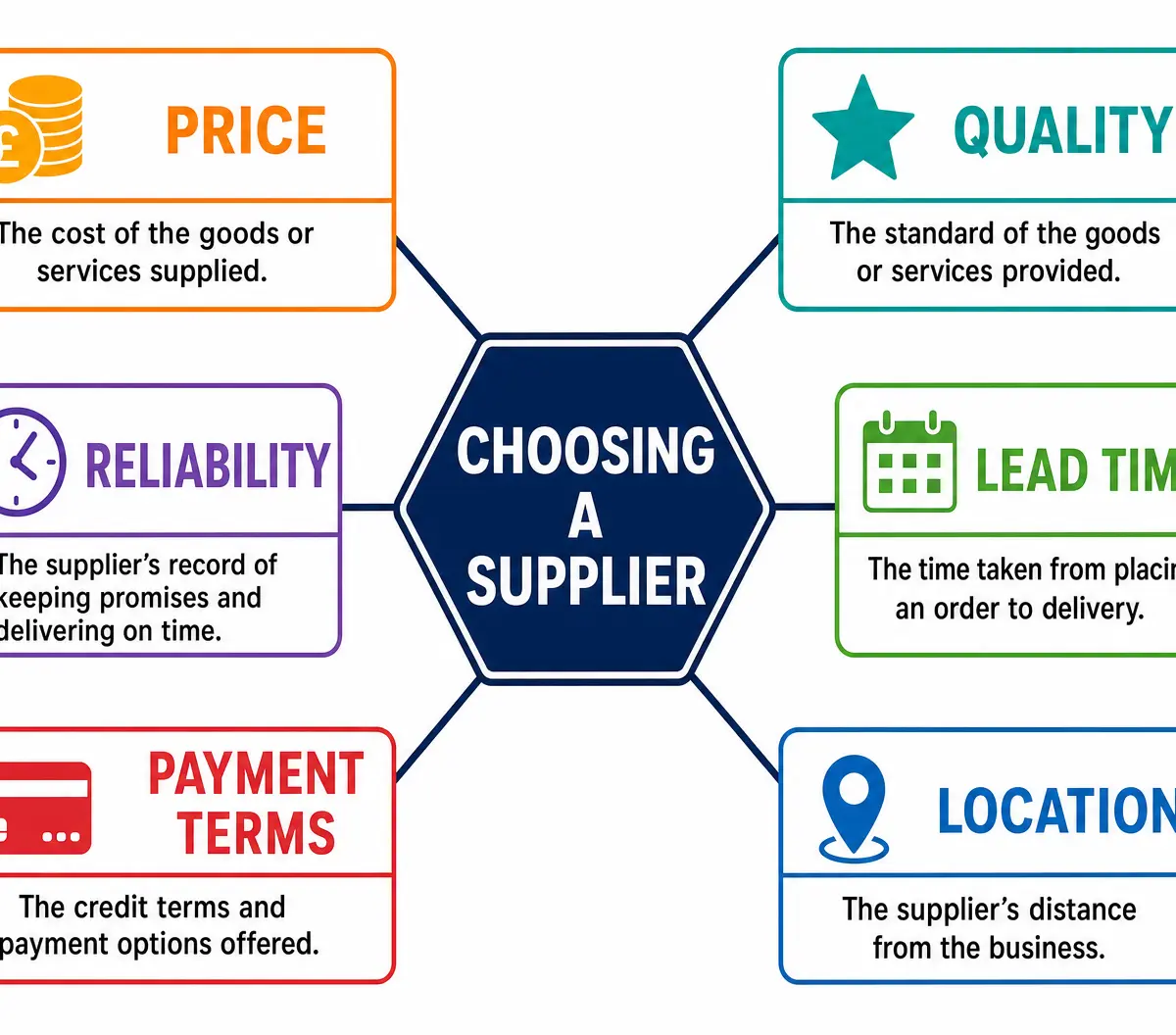
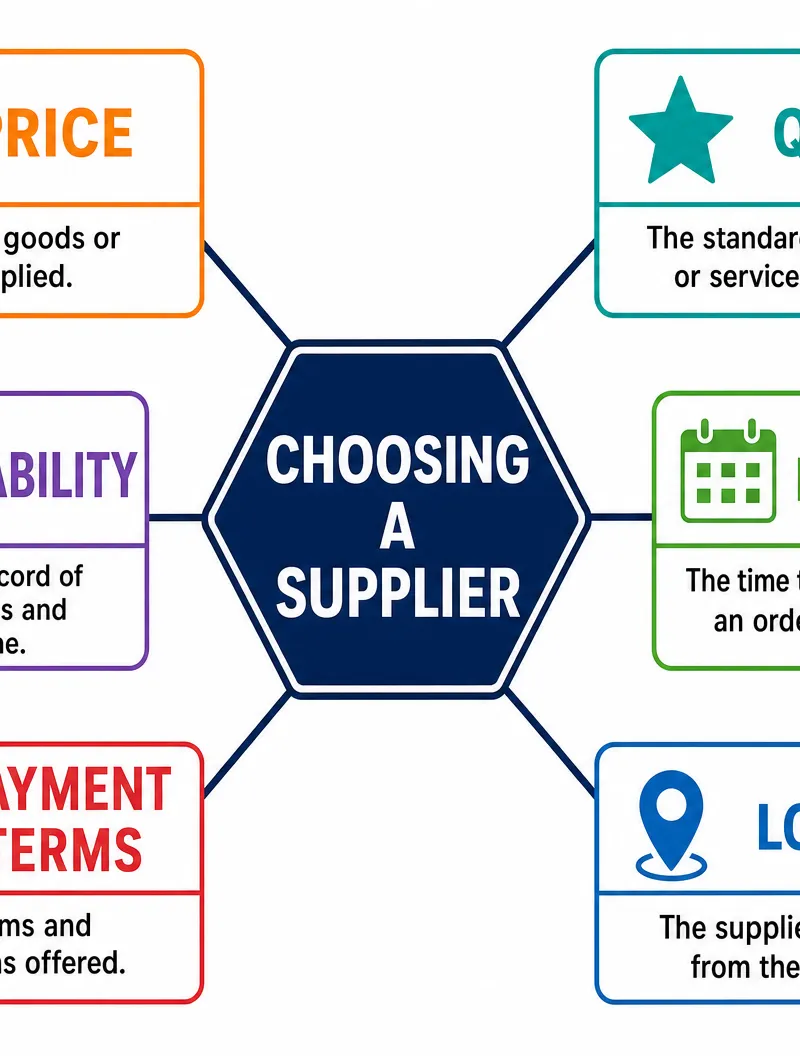
This is a critical decision point. Businesses must weigh several factors:
- Price: Impacts the business's unit costs and profit margins.
- Quality: Substandard inputs lead to poor final products, increasing returns and damaging brand reputation.
- Reliability: Suppliers must deliver on time, every time.
- Lead Time: The time between placing an order and receiving it. Shorter lead times allow a business to be more responsive to market changes.
- Payment Terms: Favourable credit terms improve the buying business's cash flow.
- Location: Closer suppliers often mean lower transport costs and shorter lead times, though overseas suppliers might offer lower unit costs.
3. Ordering Goods and Services
This involves agreeing on quantities, prices, and delivery schedules, often establishing formal contracts and building long-term relationships.
4. Receiving Deliveries
Goods must be checked upon arrival to ensure they match the order in quantity and quality. Any discrepancies must be managed immediately to avoid operational disruption.
The Impact of Logistical and Supply Decisions
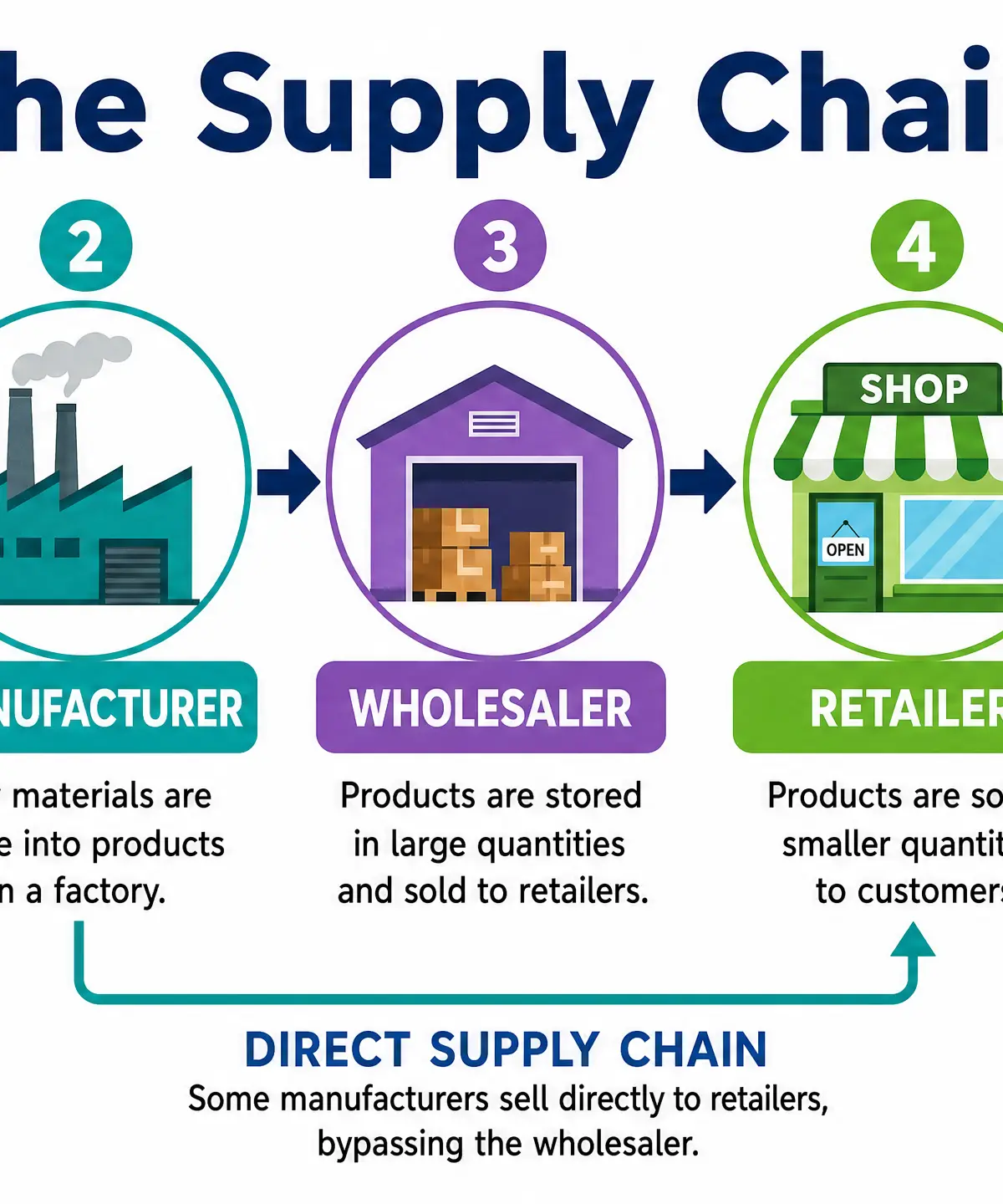
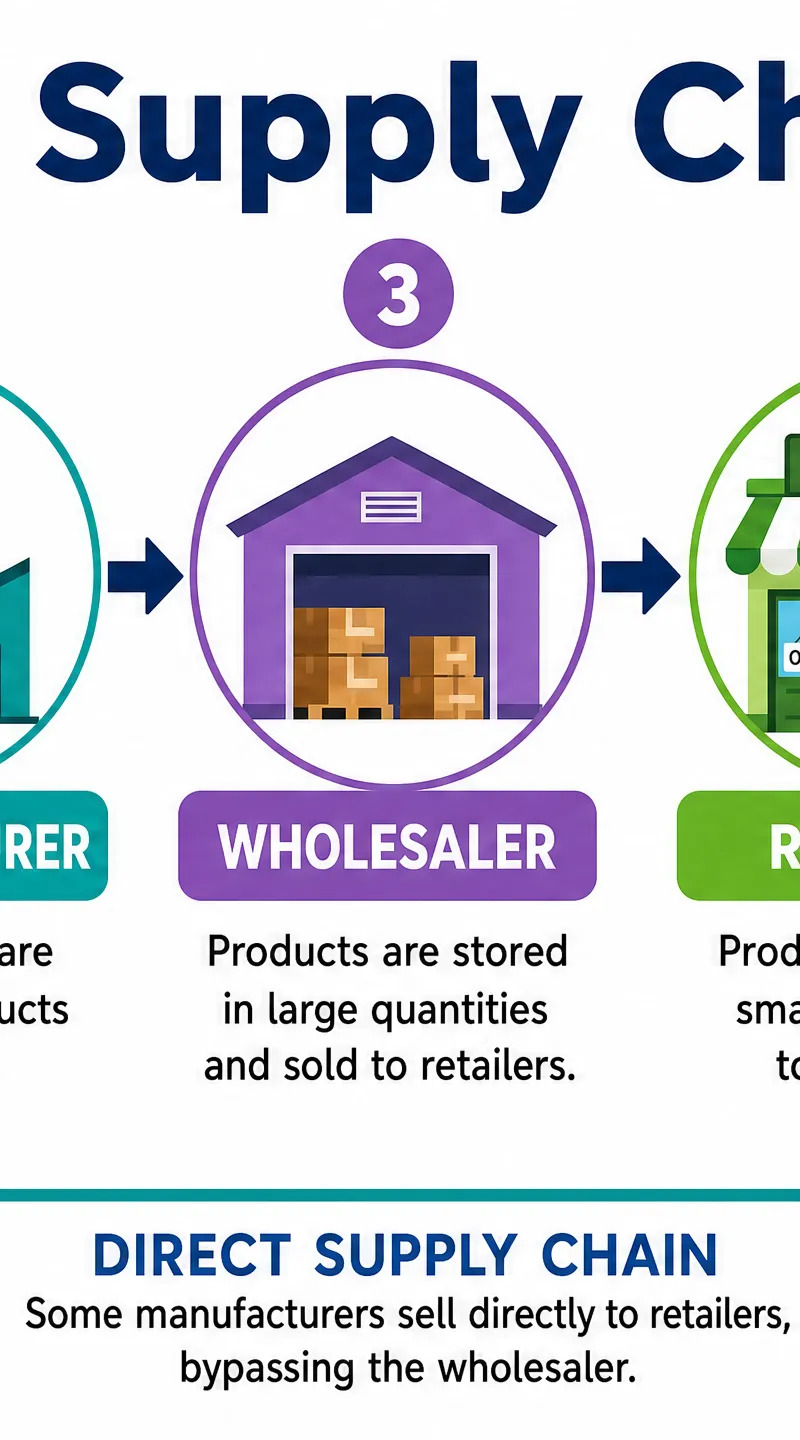
Logistics refers to the management of the flow of things between the point of origin and the point of consumption. The supply chain encompasses all the businesses and processes involved in this flow.
Examiners frequently test your understanding of how supply decisions affect the business in five key areas:
Time
Speed is a competitive advantage. A responsive supply chain allows a business to quickly adapt to changing consumer trends (e.g., fast fashion).
Length of Supply Chain
Longer supply chains (e.g., Producer → Wholesaler → Retailer → Consumer) add complexity, risk, and cost at each stage. Many businesses use direct sourcing to shorten the chain, improving margins and control.
Reliability of Supply
Unreliable suppliers cause production delays. To mitigate this risk, businesses often use multiple suppliers, ensuring a backup is available if one fails.
Costs
Every supply chain decision involves a cost trade-off. For example, bulk buying reduces unit costs (economies of scale) but increases storage costs and the risk of waste.
Customer Service
Ultimately, supply chain efficiency dictates customer satisfaction. Late deliveries or poor-quality products directly harm the customer experience, leading to lost sales and negative reviews.
Podcast Revision
Listen to this 11-minute podcast covering the core concepts, exam tips, and a quick-fire recall quiz.
Worked Examples
3 worked examples — open one to explore the question and available guidance.
Practice Questions
Try the question, then reveal an answer plan or example response
State two stages in the procurement process. (2 marks)
Hint: Think of the ICOR mnemonic.
Explain one impact of an unreliable supplier on a manufacturing business. (3 marks)
Hint: What happens to the factory if parts don't arrive?
A furniture manufacturer currently buys wood from a supplier with a 4-week lead time. They are considering switching to a new supplier who charges 10% more but has a 1-week lead time. Evaluate whether the manufacturer should switch suppliers. (9 marks)
Hint: Analyse the cost vs. speed trade-off. Which is more important for furniture?
Explain how the length of a supply chain can impact a business's costs. (3 marks)
Hint: Think about what happens at each stage of the chain.
Describe the difference between procurement and logistics. (2 marks)
Hint: One is about buying, the other is about moving.
Exam technique
How to turn what you know into marks
How to approach the question
Always look for the context in the stimulus material. If the business is a café, talk about flour and ovens, not generic 'raw materials'.
How to structure your answer
- State questions
- Provide simple facts, do not waste time explaining.
- Explain questions
- Use the BLT structure: Because, Leading to, Therefore. Build a chain of consequence.
- Justify questions
- Analyse Option A, Analyse Option B, Overall Judgement with a 'depends on' factor.
Timing
Approximately 1 minute per mark.
Common pitfalls
- Using generic terms instead of applying the answer to the specific business context.
- Failing to explain the 'so what?'—always link a supply chain issue to the ultimate impact on profit or customer satisfaction.
- Not weighing up trade-offs in 6 or 9 mark questions.
What the command words want
- Analyse
- Build a detailed chain of reasoning showing causes and effects in context.
- Explain
- Give a reason and develop it with a consequence.
- State/Identify
- Give a simple fact or list item.
- Justify/Evaluate
- Look at both sides of an argument and make a supported final decision.
Watch or listen (optional)
Test your understanding of Working with suppliers
Active recall beats re-reading. Take an instant quiz now to test what you’ve learned and lock it into long-term memory.
A week of Premium from your first lesson · Then the free plan continues · No card, no charge