Pearson Edexcel · GCSE · Business
Course version: 1BS0 · Version from Sept 2017
The product life cycle: ● the phases of the product life cycle ● extension…
Full specification wording
Product: The product life cycle: ● the phases of the product life cycle ● extension strategies. The importance to a business of differentiating a product/ service.
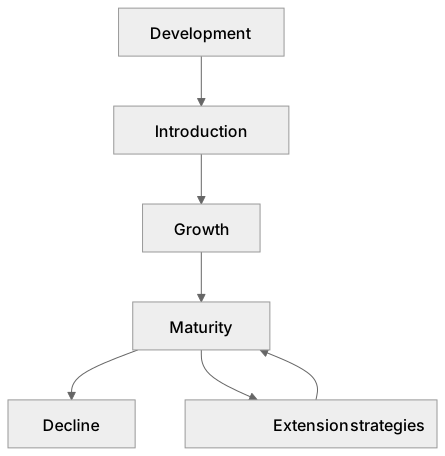
The product life cycle maps sales over time through five phases: development, introduction, growth, maturity, and decline.
Checked against the Pearson Edexcel 1BS0 specification (opens in a new tab) on .
- Point 2 of 2
- 3 key terms
Study notes
From the checked teaching notes for this specification point.
The idea
The product life cycle maps sales over time through five phases: development, introduction, growth, maturity, and decline. Development incurs high costs with zero sales. Introduction sees slow sales, which accelerate rapidly during growth. Maturity brings peak sales, followed by falling sales in decline. To prevent decline, businesses use extension strategies like updating packaging or adding features (e.g., a new smartphone camera). Furthermore, differentiating a product or service is vital. By creating a unique selling point (USP), such as superior design or exceptional customer service, a business stands out from competitors, builds brand loyalty, and can often justify charging a premium price.
What earns the marks
- Identify the correct phase of the product life cycle from a given sales, cash flow, or profit scenario.
- Explain how an extension strategy, such as rebranding or adding new features, prolongs the maturity phase and delays decline.
- Analyse the impact of product differentiation on a business's ability to gain a competitive advantage and build brand loyalty.
- Evaluate the costs and risks associated with developing a new product versus extending the life of an existing one.
Common mistakes and how to put them right
Confusing the growth and maturity phases.
Put it right: Growth is when sales increase most rapidly, whereas maturity is when sales reach their peak but growth slows.
Assuming extension strategies are used during the decline phase.
Put it right: They should be implemented during the maturity phase to prevent decline from occurring.
Stating that differentiation only involves the physical product.
Put it right by including customer service, brand image, and delivery methods as valid differentiators.
Exam tips
- When evaluating extension strategies, always consider the financial cost of the strategy against the potential revenue from extended sales.
- Use the concept of a Unique Selling Point (USP) when explaining why differentiation allows a business to charge higher prices.
- Link the phases of the product life cycle to cash flow, noting that cash flow is typically negative during the development and introduction phases.
Try the lesson
The start of the Product: The product life cycle: ● the phases of the product life cycle ● extension strategies. The importance to a business of differentiating a product/ service. lesson, made from checked teaching notes for this specification point.
Have a go first
Which phase of the product life cycle typically involves the highest initial costs and zero sales revenue?
Listen
The product life cycle maps sales over time through five phases: development, introduction, growth, maturity, and decline. Development incurs high costs with zero sales. Introduction sees slow sales, which accelerate rapidly during growth. Maturity brings peak sales, followed by falling sales in decline. To prevent decline, businesses use extension strategies like updating packaging or adding features (e.g., a new smartphone camera). Furthermore, differentiating a product or service is vital. By creating a unique selling point (USP), such as superior design or exceptional customer service, a business stands out from competitors, builds brand loyalty, and can often justify charging a premium price. A strong answer earns marks for these points. Identify the correct phase of the product life cycle from a given sales, cash flow, or profit scenario. Explain how an extension strategy, such as rebranding or adding new features, prolongs the maturity phase and delays decline. Analyse the impact of product differentiation on a business's ability to gain a competitive advantage and build brand loyalty. Evaluate the costs and risks associated with developing a new product versus extending the life of an existing one. A common slip: Stating that differentiation only involves the physical product. Instead, including customer service, brand image, and delivery methods as valid differentiators. Exam tip: When evaluating extension strategies, always consider the financial cost of the strategy against the potential revenue from extended sales.
See it
Key words
Say what each word means before you turn the card.
Product life cycle
Try answering aloud or in your head before turning the card.
Extension strategies
Try answering aloud or in your head before turning the card.
Product differentiation
Try answering aloud or in your head before turning the card.
See every definition
- Product life cycle
- Maps sales over time through five phases: development, introduction, growth, maturity, and decline.
- Extension strategies
- Methods such as updating packaging or adding features used to prevent decline.
- Product differentiation
- Creating a unique selling point, such as superior design or exceptional customer service, so a business stands out from competitors.
Label the diagram
Some boxes have lost their names. Pick the right name for each number.
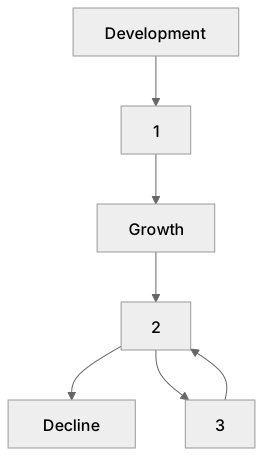
1Box 1
2Box 2
3Box 3
There is more to this lesson
The full lesson goes on to check your understanding and help you earn the marks. Create a free account to carry on, with your progress saved.
A week of Premium from your first lesson · Then the free plan continues · No card, no charge
Test your understanding of Product: The product life cycle: ● the phases of the product life cycle ● extension strategies. The importance to a business of differentiating a product/ service.
Active recall beats re-reading. Take an instant quiz now to test what you’ve learned and lock it into long-term memory.
A week of Premium from your first lesson · Then the free plan continues · No card, no charge