Pearson Edexcel · GCSE · Business
Course version: 1BS0 · Version from Sept 2017
How new business ideas come about: ● original ideas ● adapting existing…
Full specification wording
The dynamic nature of business: How new business ideas come about: ● original ideas ● adapting existing products/services/ideas.
Entrepreneurs generate new business ideas through two main approaches: creating completely original ideas or adapting existing ones.
Checked against the Pearson Edexcel 1BS0 specification (opens in a new tab) on .
- Point 2 of 2
- 2 key terms
Study notes
From the checked teaching notes for this specification point.
The idea
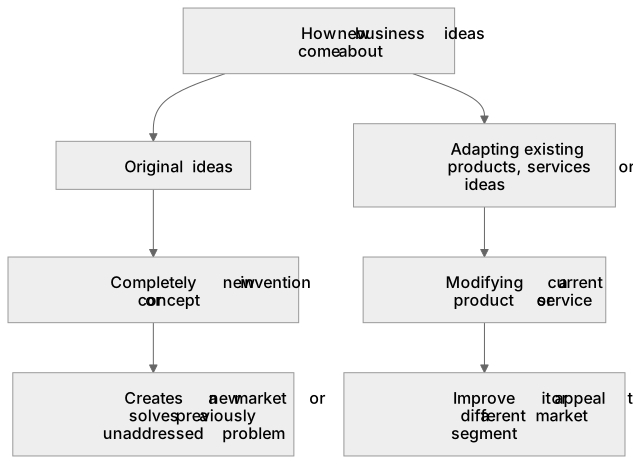
Entrepreneurs generate new business ideas through two main approaches: creating completely original ideas or adapting existing ones. Original ideas involve inventing a product or service that did not previously exist, often solving a unique problem or creating a brand-new market. For instance, the very first smartphone was a highly original concept. However, most new business ideas come from adapting existing products, services, or ideas. This means taking something that is already on the market and improving it, changing its target audience, or adding new features. An example is adapting a traditional bicycle by adding an electric motor to create an e-bike. Both methods require creativity and a clear understanding of market needs to be successful.
What earns the marks
- Define an original idea as a completely new invention or concept that creates a new market or solves a previously unaddressed problem.
- Explain that adapting an existing idea involves modifying a current product or service to improve it or appeal to a different market segment.
- Recognise that adapting existing ideas is generally less risky and more common than developing entirely original concepts.
- Provide examples of adaptation, such as changing the flavour, size, packaging, or delivery method of an existing product.
Common mistakes and how to put them right
Believing that all new businesses must be based on completely original inventions.
Put it right: The vast majority of successful new businesses are adaptations of existing ideas.
Confusing 'adapting' with 'copying'.
Put it right: Adapting involves adding value or making improvements, whereas copying is simply replicating a competitor's product without changes.
Failing to distinguish between 'how' and 'why' ideas come about.
Put it right: 'how' refers to the method of creation (original or adapted), while 'why' refers to the external drivers (technology, consumer wants).
Exam tips
- If a case study mentions a business improving a competitor's product, explicitly use the term 'adapting an existing product' in your answer.
- Be prepared to evaluate whether it is better for a specific business to launch an original idea or adapt an existing one, considering the financial risks involved.
- Ensure you can clearly distinguish between a product, a service, and an idea when discussing adaptations in an exam context.
Try the lesson
The start of the The dynamic nature of business: How new business ideas come about: ● original ideas ● adapting existing products/services/ideas. lesson, made from checked teaching notes for this specification point.
Have a go first
Which of the following describes how a new business idea can come about by changing an existing product to improve it or give it a new use?
Listen
Entrepreneurs generate new business ideas through two main approaches: creating completely original ideas or adapting existing ones. Original ideas involve inventing a product or service that did not previously exist, often solving a unique problem or creating a brand-new market. For instance, the very first smartphone was a highly original concept. However, most new business ideas come from adapting existing products, services, or ideas. This means taking something that is already on the market and improving it, changing its target audience, or adding new features. An example is adapting a traditional bicycle by adding an electric motor to create an e-bike. Both methods require creativity and a clear understanding of market needs to be successful. A strong answer earns marks for these points. Define an original idea as a completely new invention or concept that creates a new market or solves a previously unaddressed problem. Explain that adapting an existing idea involves modifying a current product or service to improve it or appeal to a different market segment. Recognise that adapting existing ideas is generally less risky and more common than developing entirely original concepts. Provide examples of adaptation, such as changing the flavour, size, packaging, or delivery method of an existing product. A common slip: Believing that all new businesses must be based on completely original inventions. Instead, the vast majority of successful new businesses are adaptations of existing ideas. Exam tip: If a case study mentions a business improving a competitor's product, explicitly use the term 'adapting an existing product' in your answer.
See it
Watch it explained
What is the one idea the video explains? Say it in a sentence.
Read the described scene instead
Entrepreneurs generate new business ideas in two main ways. They can create completely original ideas, or they can adapt existing products, services, or ideas. Both approaches require creativity and a clear understanding of market needs. An original idea is a completely new invention or concept. It creates a new market or solves a problem that was not addressed before. For example, the very first smartphone was a highly original concept. Most new business ideas come from adapting existing products, services, or ideas. This means taking something already on the market and improving it, changing its target audience, or adding new features. An example is adapting a traditional bicycle by adding an electric motor to create an e-bike. A common mistake is believing all new businesses must be based on completely original inventions. In fact, the vast majority of successful new businesses are adaptations of existing ideas. Also, adapting is not copying. Adapting adds value or makes improvements, while copying simply replicates a competitor's product without changes. It is also important to distinguish between how and why ideas come about. How refers to the method of creation: original or adapted. Why refers to external drivers, such as technology or consumer wants. Understanding both helps explain the dynamic nature of business. To recap, new business ideas can be original inventions or adaptations of existing products and services. Original ideas create new markets, while adaptations improve or reposition what already exists. Adapting is generally less risky and more common. Entrepreneurs need creativity and an understanding of market needs.
Key words
Say what each word means before you turn the card.
Original ideas
Try answering aloud or in your head before turning the card.
Adapting an existing idea
Try answering aloud or in your head before turning the card.
See every definition
- Original ideas
- A completely new invention or concept that creates a new market or solves a previously unaddressed problem.
- Adapting an existing idea
- Modifying a current product or service to improve it or appeal to a different market segment.
Label the diagram
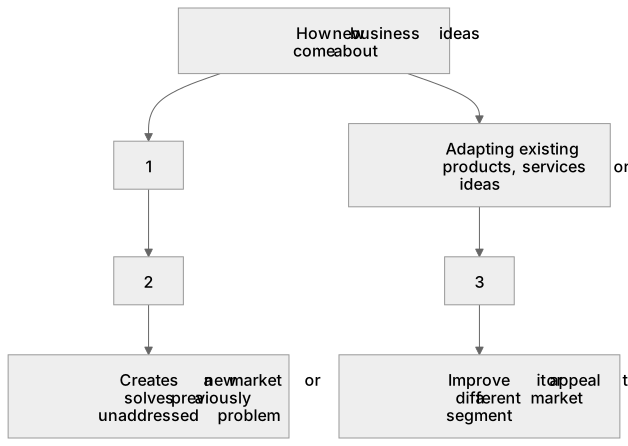
Some boxes have lost their names. Pick the right name for each number.
1Box 1
2Box 2
3Box 3
There is more to this lesson
The full lesson goes on to check your understanding and help you earn the marks. Create a free account to carry on, with your progress saved.
A week of Premium from your first lesson · Then the free plan continues · No card, no charge
Test your understanding of The dynamic nature of business: How new business ideas come about: ● original ideas ● adapting existing products/services/ideas.
Active recall beats re-reading. Take an instant quiz now to test what you’ve learned and lock it into long-term memory.
A week of Premium from your first lesson · Then the free plan continues · No card, no charge