Pearson Edexcel · GCSE · Business
Course version: 1BS0 · Version from Sept 2017
Why new business ideas come about: ● changes in technology ● changes in…
Full specification wording
The dynamic nature of business: Why new business ideas come about: ● changes in technology ● changes in what consumers want ● products and services becoming obsolete.
Business is dynamic, meaning it constantly changes.
Checked against the Pearson Edexcel 1BS0 specification (opens in a new tab) on .
- Point 1 of 2
- 4 key terms
Study notes
From the checked teaching notes for this specification point.
The idea
Business is dynamic, meaning it constantly changes. New business ideas emerge primarily for three reasons. First, changes in technology create opportunities for innovative products, such as the shift from physical media to streaming services, or using apps for food delivery. Second, changes in what consumers want drive new ideas; as society becomes more health-conscious, businesses develop plant-based foods or fitness trackers. Finally, products and services become obsolete when they are no longer needed or replaced by superior alternatives. For example, traditional film cameras became obsolete with the rise of digital photography, prompting entrepreneurs to create new digital solutions. Understanding these drivers helps entrepreneurs spot gaps in the market.
What earns the marks
- Identify technological advancements as a catalyst for new business ideas, such as the development of e-commerce or mobile applications.
- Explain how shifting consumer preferences, such as a desire for eco-friendly packaging, create new market opportunities.
- Define obsolescence as the point where a product is no longer wanted or needed, often due to technological replacement.
- Link the dynamic nature of the business environment to the continuous need for innovation to survive and remain competitive.
Common mistakes and how to put them right
Confusing changes in technology with changes in consumer wants.
Put it right: Technology refers to new inventions or methods, while consumer wants refer to shifting tastes or lifestyle choices.
Assuming obsolete means a product is physically broken.
Put it right: Obsolete means it is no longer useful or desired because it has been replaced by something better.
Stating that businesses only change when forced to by the government.
Put it right: Successful businesses proactively seek new ideas to stay ahead of trends and avoid obsolescence.
Exam tips
- Use real-world examples, such as the decline of video rental stores, to illustrate how technological changes lead to obsolescence.
- When asked 'why' new ideas come about, ensure you link the cause directly to the effect, showing how a specific trend led to a specific product.
- Read the case study carefully to identify which of the three reasons is driving the new business idea in that specific scenario.
Try the lesson
The start of the The dynamic nature of business: Why new business ideas come about: ● changes in technology ● changes in what consumers want ● products and services becoming obsolete. lesson, made from checked teaching notes for this specification point.
Have a go first
Which of the following is a primary reason why new business ideas come about?
Listen
Business is dynamic, meaning it constantly changes. New business ideas emerge primarily for three reasons. First, changes in technology create opportunities for innovative products, such as the shift from physical media to streaming services, or using apps for food delivery. Second, changes in what consumers want drive new ideas; as society becomes more health-conscious, businesses develop plant-based foods or fitness trackers. Finally, products and services become obsolete when they are no longer needed or replaced by superior alternatives. For example, traditional film cameras became obsolete with the rise of digital photography, prompting entrepreneurs to create new digital solutions. Understanding these drivers helps entrepreneurs spot gaps in the market. A strong answer earns marks for these points. Identify technological advancements as a catalyst for new business ideas, such as the development of e-commerce or mobile applications. Explain how shifting consumer preferences, such as a desire for eco-friendly packaging, create new market opportunities. Define obsolescence as the point where a product is no longer wanted or needed, often due to technological replacement. Link the dynamic nature of the business environment to the continuous need for innovation to survive and remain competitive. A common slip: Confusing changes in technology with changes in consumer wants. Instead, technology refers to new inventions or methods, while consumer wants refer to shifting tastes or lifestyle choices. Exam tip: Use real-world examples, such as the decline of video rental stores, to illustrate how technological changes lead to obsolescence.
See it
Watch it explained
What is the one idea the video explains? Say it in a sentence.
Read the described scene instead
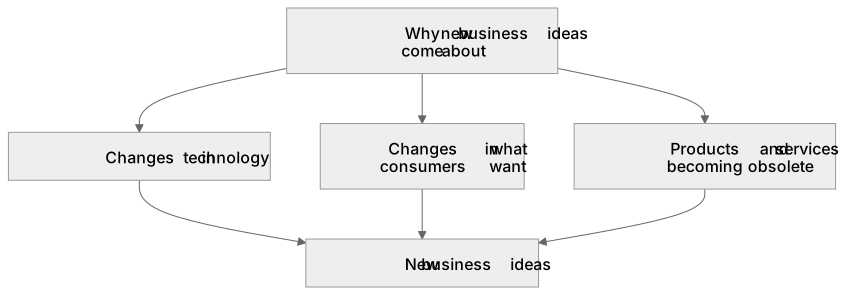
Business is dynamic. That means it constantly changes. New business ideas come about mainly for three reasons: changes in technology, changes in what consumers want, and products or services becoming obsolete. Understanding these drivers helps entrepreneurs spot gaps in the market. Let's map the three drivers. First, technological change. New inventions or methods create opportunities for innovative products. Second, changing consumer wants. Shifts in tastes or lifestyle choices open new market opportunities. Third, obsolescence. A product or service is no longer wanted or needed, often because something better replaces it. Each driver can prompt a new business idea. Changes in technology create opportunities. For example, the shift from physical media to streaming services, or using apps for food delivery. Changes in consumer wants also drive new ideas. As society becomes more health-conscious, businesses develop plant-based foods or fitness trackers. These examples show technology and consumer trends are different drivers. Let's link a cause to an effect. Traditional film cameras became obsolete with the rise of digital photography. They were no longer needed or replaced by superior alternatives. This prompted entrepreneurs to create new digital solutions. So, technological change led to obsolescence, and obsolescence created new business opportunities. Pause to think: what was the cause, and what was the effect? Watch three common mistakes. First, don't confuse changes in technology with changes in consumer wants. Technology refers to new inventions or methods. Consumer wants refer to shifting tastes or lifestyle choices. Second, obsolete does not mean physically broken. It means no longer useful or desired because something better has replaced it. Third, businesses do not only change when forced by government. Successful businesses proactively seek new ideas to stay ahead of trends and avoid obsolescence. To recap, business is dynamic. New ideas come from changes in technology, changes in consumer wants, and obsolescence. Technology creates innovative products, consumer trends open new markets, and obsolete products are replaced. Entrepreneurs who understand these drivers can spot gaps and innovate to stay competitive.
Key words
Say what each word means before you turn the card.
Dynamic business environment
Try answering aloud or in your head before turning the card.
Technological advancement
Try answering aloud or in your head before turning the card.
Consumer trends
Try answering aloud or in your head before turning the card.
Obsolescence
Try answering aloud or in your head before turning the card.
See every definition
- Dynamic business environment
- Business is dynamic, meaning it constantly changes, and this links to the continuous need for innovation to survive and remain competitive.
- Technological advancement
- Changes in technology create opportunities for innovative products, such as the shift from physical media to streaming services.
- Consumer trends
- Changes in what consumers want drive new ideas, as when society becomes more health-conscious and businesses develop plant-based foods or fitness trackers.
- Obsolescence
- Products and services become obsolete when they are no longer needed or replaced by superior alternatives, such as traditional film cameras with the rise of digital photography.
Label the diagram
Some boxes have lost their names. Pick the right name for each number.
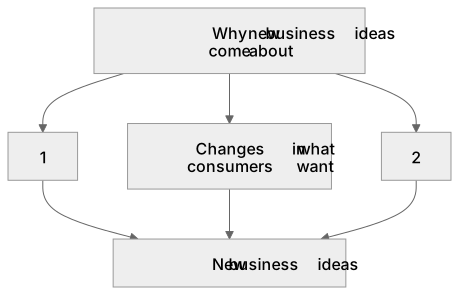
1Box 1
2Box 2
There is more to this lesson
The full lesson goes on to check your understanding and help you earn the marks. Create a free account to carry on, with your progress saved.
A week of Premium from your first lesson · Then the free plan continues · No card, no charge
Test your understanding of The dynamic nature of business: Why new business ideas come about: ● changes in technology ● changes in what consumers want ● products and services becoming obsolete.
Active recall beats re-reading. Take an instant quiz now to test what you’ve learned and lock it into long-term memory.
A week of Premium from your first lesson · Then the free plan continues · No card, no charge