AQA · A-Level · Chemistry
Chemical equilibria, Le Chatelier’s principle and Kc
An examiner-focused guide to dynamic equilibrium, Le Chatelier’s principle, industrial compromise conditions and the Kc extension. It combines mark-scheme language, worked solutions, visual assets, diagrams and a 10-minute audio recap.
- 10 min read
- 4 worked examples
- 5 practice questions
- 6 key terms
Study Notes

Chemical Equilibria: Dynamic Equilibrium, Le Chatelier’s Principle and Kc
Overview and specification scope
This guide is written for GCSE Chemistry candidates studying reversible reactions, dynamic equilibrium and the effect of changing conditions. The supplied heading, “3.1.6 Chemical equilibria, Le Chatelier’s principle and Kc”, is the AQA A-level Chemistry reference. Therefore, the guide treats equilibrium as core GCSE content and marks Kc clearly as a Higher/transition-to-A-level extension rather than pretending it is required on every GCSE specification. The GCSE-aligned content is based on reversible reactions, dynamic equilibrium and Le Chatelier’s principle; the Kc extension aligns with AQA A-level 3.1.6.1 2
In an examination, the highest-mark answers do more than name a rule. Candidates must use the condition changed, name the direction of the shift, and state the observable consequence for yield or concentration. This guide repeatedly models that chain: change → equilibrium response → shift → result.
1. Dynamic equilibrium: the non-negotiable definition
A reversible reaction can proceed in both directions. In a sealed flask, reactant particles collide to make products, while product particles also collide to remake reactants. Initially, the forward reaction is usually faster because there are many reactant particles and few product particles. As products accumulate, the reverse reaction becomes faster. Dynamic equilibrium is reached when the forward and reverse reaction rates are equal in a closed system. At that point, the concentrations of reactants and products remain constant.1 2
Examiner wording: “constant concentrations” does not mean “equal concentrations”. A mark is awarded for equal rates, not for claiming that equal amounts of reactant and product are present.
Use the escalator image in your mind. A person walking up a down escalator at exactly the escalator’s speed remains at the same height. Movement continues in both directions, but there is no overall change. That is why equilibrium is dynamic, not static.
| Feature | Before equilibrium | At dynamic equilibrium |
|---|---|---|
| Forward reaction rate | Usually greater at the start | Equal to reverse rate |
| Reverse reaction rate | Usually very small at the start | Equal to forward rate |
| Concentrations | Changing | Constant, but not necessarily equal |
| System | May be open or closed temporarily | Must be closed |
Reading a rate or concentration graph
On a rate–time graph, the forward rate begins high and falls; the reverse rate begins low and rises. Where the lines meet, their rates are equal: equilibrium has been reached. On a concentration–time graph, the lines flatten at equilibrium. The plateau heights can be different. Candidates who write “the lines must meet” on a concentration graph lose credit because concentration values need not be equal.
2. Le Chatelier’s principle: predict, then explain
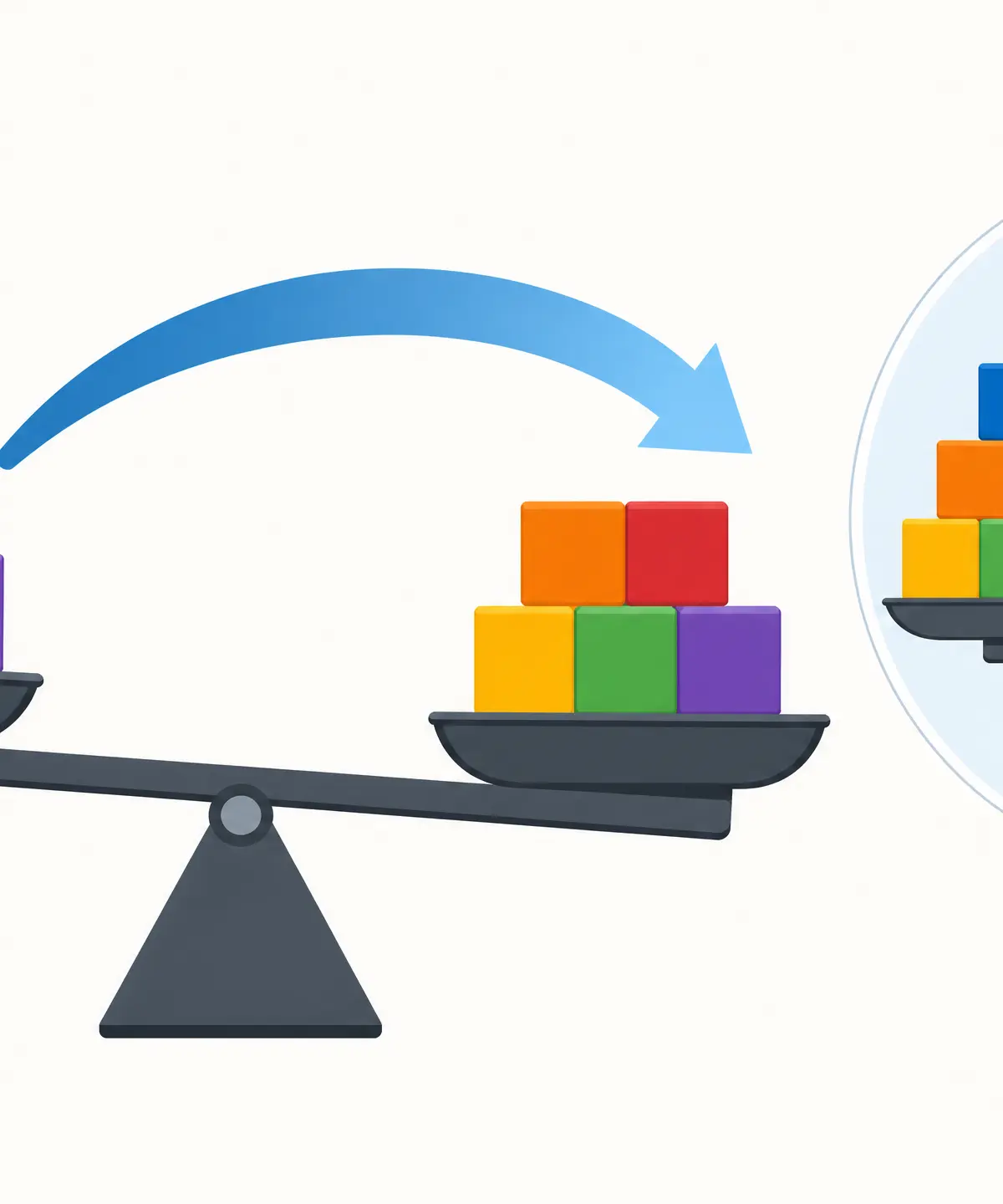
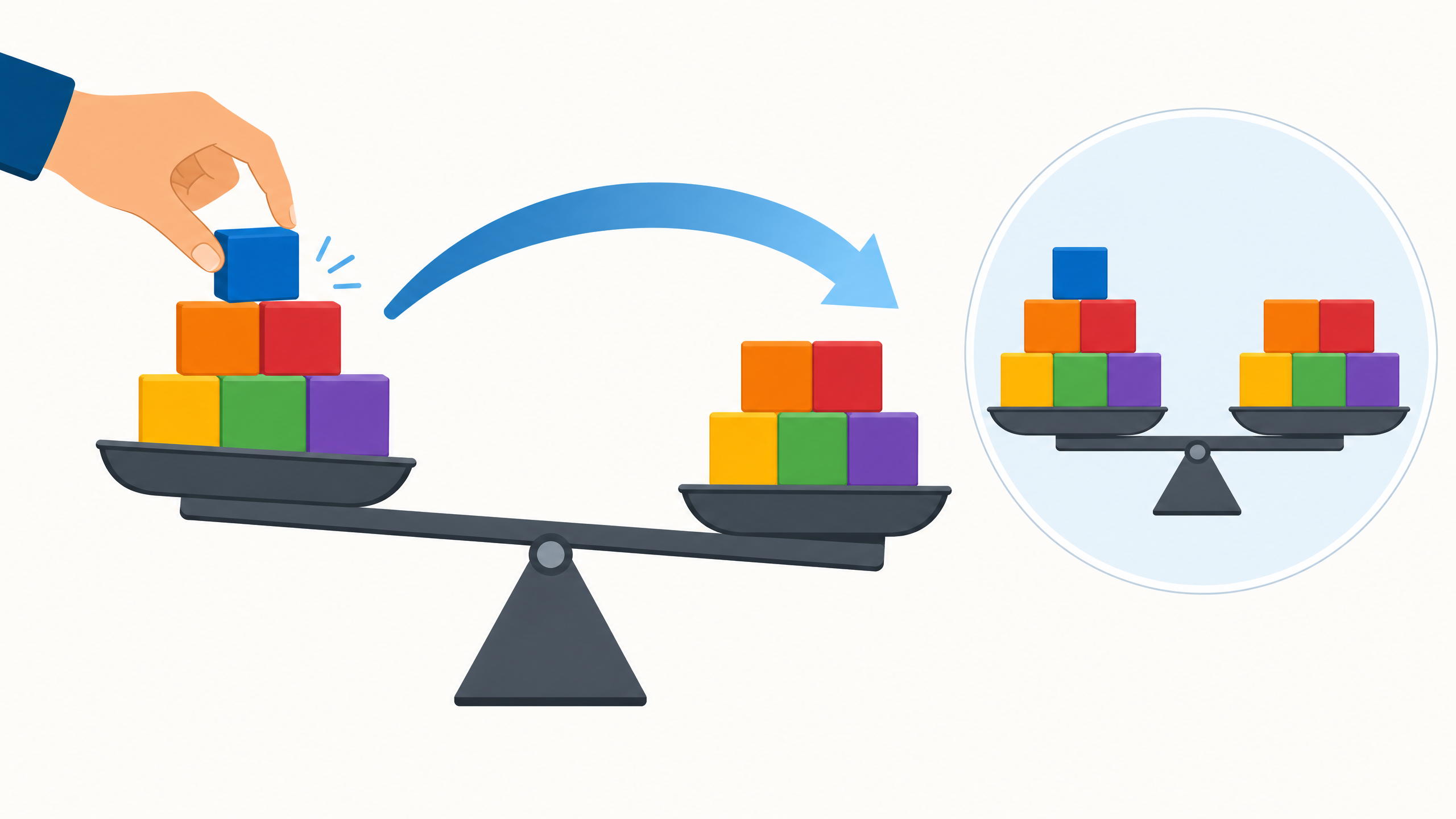
Le Chatelier’s principle states that when a system at equilibrium experiences a change in conditions, the position of equilibrium shifts in the direction that opposes the change.1 Think of equilibrium as a seesaw: disturb it and it shifts to reduce the disturbance.
Changing concentration
For the reaction A + B ⇌ C + D, adding A or B makes the forward reaction more likely because there are more reactant collisions. The equilibrium shifts right and the yield of C and D rises. Removing a product has the same effect: the system shifts right to replace the removed product. Conversely, adding a product shifts left; removing a reactant shifts left.
A precise examination sentence is: “Adding reactant increases its concentration, so the equilibrium shifts to the product side to reduce the added reactant; therefore the equilibrium yield of product increases.” Credit is given for both the direction and the reason.
Changing temperature
Treat heat as though it were a substance in the equation. In an exothermic direction, heat is released, so write it conceptually on the product side. In an endothermic direction, heat is absorbed, so write heat conceptually on the reactant side. If temperature increases, equilibrium shifts in the endothermic direction to absorb the supplied energy. If temperature decreases, equilibrium shifts in the exothermic direction to release energy.
For example, if the forward reaction is exothermic, heating shifts equilibrium left and lowers the equilibrium yield of the forward products. Do not state merely that “temperature increases the rate”. That can be true for both reaction directions, but it does not answer a question about equilibrium position.
Changing pressure: gases only
Pressure changes are relevant where gases are involved. Increasing pressure shifts equilibrium to the side with fewer moles of gas, because that side reduces the pressure. Decreasing pressure shifts it to the side with more moles of gas. Count the large balanced coefficients, not the chemical formula subscripts.
For N₂(g) + 3H₂(g) ⇌ 2NH₃(g), the left side contains four moles of gas and the right side contains two. Increasing pressure shifts equilibrium right and increases ammonia yield. If both sides have the same number of gas moles, pressure has no effect on equilibrium position. Solids and liquids are not counted in this rule.
Adding a catalyst
A catalyst provides an alternative pathway with lower activation energy. It speeds up the forward and reverse reactions by the same factor. Therefore it does not change the equilibrium position, equilibrium yield or Kc; it only lets the system reach equilibrium faster.2 A statement that “a catalyst gives a higher yield” earns no credit unless the question concerns yield achieved in a fixed, short production time before equilibrium is reached.
3. Compromise conditions: chemistry meets industry
Industrial chemists select conditions that balance yield, rate, energy cost, equipment cost and safety. The Haber process is the familiar example:
N₂(g) + 3H₂(g) ⇌ 2NH₃(g) (forward reaction exothermic)
A low temperature would favour ammonia because the forward direction is exothermic, but the reaction rate would be too slow. A high pressure would favour ammonia because the product side has fewer moles of gas, but very high pressures require costly reinforced equipment and create safety risks. A typical teaching example uses approximately 450 °C, 200 atmospheres and an iron catalyst. These are compromise conditions: not the maximum equilibrium yield, but an economically acceptable balance of rate and yield.1
Six-mark discipline: write both sides of the trade-off. Candidates gain credit for “lower temperature gives higher yield because the forward reaction is exothermic” and separately for “lower temperature reduces collision frequency or energy, so the rate is too slow”. Finish by judging the condition as a compromise.
4. Higher/transition extension: Kc
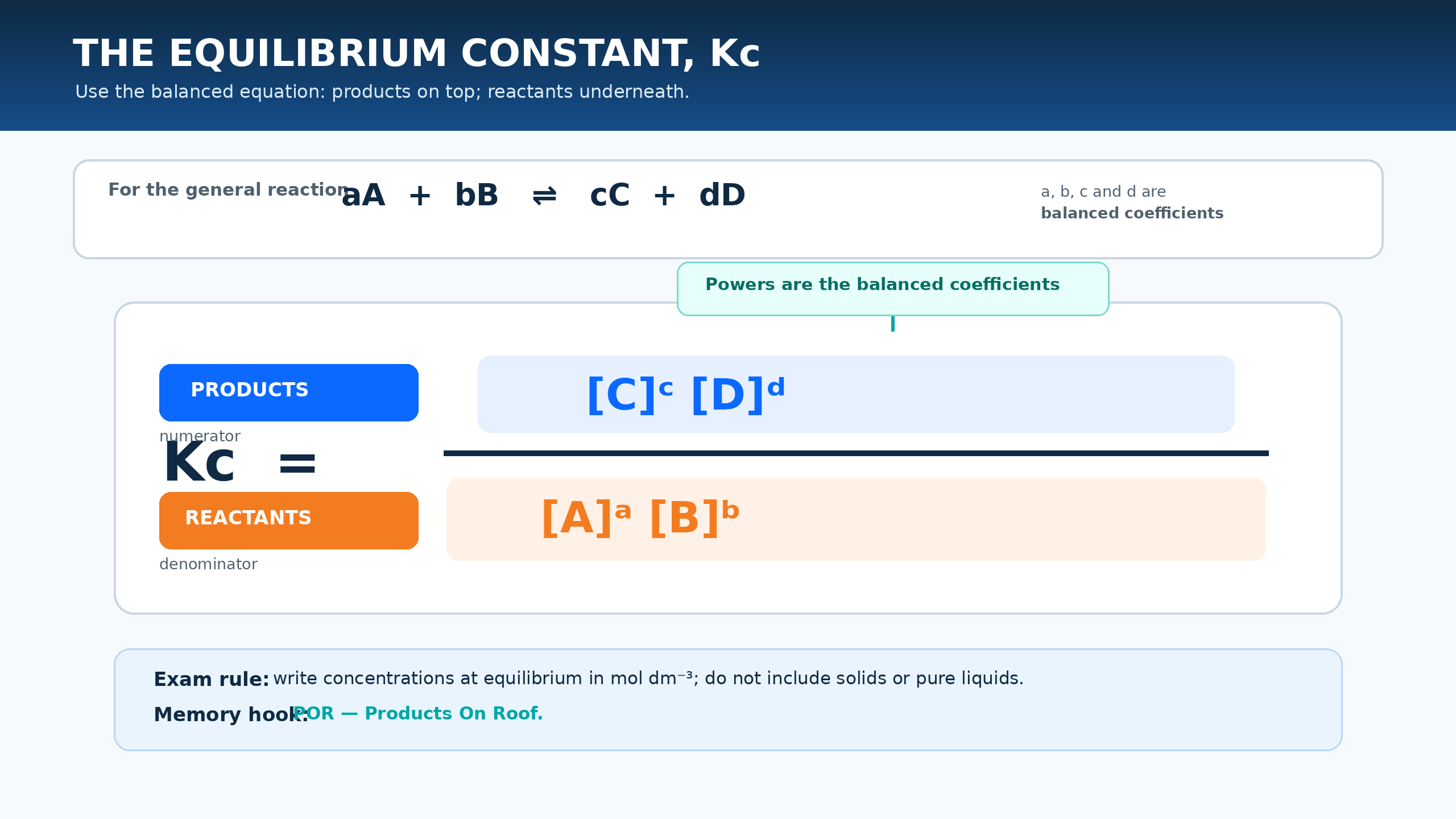
The equilibrium constant, Kc, describes the relative equilibrium concentrations for a reversible reaction at a fixed temperature. For the general equation aA + bB ⇌ cC + dD:
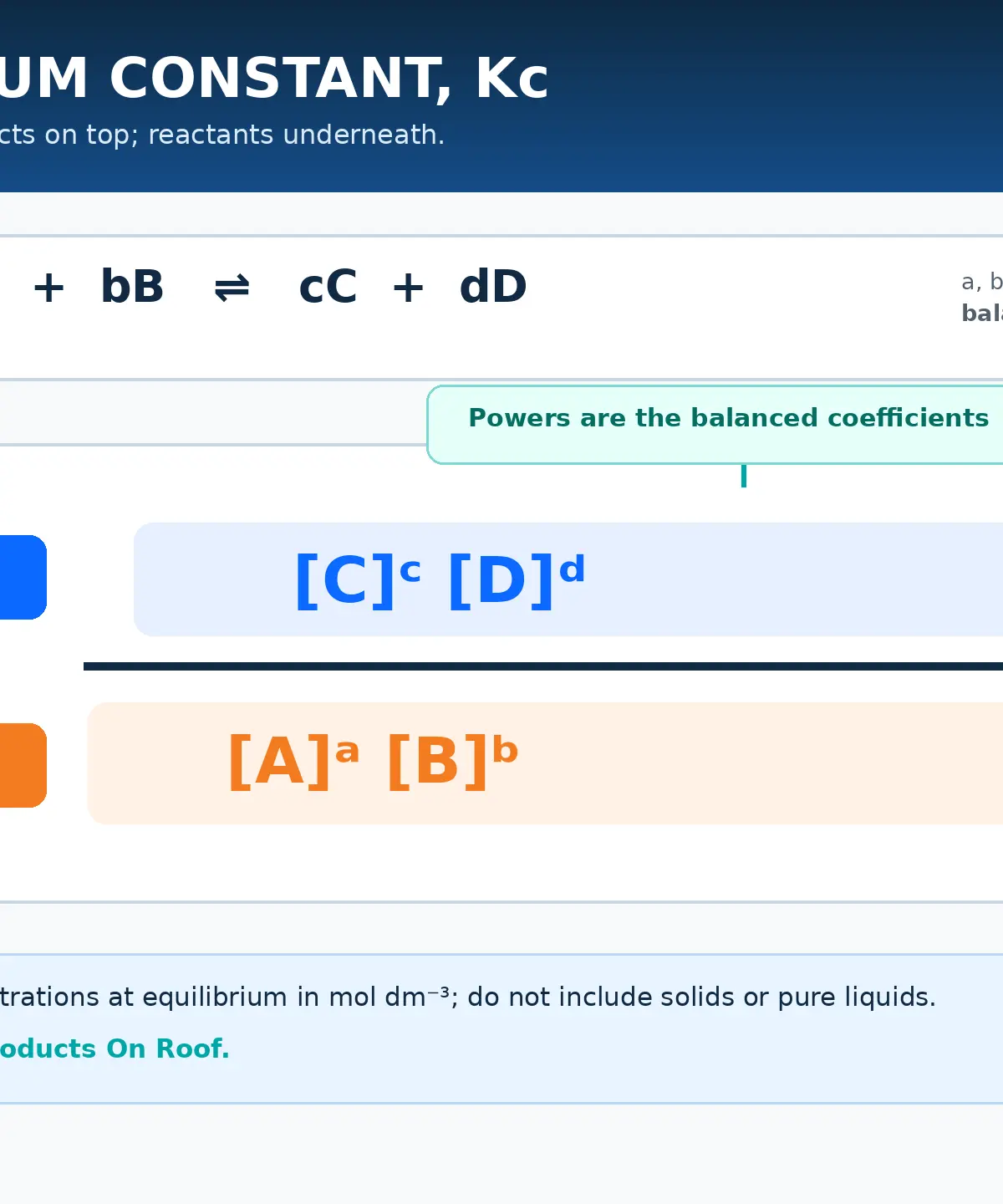
Kc = ([C]^c [D]^d) / ([A]^a [B]^b)
Square brackets mean equilibrium concentration, normally in mol dm⁻³. Put products in the numerator, reactants in the denominator, and use the balanced coefficients as powers. For 2SO₂(g) + O₂(g) ⇌ 2SO₃(g), the expression is Kc = [SO₃]^2 / ([SO₂]^2[O₂]). Do not use plus signs in the denominator: concentrations are multiplied.
At a fixed temperature, changing concentrations or adding a catalyst changes the position of equilibrium temporarily but does not change the numerical value of Kc. Temperature can change Kc because it changes which direction is favoured.2 Kc units depend on the balanced equation; use units only if the question or your specification requires them. The general Kc expression is usually not a GCSE requirement, so treat it as extension material unless your teacher or board confirms otherwise.
5. Graph and data skills
When drawing a concentration–time graph, place time on the x-axis and concentration on the y-axis. Use a sharp change only at the moment a substance is added or removed; then draw a smooth curve to the new equilibrium plateau. After adding a reactant, its line jumps up immediately and then falls as it is used. Product concentration rises smoothly to a higher plateau. A catalyst causes no concentration jump and no new plateau; it changes only how quickly the plateau is reached.
| Data cue in a question | What it means | Mark-winning response |
|---|---|---|
| Forward and reverse rate lines meet | Dynamic equilibrium reached | “Rates are equal.” |
| Concentration lines become horizontal | Concentrations are constant | “No overall change in concentration.” |
| Reactant line jumps upward | Reactant added | “Equilibrium shifts toward products.” |
| Same gas moles on both sides | Pressure change is irrelevant | “No shift in equilibrium position.” |
6. Examination method and command words
Budget about one minute per mark. For a three-mark explain question, use three linked statements: identify the relevant condition, state the equilibrium shift, and state the effect on yield. For a six-mark evaluate question, plan two chemical benefits, two practical drawbacks and a final compromise judgement.
| Command word | What candidates must do | Typical error |
|---|---|---|
| State | Give one precise fact | Adding an unsupported explanation |
| Describe | Say what happens | Writing why instead of what |
| Explain | Link cause and consequence with “because” | Naming Le Chatelier without applying it |
| Predict | Give a directional outcome | Omitting the effect on yield or concentration |
| Evaluate | Balance advantages and disadvantages, then judge | Giving only chemistry and no industrial cost/risk |
Memory hooks: “Exo exits; endo enters” reminds you that exothermic reactions release heat and endothermic reactions absorb it. “Pressure squashes to the smaller side” reminds you to count gas moles. “POR: Products On Roof” fixes the Kc order. Finally, picture the Le Chatelier seesaw: add a block to one side and the system shifts to reduce its impact.
7. Cover-and-recall checkpoints
- Cover the guide. State the two conditions required for dynamic equilibrium.
- For an exothermic forward reaction, predict the equilibrium shift when temperature increases.
- In
2SO₂ + O₂ ⇌ 2SO₃, count the moles of gas on each side and predict the effect of increased pressure. - Explain in one sentence why a catalyst does not increase equilibrium yield.
- Write the Kc expression for
H₂ + I₂ ⇌ 2HIwithout looking.
References
Visual Resources
2 diagrams and illustrations
Interactive Diagrams
2 interactive diagrams to visualise key concepts
Conceptual Flow Outline
Use this flowchart only after identifying whether the forward direction is exothermic or endothermic.
Conceptual Flow Outline
The pressure rule applies only to gases; ignore solids and liquids when counting.
Worked Examples
4 worked examples — open one to explore the question and available guidance.
Practice Questions
Test your understanding — click to reveal model answers
State two features of a system at dynamic equilibrium. [2 marks]
Hint: Think about rates and concentrations.
The forward reaction X(g) ⇌ Y(g) is endothermic. Predict the effect on the yield of Y when temperature is increased. Explain your answer. [3 marks]
Hint: Which direction absorbs heat?
For 2SO₂(g) + O₂(g) ⇌ 2SO₃(g), predict the effect of decreasing pressure on the equilibrium yield of SO₃. [3 marks]
Hint: Count moles of gas: left versus right.
Explain why an iron catalyst is used in the Haber process even though it does not increase the equilibrium yield of ammonia. [3 marks]
Hint: Separate rate from equilibrium position.
Higher/transition extension: A reaction has Kc = 16 at one temperature. At a higher temperature, Kc = 4. The forward reaction forms the products in the numerator. What has happened to the equilibrium position, and what does this suggest about the forward reaction? [3 marks]
Hint: A lower Kc means a lower product-to-reactant ratio.
Test your understanding of Chemical equilibria, Le Chatelier’s principle and Kc
Active recall beats re-reading. Take an instant quiz now to test what you’ve learned and lock it into long-term memory.
7 days Premium · Then free forever · No card, no charge