AQA · A-Level · Chemistry
Course version: 7405 · Version from Sept 2016
Oxidation is the process of electron loss and oxidising agents are…
Full specification wording
Oxidation, reduction and redox equations: Oxidation is the process of electron loss and oxidising agents are electron acceptors.
Oxidation is loss of electrons.
Checked against the AQA 7405 specification (opens in a new tab) on .
- Point 1 of 4
- 3 key terms
Study notes
From the checked teaching notes for this specification point.
The idea
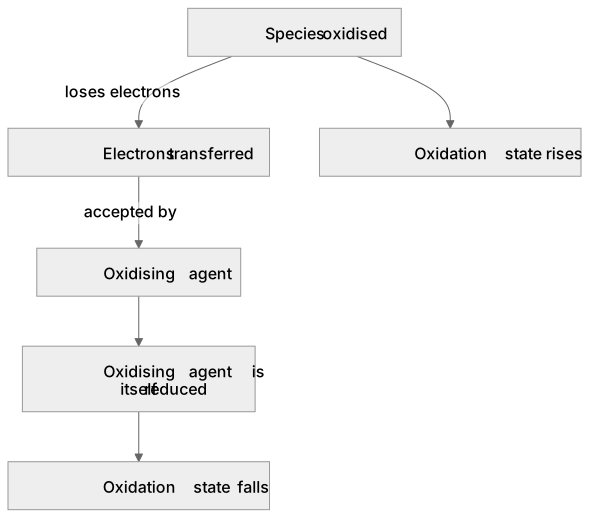
Oxidation is loss of electrons. A species that is oxidised gives electrons away, and its oxidation state rises. The oxidising agent is the other partner in that transfer: it takes the electrons in, so it is itself reduced and its oxidation state falls. The two ideas are often confused because the oxidising agent is the one that ends up reduced. Concentrated sulfuric acid with solid sodium iodide shows it in action: iodide ions are oxidised to iodine, giving up electrons, while the sulfur in the acid is reduced from +6 down to +4 in sulfur dioxide or all the way to −2 in hydrogen sulfide, so the sulfuric acid is acting as the oxidising agent. Powerful oxidising agents include manganate(VII), dichromate(VI) and the halogens.
What earns the marks
- Defining oxidation as loss of electrons.
- Defining an oxidising agent as an electron acceptor.
- Identifying the species oxidised and the species reduced in a given equation.
- Naming the oxidising agent in a reaction and supporting it with a change in oxidation state.
Common mistakes and how to put them right
Calling the species that is oxidised the oxidising agent.
Defining oxidation as gain of oxygen only, which fails for reactions with no oxygen present.
Writing that the oxidising agent donates electrons.
Quoting an oxidation state change without saying which species was oxidised and which reduced.
Assuming a species with a high oxidation state must always be oxidised further.
Exam tips
- Remember OIL RIG, then add the twist: the oxidising agent is the one that gets reduced.
- Support any claim about an agent with the oxidation state before and after; bare assertions rarely score.
- Use the phrase with reference to electrons if the question asks you to explain why a reaction is redox.
Try the lesson
The start of the Oxidation, reduction and redox equations: Oxidation is the process of electron loss and oxidising agents are electron acceptors. lesson, made from checked teaching notes for this specification point.
Have a go first
Which statement correctly defines oxidation in redox chemistry?
Listen
Oxidation is loss of electrons. A species that is oxidised gives electrons away, and its oxidation state rises. The oxidising agent is the other partner in that transfer: it takes the electrons in, so it is itself reduced and its oxidation state falls. The two ideas are often confused because the oxidising agent is the one that ends up reduced. Concentrated sulfuric acid with solid sodium iodide shows it in action: iodide ions are oxidised to iodine, giving up electrons, while the sulfur in the acid is reduced from +6 down to +4 in sulfur dioxide or all the way to −2 in hydrogen sulfide, so the sulfuric acid is acting as the oxidising agent. Powerful oxidising agents include manganate(VII), dichromate(VI) and the halogens. A strong answer earns marks for these points. defining oxidation as loss of electrons. defining an oxidising agent as an electron acceptor. identifying the species oxidised and the species reduced in a given equation. naming the oxidising agent in a reaction and supporting it with a change in oxidation state. Exam tip: Remember OIL RIG, then add the twist: the oxidising agent is the one that gets reduced.
See it
Key words
Say what each word means before you turn the card.
oxidation
Try answering aloud or in your head before turning the card.
oxidising agent
Try answering aloud or in your head before turning the card.
common oxidising agents
Try answering aloud or in your head before turning the card.
See every definition
- oxidation
- The process of electron loss, in which a species gives electrons away and its oxidation state rises.
- oxidising agent
- An electron acceptor that takes the electrons in, so it is itself reduced and its oxidation state falls.
- common oxidising agents
- Powerful oxidising agents include manganate(VII), dichromate(VI) and the halogens.
Label the diagram
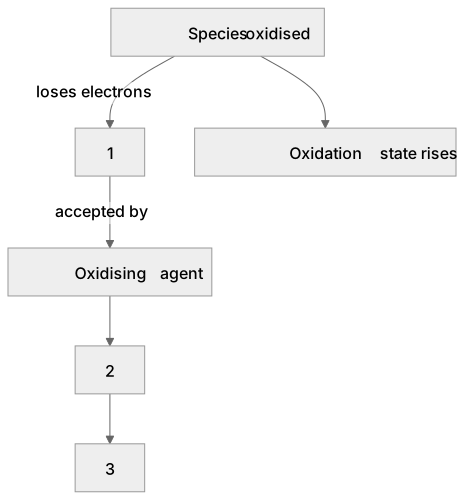
Some boxes have lost their names. Pick the right name for each number.
1Box 1
2Box 2
3Box 3
There is more to this lesson
The full lesson goes on to check your understanding and help you earn the marks. Create a free account to carry on, with your progress saved.
A week of Premium from your first lesson · Then the free plan continues · No card, no charge
Test your understanding of Oxidation, reduction and redox equations: Oxidation is the process of electron loss and oxidising agents are electron acceptors.
Active recall beats re-reading. Take an instant quiz now to test what you’ve learned and lock it into long-term memory.
A week of Premium from your first lesson · Then the free plan continues · No card, no charge