AQA · GCSE · Chemistry
Course version: 8462 · Version from Sept 2018
Most fuels, including coal, contain carbon and/or hydrogen and may also…
Full specification wording
Atmospheric pollutants from fuels: Most fuels, including coal, contain carbon and/or hydrogen and may also contain some sulfur.
Fuels are substances that release energy when burned.
Checked against the AQA 8462 specification (opens in a new tab) on .
- Point 2 of 5
- 2 key terms
Study notes
From the checked teaching notes for this specification point.
The idea
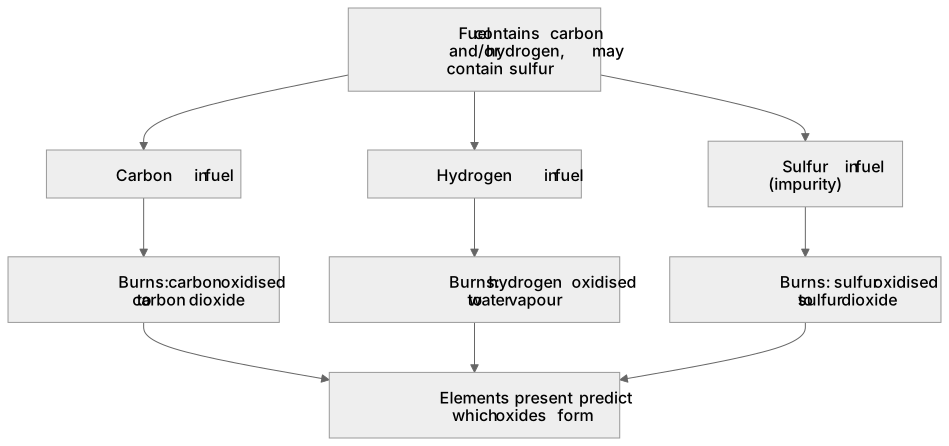
Fuels are substances that release energy when burned. Most common fuels are based on carbon and hydrogen. Coal is mostly carbon but also contains hydrocarbons and mineral matter. Petrol, diesel and natural gas are hydrocarbons, meaning their molecules contain only carbon and hydrogen. Many fuels also contain sulfur as an impurity. For example, coal and crude-oil fractions can contain sulfur compounds. When the fuel burns, carbon is oxidised to carbon dioxide, hydrogen is oxidised to water vapour, and sulfur is oxidised to sulfur dioxide. Knowing the elements present in a fuel lets you predict which oxides will form. This is why the composition of a fuel matters when assessing its pollution.
What earns the marks
- Most fuels contain carbon and/or hydrogen, so burning them can produce carbon dioxide and water vapour.
- Coal is a carbon-rich fuel that also contains hydrocarbons and other material.
- Sulfur is present in many fuels as an impurity, not as the main fuel component.
- Burning sulfur in a fuel produces sulfur dioxide.
- The elements present in a fuel determine which oxide pollutants can form when it burns.
Common mistakes and how to put them right
Saying that coal contains only carbon.
Put it right: Coal is mainly carbon but also contains hydrocarbons and sulfur impurities.
Confusing the element sulfur with the product sulfur dioxide.
Put it right: Sulfur is the impurity in the fuel; sulfur dioxide is the oxide formed when it burns.
Assuming that all fuels contain sulfur.
Put it right: Sulfur is a common impurity in some fuels, but its amount varies and some fuels contain very little.
Exam tips
- Use the wording carbon and/or hydrogen when describing fuel composition, because it covers fuels that contain both elements as well as those containing only one.
- If a question gives the formula of a fuel, identify the carbon, hydrogen and any sulfur atoms before predicting the combustion products.
- Distinguish clearly between an element present in a fuel and the oxide pollutant formed from it, for example sulfur in coal and sulfur dioxide in the exhaust gases.
Try the lesson
The start of the Atmospheric pollutants from fuels: Most fuels, including coal, contain carbon and/or hydrogen and may also contain some sulfur. lesson, made from checked teaching notes for this specification point.
Have a go first
Which two elements are found in most fuels such as coal, petrol and natural gas?
Listen
Fuels are substances that release energy when burned. Most common fuels are based on carbon and hydrogen. Coal is mostly carbon but also contains hydrocarbons and mineral matter. Petrol, diesel and natural gas are hydrocarbons, meaning their molecules contain only carbon and hydrogen. Many fuels also contain sulfur as an impurity. For example, coal and crude-oil fractions can contain sulfur compounds. When the fuel burns, carbon is oxidised to carbon dioxide, hydrogen is oxidised to water vapour, and sulfur is oxidised to sulfur dioxide. Knowing the elements present in a fuel lets you predict which oxides will form. This is why the composition of a fuel matters when assessing its pollution. A strong answer earns marks for these points. Most fuels contain carbon and/or hydrogen, so burning them can produce carbon dioxide and water vapour. Coal is a carbon-rich fuel that also contains hydrocarbons and other material. Sulfur is present in many fuels as an impurity, not as the main fuel component. Burning sulfur in a fuel produces sulfur dioxide. A common slip: Saying that coal contains only carbon. Instead, coal is mainly carbon but also contains hydrocarbons and sulfur impurities. Exam tip: Use the wording carbon and/or hydrogen when describing fuel composition, because it covers fuels that contain both elements as well as those containing only one.
See it
Key words
Say what each word means before you turn the card.
Hydrocarbons
Try answering aloud or in your head before turning the card.
Sulfur impurities
Try answering aloud or in your head before turning the card.
See every definition
- Hydrocarbons
- Molecules that contain only carbon and hydrogen, as in petrol, diesel and natural gas.
- Sulfur impurities
- Sulfur present in many fuels as an impurity rather than as the main fuel component, as in coal and crude-oil fractions.
Label the diagram
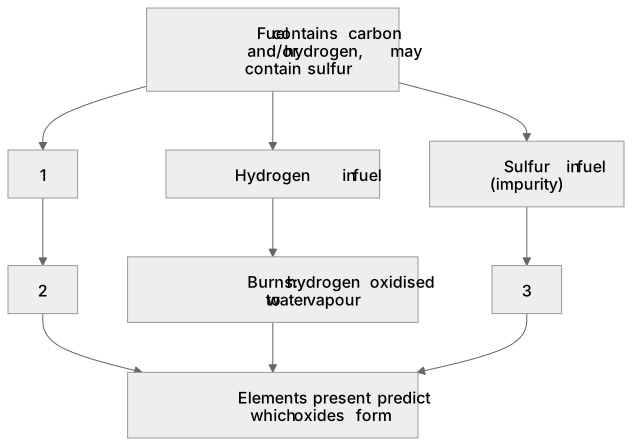
Some boxes have lost their names. Pick the right name for each number.
1Box 1
2Box 2
3Box 3
There is more to this lesson
The full lesson goes on to check your understanding and help you earn the marks. Create a free account to carry on, with your progress saved.
A week of Premium from your first lesson · Then the free plan continues · No card, no charge
Test your understanding of Atmospheric pollutants from fuels: Most fuels, including coal, contain carbon and/or hydrogen and may also contain some sulfur.
Active recall beats re-reading. Take an instant quiz now to test what you’ve learned and lock it into long-term memory.
A week of Premium from your first lesson · Then the free plan continues · No card, no charge