AQA · GCSE · Chemistry
Course version: 8462 · Version from Sept 2018
Most of the compounds in crude oil are hydrocarbons, which are molecules…
Full specification wording
Crude oil, hydrocarbons and alkanes: Most of the compounds in crude oil are hydrocarbons, which are molecules made up of hydrogen and carbon atoms only.
A hydrocarbon is a molecule that contains only hydrogen and carbon atoms.
Checked against the AQA 8462 specification (opens in a new tab) on .
- Point 3 of 4
Study notes
From the checked teaching notes for this specification point.
The idea
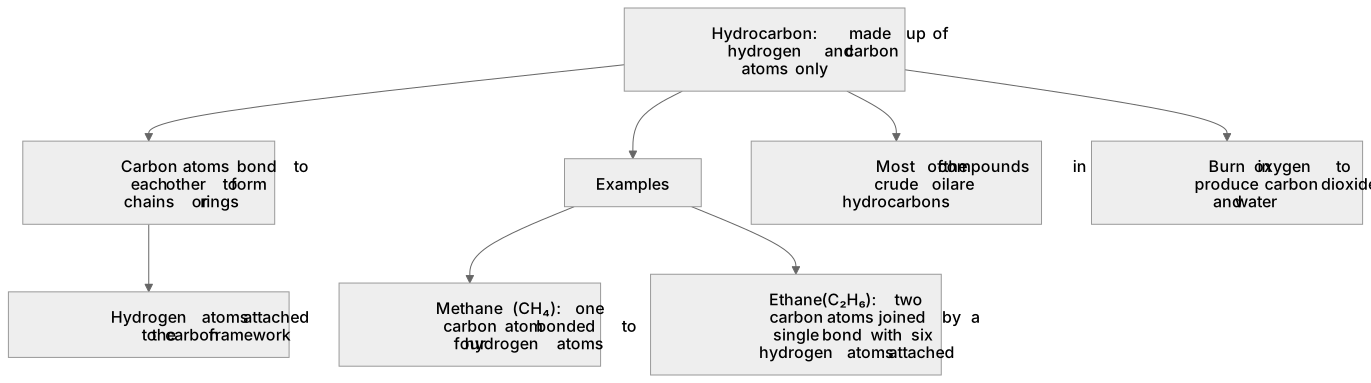
A hydrocarbon is a molecule that contains only hydrogen and carbon atoms. In crude oil, the vast majority of the compounds present are hydrocarbons, although small amounts of other compounds containing sulfur, nitrogen or oxygen may also be found. The carbon atoms in a hydrocarbon bond to each other to form chains or rings, and hydrogen atoms are attached to the carbon framework. For example, methane (CH₄) contains one carbon atom bonded to four hydrogen atoms, and ethane (C₂H₆) contains two carbon atoms joined by a single bond with six hydrogen atoms attached. Because hydrocarbons contain only carbon and hydrogen, they burn in oxygen to produce carbon dioxide and water.
What earns the marks
- A hydrocarbon is a molecule made up of hydrogen and carbon atoms only.
- Most of the compounds in crude oil are hydrocarbons.
- Carbon atoms bond to each other to form chains or rings in hydrocarbon molecules.
- Hydrogen atoms are attached to the carbon framework.
- Examples include methane (CH₄) and ethane (C₂H₆).
- Complete combustion of hydrocarbons produces carbon dioxide and water.
Common mistakes and how to put them right
Stating that hydrocarbons contain carbon and hydrogen and other elements.
Put it right by emphasising 'only' carbon and hydrogen.
Confusing hydrocarbons with carbohydrates.
Put it right by noting carbohydrates contain carbon, hydrogen and oxygen.
Writing molecular formulae with baseline numbers.
Put it right by using subscript notation such as CH₄ and C₂H₆.
Exam tips
- Use the word 'only' when defining a hydrocarbon to emphasise the absence of other elements.
- Give a named example such as methane to support your definition.
- Link the composition of hydrocarbons to the products of their complete combustion.
Try the lesson
The start of the Crude oil, hydrocarbons and alkanes: Most of the compounds in crude oil are hydrocarbons, which are molecules made up of hydrogen and carbon atoms only. lesson, made from checked teaching notes for this specification point.
Have a go first
Which two elements are found in a hydrocarbon molecule?
Listen
A hydrocarbon is a molecule that contains only hydrogen and carbon atoms. In crude oil, the vast majority of the compounds present are hydrocarbons, although small amounts of other compounds containing sulfur, nitrogen or oxygen may also be found. The carbon atoms in a hydrocarbon bond to each other to form chains or rings, and hydrogen atoms are attached to the carbon framework. For example, methane (CH₄) contains one carbon atom bonded to four hydrogen atoms, and ethane (C₂H₆) contains two carbon atoms joined by a single bond with six hydrogen atoms attached. Because hydrocarbons contain only carbon and hydrogen, they burn in oxygen to produce carbon dioxide and water. A strong answer earns marks for these points. A hydrocarbon is a molecule made up of hydrogen and carbon atoms only. Most of the compounds in crude oil are hydrocarbons. Carbon atoms bond to each other to form chains or rings in hydrocarbon molecules. Hydrogen atoms are attached to the carbon framework. A common slip: Stating that hydrocarbons contain carbon and hydrogen and other elements. Instead, emphasising 'only' carbon and hydrogen. Exam tip: Use the word 'only' when defining a hydrocarbon to emphasise the absence of other elements.
See it
Label the diagram
Some boxes have lost their names. Pick the right name for each number.
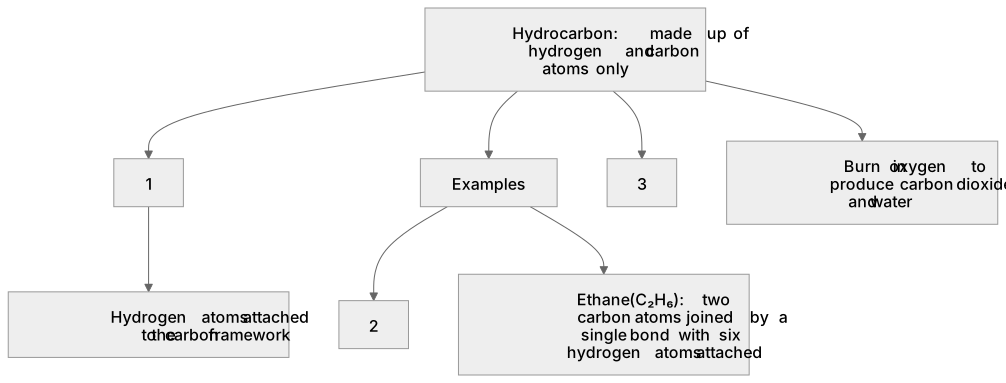
1Box 1
2Box 2
3Box 3
There is more to this lesson
The full lesson goes on to check your understanding and help you earn the marks. Create a free account to carry on, with your progress saved.
A week of Premium from your first lesson · Then the free plan continues · No card, no charge
Test your understanding of Crude oil, hydrocarbons and alkanes: Most of the compounds in crude oil are hydrocarbons, which are molecules made up of hydrogen and carbon atoms only.
Active recall beats re-reading. Take an instant quiz now to test what you’ve learned and lock it into long-term memory.
A week of Premium from your first lesson · Then the free plan continues · No card, no charge