AQA · GCSE · Chemistry
Course version: 8462 · Version from Sept 2018
The electrons in an atom occupy the lowest available energy levels…
Full specification wording
Electronic structure: The electrons in an atom occupy the lowest available energy levels (innermost available shells).
Electrons in an atom are arranged in energy levels, often called shells.
Checked against the AQA 8462 specification (opens in a new tab) on .
- Point 1 of 3
- 3 key terms
Study notes
From the checked teaching notes for this specification point.
The idea
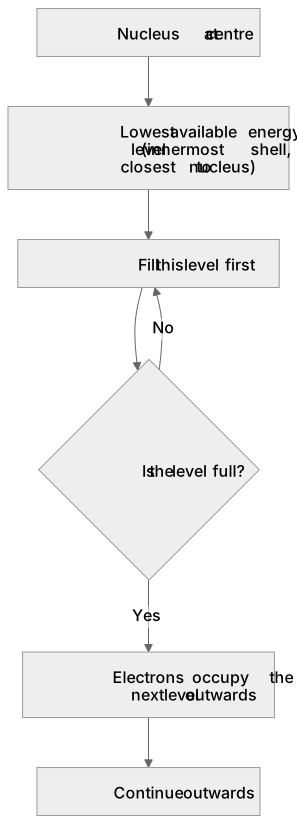
Electrons in an atom are arranged in energy levels, often called shells. The lowest available energy level is the one closest to the nucleus and has the lowest energy. Electrons fill this level first because the atom is most stable when its electrons occupy the lowest available energy states. Only when the lowest level is full do electrons occupy the next level outwards, and so on. For example, hydrogen has one electron in the first level, while lithium has two electrons filling the first level and one electron in the second level. This filling order explains why the outer electron of an alkali metal is in a higher energy level and is relatively easily lost.
What earns the marks
- Electrons occupy energy levels, also called shells, around the nucleus.
- The lowest available energy level is the innermost shell, closest to the nucleus.
- Electrons fill the lowest available energy level first before occupying higher levels.
- A level must be full before electrons occupy the next available level outwards.
- The arrangement of electrons in energy levels determines an atom's electronic structure.
Common mistakes and how to put them right
Thinking electrons fill the outermost shell first.
Put it right by stating that the innermost, lowest-energy shell fills first.
Assuming all shells hold the same number of electrons.
Put it right by noting that the first shell holds a maximum of two electrons and later shells hold more.
Writing electron arrangements with electrons in a higher level while a lower level is not full.
Put it right by filling each lower level to its capacity before moving outwards.
Exam tips
- Use the phrase lowest available energy level when explaining why the first shell fills first.
- Link the filling order to the position of the element in the periodic table, since the number of outer electrons matches the group for main-group elements.
- When drawing a shell diagram, place the nucleus at the centre and add electrons to the innermost shell before any outer shell.
Try the lesson
The start of the Electronic structure: The electrons in an atom occupy the lowest available energy levels (innermost available shells). lesson, made from checked teaching notes for this specification point.
Have a go first
An atom has electrons in its energy levels. Which statement describes how these electrons are arranged?
Listen
Electrons in an atom are arranged in energy levels, often called shells. The lowest available energy level is the one closest to the nucleus and has the lowest energy. Electrons fill this level first because the atom is most stable when its electrons occupy the lowest available energy states. Only when the lowest level is full do electrons occupy the next level outwards, and so on. For example, hydrogen has one electron in the first level, while lithium has two electrons filling the first level and one electron in the second level. This filling order explains why the outer electron of an alkali metal is in a higher energy level and is relatively easily lost. A strong answer earns marks for these points. Electrons occupy energy levels, also called shells, around the nucleus. The lowest available energy level is the innermost shell, closest to the nucleus. Electrons fill the lowest available energy level first before occupying higher levels. A level must be full before electrons occupy the next available level outwards. A common slip: Thinking electrons fill the outermost shell first. Instead, stating that the innermost, lowest-energy shell fills first. Exam tip: Use the phrase lowest available energy level when explaining why the first shell fills first.
See it
Key words
Say what each word means before you turn the card.
Energy levels and shells
Try answering aloud or in your head before turning the card.
Electron configuration
Try answering aloud or in your head before turning the card.
Stability of atoms
Try answering aloud or in your head before turning the card.
See every definition
- Energy levels and shells
- The regions around the nucleus that electrons occupy, with the lowest available energy level being the innermost shell, closest to the nucleus.
- Electron configuration
- The arrangement of electrons in energy levels, which determines an atom's electronic structure.
- Stability of atoms
- An atom is most stable when its electrons occupy the lowest available energy states.
There is more to this lesson
The full lesson goes on to check your understanding and help you earn the marks. Create a free account to carry on, with your progress saved.
A week of Premium from your first lesson · Then the free plan continues · No card, no charge
Test your understanding of Electronic structure: The electrons in an atom occupy the lowest available energy levels (innermost available shells).
Active recall beats re-reading. Take an instant quiz now to test what you’ve learned and lock it into long-term memory.
A week of Premium from your first lesson · Then the free plan continues · No card, no charge