AQA · GCSE · Chemistry
Course version: 8462 · Version from Sept 2018
Students should be able to: interpret or evaluate specific metal…
Full specification wording
Extraction of metals and reduction: Students should be able to: interpret or evaluate specific metal extraction processes when given appropriate information identify the substances which are oxidised or reduced in terms of gain or loss of oxygen.
Evaluating metal extraction requires analysing provided data, such as energy costs, environmental impacts, and the chemical reactions involved.
Checked against the AQA 8462 specification (opens in a new tab) on .
- Point 4 of 4
- 3 key terms
Study notes
From the checked teaching notes for this specification point.
The idea
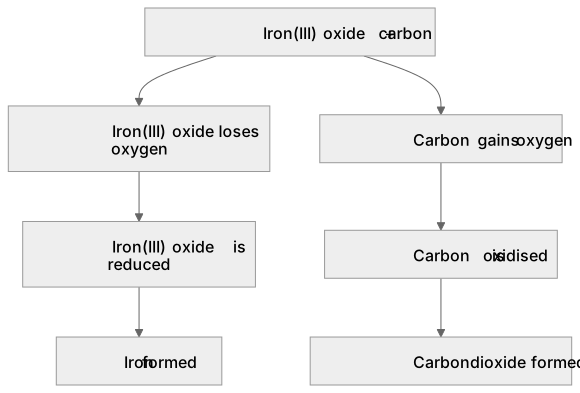
Evaluating metal extraction requires analysing provided data, such as energy costs, environmental impacts, and the chemical reactions involved. In a typical extraction, such as heating iron(III) oxide with carbon, the iron(III) oxide loses oxygen and is therefore reduced to iron. Simultaneously, the carbon gains oxygen and is oxidised to carbon dioxide. Exam questions often present unfamiliar extraction methods, requiring students to identify the oxidised and reduced species from the given chemical equation and weigh the pros and cons of the process using the supplied text.
What earns the marks
- Define oxidation as the gain of oxygen in a chemical reaction.
- Define reduction as the loss of oxygen in a chemical reaction.
- Identify the metal oxide as the substance being reduced during extraction.
- Identify the reducing agent, such as carbon, as the substance being oxidised.
- Compare advantages and disadvantages of extraction methods using provided data.
Common mistakes and how to put them right
Confusing which substance is oxidised or reduced.
Put it right: The metal oxide loses oxygen so it is reduced, while the carbon gains oxygen so it is oxidised.
Stating the pure metal is reduced.
Put it right: The metal compound or oxide is reduced to form the pure metal.
Failing to use provided data in evaluation questions.
Put it right: Reference specific facts, costs, or environmental factors given in the prompt.
Exam tips
- Highlight the oxygen atoms in the reactants and trace where they go in the products to easily spot oxidation and reduction.
- When evaluating, ensure you provide a conclusion if the question asks for a justified choice between methods.
- Clearly state the full name of the compound being reduced, not just the metal element.
Try the lesson
The start of the Extraction of metals and reduction: Students should be able to: interpret or evaluate specific metal extraction processes when given appropriate information identify the substances which are oxidised or reduced in terms of gain or loss of oxygen. lesson, made from checked teaching notes for this specification point.
Have a go first
In the reaction Fe₂O₃ + 3CO → 2Fe + 3CO₂, which substance is reduced?
Listen
Evaluating metal extraction requires analysing provided data, such as energy costs, environmental impacts, and the chemical reactions involved. In a typical extraction, such as heating iron(III) oxide with carbon, the iron(III) oxide loses oxygen and is therefore reduced to iron. Simultaneously, the carbon gains oxygen and is oxidised to carbon dioxide. Exam questions often present unfamiliar extraction methods, requiring students to identify the oxidised and reduced species from the given chemical equation and weigh the pros and cons of the process using the supplied text. A strong answer earns marks for these points. Define oxidation as the gain of oxygen in a chemical reaction. Define reduction as the loss of oxygen in a chemical reaction. Identify the metal oxide as the substance being reduced during extraction. Identify the reducing agent, such as carbon, as the substance being oxidised. A common slip: Confusing which substance is oxidised or reduced. Instead, The metal oxide loses oxygen so it is reduced, while the carbon gains oxygen so it is oxidised. Exam tip: Highlight the oxygen atoms in the reactants and trace where they go in the products to easily spot oxidation and reduction.
See it
Key words
Say what each word means before you turn the card.
Oxidation
Try answering aloud or in your head before turning the card.
Reduction
Try answering aloud or in your head before turning the card.
Data evaluation
Try answering aloud or in your head before turning the card.
See every definition
- Oxidation
- The gain of oxygen in a chemical reaction, for example when carbon gains oxygen and is oxidised to carbon dioxide.
- Reduction
- The loss of oxygen in a chemical reaction, for example when iron(III) oxide loses oxygen and is reduced to iron.
- Data evaluation
- Analysing provided data, such as energy costs, environmental impacts and the chemical reactions involved, to weigh the pros and cons of a metal extraction process.
Label the diagram
Some boxes have lost their names. Pick the right name for each number.
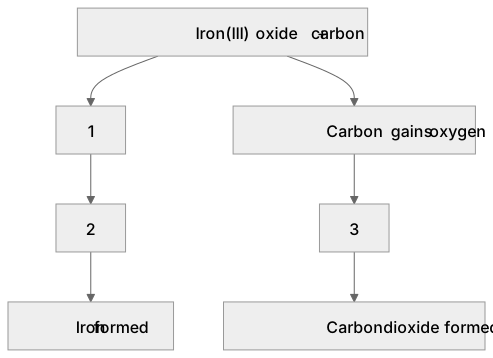
1Box 1
2Box 2
3Box 3
There is more to this lesson
The full lesson goes on to check your understanding and help you earn the marks. Create a free account to carry on, with your progress saved.
A week of Premium from your first lesson · Then the free plan continues · No card, no charge
Test your understanding of Extraction of metals and reduction: Students should be able to: interpret or evaluate specific metal extraction processes when given appropriate information identify the substances which are oxidised or reduced in terms of gain or loss of oxygen.
Active recall beats re-reading. Take an instant quiz now to test what you’ve learned and lock it into long-term memory.
A week of Premium from your first lesson · Then the free plan continues · No card, no charge