AQA · GCSE · Chemistry
Course version: 8462 · Version from Sept 2018
An increase in average global temperature is a major cause of climate…
Full specification wording
Global climate change: An increase in average global temperature is a major cause of climate change.
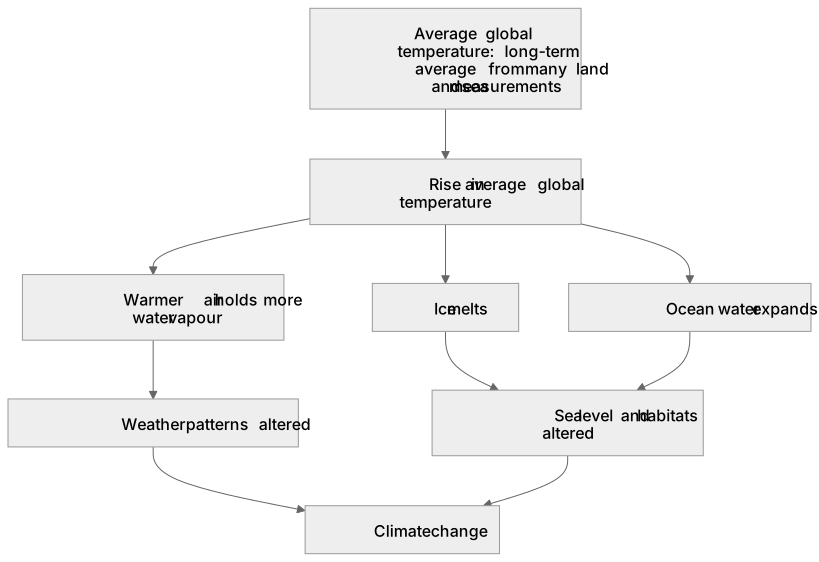
Average global temperature is calculated from many land and sea measurements over a long period.
Checked against the AQA 8462 specification (opens in a new tab) on .
- Point 1 of 3
- 4 key terms
Study notes
From the checked teaching notes for this specification point.
The idea
Average global temperature is calculated from many land and sea measurements over a long period. When this average rises, the climate system changes: warmer air holds more water vapour, ice melts, and ocean water expands. These changes alter weather patterns, sea level and habitats, so the temperature rise is a major cause of climate change. It is not the only factor, because volcanic eruptions and changes in solar output also affect climate, but the recent rise is linked to increased greenhouse gases from human activity. A useful method is to distinguish weather, which is short term and local, from climate, which is long term and average. A single hot day is weather; a rising multi-decade average is climate change.
What earns the marks
- Define average global temperature as a long-term average from many measurements around the world.
- Explain that a rise in this average drives climate change by altering the climate system.
- Link the temperature rise to effects such as melting ice, thermal expansion of oceans and changed weather patterns.
- Distinguish climate, a long-term average, from weather, which is short term and local.
- Recognise that other factors such as volcanic activity and solar variation also affect climate, but the recent rise is linked to greenhouse gases.
Common mistakes and how to put them right
Using one cold day to argue against global warming.
Put it right by explaining that climate is a long-term average, so single weather events do not disprove a trend.
Confusing climate change with the ozone hole.
Put it right by linking climate change to greenhouse gases and the ozone hole to chlorofluorocarbons.
Saying the temperature rise is the only cause of climate change.
Put it right by stating it is a major cause while other natural factors also operate.
Exam tips
- Define average global temperature before explaining its effect, so your answer has a clear starting point.
- Use the weather-versus-climate distinction when a question gives a short-term event.
- Link the temperature rise to at least two consequences to show the causal chain.
Try the lesson
The start of the Global climate change: An increase in average global temperature is a major cause of climate change. lesson, made from checked teaching notes for this specification point.
Have a go first
An increase in average global temperature is recognised as a major cause of which environmental issue?
Listen
Average global temperature is calculated from many land and sea measurements over a long period. When this average rises, the climate system changes: warmer air holds more water vapour, ice melts, and ocean water expands. These changes alter weather patterns, sea level and habitats, so the temperature rise is a major cause of climate change. It is not the only factor, because volcanic eruptions and changes in solar output also affect climate, but the recent rise is linked to increased greenhouse gases from human activity. A useful method is to distinguish weather, which is short term and local, from climate, which is long term and average. A single hot day is weather; a rising multi-decade average is climate change. A strong answer earns marks for these points. Define average global temperature as a long-term average from many measurements around the world. Explain that a rise in this average drives climate change by altering the climate system. Link the temperature rise to effects such as melting ice, thermal expansion of oceans and changed weather patterns. Distinguish climate, a long-term average, from weather, which is short term and local. A common slip: Using one cold day to argue against global warming. Instead, explaining that climate is a long-term average, so single weather events do not disprove a trend. Exam tip: Define average global temperature before explaining its effect, so your answer has a clear starting point.
See it
Key words
Say what each word means before you turn the card.
Global temperature
Try answering aloud or in your head before turning the card.
Climate versus weather
Try answering aloud or in your head before turning the card.
Greenhouse gases
Try answering aloud or in your head before turning the card.
Causal mechanisms
Try answering aloud or in your head before turning the card.
See every definition
- Global temperature
- A long-term average calculated from many land and sea measurements around the world.
- Climate versus weather
- Weather is short term and local, whereas climate is long term and average.
- Greenhouse gases
- Increased amounts from human activity are linked to the recent rise in average global temperature.
- Causal mechanisms
- Warmer air holds more water vapour, ice melts and ocean water expands, altering weather patterns, sea level and habitats.
Label the diagram
Some boxes have lost their names. Pick the right name for each number.
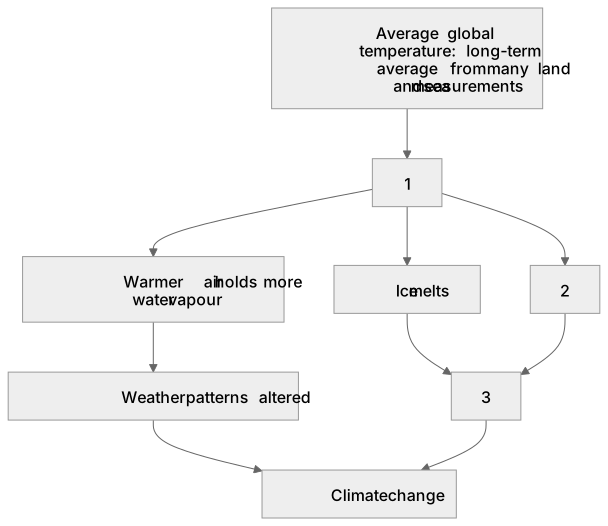
1Box 1
2Box 2
3Box 3
There is more to this lesson
The full lesson goes on to check your understanding and help you earn the marks. Create a free account to carry on, with your progress saved.
A week of Premium from your first lesson · Then the free plan continues · No card, no charge
Test your understanding of Global climate change: An increase in average global temperature is a major cause of climate change.
Active recall beats re-reading. Take an instant quiz now to test what you’ve learned and lock it into long-term memory.
A week of Premium from your first lesson · Then the free plan continues · No card, no charge