AQA · GCSE · Chemistry
Course version: 8462 · Version from Sept 2018
Carbon dioxide was also decreased by the formation of sedimentary rocks…
Full specification wording
How carbon dioxide decreased: Carbon dioxide was also decreased by the formation of sedimentary rocks and fossil fuels that contain carbon.
Early Earth's atmosphere had little oxygen and much more carbon dioxide than today.
Checked against the AQA 8462 specification (opens in a new tab) on .
- Point 2 of 3
- 4 key terms
Study notes
From the checked teaching notes for this specification point.
The idea
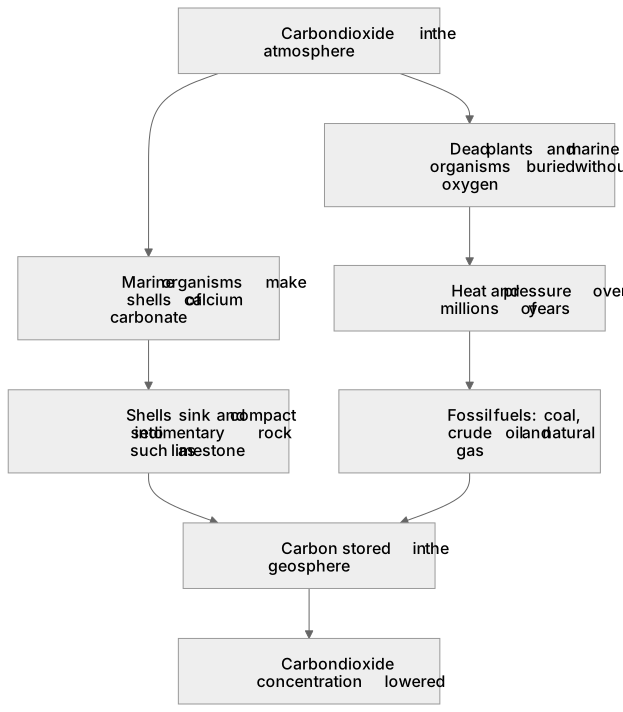
Early Earth's atmosphere had little oxygen and much more carbon dioxide than today. Two linked processes removed carbon dioxide. When marine organisms made shells of calcium carbonate, the shells sank and compacted into sedimentary rock such as limestone, locking carbon in carbonate minerals. When dead plants and marine organisms were buried without oxygen, heat and pressure over millions of years converted their carbon into coal, crude oil and natural gas. So carbon that was once atmospheric carbon dioxide became stored in the geosphere as sedimentary rock and fossil fuels. This removal lowered carbon dioxide concentration, helping conditions for oxygen to rise later.
What earns the marks
- Carbon dioxide is removed from the atmosphere when carbon becomes locked into solid or buried stores rather than remaining as a gas.
- Shells and skeletons of marine organisms contain calcium carbonate; when these settle and are compacted, sedimentary rock such as limestone forms and stores carbon.
- Buried plant and marine material, heated and compressed over millions of years without oxygen, forms fossil fuels: coal, crude oil and natural gas.
- The carbon in limestone and fossil fuels originated from carbon dioxide in the atmosphere or dissolved in oceans, so these stores represent removed atmospheric carbon.
- Photosynthesis by early organisms also removed carbon dioxide, and some of that carbon later became buried and fossilised.
Common mistakes and how to put them right
Thinking fossil fuels form quickly from living plants.
Put it right by stressing burial, heat and pressure acting over millions of years.
Confusing sedimentary rock formation with igneous or metamorphic processes.
Put it right: Limestone is a sedimentary rock formed from compacted calcium carbonate remains.
Believing carbon dioxide simply disappeared.
Put it right: It was not destroyed but transferred into carbonate rock and fossil fuel stores, so carbon is conserved.
Exam tips
- Link each carbon store to the process that formed it: limestone to marine shells and compaction, coal to buried plant material, crude oil and natural gas to buried marine organisms.
- Use the phrase 'locked up' or 'stored' to show carbon dioxide was removed from the atmosphere, not destroyed.
- When asked to explain a decrease, name the store and state that the process is geological and slow, so it acted over millions of years.
Try the lesson
The start of the How carbon dioxide decreased: Carbon dioxide was also decreased by the formation of sedimentary rocks and fossil fuels that contain carbon. lesson, made from checked teaching notes for this specification point.
Have a go first
Which of the following processes contributed to the decrease of carbon dioxide in the Earth's early atmosphere?
Listen
Early Earth's atmosphere had little oxygen and much more carbon dioxide than today. Two linked processes removed carbon dioxide. When marine organisms made shells of calcium carbonate, the shells sank and compacted into sedimentary rock such as limestone, locking carbon in carbonate minerals. When dead plants and marine organisms were buried without oxygen, heat and pressure over millions of years converted their carbon into coal, crude oil and natural gas. So carbon that was once atmospheric carbon dioxide became stored in the geosphere as sedimentary rock and fossil fuels. This removal lowered carbon dioxide concentration, helping conditions for oxygen to rise later. A strong answer earns marks for these points. Carbon dioxide is removed from the atmosphere when carbon becomes locked into solid or buried stores rather than remaining as a gas. Shells and skeletons of marine organisms contain calcium carbonate; when these settle and are compacted, sedimentary rock such as limestone forms and stores carbon. Buried plant and marine material, heated and compressed over millions of years without oxygen, forms fossil fuels: coal, crude oil and natural gas. The carbon in limestone and fossil fuels originated from carbon dioxide in the atmosphere or dissolved in oceans, so these stores represent removed atmospheric carbon. A common slip: Thinking fossil fuels form quickly from living plants. Instead, stressing burial, heat and pressure acting over millions of years. Exam tip: Link each carbon store to the process that formed it: limestone to marine shells and compaction, coal to buried plant material, crude oil and natural gas to buried marine organisms.
See it
Key words
Say what each word means before you turn the card.
Formation of sedimentary rocks
Try answering aloud or in your head before turning the card.
Formation of fossil fuels
Try answering aloud or in your head before turning the card.
Geological timescales and atmospheric change
Try answering aloud or in your head before turning the card.
Carbon cycle and carbon stores
Try answering aloud or in your head before turning the card.
See every definition
- Formation of sedimentary rocks
- Shells and skeletons of marine organisms contain calcium carbonate; when these settle and are compacted, sedimentary rock such as limestone forms and stores carbon.
- Formation of fossil fuels
- Buried plant and marine material, heated and compressed over millions of years without oxygen, forms coal, crude oil and natural gas.
- Geological timescales and atmospheric change
- Both processes are slow and geological, so they reduced carbon dioxide gradually over long time periods.
- Carbon cycle and carbon stores
- Carbon dioxide is removed from the atmosphere when carbon becomes locked into solid or buried stores rather than remaining as a gas.
Label the diagram
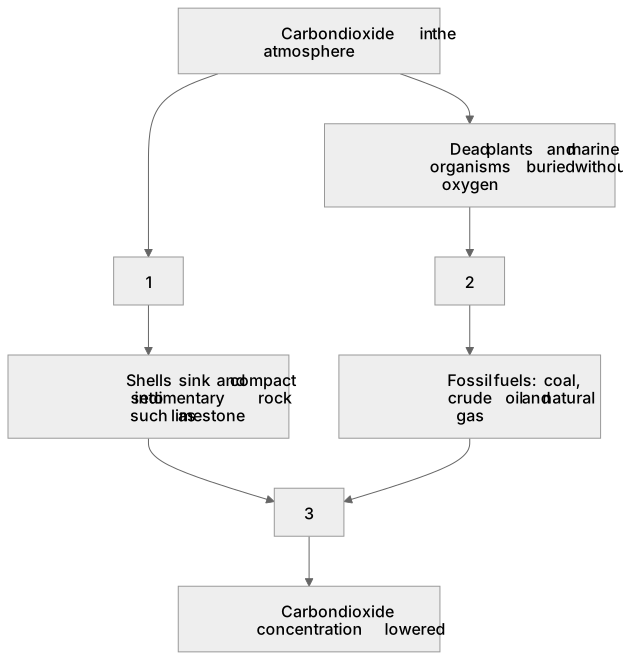
Some boxes have lost their names. Pick the right name for each number.
1Box 1
2Box 2
3Box 3
There is more to this lesson
The full lesson goes on to check your understanding and help you earn the marks. Create a free account to carry on, with your progress saved.
A week of Premium from your first lesson · Then the free plan continues · No card, no charge
Test your understanding of How carbon dioxide decreased: Carbon dioxide was also decreased by the formation of sedimentary rocks and fossil fuels that contain carbon.
Active recall beats re-reading. Take an instant quiz now to test what you’ve learned and lock it into long-term memory.
A week of Premium from your first lesson · Then the free plan continues · No card, no charge