AQA · GCSE · Chemistry
Course version: 8462 · Version from Sept 2018
Acids are neutralised by alkalis (eg soluble metal hydroxides) and bases…
Full specification wording
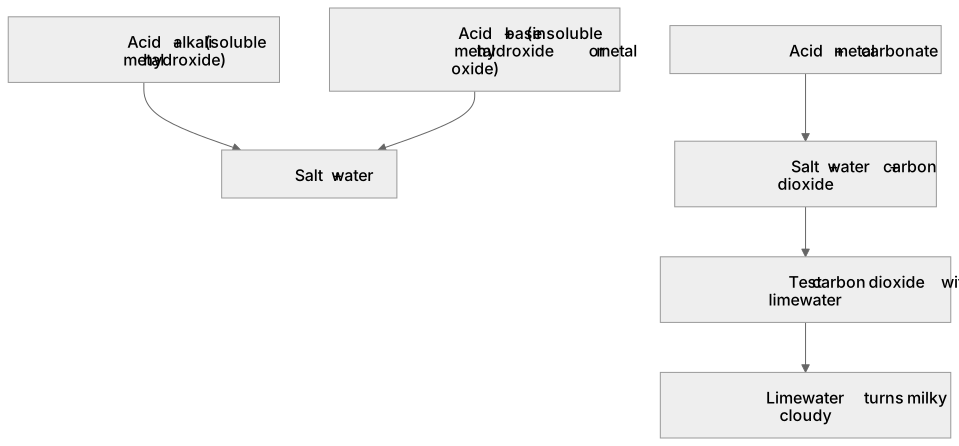
Neutralisation of acids and salt production: Acids are neutralised by alkalis (eg soluble metal hydroxides) and bases (eg insoluble metal hydroxides and metal oxides) to produce salts and water, and by metal carbonates to produce salts, water and carbon dioxide.
Neutralisation occurs when an acid reacts with a base, producing a salt and water.
Checked against the AQA 8462 specification (opens in a new tab) on .
- Point 1 of 3
- 3 key terms
Study notes
From the checked teaching notes for this specification point.
The idea
Neutralisation occurs when an acid reacts with a base, producing a salt and water. Alkalis are soluble bases, such as sodium hydroxide, while insoluble bases include copper(II) oxide and copper(II) hydroxide. For example, hydrochloric acid with sodium hydroxide gives sodium chloride and water: HCl(aq) + NaOH(aq) → NaCl(aq) + H₂O(l). With an insoluble base such as copper(II) oxide, the reaction is CuO(s) + 2HCl(aq) → CuCl₂(aq) + H₂O(l). Metal carbonates also neutralise acids but produce carbon dioxide as well as salt and water, for example CaCO₃(s) + 2HCl(aq) → CaCl₂(aq) + H₂O(l) + CO₂(g). The salt name comes from the metal and the acid: hydrochloric acid gives chlorides, sulfuric acid gives sulfates, nitric acid gives nitrates.
What earns the marks
- Name the salt produced from the metal and the acid used.
- Write balanced symbol equations for neutralisation with an alkali, a base and a metal carbonate.
- State that neutralisation of an acid with an alkali or base produces a salt and water only.
- State that reaction with a metal carbonate also produces carbon dioxide.
- Describe the test for carbon dioxide using limewater turning milky or cloudy.
Common mistakes and how to put them right
Omitting water from the products of an acid-carbonate reaction.
Put it right: The products are salt, water and carbon dioxide.
Naming the salt from the acid alone.
Put it right: Combine the metal name with the acid-derived ending, such as sodium sulfate.
Treating all bases as soluble.
Put it right: Alkalis are soluble bases while many metal oxides and hydroxides are insoluble bases.
Exam tips
- Write the word equation first to confirm all products before balancing the symbol equation.
- Include state symbols where the question requires a full equation.
- Link the limewater test directly to carbon dioxide and describe the colour change clearly.
Try the lesson
The start of the Neutralisation of acids and salt production: Acids are neutralised by alkalis (eg soluble metal hydroxides) and bases (eg insoluble metal hydroxides and metal oxides) to produce salts and water, and by metal carbonates to produce salts, water and carbon dioxide. lesson, made from checked teaching notes for this specification point.
Have a go first
Sodium hydroxide solution is added to dilute hydrochloric acid until the acid is neutralised. Which two products are formed?
Listen
Neutralisation occurs when an acid reacts with a base, producing a salt and water. Alkalis are soluble bases, such as sodium hydroxide, while insoluble bases include copper(II) oxide and copper(II) hydroxide. For example, hydrochloric acid with sodium hydroxide gives sodium chloride and water: HCl(aq) + NaOH(aq) → NaCl(aq) + H₂O(l). With an insoluble base such as copper(II) oxide, the reaction is CuO(s) + 2HCl(aq) → CuCl₂(aq) + H₂O(l). Metal carbonates also neutralise acids but produce carbon dioxide as well as salt and water, for example CaCO₃(s) + 2HCl(aq) → CaCl₂(aq) + H₂O(l) + CO₂(g). The salt name comes from the metal and the acid: hydrochloric acid gives chlorides, sulfuric acid gives sulfates, nitric acid gives nitrates. A strong answer earns marks for these points. Name the salt produced from the metal and the acid used. Write balanced symbol equations for neutralisation with an alkali, a base and a metal carbonate. State that neutralisation of an acid with an alkali or base produces a salt and water only. State that reaction with a metal carbonate also produces carbon dioxide. A common slip: Omitting water from the products of an acid-carbonate reaction. Instead, the products are salt, water and carbon dioxide. Exam tip: Write the word equation first to confirm all products before balancing the symbol equation.
See it
Key words
Say what each word means before you turn the card.
Neutralisation
Try answering aloud or in your head before turning the card.
Acid-base reactions
Try answering aloud or in your head before turning the card.
Carbonate reactions
Try answering aloud or in your head before turning the card.
See every definition
- Neutralisation
- The process in which acids are neutralised by alkalis and bases to produce salts and water, and by metal carbonates to produce salts, water and carbon dioxide.
- Acid-base reactions
- Acids are neutralised by alkalis, which are soluble bases, and by bases, which include insoluble metal hydroxides and metal oxides, to produce salts and water.
- Carbonate reactions
- Metal carbonates neutralise acids but produce carbon dioxide as well as salt and water.
Label the diagram
Some boxes have lost their names. Pick the right name for each number.
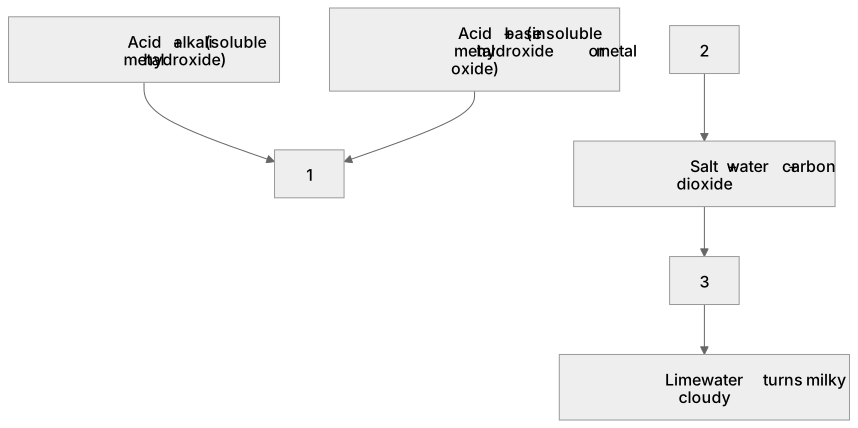
1Box 1
2Box 2
3Box 3
There is more to this lesson
The full lesson goes on to check your understanding and help you earn the marks. Create a free account to carry on, with your progress saved.
A week of Premium from your first lesson · Then the free plan continues · No card, no charge
Test your understanding of Neutralisation of acids and salt production: Acids are neutralised by alkalis (eg soluble metal hydroxides) and bases (eg insoluble metal hydroxides and metal oxides) to produce salts and water, and by metal carbonates to produce salts, water and carbon dioxide.
Active recall beats re-reading. Take an instant quiz now to test what you’ve learned and lock it into long-term memory.
A week of Premium from your first lesson · Then the free plan continues · No card, no charge