AQA · GCSE · Chemistry
Course version: 8462 · Version from Sept 2018
Potable water is not pure water in the chemical sense because it contains…
Full specification wording
Potable water: Potable water is not pure water in the chemical sense because it contains dissolved substances.
In chemistry, pure water contains only H₂O molecules.
Checked against the AQA 8462 specification (opens in a new tab) on .
- Point 4 of 12
Study notes
From the checked teaching notes for this specification point.
The idea
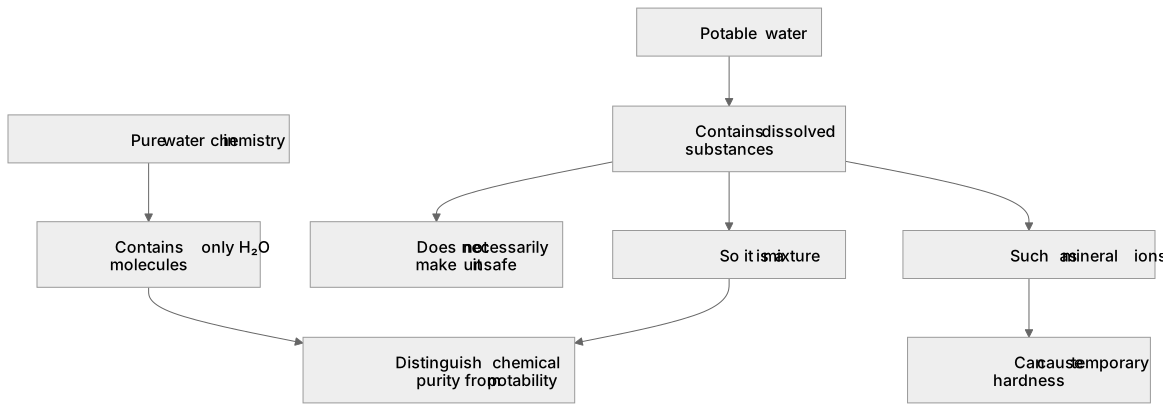
In chemistry, pure water contains only H₂O molecules. Potable water is not pure in this sense because it contains dissolved substances, such as mineral ions, at low concentrations. These dissolved substances do not necessarily make the water unsafe, but they mean it is a mixture rather than a pure substance. For example, tap water may contain dissolved calcium and magnesium ions, which can cause temporary hardness. This distinction is important when interpreting tests for purity, such as boiling point.
What earns the marks
- States that pure water in chemistry contains only H₂O molecules.
- Explains that potable water contains dissolved substances, so it is a mixture.
- Distinguishes chemical purity from potability.
- Gives examples of dissolved substances in potable water, such as mineral ions.
- Links the presence of dissolved substances to properties such as boiling point or hardness.
Common mistakes and how to put them right
Calling potable water pure because it is clear.
Put it right: Chemical purity means only one substance is present.
Thinking dissolved substances always make water unsafe.
Put it right: Low levels can be safe and are allowed in potable water.
Confusing a mixture with a compound.
Put it right: Potable water is a mixture of water and dissolved substances.
Exam tips
- When a question asks about purity, state that pure water contains only H₂O molecules.
- Use the phrase 'in the chemical sense' to show you understand the distinction.
- If asked why potable water is not pure, refer to dissolved substances.
- Avoid using 'pure' to mean 'clean' in chemistry answers.
Try the lesson
The start of the Potable water: Potable water is not pure water in the chemical sense because it contains dissolved substances. lesson, made from checked teaching notes for this specification point.
Have a go first
Which statement best describes potable water?
Listen
In chemistry, pure water contains only H₂O molecules. Potable water is not pure in this sense because it contains dissolved substances, such as mineral ions, at low concentrations. These dissolved substances do not necessarily make the water unsafe, but they mean it is a mixture rather than a pure substance. For example, tap water may contain dissolved calcium and magnesium ions, which can cause temporary hardness. This distinction is important when interpreting tests for purity, such as boiling point. A strong answer earns marks for these points. States that pure water in chemistry contains only H₂O molecules. Explains that potable water contains dissolved substances, so it is a mixture. Distinguishes chemical purity from potability. Gives examples of dissolved substances in potable water, such as mineral ions. A common slip: Calling potable water pure because it is clear. Instead, chemical purity means only one substance is present. Exam tip: When a question asks about purity, state that pure water contains only H₂O molecules.
See it
Label the diagram
Some boxes have lost their names. Pick the right name for each number.
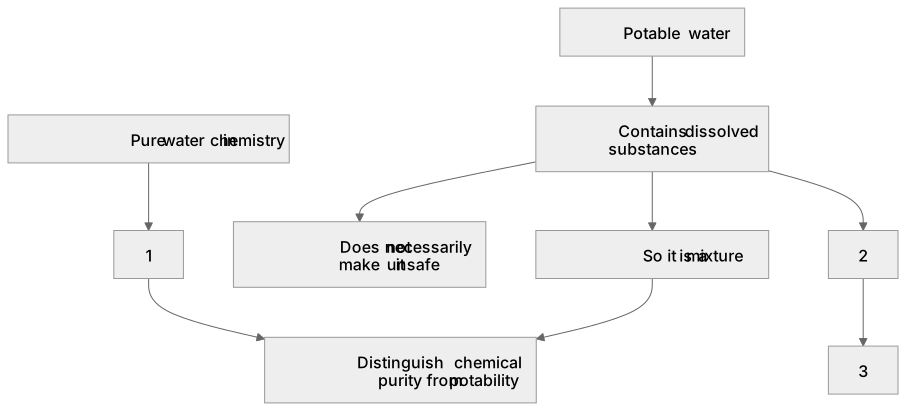
1Box 1
2Box 2
3Box 3
There is more to this lesson
The full lesson goes on to check your understanding and help you earn the marks. Create a free account to carry on, with your progress saved.
A week of Premium from your first lesson · Then the free plan continues · No card, no charge
Test your understanding of Potable water: Potable water is not pure water in the chemical sense because it contains dissolved substances.
Active recall beats re-reading. Take an instant quiz now to test what you’ve learned and lock it into long-term memory.
A week of Premium from your first lesson · Then the free plan continues · No card, no charge