AQA · GCSE · Chemistry
Course version: 8462 · Version from Sept 2018
Carbon monoxide is a toxic gas. It is colourless and odourless and so is…
Full specification wording
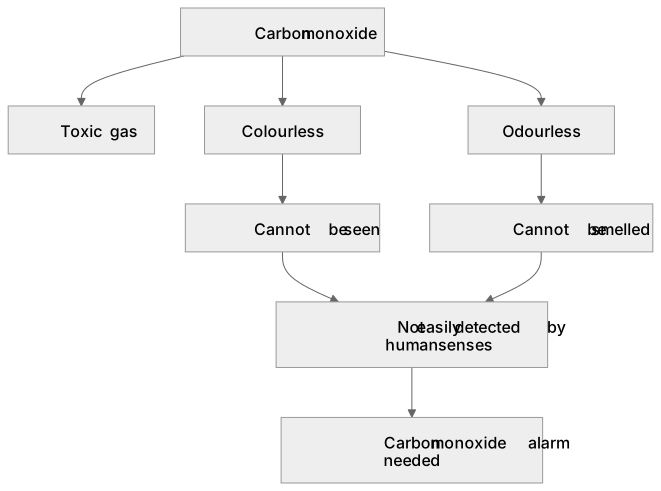
Properties and effects of atmospheric pollutants: Carbon monoxide is a toxic gas. It is colourless and odourless and so is not easily detected.
Carbon monoxide is a toxic gas produced by incomplete combustion of fuels.
Checked against the AQA 8462 specification (opens in a new tab) on .
- Point 1 of 4
- 4 key terms
Study notes
From the checked teaching notes for this specification point.
The idea
Carbon monoxide is a toxic gas produced by incomplete combustion of fuels. It is colourless and odourless, so people cannot see or smell it, making it hard to detect without a carbon monoxide alarm. Once inhaled, it binds to haemoglobin in red blood cells more strongly than oxygen does, reducing the oxygen carried around the body. This can cause headaches, dizziness, unconsciousness and death. Because it has no colour or smell, a faulty boiler or blocked flue can release it unnoticed. Its toxicity and lack of warning properties explain why carbon monoxide detectors are used in homes and why appliances must be serviced and rooms ventilated.
What earns the marks
- Carbon monoxide is toxic to humans and can cause serious harm or death.
- Because it has no colour or smell, it is not easily detected without a detector.
- Its toxic effect involves reducing the oxygen-carrying capacity of the blood.
- Detection requires a carbon monoxide alarm or similar device rather than human senses.
Common mistakes and how to put them right
Confusing carbon monoxide with carbon dioxide.
Put it right: Carbon monoxide is toxic and is produced by incomplete combustion, while carbon dioxide is a product of complete combustion.
Thinking carbon monoxide has a smell.
Put it right: It is odourless.
Believing carbon monoxide can be seen as a coloured gas.
Put it right: It is colourless.
Assuming a person would notice carbon monoxide by irritation.
Put it right: It gives no sensory warning.
Exam tips
- State both physical properties together: colourless and odourless, so it is not easily detected.
- Link the lack of colour and smell to the need for a carbon monoxide detector.
- Use the word toxic rather than vague terms such as 'bad' or 'harmful' when describing its effect.
- Avoid saying carbon monoxide is harmless because it has no smell; absence of smell does not mean absence of danger.
Try the lesson
The start of the Properties and effects of atmospheric pollutants: Carbon monoxide is a toxic gas. It is colourless and odourless and so is not easily detected. lesson, made from checked teaching notes for this specification point.
Have a go first
Why is carbon monoxide difficult to detect in the air?
Listen
Carbon monoxide is a toxic gas produced by incomplete combustion of fuels. It is colourless and odourless, so people cannot see or smell it, making it hard to detect without a carbon monoxide alarm. Once inhaled, it binds to haemoglobin in red blood cells more strongly than oxygen does, reducing the oxygen carried around the body. This can cause headaches, dizziness, unconsciousness and death. Because it has no colour or smell, a faulty boiler or blocked flue can release it unnoticed. Its toxicity and lack of warning properties explain why carbon monoxide detectors are used in homes and why appliances must be serviced and rooms ventilated. A strong answer earns marks for these points. Carbon monoxide is toxic to humans and can cause serious harm or death. Because it has no colour or smell, it is not easily detected without a detector. Its toxic effect involves reducing the oxygen-carrying capacity of the blood. Detection requires a carbon monoxide alarm or similar device rather than human senses. A common slip: Confusing carbon monoxide with carbon dioxide. Instead, carbon monoxide is toxic and is produced by incomplete combustion, while carbon dioxide is a product of complete combustion. Exam tip: State both physical properties together: colourless and odourless, so it is not easily detected.
See it
Key words
Say what each word means before you turn the card.
Toxic
Try answering aloud or in your head before turning the card.
Colourless
Try answering aloud or in your head before turning the card.
Odourless
Try answering aloud or in your head before turning the card.
Detection
Try answering aloud or in your head before turning the card.
See every definition
- Toxic
- Carbon monoxide is a toxic gas, meaning it is poisonous to humans and can cause serious harm or death.
- Colourless
- Carbon monoxide has no colour, so it cannot be seen.
- Odourless
- Carbon monoxide has no smell, so it cannot be smelled.
- Detection
- Because carbon monoxide has no colour or smell, it is not easily detected without a detector such as a carbon monoxide alarm.
Label the diagram
Some boxes have lost their names. Pick the right name for each number.
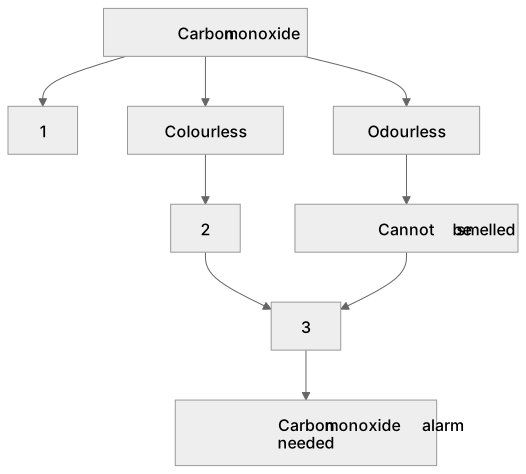
1Box 1
2Box 2
3Box 3
There is more to this lesson
The full lesson goes on to check your understanding and help you earn the marks. Create a free account to carry on, with your progress saved.
A week of Premium from your first lesson · Then the free plan continues · No card, no charge
Test your understanding of Properties and effects of atmospheric pollutants: Carbon monoxide is a toxic gas. It is colourless and odourless and so is not easily detected.
Active recall beats re-reading. Take an instant quiz now to test what you’ve learned and lock it into long-term memory.
A week of Premium from your first lesson · Then the free plan continues · No card, no charge