AQA · GCSE · Chemistry
Course version: 8462 · Version from Sept 2018
The process of electrolysis: This process is called electrolysis.
Electrolysis is the process of breaking down an ionic compound into its elements using an electric current.
Checked against the AQA 8462 specification (opens in a new tab) on .
- Point 6 of 7
Study notes
From the checked teaching notes for this specification point.
The idea
Electrolysis is the process of breaking down an ionic compound into its elements using an electric current. It occurs when a direct current is passed through an electrolyte, which is a molten or aqueous ionic compound containing mobile ions. The ions move to the electrodes: positive ions to the cathode and negative ions to the anode. At the electrodes, ions gain or lose electrons and are discharged as neutral atoms, producing elements. For example, electrolysis of molten lead bromide produces lead at the cathode and bromine at the anode. The term 'electrolysis' literally means 'breaking down with electricity'. It is used industrially to extract reactive metals and to produce useful chemicals.
What earns the marks
- Electrolysis is defined as the breakdown of an ionic compound using electricity.
- The electrolyte must be molten or in aqueous solution to allow ion movement.
- A direct current (d.c.) supply is required.
- Ions are discharged at the electrodes, producing elements.
- The process involves oxidation at the anode and reduction at the cathode.
Common mistakes and how to put them right
Thinking that electrolysis can occur with solid ionic compounds.
Put it right: The ions must be free to move, so the compound must be molten or dissolved.
Confusing electrolysis with simple conduction.
Put it right: Electrolysis involves chemical change at the electrodes, not just the flow of charge.
Believing that alternating current (a.c.) is used.
Put it right: Electrolysis requires direct current (d.c.) to ensure consistent electrode reactions.
Exam tips
- Define electrolysis clearly, mentioning the use of electricity to break down an ionic compound.
- State that the electrolyte must be molten or aqueous to allow ions to move.
- Use the term 'discharge' when describing the formation of products at electrodes.
Try the lesson
The start of the The process of electrolysis: This process is called electrolysis. lesson, made from checked teaching notes for this specification point.
Have a go first
What name is given to the process in which an electric current breaks down an ionic compound?
Listen
Electrolysis is the process of breaking down an ionic compound into its elements using an electric current. It occurs when a direct current is passed through an electrolyte, which is a molten or aqueous ionic compound containing mobile ions. The ions move to the electrodes: positive ions to the cathode and negative ions to the anode. At the electrodes, ions gain or lose electrons and are discharged as neutral atoms, producing elements. For example, electrolysis of molten lead bromide produces lead at the cathode and bromine at the anode. The term 'electrolysis' literally means 'breaking down with electricity'. It is used industrially to extract reactive metals and to produce useful chemicals. A strong answer earns marks for these points. Electrolysis is defined as the breakdown of an ionic compound using electricity. The electrolyte must be molten or in aqueous solution to allow ion movement. A direct current (d.c.) supply is required. Ions are discharged at the electrodes, producing elements. A common slip: Thinking that electrolysis can occur with solid ionic compounds. Instead, the ions must be free to move, so the compound must be molten or dissolved. Exam tip: Define electrolysis clearly, mentioning the use of electricity to break down an ionic compound.
See it
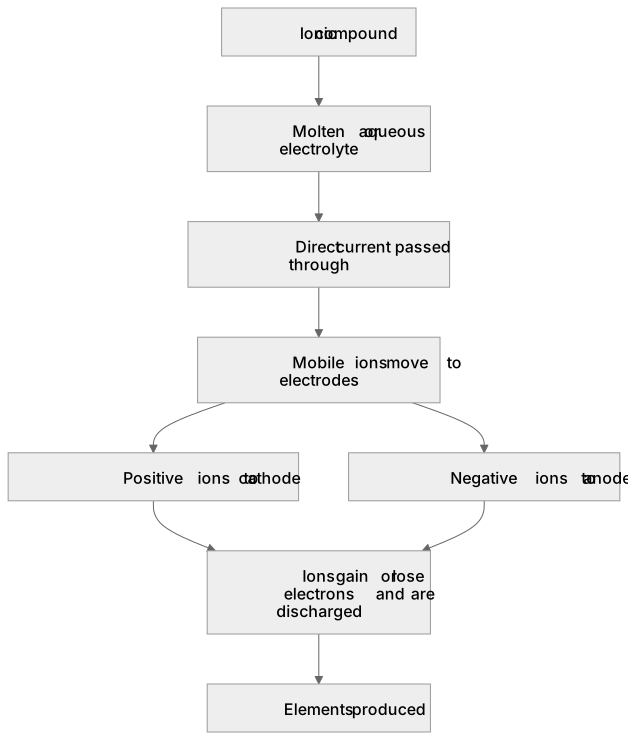
Label the diagram
Some boxes have lost their names. Pick the right name for each number.
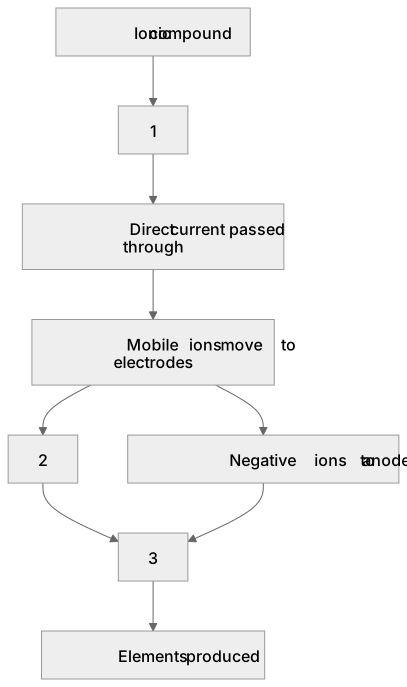
1Box 1
2Box 2
3Box 3
There is more to this lesson
The full lesson goes on to check your understanding and help you earn the marks. Create a free account to carry on, with your progress saved.
A week of Premium from your first lesson · Then the free plan continues · No card, no charge
Test your understanding of The process of electrolysis: This process is called electrolysis.
Active recall beats re-reading. Take an instant quiz now to test what you’ve learned and lock it into long-term memory.
A week of Premium from your first lesson · Then the free plan continues · No card, no charge