AQA · GCSE · Chemistry
Course version: 8462 · Version from Sept 2018
Urban lifestyles and industrial processes produce large amounts of waste…
Full specification wording
Waste water treatment: Urban lifestyles and industrial processes produce large amounts of waste water that require treatment before being released into the environment.
Urban living and industry generate waste water from homes, businesses and factories.
Checked against the AQA 8462 specification (opens in a new tab) on .
- Point 1 of 5
- 4 key terms
Study notes
From the checked teaching notes for this specification point.
The idea
Urban living and industry generate waste water from homes, businesses and factories. Domestic waste water includes water from sinks, baths, toilets and washing machines, while industrial processes may add chemicals, oils or other pollutants. If this water were released untreated, it could harm aquatic life, spread disease and pollute rivers, lakes and groundwater. Treatment removes solids, organic matter and harmful microorganisms before the water is returned to the environment. A typical treatment sequence includes screening to remove large objects, sedimentation to settle suspended solids, and biological or chemical treatment to break down organic matter and reduce harmful microbes. The treated water must meet environmental standards before release.
What earns the marks
- State that urban lifestyles produce domestic waste water from homes and that industrial processes produce waste water containing a range of pollutants.
- Explain that untreated waste water can harm the environment by causing disease, deoxygenating water or introducing toxic substances.
- Describe the purpose of treatment as removing solids, organic matter and harmful microbes before release.
- Outline a treatment sequence such as screening, sedimentation and biological treatment, linking each stage to what it removes.
- Recognise that treated water must meet environmental standards before being released into rivers or the sea.
Common mistakes and how to put them right
Thinking all waste water is sewage.
Put it right: Recognise that industrial waste water may contain different pollutants such as chemicals and oils.
Believing treatment simply dilutes waste.
Put it right: Treatment removes or breaks down pollutants rather than just diluting them.
Confusing waste water treatment with potable water treatment.
Put it right: Waste water treatment aims to make water safe for release, while potable water treatment aims to make water safe to drink.
Exam tips
- Use the phrase 'before being released into the environment' to show you understand the purpose of treatment.
- When describing treatment, name the stage and state what it removes, for example 'screening removes large solid objects'.
- Link environmental harm to specific effects, such as harmful microbes causing disease or organic matter reducing oxygen levels in water.
Try the lesson
The start of the Waste water treatment: Urban lifestyles and industrial processes produce large amounts of waste water that require treatment before being released into the environment. lesson, made from checked teaching notes for this specification point.
Have a go first
Which of these is a reason why the large amounts of waste water produced by urban lifestyles and industrial processes must be treated before release?
Listen
Urban living and industry generate waste water from homes, businesses and factories. Domestic waste water includes water from sinks, baths, toilets and washing machines, while industrial processes may add chemicals, oils or other pollutants. If this water were released untreated, it could harm aquatic life, spread disease and pollute rivers, lakes and groundwater. Treatment removes solids, organic matter and harmful microorganisms before the water is returned to the environment. A typical treatment sequence includes screening to remove large objects, sedimentation to settle suspended solids, and biological or chemical treatment to break down organic matter and reduce harmful microbes. The treated water must meet environmental standards before release. A strong answer earns marks for these points. State that urban lifestyles produce domestic waste water from homes and that industrial processes produce waste water containing a range of pollutants. Explain that untreated waste water can harm the environment by causing disease, deoxygenating water or introducing toxic substances. Describe the purpose of treatment as removing solids, organic matter and harmful microbes before release. Outline a treatment sequence such as screening, sedimentation and biological treatment, linking each stage to what it removes. A common slip: Thinking all waste water is sewage. Instead, recognise that industrial waste water may contain different pollutants such as chemicals and oils. Exam tip: Use the phrase 'before being released into the environment' to show you understand the purpose of treatment.
See it
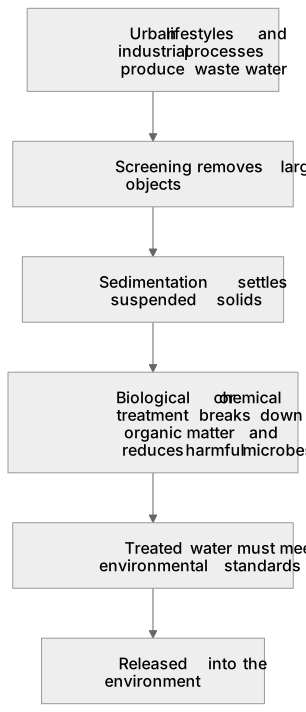
Put it in order
Put these steps in the order they happen.
- 1. Sedimentation settles suspended solids
- 2. Screening removes large objects
- 3. Urban lifestyles and industrial processes produce waste water
- 4. Released into the environment
- 5. Treated water must meet environmental standards
- 6. Biological or chemical treatment breaks down organic matter and reduces harmful microbes
Key words
Say what each word means before you turn the card.
Waste water
Try answering aloud or in your head before turning the card.
Environmental standards
Try answering aloud or in your head before turning the card.
Screening
Try answering aloud or in your head before turning the card.
Sedimentation
Try answering aloud or in your head before turning the card.
See every definition
- Waste water
- Water produced by urban lifestyles and industrial processes that requires treatment before being released into the environment.
- Environmental standards
- Requirements that treated water must meet before being released into rivers or the sea.
- Screening
- A treatment stage that removes large objects from waste water.
- Sedimentation
- A treatment stage that settles suspended solids in waste water.
Label the diagram
Some boxes have lost their names. Pick the right name for each number.
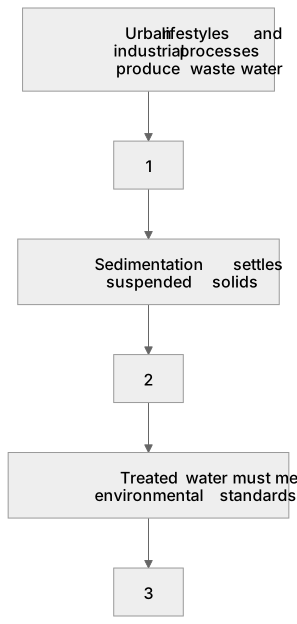
1Box 1
2Box 2
3Box 3
There is more to this lesson
The full lesson goes on to check your understanding and help you earn the marks. Create a free account to carry on, with your progress saved.
A week of Premium from your first lesson · Then the free plan continues · No card, no charge
Test your understanding of Waste water treatment: Urban lifestyles and industrial processes produce large amounts of waste water that require treatment before being released into the environment.
Active recall beats re-reading. Take an instant quiz now to test what you’ve learned and lock it into long-term memory.
A week of Premium from your first lesson · Then the free plan continues · No card, no charge