AQA · GCSE · Chemistry
Course version: 8462 · Version from Sept 2018
Metals can be recycled by melting and recasting or reforming into…
Full specification wording
Ways of reducing the use of resources: Metals can be recycled by melting and recasting or reforming into different products.
Metals are recyclable because they can be melted and reshaped without changing their chemical identity.
Checked against the AQA 8462 specification (opens in a new tab) on .
- Point 8 of 11
Study notes
From the checked teaching notes for this specification point.
The idea
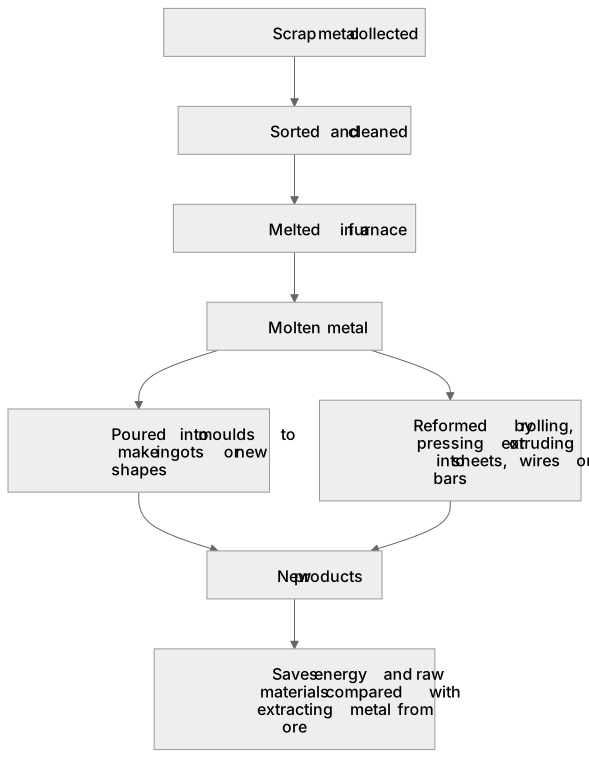
Metals are recyclable because they can be melted and reshaped without changing their chemical identity. Scrap metal is collected, sorted and cleaned, then melted in a furnace. The molten metal is poured into moulds to make ingots or directly cast into new shapes. It can also be reformed by rolling, pressing or extruding into sheets, wires or bars. Aluminium and steel are common examples. Recycling metals saves the energy and raw materials needed to extract metal from its ore. For example, recycling aluminium uses much less energy than extracting aluminium from bauxite by electrolysis. It also reduces the amount of metal sent to landfill and lowers the environmental impact of mining.
What earns the marks
- Metals can be melted and recast or reformed into new products.
- Scrap metal is collected, sorted and cleaned before melting.
- Molten metal can be poured into moulds to make new shapes or ingots.
- Reforming includes rolling, pressing or extruding metal into sheets, wires or bars.
- Recycling metals saves the energy and raw materials needed to extract metal from ore.
- Recycling aluminium uses much less energy than extracting aluminium from bauxite by electrolysis.
Common mistakes and how to put them right
Saying metals cannot be recycled because they change chemically.
Put it right: Metals keep their chemical identity when melted and reformed.
Confusing melting with burning.
Put it right: Melting is a physical change, while burning is a chemical reaction.
Forgetting that scrap metal must be sorted and cleaned.
Put it right: Impurities can affect the quality of the recycled metal.
Exam tips
- Use the terms 'recast' and 'reformed' to match the statement.
- Give a named metal example, such as aluminium or steel.
- Compare the energy needed for recycling with extraction from ore.
- State that melting is a physical change, so the metal is not chemically altered.
Try the lesson
The start of the Ways of reducing the use of resources: Metals can be recycled by melting and recasting or reforming into different products. lesson, made from checked teaching notes for this specification point.
Have a go first
How are waste metals, such as aluminium drinks cans, typically recycled into new products?
Listen
Metals are recyclable because they can be melted and reshaped without changing their chemical identity. Scrap metal is collected, sorted and cleaned, then melted in a furnace. The molten metal is poured into moulds to make ingots or directly cast into new shapes. It can also be reformed by rolling, pressing or extruding into sheets, wires or bars. Aluminium and steel are common examples. Recycling metals saves the energy and raw materials needed to extract metal from its ore. For example, recycling aluminium uses much less energy than extracting aluminium from bauxite by electrolysis. It also reduces the amount of metal sent to landfill and lowers the environmental impact of mining. A strong answer earns marks for these points. Metals can be melted and recast or reformed into new products. Scrap metal is collected, sorted and cleaned before melting. Molten metal can be poured into moulds to make new shapes or ingots. Reforming includes rolling, pressing or extruding metal into sheets, wires or bars. A common slip: Saying metals cannot be recycled because they change chemically. Instead, metals keep their chemical identity when melted and reformed. Exam tip: Use the terms 'recast' and 'reformed' to match the statement.
See it
Label the diagram
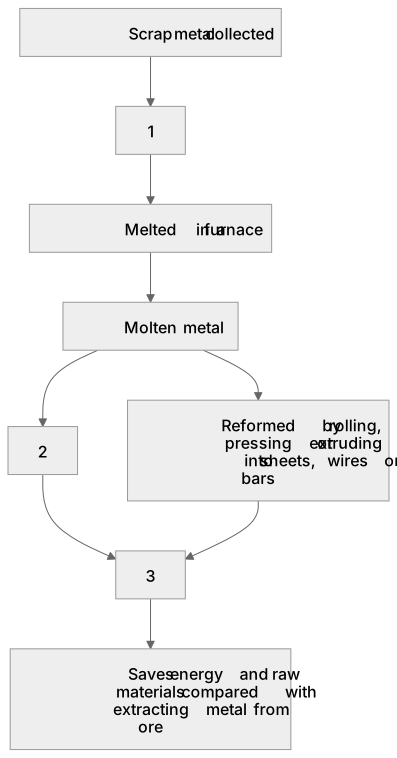
Some boxes have lost their names. Pick the right name for each number.
1Box 1
2Box 2
3Box 3
There is more to this lesson
The full lesson goes on to check your understanding and help you earn the marks. Create a free account to carry on, with your progress saved.
A week of Premium from your first lesson · Then the free plan continues · No card, no charge
Test your understanding of Ways of reducing the use of resources: Metals can be recycled by melting and recasting or reforming into different products.
Active recall beats re-reading. Take an instant quiz now to test what you’ve learned and lock it into long-term memory.
A week of Premium from your first lesson · Then the free plan continues · No card, no charge