AQA · GCSE · Chemistry
Course version: 8462 · Version from Sept 2018
The reduction in use, reuse and recycling of materials by end users…
Full specification wording
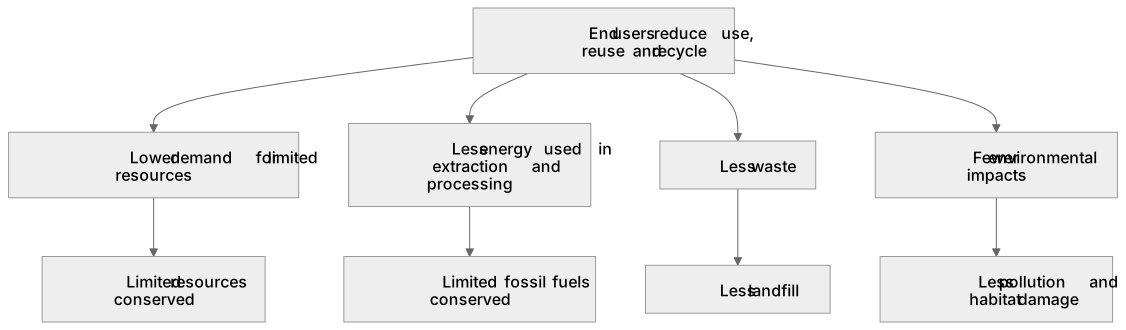
Ways of reducing the use of resources: The reduction in use, reuse and recycling of materials by end users reduces the use of limited resources, use of energy sources, waste and environmental impacts.
End users are the people and organisations who consume products, and their choices drive demand for raw materials.
Checked against the AQA 8462 specification (opens in a new tab) on .
- Point 1 of 11
- 4 key terms
Study notes
From the checked teaching notes for this specification point.
The idea
End users are the people and organisations who consume products, and their choices drive demand for raw materials. Reducing use means designing and buying less: lighter packaging, longer-lasting goods and products that need fewer materials. Reuse means using an item again for the same or a new purpose, such as refilling a glass bottle or passing on clothing, so no new material is extracted. Recycling means collecting, sorting and reprocessing waste materials into new products, for example melting used aluminium cans to make new ones. All three cut demand for limited resources such as metal ores and crude oil, and they cut the energy needed for extraction and processing, much of which also comes from limited fossil fuels. Less landfill and fewer emissions mean lower environmental impacts.
What earns the marks
- Reducing use lowers demand for limited raw materials such as metal ores, crude oil and clay.
- Reuse extends an item's useful life, so fewer new products are manufactured and less material is extracted.
- Recycling reprocesses waste materials into new products, reducing the need to extract and process virgin raw materials.
- Lower demand for raw materials reduces the energy consumed in extraction, transport and processing, and much of that energy comes from limited fossil fuels.
- Reducing, reusing and recycling cut the volume of waste sent to landfill and reduce pollution and habitat damage.
- A named example, such as refilling a glass bottle or recycling aluminium cans, can illustrate how each approach reduces resource use and environmental impact.
Common mistakes and how to put them right
Treating reduce, reuse and recycling as identical.
Put it right: Reduce means using less in the first place, reuse means using an item again, and recycling means reprocessing the material.
Assuming recycling always removes the need for raw materials.
Put it right: Recycling reduces but does not eliminate demand, because some products cannot be recycled indefinitely.
Ignoring the energy saved.
Put it right: Reprocessing recycled material usually uses less energy than extracting and processing raw material, so recycling also reduces demand for limited energy sources.
Exam tips
- Link each of the three approaches to a specific resource or impact, such as aluminium cans and bauxite ore, rather than writing generally about helping the planet.
- Use the phrase limited resources when explaining why reduction matters, because the specification ties these actions to resource depletion.
- When a question asks for a benefit, state the action, the resource or energy saved, and the resulting environmental effect in one clear chain.
Try the lesson
The start of the Ways of reducing the use of resources: The reduction in use, reuse and recycling of materials by end users reduces the use of limited resources, use of energy sources, waste and environmental impacts. lesson, made from checked teaching notes for this specification point.
Have a go first
Which action by an end user directly reduces the amount of a limited raw material that must be extracted?
Listen
End users are the people and organisations who consume products, and their choices drive demand for raw materials. Reducing use means designing and buying less: lighter packaging, longer-lasting goods and products that need fewer materials. Reuse means using an item again for the same or a new purpose, such as refilling a glass bottle or passing on clothing, so no new material is extracted. Recycling means collecting, sorting and reprocessing waste materials into new products, for example melting used aluminium cans to make new ones. All three cut demand for limited resources such as metal ores and crude oil, and they cut the energy needed for extraction and processing, much of which also comes from limited fossil fuels. Less landfill and fewer emissions mean lower environmental impacts. A strong answer earns marks for these points. Reducing use lowers demand for limited raw materials such as metal ores, crude oil and clay. Reuse extends an item's useful life, so fewer new products are manufactured and less material is extracted. Recycling reprocesses waste materials into new products, reducing the need to extract and process virgin raw materials. Lower demand for raw materials reduces the energy consumed in extraction, transport and processing, and much of that energy comes from limited fossil fuels. A common slip: Treating reduce, reuse and recycling as identical. Instead, reduce means using less in the first place, reuse means using an item again, and recycling means reprocessing the material. Exam tip: Link each of the three approaches to a specific resource or impact, such as aluminium cans and bauxite ore, rather than writing generally about helping the planet.
See it
Key words
Say what each word means before you turn the card.
Reducing use
Try answering aloud or in your head before turning the card.
Reuse
Try answering aloud or in your head before turning the card.
Recycling
Try answering aloud or in your head before turning the card.
End users
Try answering aloud or in your head before turning the card.
See every definition
- Reducing use
- Designing and buying less, such as lighter packaging, longer-lasting goods and products that need fewer materials.
- Reuse
- Using an item again for the same or a new purpose, such as refilling a glass bottle or passing on clothing, so no new material is extracted.
- Recycling
- Collecting, sorting and reprocessing waste materials into new products, for example melting used aluminium cans to make new ones.
- End users
- The people and organisations who consume products, and whose choices drive demand for raw materials.
Label the diagram
Some boxes have lost their names. Pick the right name for each number.
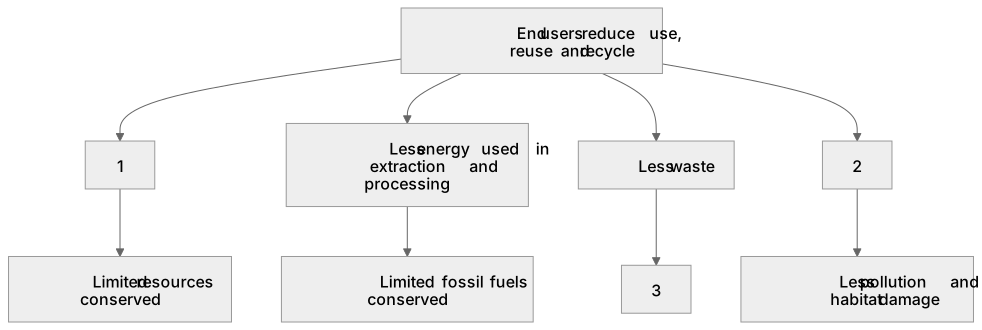
1Box 1
2Box 2
3Box 3
There is more to this lesson
The full lesson goes on to check your understanding and help you earn the marks. Create a free account to carry on, with your progress saved.
A week of Premium from your first lesson · Then the free plan continues · No card, no charge
Test your understanding of Ways of reducing the use of resources: The reduction in use, reuse and recycling of materials by end users reduces the use of limited resources, use of energy sources, waste and environmental impacts.
Active recall beats re-reading. Take an instant quiz now to test what you’ve learned and lock it into long-term memory.
A week of Premium from your first lesson · Then the free plan continues · No card, no charge