Pearson Edexcel · GCSE · Citizenship Studies
Theme A: Living together in the UK
Theme A: Living Together in the UK explores the vibrant, diverse nature of British society and the fundamental rights and responsibilities of its citizens. By understanding the Equality Act, human rights legislation, and local government structures, you will gain the knowledge needed to critically evaluate how democracy functions and how competing rights are balanced in real-world scenarios.
- 4 min read
- 3 worked examples
- 2 practice questions
- 6 key terms
Study Notes
Overview
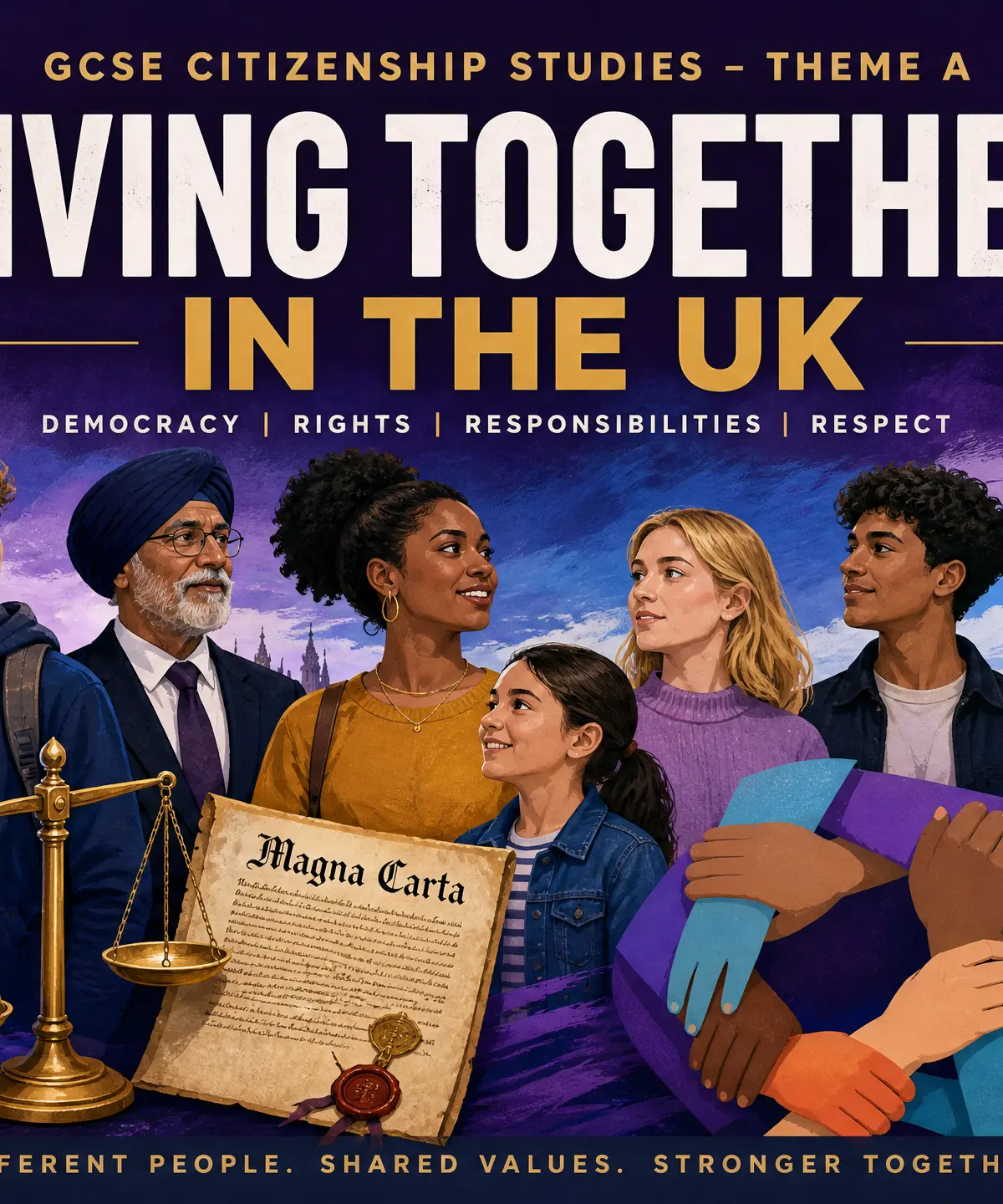
Theme A: Living Together in the UK is a foundational topic in GCSE Citizenship Studies. It examines the changing nature of the UK population, the concept of multiple identities, and the impact of migration. Furthermore, it delves into the legal frameworks that protect citizens—specifically the Equality Act 2010 and key human rights documents. Examiners expect candidates to not only know the facts but to apply them to real-world scenarios, particularly when discussing how competing rights are balanced. A strong understanding of local government structure and funding is also crucial for success in this theme.
Key Concepts & Legislation
The Changing UK Population & Multiple Identities
What you need to know: The UK population is ageing (around 19% aged 65+ in 2021) and becoming more ethnically and religiously diverse.
Why it matters: These demographic shifts impact public services, social cohesion, and the economy. The concept of 'multiple identities'—where a person identifies with several groups simultaneously (e.g., British, Muslim, Mancunian, teenager)—is central to understanding modern Britain.
Migration
Specific Knowledge: You must distinguish between types of migrants:
- Economic Migrant: Moves voluntarily for work or a better standard of living.
- Refugee: Forced to flee due to war or persecution; has legal protection.
- Asylum Seeker: Has applied for refugee status and is waiting for a decision.
Impact: Migration fills skills gaps (e.g., in the NHS) and enriches culture, but can also put pressure on local services and housing.
The Equality Act 2010
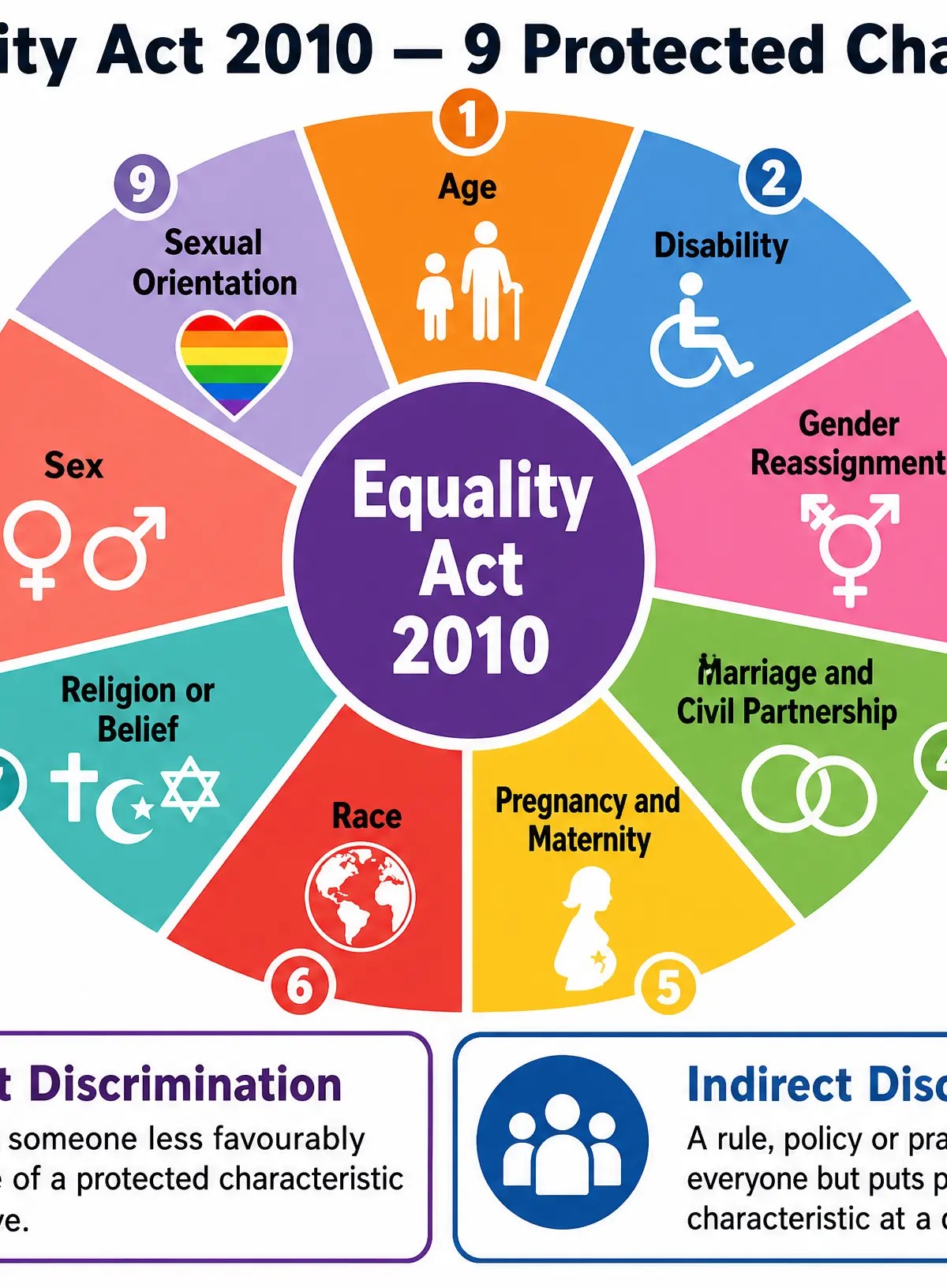
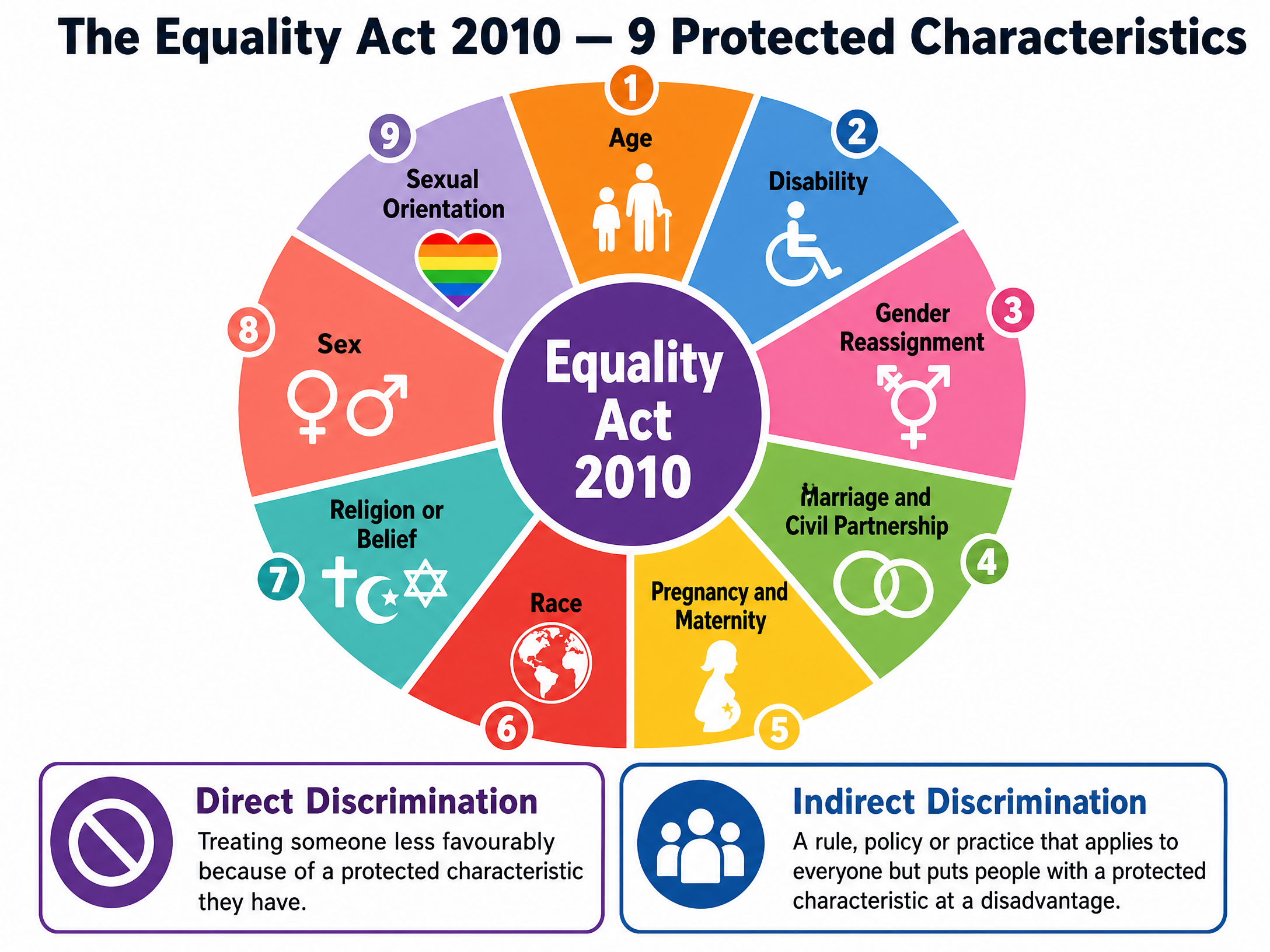
What it is: Legislation that legally protects people from discrimination in the workplace and in wider society.
Specific Knowledge: It covers 9 protected characteristics: Age, Disability, Gender Reassignment, Marriage and Civil Partnership, Pregnancy and Maternity, Race, Religion or Belief, Sex, and Sexual Orientation.
Key Terms: Understand the difference between Direct Discrimination (treating someone worse because of a characteristic) and Indirect Discrimination (a rule that applies to everyone but disadvantages a specific group).
Human Rights Development
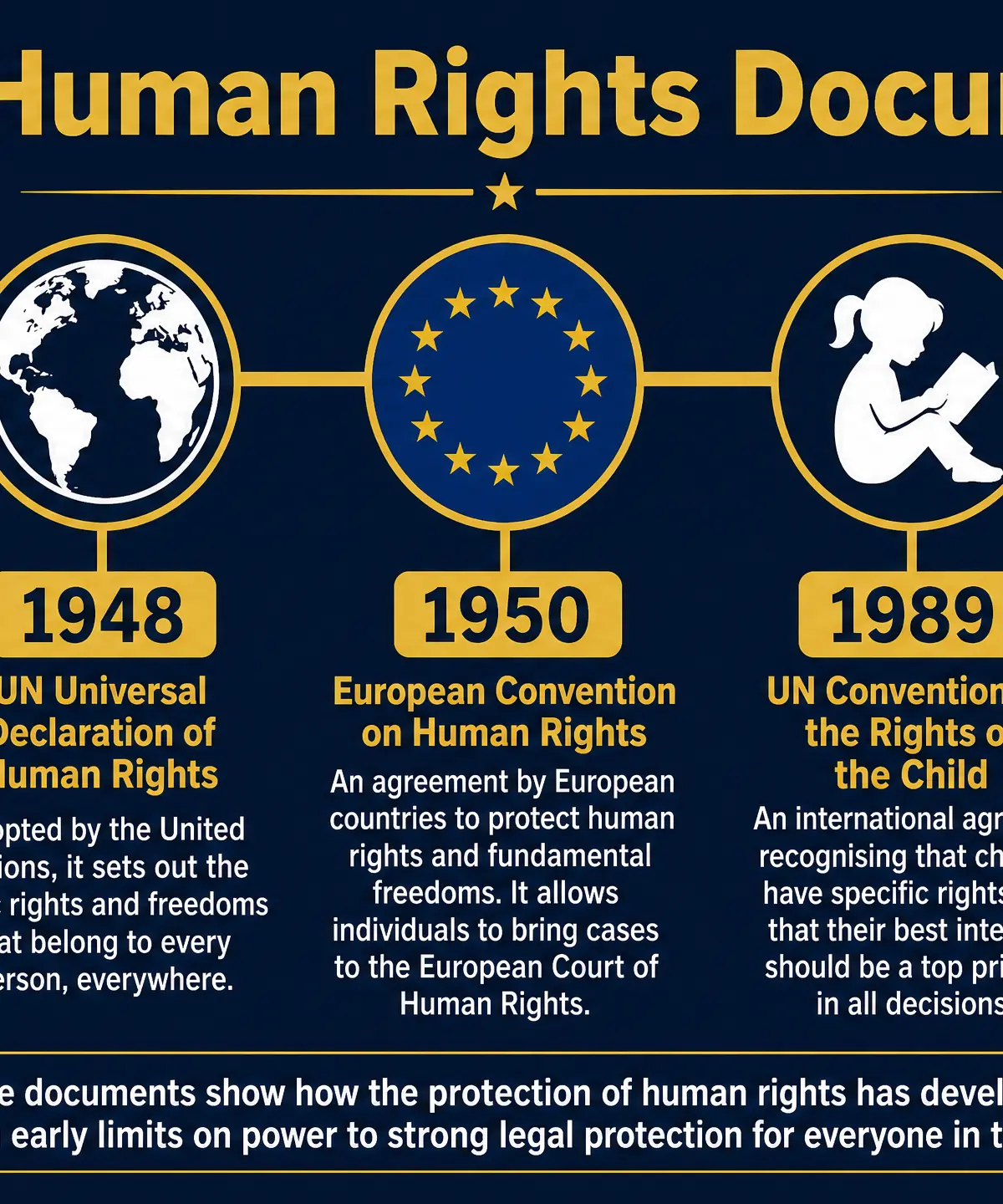
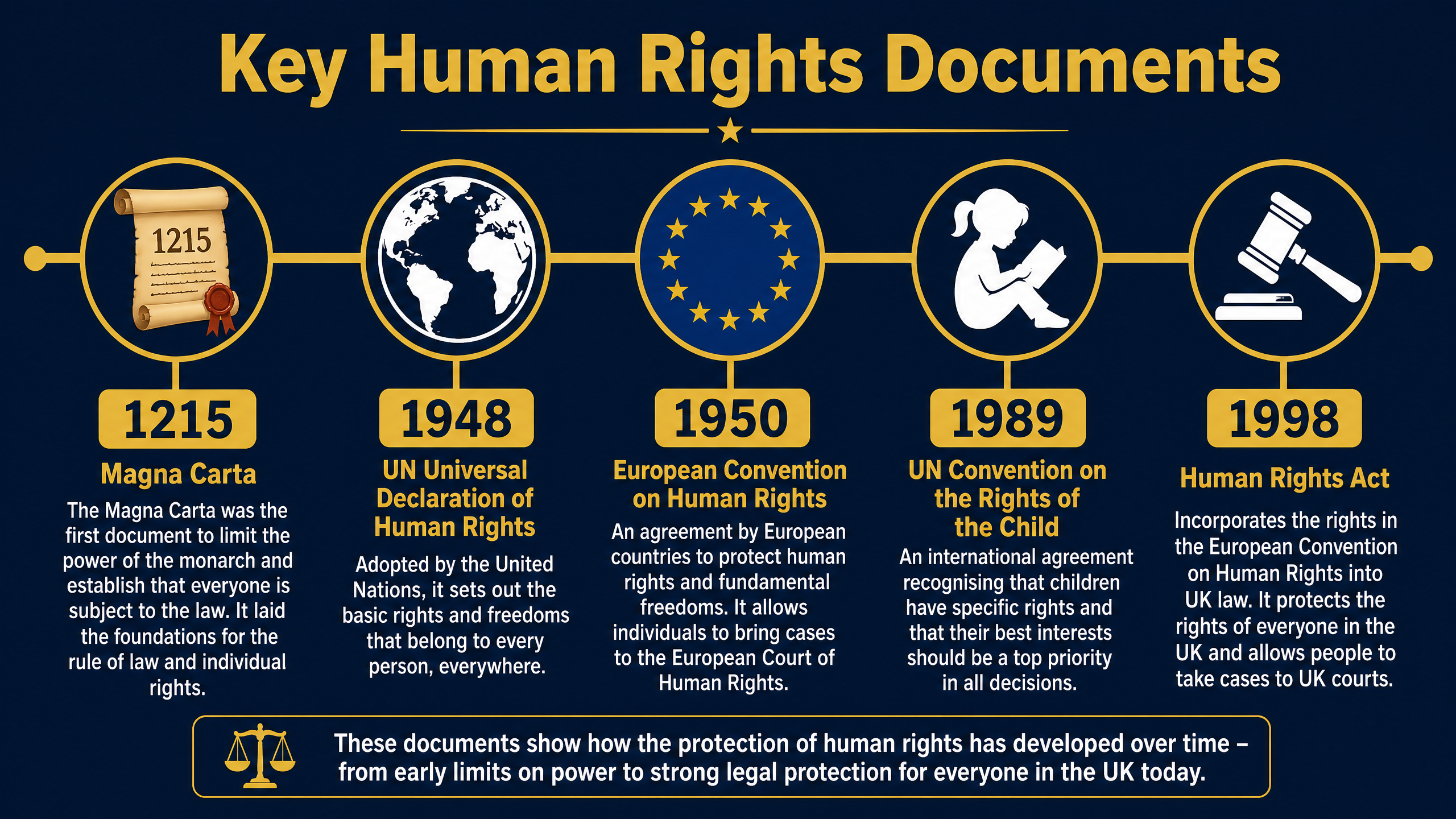
Key Documents:
- 1215 Magna Carta: Established the rule of law; the monarch is not above the law.
- 1948 UN Universal Declaration of Human Rights: 30 fundamental global rights.
- 1950 European Convention on Human Rights (ECHR): Legally binding treaty for European nations.
- 1989 UN Convention on the Rights of the Child (UNCRC): Specific rights for children.
- 1998 Human Rights Act: Incorporated the ECHR into UK law, allowing cases to be heard in UK courts.
Balancing Competing Rights
Why it matters: Rights are rarely absolute. Examiners want to see you evaluate scenarios where rights clash, such as Freedom of Speech vs. Protection from Hate Speech, or Right to Privacy vs. National Security.
Local Government Structure & Funding
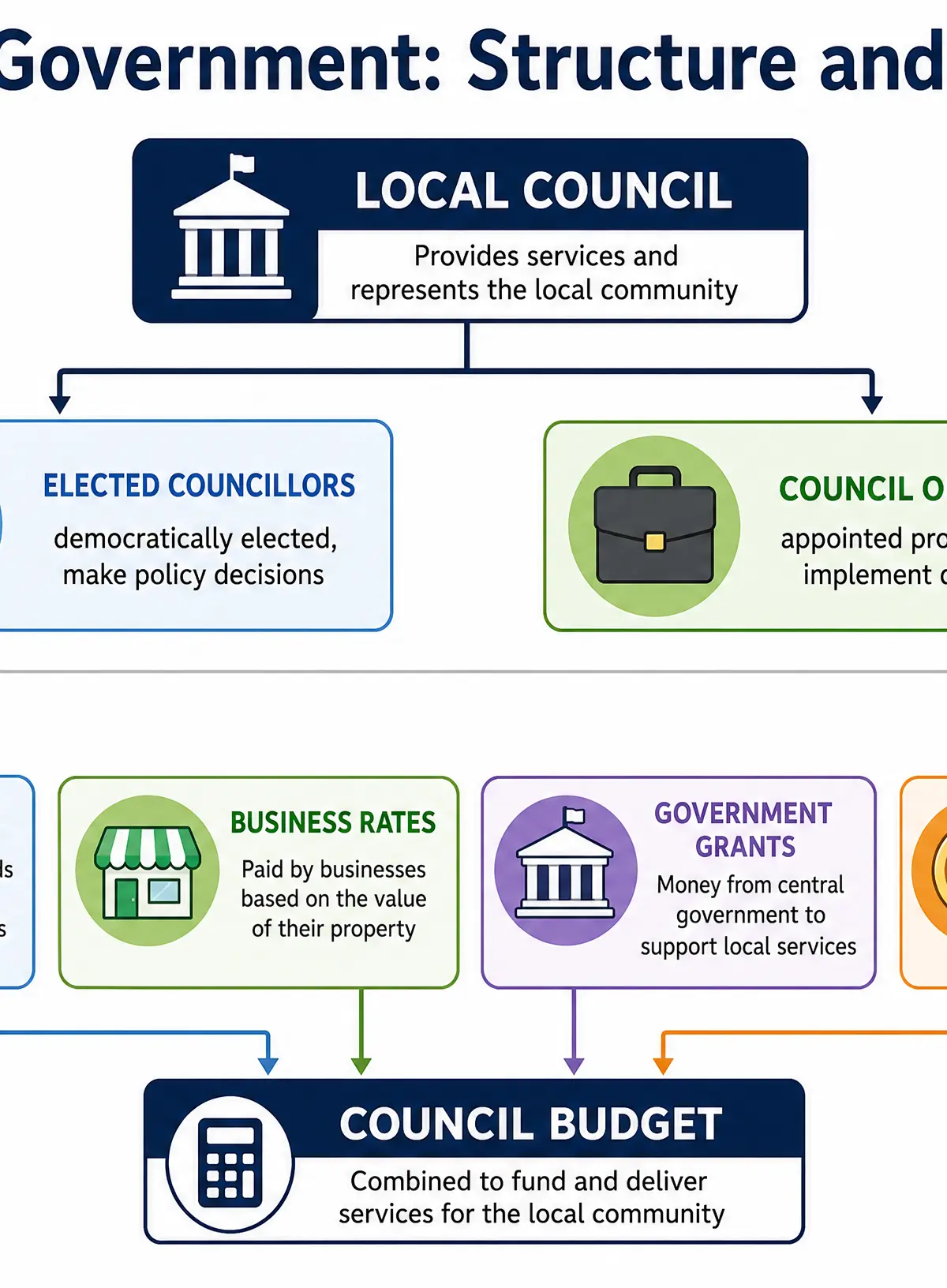
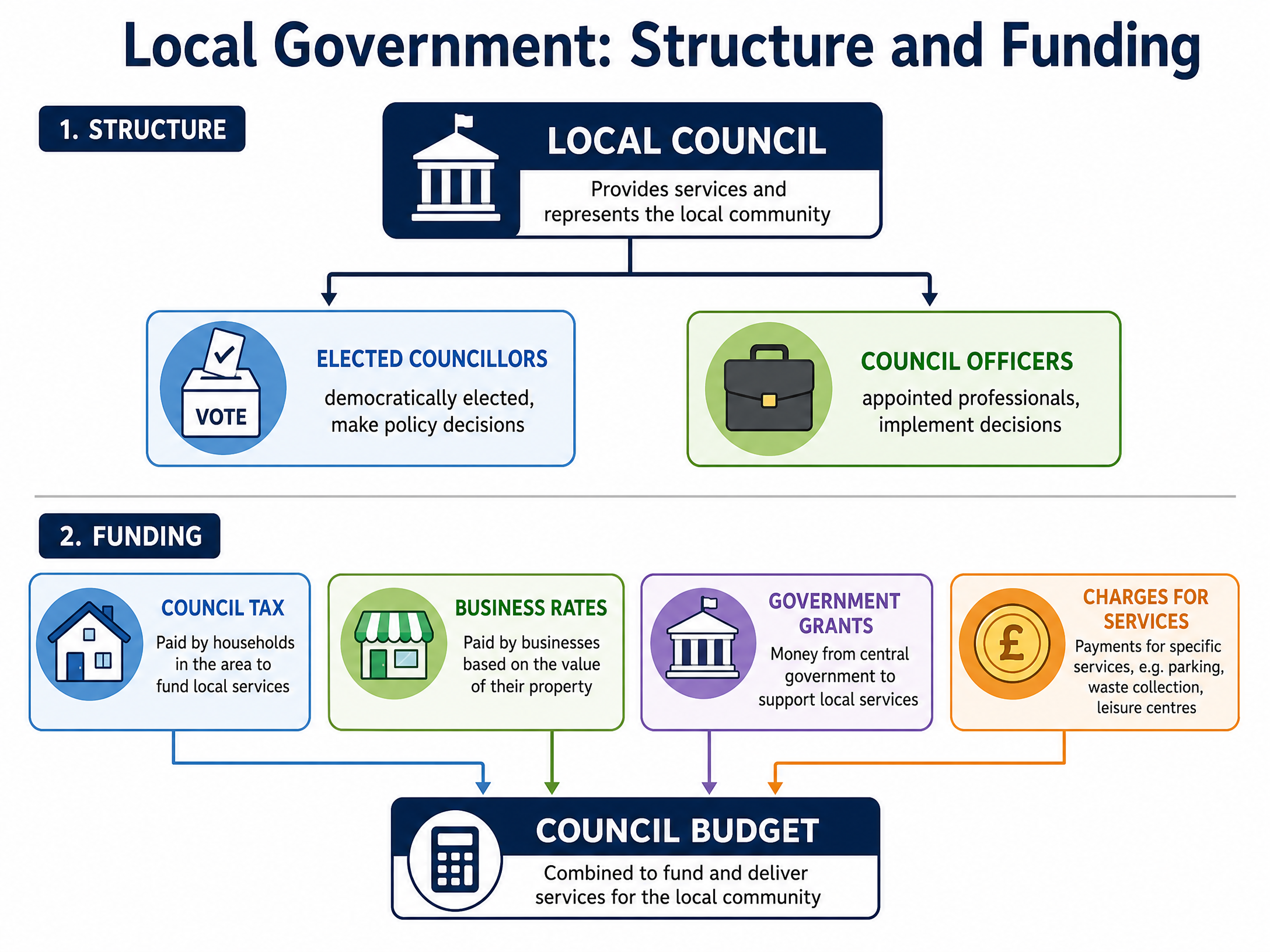
Structure:
- Councillors: Elected by the public to make policy decisions.
- Officers: Appointed professionals who implement those decisions.
Funding Sources: Council Tax, Business Rates, Government Grants, and Charges for Services.
Audio Revision
Listen to the comprehensive podcast covering this entire theme:
Visual Resources
3 diagrams and illustrations
Interactive Diagrams
1 interactive diagram to visualise key concepts
Conceptual Flow Outline
Structure and Funding of Local Government
Worked Examples
3 worked examples — open one to explore the question and available guidance.
Practice Questions
Test your understanding — click to reveal model answers
Explain two ways the UK population has changed in recent years. (4 marks)
Hint: Think about age demographics and ethnic/religious diversity.
Discuss the impact of migration on UK communities. (15 marks)
Hint: Provide a balanced argument covering both economic and social impacts, both positive and negative.
Test your understanding of Theme A: Living together in the UK
Active recall beats re-reading. Take an instant quiz now to test what you’ve learned and lock it into long-term memory.
7 days Premium · Then free forever · No card, no charge