Pearson Edexcel · GCSE · Citizenship Studies
Theme D: Power and influence
Theme D: Power and Influence explores how citizens, governments, and the media shape our world, from local protests to global conflicts. This study is crucial because it empowers you to understand your own political agency and the complex international systems that govern our modern society.
- 4 min read
- 3 worked examples
- 5 practice questions
- 6 key terms
Study Notes
Overview
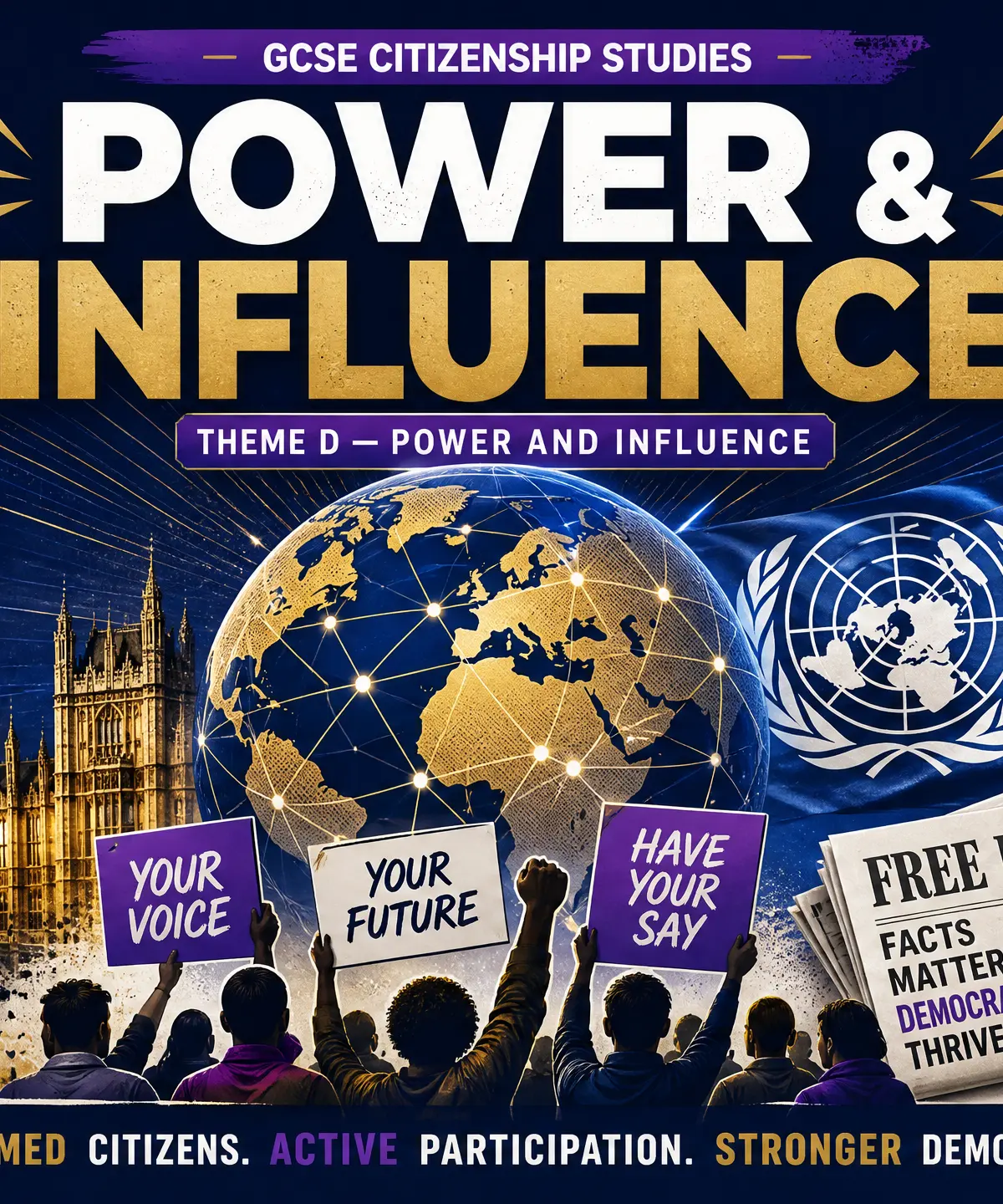
Theme D: Power and Influence is a cornerstone of GCSE Citizenship Studies. It examines the mechanics of democracy, exploring how power is distributed and exercised at local, national, and global levels. Examiners expect candidates to understand not just the theory of political systems, but how they function in practice. You must be able to evaluate the effectiveness of different methods of citizen participation, analyse the role of a free press in holding power to account, and understand the UK's complex position within international organisations like the UN and NATO. Crucially, high-scoring answers will always link these concepts together—for instance, showing how social media can both facilitate citizen action and spread misinformation.
Listen to our comprehensive revision podcast to solidify your understanding of these core concepts:
Key Concepts & Developments
Citizen Participation
What it is: The ways in which ordinary people engage with the political process to bring about change.
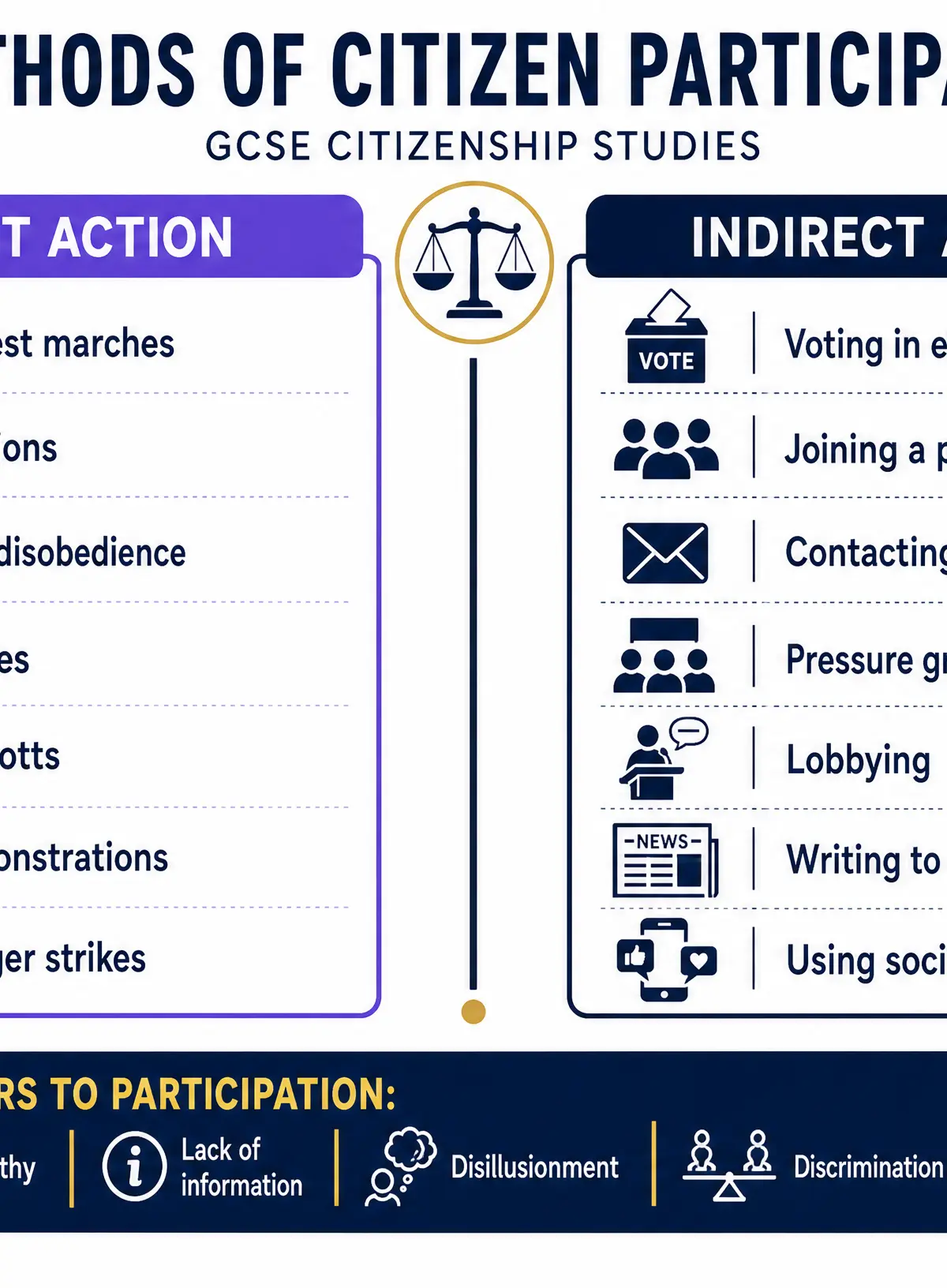
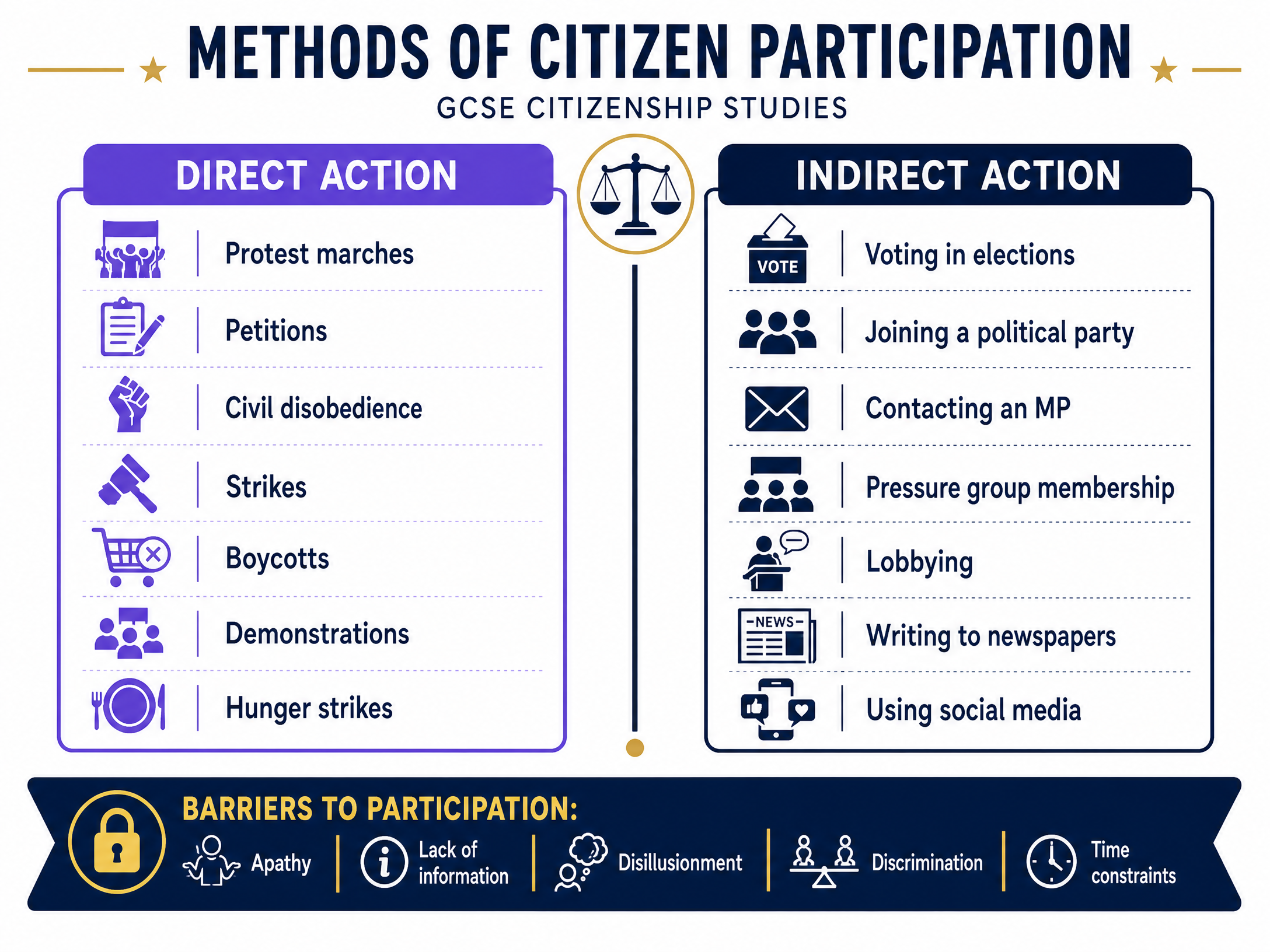
Key Distinctions: Examiners expect you to distinguish clearly between direct action (acting outside normal political channels, e.g., strikes, protests, civil disobedience) and indirect action (working within the established system, e.g., voting, lobbying, joining a political party).
Specific Knowledge: Extinction Rebellion (direct action); voting in the 2019 General Election (indirect action).
The Media and Free Press
What it is: The role of newspapers, broadcasters, and social media in a democratic society.
Why it matters: A free press is essential for accountability. It informs the public, sets the political agenda, and scrutinises government actions. However, the media is not neutral; ownership influences editorial bias.
Specific Knowledge: The Leveson Inquiry into press ethics; the role of social media in the Arab Spring (2010-2011) and the People's Vote march (2019).
International Organisations
What it is: Global bodies that facilitate cooperation between nations.
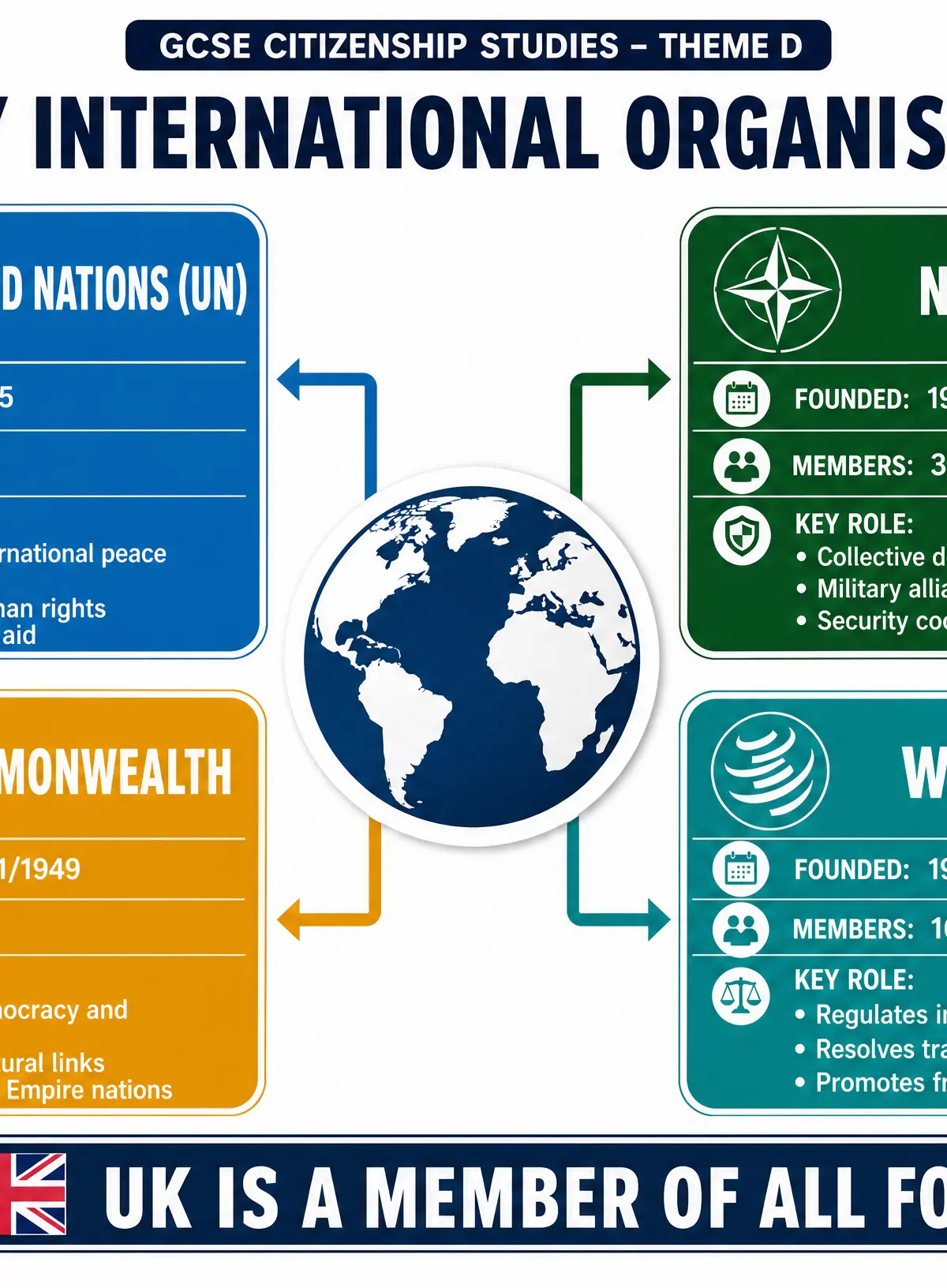
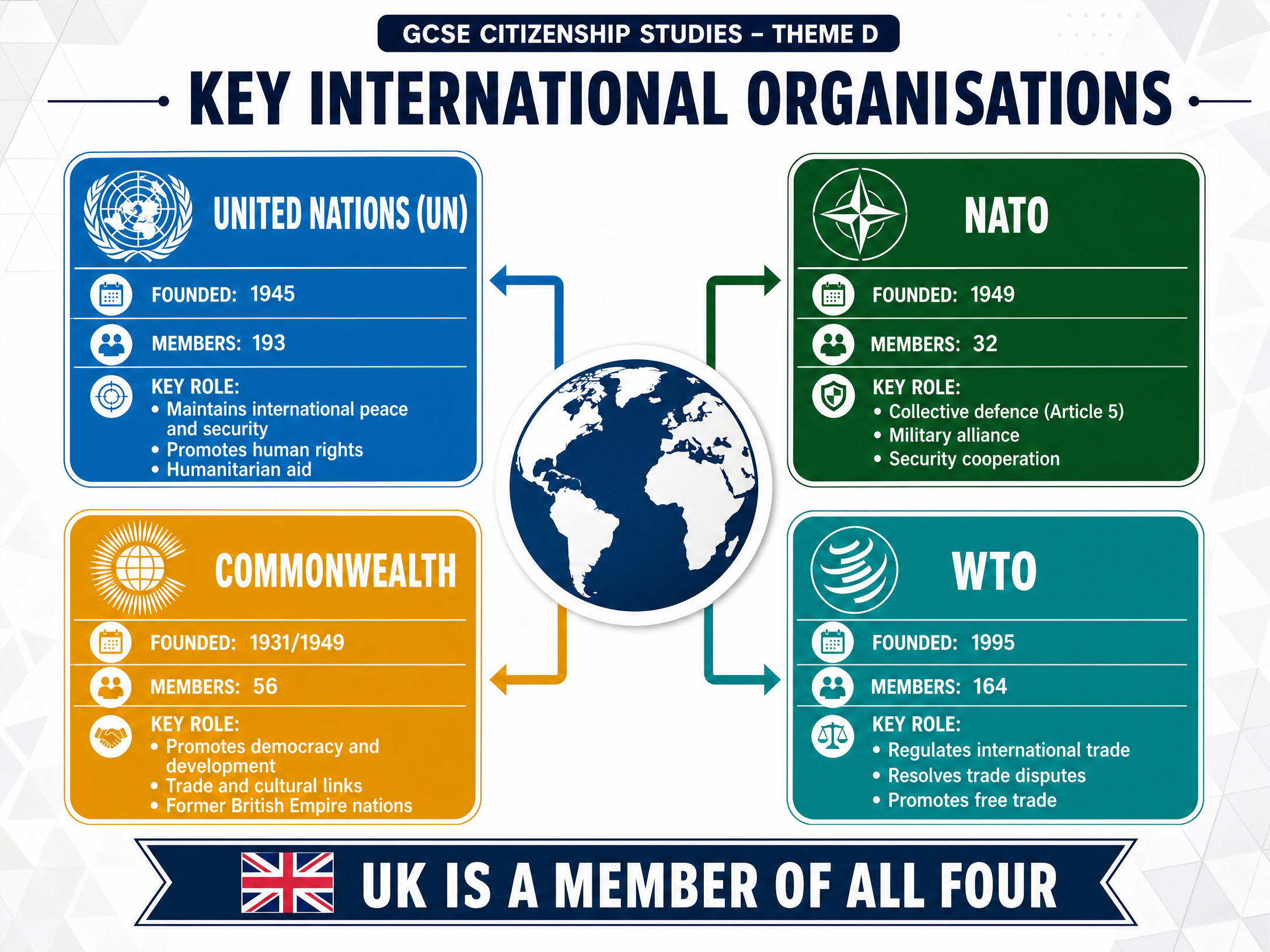
Key Distinctions: You must know the distinct roles of the UN (peace and security), NATO (military alliance, Article 5), the Commonwealth (shared values, former empire), and the WTO (international trade).
Specific Knowledge: The UN Security Council's 5 permanent members (USA, Russia, China, France, UK); NATO's 32 members.
The UK and the EU (Post-Brexit)
What it is: The evolving relationship between the UK and the European Union following the 2016 referendum and the official departure in January 2020.
Why it matters: Examiners expect up-to-date knowledge on the Trade and Cooperation Agreement (December 2020), the end of freedom of movement, and changes to trade and travel.
Democratic vs Non-Democratic Systems
What it is: Comparing how power is held and exercised in different political regimes.
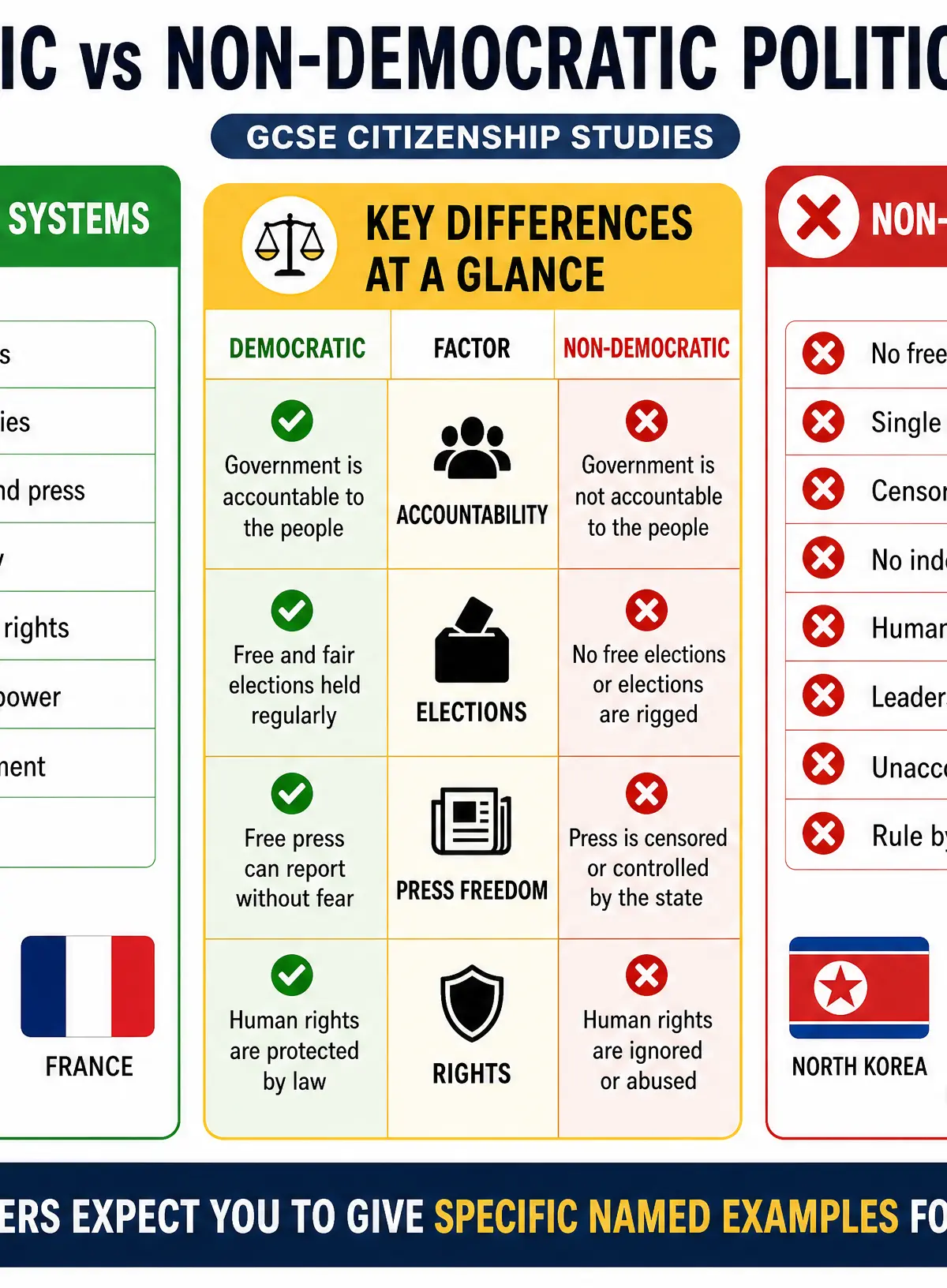
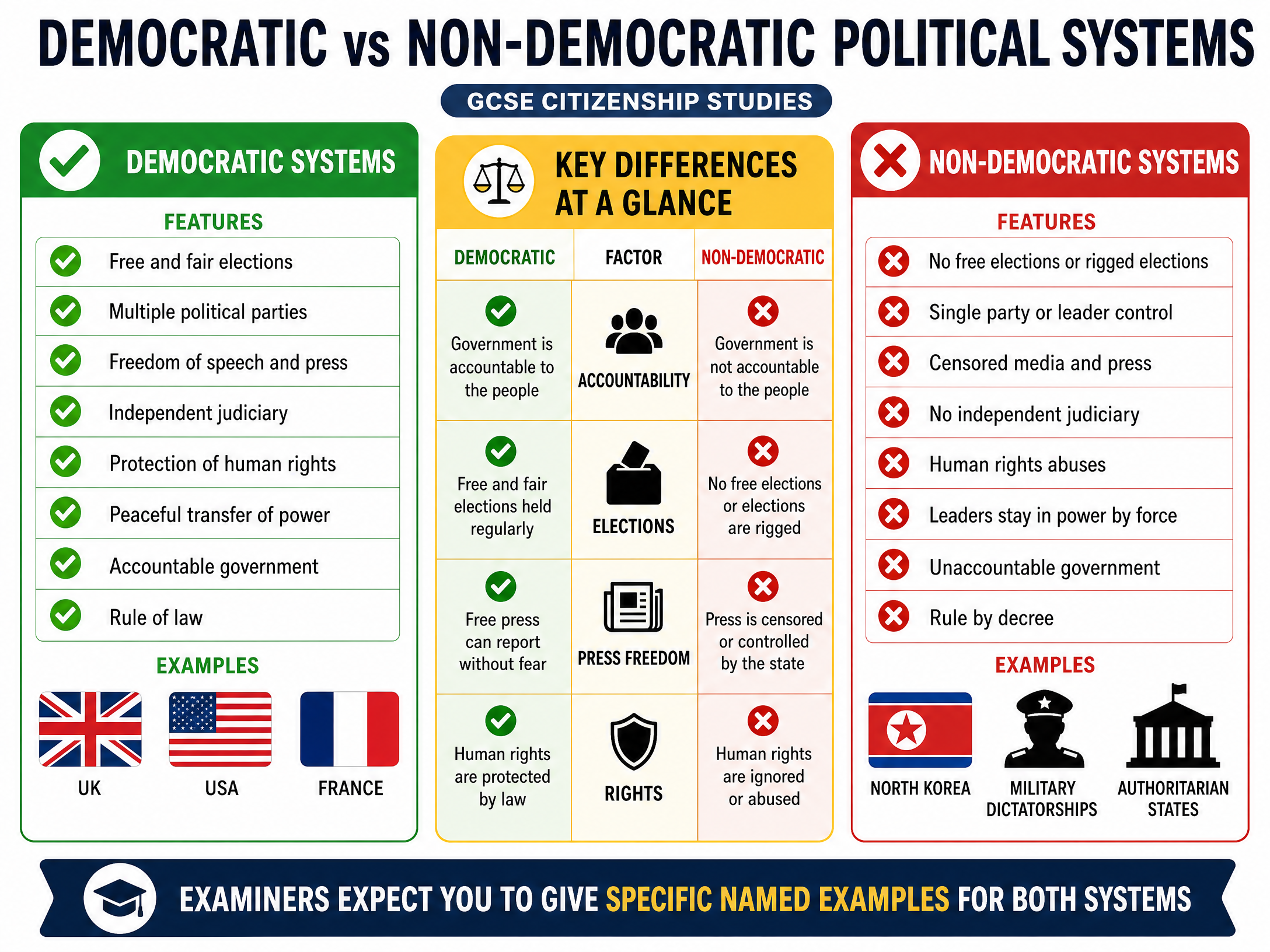
Key Distinctions: Democracies feature free elections, an independent judiciary, and a free press. Non-democracies (authoritarian states) feature rigged elections, censorship, and rule by decree.
Specific Knowledge: UK/USA (Democracies) vs North Korea (Non-democratic).
Source Skills for Theme D
When tackling source questions in Citizenship Studies, always consider:
- Content: What is the source actually saying about power or influence?
- Provenance: Who created it? A government official, a pressure group, a biased newspaper?
- Purpose: Is it trying to inform, persuade, or manipulate?
- Limitations: What is omitted? Does it only show one side of a political debate?
Visual Resources
3 diagrams and illustrations
Interactive Diagrams
1 interactive diagram to visualise key concepts
Conceptual Flow Outline
Flowchart showing the division of participation methods
Worked Examples
3 worked examples — open one to explore the question and available guidance.
Practice Questions
Test your understanding — click to reveal model answers
Explain the difference between a sectional pressure group and a cause pressure group. (4 marks)
Hint: Think about WHO the group is trying to benefit.
Discuss the view that the UK's membership of international organisations restricts its power. (15 marks)
Hint: Consider the concept of sovereignty versus collective power and influence.
Explain two barriers that might prevent citizens from participating in the democratic process. (8 marks)
Hint: Think about psychological barriers and practical barriers.
Describe the main role of the World Trade Organisation (WTO). (2 marks)
Hint: Focus on the word 'Trade' in the title.
Explain why a free press is essential in a democratic society. (8 marks)
Hint: Connect the media to the concept of 'accountability'.
Test your understanding of Theme D: Power and influence
Active recall beats re-reading. Take an instant quiz now to test what you’ve learned and lock it into long-term memory.
7 days Premium · Then free forever · No card, no charge