AQA · GCSE · Combined Science
Course version: 8464 · Version from Sept 2018
Students should be able to explain how a change in an abiotic factor would…
Full specification wording
Abiotic factors: Students should be able to explain how a change in an abiotic factor would affect a given community given appropriate data or context.
A community is all the populations of different species living together in a habitat.
Checked against the AQA 8464 specification (opens in a new tab) on .
- Point 1 of 10
- 2 key terms
Study notes
From the checked teaching notes for this specification point.
The idea
A community is all the populations of different species living together in a habitat. Abiotic factors are the non-living conditions of that habitat, such as light intensity, temperature, moisture and soil pH. A change in one of these factors alters which organisms can survive and reproduce, so it changes the community. To explain an effect, identify the factor that changed, state how it changed, then link that change to the physiology or behaviour of named organisms. For example, if light intensity falls in a woodland, plants receive less energy for photosynthesis, so growth slows and some species die out; fewer plants mean less food and shelter for herbivores, so their numbers may fall too. Always use the data or context given rather than a generic answer.
What earns the marks
- Identify the specific abiotic factor that has changed and state the direction of change, for example light intensity has decreased or soil pH has become more acidic.
- Link the changed factor to a named process in named organisms, such as less light reducing the rate of photosynthesis in plants.
- Explain the consequence for survival, growth or reproduction of organisms, for example slower growth, fewer seeds germinated or reduced breeding success.
- Extend the effect through the community, for example fewer plants reducing food and shelter for herbivores, which may then decline.
- Use figures or context from the data provided, such as a temperature rise of 5 °C or a light level falling from 800 lux to 200 lux, to support the explanation.
- Recognise that different species respond differently, so some may decline while others thrive, changing the balance of the community.
Common mistakes and how to put them right
Describing the abiotic factor as living or confusing it with a biotic factor such as predation.
Put it right: Abiotic means non-living, so use light, temperature, moisture, pH or mineral content.
Stating only that organisms die without explaining the intermediate process.
Put it right: Include the link, for example less light means less photosynthesis, so less glucose for growth.
Giving a generic answer that ignores the supplied data.
Put it right: Quote or use the specific values and context given in the question.
Exam tips
- Underline the abiotic factor named in the question and the direction of its change before you start writing.
- Use a chain of reasoning with connectives such as because, so and therefore to show each step from factor to community effect.
- Refer explicitly to the data or context, for example by quoting a value, to show you have applied the information rather than recalled a general fact.
Try the lesson
The start of the Abiotic factors: Students should be able to explain how a change in an abiotic factor would affect a given community given appropriate data or context. lesson, made from checked teaching notes for this specification point.
Have a go first
A period of drought significantly reduces the moisture level in the soil of a woodland. How is this change in an abiotic factor most likely to affect the plant community?
Listen
A community is all the populations of different species living together in a habitat. Abiotic factors are the non-living conditions of that habitat, such as light intensity, temperature, moisture and soil pH. A change in one of these factors alters which organisms can survive and reproduce, so it changes the community. To explain an effect, identify the factor that changed, state how it changed, then link that change to the physiology or behaviour of named organisms. For example, if light intensity falls in a woodland, plants receive less energy for photosynthesis, so growth slows and some species die out; fewer plants mean less food and shelter for herbivores, so their numbers may fall too. Always use the data or context given rather than a generic answer. A strong answer earns marks for these points. Identify the specific abiotic factor that has changed and state the direction of change, for example light intensity has decreased or soil pH has become more acidic. Link the changed factor to a named process in named organisms, such as less light reducing the rate of photosynthesis in plants. Explain the consequence for survival, growth or reproduction of organisms, for example slower growth, fewer seeds germinated or reduced breeding success. Extend the effect through the community, for example fewer plants reducing food and shelter for herbivores, which may then decline. A common slip: Describing the abiotic factor as living or confusing it with a biotic factor such as predation. Instead, abiotic means non-living, so use light, temperature, moisture, pH or mineral content. Exam tip: Underline the abiotic factor named in the question and the direction of its change before you start writing.
See it
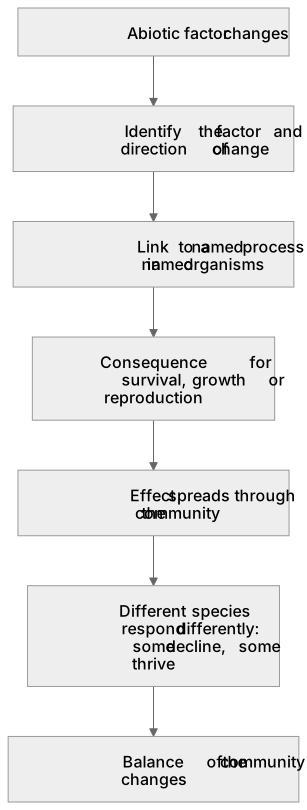
Put it in order
Put these steps in the order they happen.
- 1. Balance of the community changes
- 2. Different species respond differently: some decline, some thrive
- 3. Link to a named process in named organisms
- 4. Effect spreads through the community
- 5. Abiotic factor changes
- 6. Identify the factor and direction of change
- 7. Consequence for survival, growth or reproduction
Key words
Say what each word means before you turn the card.
abiotic factor
Try answering aloud or in your head before turning the card.
community
Try answering aloud or in your head before turning the card.
See every definition
- abiotic factor
- A non-living condition of a habitat, such as light intensity, temperature, moisture or soil pH.
- community
- All the populations of different species living together in a habitat.
Label the diagram
Some boxes have lost their names. Pick the right name for each number.
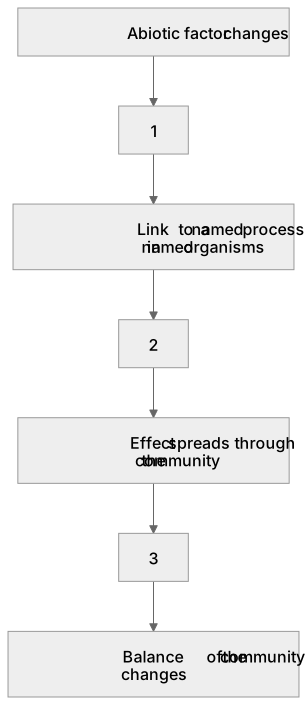
1Box 1
2Box 2
3Box 3
There is more to this lesson
The full lesson goes on to check your understanding and help you earn the marks. Create a free account to carry on, with your progress saved.
A week of Premium from your first lesson · Then the free plan continues · No card, no charge
Test your understanding of Abiotic factors: Students should be able to explain how a change in an abiotic factor would affect a given community given appropriate data or context.
Active recall beats re-reading. Take an instant quiz now to test what you’ve learned and lock it into long-term memory.
A week of Premium from your first lesson · Then the free plan continues · No card, no charge