AQA · GCSE · Combined Science
Course version: 8464 · Version from Sept 2018
Explain how a solenoid arrangement can increase the magnetic effect of the…
Full specification wording
Electromagnetism: explain how a solenoid arrangement can increase the magnetic effect of the current.
A solenoid is a long coil of insulated wire.
Checked against the AQA 8464 specification (opens in a new tab) on .
- Point 6 of 6
Study notes
From the checked teaching notes for this specification point.
The idea
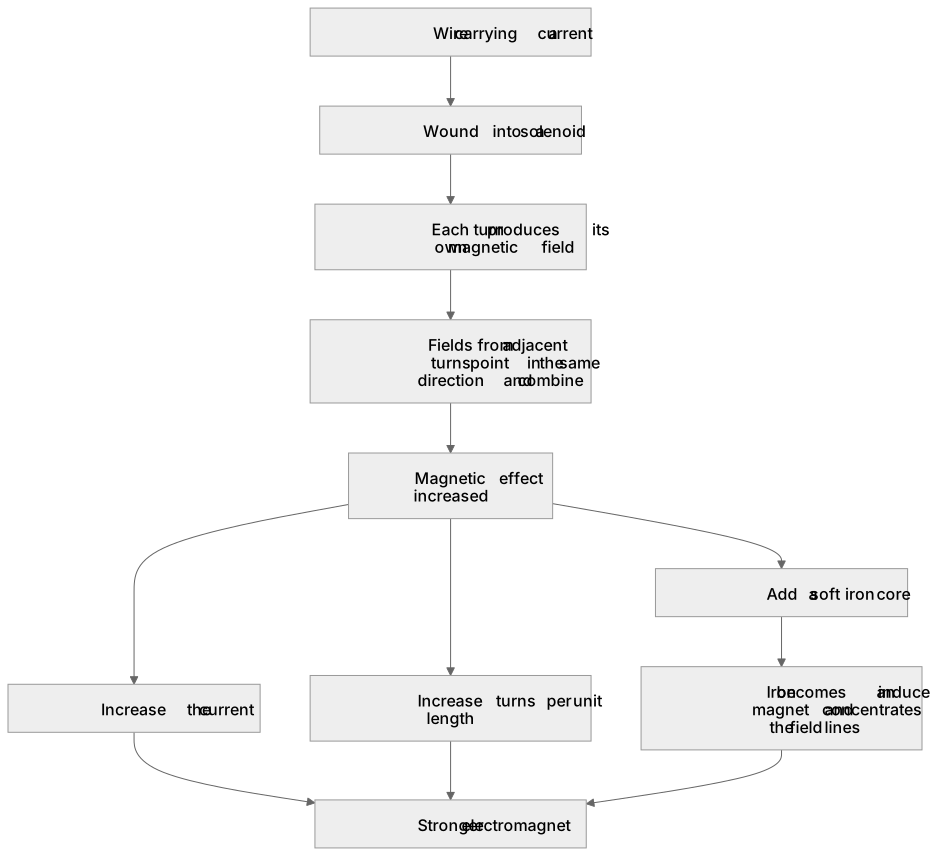
A solenoid is a long coil of insulated wire. Winding the wire into a solenoid increases the magnetic effect because each turn carries the same current and produces its own magnetic field; these fields line up along the inside of the coil and add together, so the field inside is much stronger than around a single straight wire. The field pattern is like that of a bar magnet, with a north end and a south end. The effect is increased further by increasing the current, by adding more turns per unit length, and by placing a soft iron core inside the coil. The iron core becomes an induced magnet and concentrates the magnetic field lines, making the electromagnet stronger. Reversing the current reverses the magnetic poles.
What earns the marks
- A solenoid is a coil of insulated wire carrying a current, so each turn produces its own magnetic field.
- The magnetic fields from adjacent turns point in the same direction and combine, increasing the overall magnetic effect.
- The field inside the solenoid is strong and uniform, and the outside field resembles that of a bar magnet with north and south poles.
- Increasing the current increases the magnetic field strength produced by each turn.
- Increasing the number of turns per unit length increases the number of fields that combine.
- Adding a soft iron core concentrates the magnetic field lines and makes the electromagnet stronger because the iron becomes an induced magnet.
Common mistakes and how to put them right
Thinking that a solenoid creates a magnetic field only when a permanent magnet is present.
Put it right: The current itself produces the magnetic field, and a soft iron core only strengthens it.
Believing that the magnetic field inside a solenoid is zero.
Put it right: The field inside is strong and uniform, while the field outside is weaker and like a bar magnet's field.
Assuming that increasing the current changes the direction of the magnetic field.
Put it right: Increasing the current increases the field strength, while reversing the current reverses the field direction.
Exam tips
- Link each method of increasing the effect to the underlying idea that more aligned magnetic fields add together.
- Use the phrase 'turns per unit length' rather than just 'more turns' when explaining the effect of coil geometry.
- When describing the soft iron core, state that it becomes an induced magnet and concentrates the field lines.
Try the lesson
The start of the Electromagnetism: explain how a solenoid arrangement can increase the magnetic effect of the current. lesson, made from checked teaching notes for this specification point.
Have a go first
A student coils a wire into a solenoid and connects it to a battery. Compared with the same wire left straight, why is the magnetic effect of the current stronger when the wire is coiled into a solenoid?
Listen
A solenoid is a long coil of insulated wire. Winding the wire into a solenoid increases the magnetic effect because each turn carries the same current and produces its own magnetic field; these fields line up along the inside of the coil and add together, so the field inside is much stronger than around a single straight wire. The field pattern is like that of a bar magnet, with a north end and a south end. The effect is increased further by increasing the current, by adding more turns per unit length, and by placing a soft iron core inside the coil. The iron core becomes an induced magnet and concentrates the magnetic field lines, making the electromagnet stronger. Reversing the current reverses the magnetic poles. A strong answer earns marks for these points. A solenoid is a coil of insulated wire carrying a current, so each turn produces its own magnetic field. The magnetic fields from adjacent turns point in the same direction and combine, increasing the overall magnetic effect. The field inside the solenoid is strong and uniform, and the outside field resembles that of a bar magnet with north and south poles. Increasing the current increases the magnetic field strength produced by each turn. A common slip: Thinking that a solenoid creates a magnetic field only when a permanent magnet is present. Instead, the current itself produces the magnetic field, and a soft iron core only strengthens it. Exam tip: Link each method of increasing the effect to the underlying idea that more aligned magnetic fields add together.
See it
Label the diagram
Some boxes have lost their names. Pick the right name for each number.
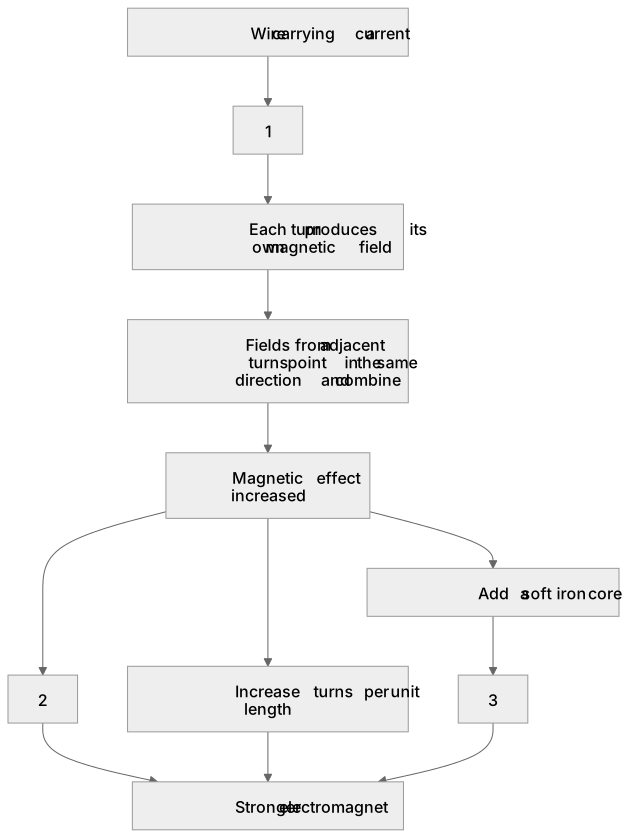
1Box 1
2Box 2
3Box 3
There is more to this lesson
The full lesson goes on to check your understanding and help you earn the marks. Create a free account to carry on, with your progress saved.
A week of Premium from your first lesson · Then the free plan continues · No card, no charge
Test your understanding of Electromagnetism: explain how a solenoid arrangement can increase the magnetic effect of the current.
Active recall beats re-reading. Take an instant quiz now to test what you’ve learned and lock it into long-term memory.
A week of Premium from your first lesson · Then the free plan continues · No card, no charge