AQA · GCSE · Combined Science
Course version: 8464 · Version from Sept 2018
Students should be able to explain the roles of thyroxine and adrenaline…
Full specification wording
Feedback systems (HT only): Students should be able to explain the roles of thyroxine and adrenaline in the body.
The roles of thyroxine and adrenaline, and negative feedback systems, are exclusively Higher Tier topics.
Checked against the AQA 8464 specification (opens in a new tab) on .
- Point 1 of 4
- 2 key terms
Study notes
From the checked teaching notes for this specification point.
The idea
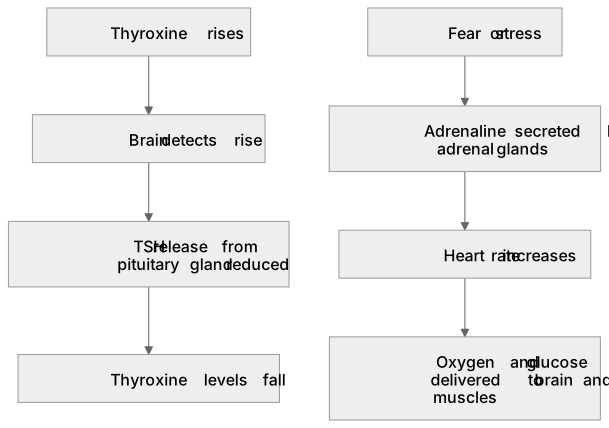
The roles of thyroxine and adrenaline, and negative feedback systems, are exclusively Higher Tier topics. Thyroxine, from the thyroid gland, stimulates the basal metabolic rate, aiding growth and development. Its release is regulated by negative feedback: a rise in thyroxine is detected by the brain, reducing thyroid-stimulating hormone (TSH) so levels fall. Adrenaline, from the adrenal glands, is produced during fear or stress. It increases heart rate and boosts oxygen and glucose delivery to the brain and muscles, preparing the body for 'flight or fight'. Adrenaline is not controlled by negative feedback.
What earns the marks
- Thyroxine is secreted by the thyroid gland and stimulates the basal metabolic rate, affecting how quickly cells respire.
- Thyroxine concentration is controlled by negative feedback; high levels inhibit TSH release from the pituitary gland.
- Adrenaline is secreted by the adrenal glands and acts rapidly during fear or stress, producing the ‘flight or fight’ response.
- Adrenaline increases heart rate, boosting oxygen and glucose delivery to the brain and muscles for rapid respiration.
Common mistakes and how to put them right
Saying thyroxine is released by the adrenal glands.
Put it right: Thyroxine comes from the thyroid gland in the neck, while adrenaline comes from the adrenal glands.
Describing adrenaline as being controlled by negative feedback.
Put it right: Adrenaline is released in response to specific nervous impulses during stress, not a continuous feedback loop.
Stating that negative feedback increases thyroxine without limit.
Put it right: Negative feedback reverses a change, so a rise in thyroxine reduces TSH release, bringing the level back down.
Exam tips
- This is a Higher Tier only topic, so ensure you can explain the negative feedback mechanism of thyroxine in detail, including the role of TSH.
- Name the gland for each hormone before describing its effect, as marks are often awarded for correct gland–hormone matching.
- Use the phrase ‘basal metabolic rate’ for thyroxine and link adrenaline explicitly to increased heart rate and oxygen/glucose delivery.
Try the lesson
The start of the Feedback systems (HT only): Students should be able to explain the roles of thyroxine and adrenaline in the body. lesson, made from checked teaching notes for this specification point.
Have a go first
Which hormone is produced by the thyroid gland and controls the rate of metabolism in the body?
Listen
The roles of thyroxine and adrenaline, and negative feedback systems, are exclusively Higher Tier topics. Thyroxine, from the thyroid gland, stimulates the basal metabolic rate, aiding growth and development. Its release is regulated by negative feedback: a rise in thyroxine is detected by the brain, reducing thyroid-stimulating hormone (TSH) so levels fall. Adrenaline, from the adrenal glands, is produced during fear or stress. It increases heart rate and boosts oxygen and glucose delivery to the brain and muscles, preparing the body for 'flight or fight'. Adrenaline is not controlled by negative feedback. A strong answer earns marks for these points. Thyroxine is secreted by the thyroid gland and stimulates the basal metabolic rate, affecting how quickly cells respire. Thyroxine concentration is controlled by negative feedback; high levels inhibit TSH release from the pituitary gland. Adrenaline is secreted by the adrenal glands and acts rapidly during fear or stress, producing the ‘flight or fight’ response. Adrenaline increases heart rate, boosting oxygen and glucose delivery to the brain and muscles for rapid respiration. A common slip: Saying thyroxine is released by the adrenal glands. Instead, thyroxine comes from the thyroid gland in the neck, while adrenaline comes from the adrenal glands. Exam tip: This is a Higher Tier only topic, so ensure you can explain the negative feedback mechanism of thyroxine in detail, including the role of TSH.
See it
Key words
Say what each word means before you turn the card.
Thyroxine
Try answering aloud or in your head before turning the card.
Adrenaline
Try answering aloud or in your head before turning the card.
See every definition
- Thyroxine
- Secreted by the thyroid gland, it stimulates the basal metabolic rate, affecting how quickly cells respire, and aids growth and development.
- Adrenaline
- Secreted by the adrenal glands during fear or stress, it increases heart rate and boosts oxygen and glucose delivery to the brain and muscles.
Label the diagram
Some boxes have lost their names. Pick the right name for each number.
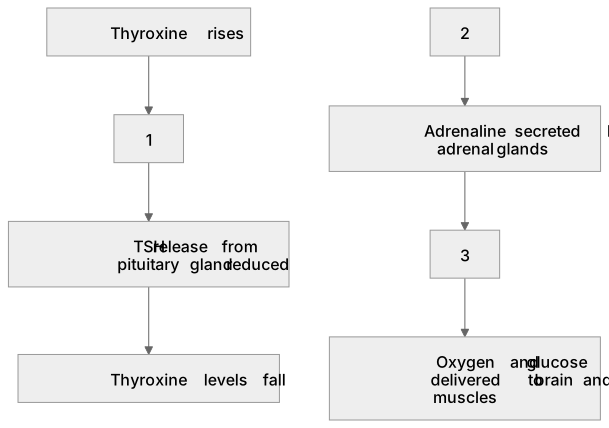
1Box 1
2Box 2
3Box 3
There is more to this lesson
The full lesson goes on to check your understanding and help you earn the marks. Create a free account to carry on, with your progress saved.
A week of Premium from your first lesson · Then the free plan continues · No card, no charge
Test your understanding of Feedback systems (HT only): Students should be able to explain the roles of thyroxine and adrenaline in the body.
Active recall beats re-reading. Take an instant quiz now to test what you’ve learned and lock it into long-term memory.
A week of Premium from your first lesson · Then the free plan continues · No card, no charge