AQA · GCSE · Combined Science
Course version: 8464 · Version from Sept 2018
Genetic inheritance: heterozygous
Heterozygous describes a genotype in which the two alleles of a gene carried by an organism are different.
Checked against the AQA 8464 specification (opens in a new tab) on .
- Point 9 of 20
- 4 key terms
Study notes
From the checked teaching notes for this specification point.
The idea
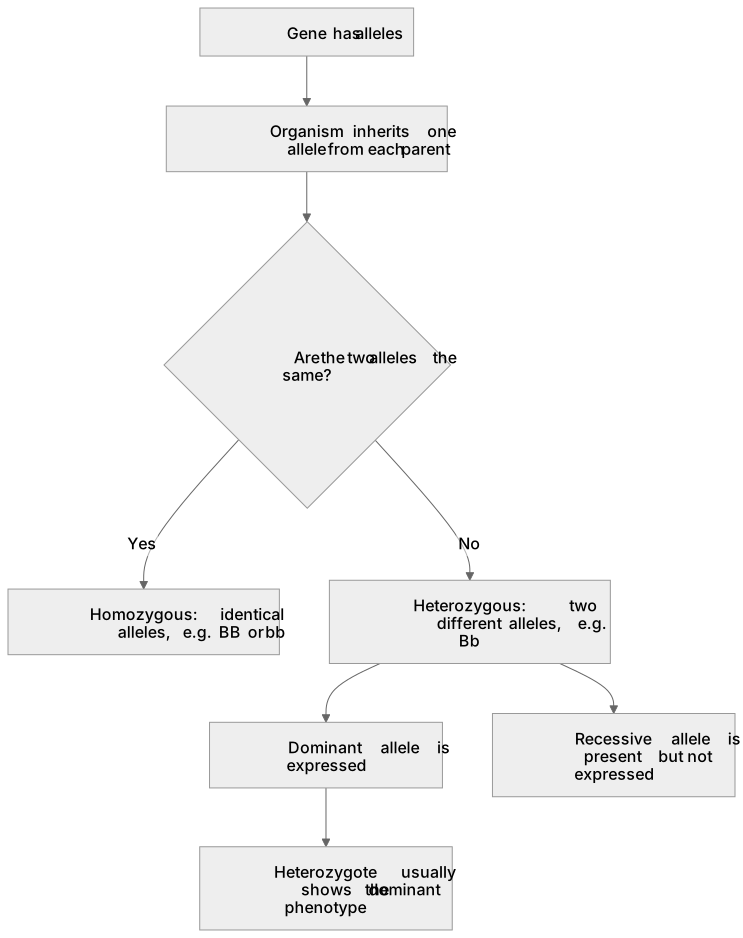
Heterozygous describes a genotype in which the two alleles of a gene carried by an organism are different. Alleles are alternative versions of a gene, and a diploid organism inherits one allele from each parent. If the alleles differ, the organism is heterozygous for that gene, for example Bb or Tt. The observable characteristic depends on dominance: a dominant allele is expressed even when only one copy is present, so a heterozygote usually shows the dominant phenotype, while the recessive allele remains hidden unless two recessive alleles are inherited.
What earns the marks
- Defines heterozygous as having two different alleles of the same gene, for example Bb.
- Uses correct allele notation: dominant allele as a capital letter and recessive allele as the matching lower-case letter.
- Explains that a heterozygote usually shows the dominant phenotype because the dominant allele is expressed.
- Distinguishes heterozygous from homozygous, where the two alleles are identical, for example BB or bb.
- Applies the term to genetic crosses, family pedigrees or probability calculations involving gametes.
- Links genotype to phenotype, noting that the recessive allele is still present but not expressed.
Common mistakes and how to put them right
Writing that heterozygous means two different genes.
Put it right: It means two different alleles of the same gene.
Confusing heterozygous with homozygous.
Put it right: Heterozygous has unlike alleles such as Bb, whereas homozygous has identical alleles such as BB or bb.
Assuming a heterozygote always shows the recessive characteristic.
Put it right: It usually shows the dominant characteristic because the dominant allele is expressed.
Exam tips
- Underline the key words 'different alleles' in the question before writing your definition.
- When completing a Punnett square, label gametes with single letters and offspring with pairs such as Bb.
- If asked to explain a ratio, state the genotypes of parents and gametes before combining them.
Try the lesson
The start of the Genetic inheritance: heterozygous lesson, made from checked teaching notes for this specification point.
Have a go first
What is the meaning of the term heterozygous?
Listen
Heterozygous describes a genotype in which the two alleles of a gene carried by an organism are different. Alleles are alternative versions of a gene, and a diploid organism inherits one allele from each parent. If the alleles differ, the organism is heterozygous for that gene, for example Bb or Tt. The observable characteristic depends on dominance: a dominant allele is expressed even when only one copy is present, so a heterozygote usually shows the dominant phenotype, while the recessive allele remains hidden unless two recessive alleles are inherited. A strong answer earns marks for these points. Defines heterozygous as having two different alleles of the same gene, for example Bb. Uses correct allele notation: dominant allele as a capital letter and recessive allele as the matching lower-case letter. Explains that a heterozygote usually shows the dominant phenotype because the dominant allele is expressed. Distinguishes heterozygous from homozygous, where the two alleles are identical, for example BB or bb. A common slip: Writing that heterozygous means two different genes. Instead, it means two different alleles of the same gene. Exam tip: Underline the key words 'different alleles' in the question before writing your definition.
See it
Key words
Say what each word means before you turn the card.
Heterozygous
Try answering aloud or in your head before turning the card.
Alleles
Try answering aloud or in your head before turning the card.
Dominant allele
Try answering aloud or in your head before turning the card.
Recessive allele
Try answering aloud or in your head before turning the card.
See every definition
- Heterozygous
- Describes a genotype in which the two alleles of a gene carried by an organism are different.
- Alleles
- Alternative versions of a gene, of which a diploid organism inherits one from each parent.
- Dominant allele
- An allele that is expressed even when only one copy is present.
- Recessive allele
- An allele that remains hidden unless two recessive alleles are inherited.
Label the diagram
Some boxes have lost their names. Pick the right name for each number.
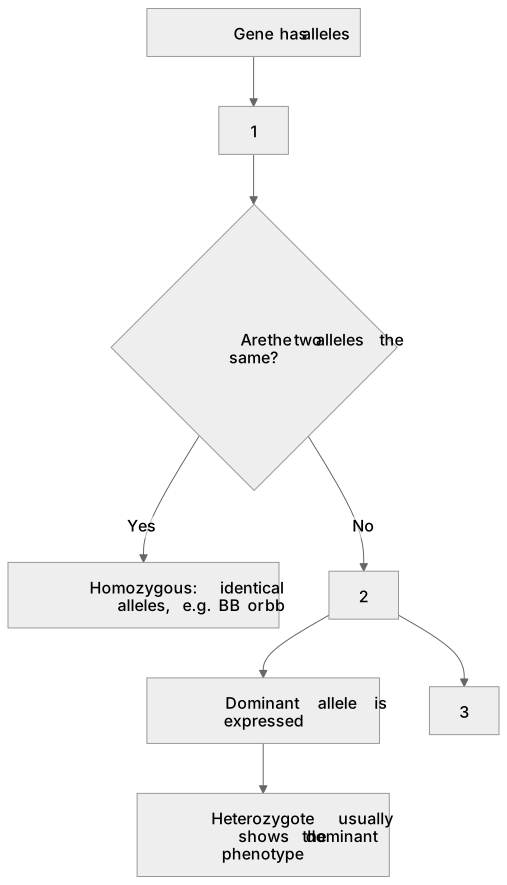
1Box 1
2Box 2
3Box 3
There is more to this lesson
The full lesson goes on to check your understanding and help you earn the marks. Create a free account to carry on, with your progress saved.
A week of Premium from your first lesson · Then the free plan continues · No card, no charge
Test your understanding of Genetic inheritance: heterozygous
Active recall beats re-reading. Take an instant quiz now to test what you’ve learned and lock it into long-term memory.
A week of Premium from your first lesson · Then the free plan continues · No card, no charge