AQA · GCSE · Combined Science
Course version: 8464 · Version from Sept 2018
Genetic inheritance: Students should be able to explain the terms:
This statement introduces the vocabulary of genetic inheritance.
Checked against the AQA 8464 specification (opens in a new tab) on .
- Point 1 of 20
- 2 key terms
Study notes
From the checked teaching notes for this specification point.
The idea
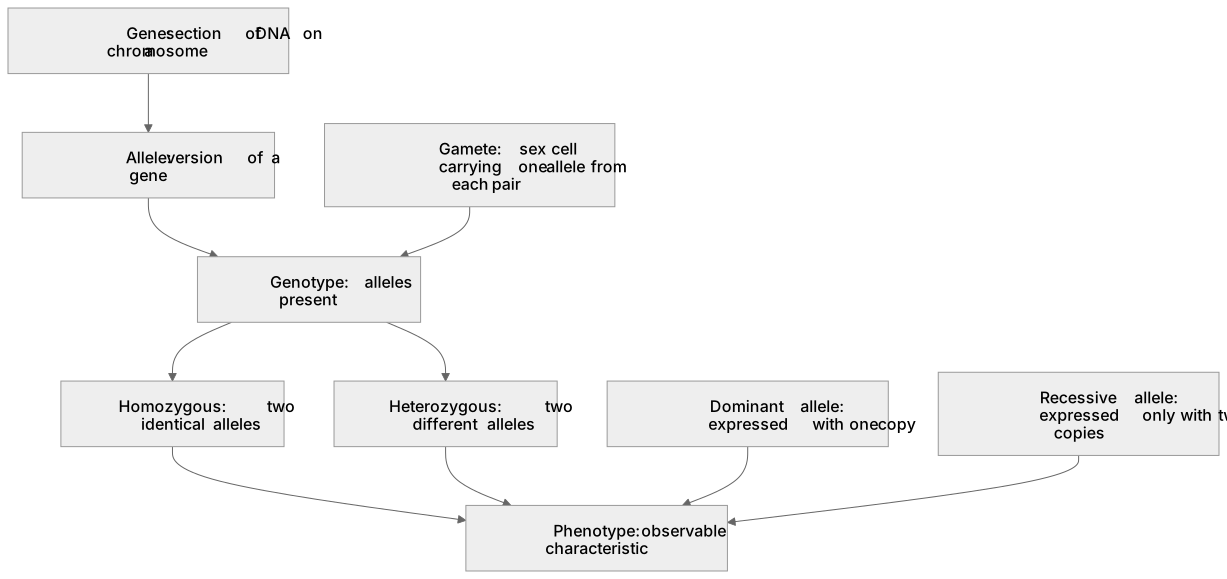
This statement introduces the vocabulary of genetic inheritance. You must be able to explain each term, not merely recall it, so link every definition to how inheritance works. Genes are sections of DNA on chromosomes; a gamete is a sex cell; a chromosome is a thread-like DNA structure; an allele is a version of a gene; dominant and recessive alleles affect phenotype; genotype is the alleles present; phenotype is the observable characteristic; homozygous means two identical alleles; heterozygous means two different alleles. For example, a pea plant with genotype Tt is heterozygous, carries one dominant tall allele and one recessive short allele, and shows the tall phenotype. Explaining means saying what each term means and using it correctly in a genetic cross.
What earns the marks
- Define a gene as a section of DNA that codes for a protein or characteristic, and locate it on a chromosome.
- Define a gamete as a sex cell, such as sperm, egg or pollen, that carries one allele from each pair.
- Define a chromosome as a thread-like structure of DNA that carries many genes.
- Define an allele as a different version of the same gene, for example T and t for plant height.
- Distinguish genotype (the alleles an organism has) from phenotype (the observable features produced).
- Explain homozygous as having two identical alleles, such as TT or tt, and heterozygous as having two different alleles, such as Tt.
- Explain dominant and recessive alleles: a dominant allele is expressed even when only one copy is present, while a recessive allele is expressed only when two copies are present.
- Use the terms accurately in a Punnett square or family pedigree to predict offspring ratios.
Common mistakes and how to put them right
Confusing a gene with a chromosome.
Put it right: A gene is a short section of DNA, whereas a chromosome is a long DNA molecule carrying many genes.
Saying a dominant allele is the most common allele.
Put it right: Dominance describes which allele is expressed in a heterozygote, not how frequent it is in a population.
Writing that a gamete has two alleles for each gene.
Put it right: Gametes are haploid, so they carry one allele from each pair.
Using genotype and phenotype interchangeably.
Put it right: Genotype is the allele combination, while phenotype is the visible or detectable characteristic.
Exam tips
- Learn each term with a short example, such as Tt for heterozygous, so you can explain rather than just state it.
- When asked to explain, give the meaning and then apply it to a cross or family tree to show understanding.
- Use genetic diagrams with clear labels for parental genotypes, gametes and offspring to support your explanations.
- Check that you use dominant and recessive correctly: dominant alleles are expressed in heterozygotes, recessive alleles only in homozygotes.
Try the lesson
The start of the Genetic inheritance: Students should be able to explain the terms: lesson, made from checked teaching notes for this specification point.
Have a go first
Which term describes the genetic makeup of an organism, such as the alleles it carries?
Listen
This statement introduces the vocabulary of genetic inheritance. You must be able to explain each term, not merely recall it, so link every definition to how inheritance works. Genes are sections of DNA on chromosomes; a gamete is a sex cell; a chromosome is a thread-like DNA structure; an allele is a version of a gene; dominant and recessive alleles affect phenotype; genotype is the alleles present; phenotype is the observable characteristic; homozygous means two identical alleles; heterozygous means two different alleles. For example, a pea plant with genotype Tt is heterozygous, carries one dominant tall allele and one recessive short allele, and shows the tall phenotype. Explaining means saying what each term means and using it correctly in a genetic cross. A strong answer earns marks for these points. Define a gene as a section of DNA that codes for a protein or characteristic, and locate it on a chromosome. Define a gamete as a sex cell, such as sperm, egg or pollen, that carries one allele from each pair. Define a chromosome as a thread-like structure of DNA that carries many genes. Define an allele as a different version of the same gene, for example T and t for plant height. Exam tip: Learn each term with a short example, such as Tt for heterozygous, so you can explain rather than just state it.
See it
Key words
Say what each word means before you turn the card.
Gene
Try answering aloud or in your head before turning the card.
Allele
Try answering aloud or in your head before turning the card.
See every definition
- Gene
- A section of DNA on a chromosome that codes for a protein or characteristic.
- Allele
- A different version of the same gene, for example T and t for plant height.
Label the diagram
Some boxes have lost their names. Pick the right name for each number.
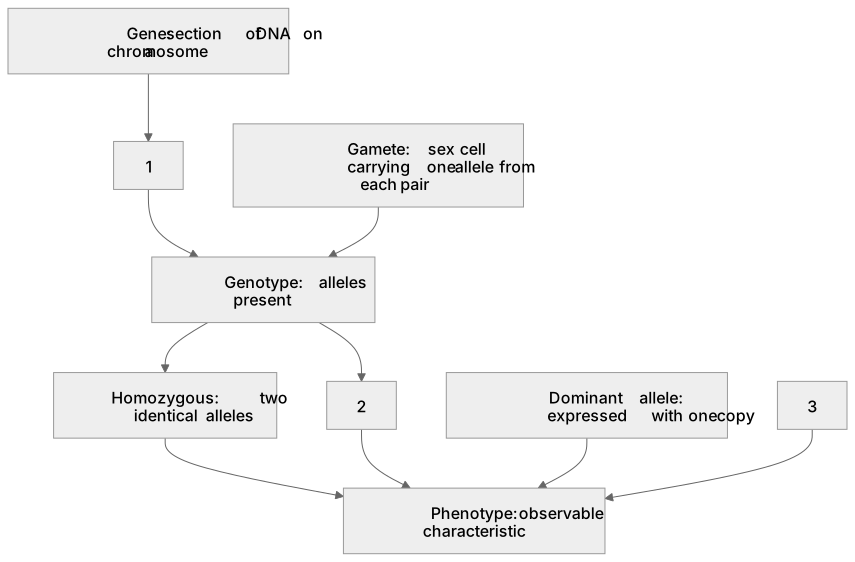
1Box 1
2Box 2
3Box 3
There is more to this lesson
The full lesson goes on to check your understanding and help you earn the marks. Create a free account to carry on, with your progress saved.
A week of Premium from your first lesson · Then the free plan continues · No card, no charge
Test your understanding of Genetic inheritance: Students should be able to explain the terms:
Active recall beats re-reading. Take an instant quiz now to test what you’ve learned and lock it into long-term memory.
A week of Premium from your first lesson · Then the free plan continues · No card, no charge