AQA · GCSE · Combined Science
Course version: 8464 · Version from Sept 2018
If a pathogen enters the body the immune system tries to destroy the…
Full specification wording
Human defence systems: If a pathogen enters the body the immune system tries to destroy the pathogen.
Once a pathogen gets past the skin, nose, trachea and stomach barriers, the immune system responds.
Checked against the AQA 8464 specification (opens in a new tab) on .
- Point 7 of 11
- 4 key terms
Study notes
From the checked teaching notes for this specification point.
The idea
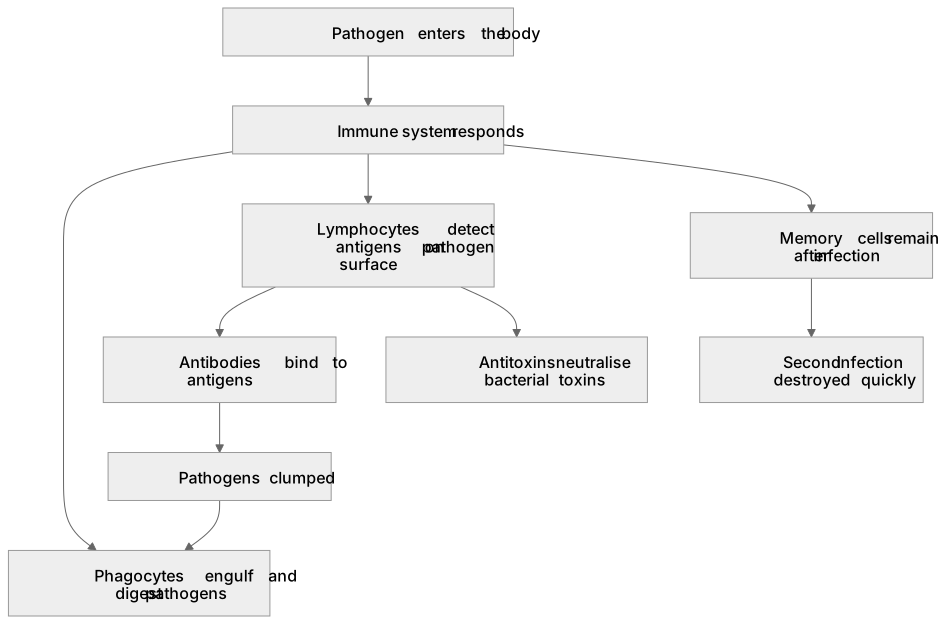
Once a pathogen gets past the skin, nose, trachea and stomach barriers, the immune system responds. White blood cells are central. Phagocytes engulf pathogens and digest them. Lymphocytes detect antigens on the pathogen surface and release antibodies that bind to those antigens, clumping the pathogens so phagocytes can destroy them. Lymphocytes also release antitoxins that neutralise bacterial toxins. This response is specific: antibodies for one antigen will not bind another. After the infection, memory cells remain, so a second infection by the same pathogen is destroyed quickly, often before symptoms appear.
What earns the marks
- The immune system responds only after a pathogen has entered the body past non-specific barriers.
- Phagocytes engulf and digest pathogens by phagocytosis.
- Lymphocytes produce antibodies that bind to specific antigens on the pathogen surface.
- Antibody binding clumps pathogens, helping phagocytes destroy them.
- Lymphocytes produce antitoxins that neutralise toxins released by bacteria.
- Memory cells remain after infection and give a faster, larger response on re-exposure.
Common mistakes and how to put them right
Thinking the immune system stops all pathogens at the body surface.
Put it right: It acts once pathogens have entered the body.
Believing one antibody works against every pathogen.
Put it right: Antibodies are specific to particular antigens.
Confusing antitoxins with antibodies.
Put it right: Antitoxins neutralise toxins, while antibodies bind antigens and clump pathogens.
Exam tips
- Start your answer by stating that the pathogen has entered the body, then describe the white blood cell response.
- Use precise terms: phagocyte, lymphocyte, antigen, antibody, antitoxin and memory cell.
- Explain the sequence: antigen detected, antibody produced, pathogen clumped, phagocyte destroys it.
Try the lesson
The start of the Human defence systems: If a pathogen enters the body the immune system tries to destroy the pathogen. lesson, made from checked teaching notes for this specification point.
Have a go first
What is the main function of the immune system when a pathogen enters the body?
Listen
Once a pathogen gets past the skin, nose, trachea and stomach barriers, the immune system responds. White blood cells are central. Phagocytes engulf pathogens and digest them. Lymphocytes detect antigens on the pathogen surface and release antibodies that bind to those antigens, clumping the pathogens so phagocytes can destroy them. Lymphocytes also release antitoxins that neutralise bacterial toxins. This response is specific: antibodies for one antigen will not bind another. After the infection, memory cells remain, so a second infection by the same pathogen is destroyed quickly, often before symptoms appear. A strong answer earns marks for these points. The immune system responds only after a pathogen has entered the body past non-specific barriers. Phagocytes engulf and digest pathogens by phagocytosis. Lymphocytes produce antibodies that bind to specific antigens on the pathogen surface. Antibody binding clumps pathogens, helping phagocytes destroy them. A common slip: Thinking the immune system stops all pathogens at the body surface. Instead, it acts once pathogens have entered the body. Exam tip: Start your answer by stating that the pathogen has entered the body, then describe the white blood cell response.
See it
Key words
Say what each word means before you turn the card.
Pathogen entry
Try answering aloud or in your head before turning the card.
White blood cell response
Try answering aloud or in your head before turning the card.
Specificity of antibodies
Try answering aloud or in your head before turning the card.
Immunity and memory cells
Try answering aloud or in your head before turning the card.
See every definition
- Pathogen entry
- The immune system tries to destroy a pathogen once it has entered the body.
- White blood cell response
- Phagocytes engulf and digest pathogens, while lymphocytes release antibodies and antitoxins.
- Specificity of antibodies
- Antibodies for one antigen will not bind another, so the response is specific.
- Immunity and memory cells
- Memory cells remain after infection, so a second infection by the same pathogen is destroyed quickly.
Label the diagram
Some boxes have lost their names. Pick the right name for each number.
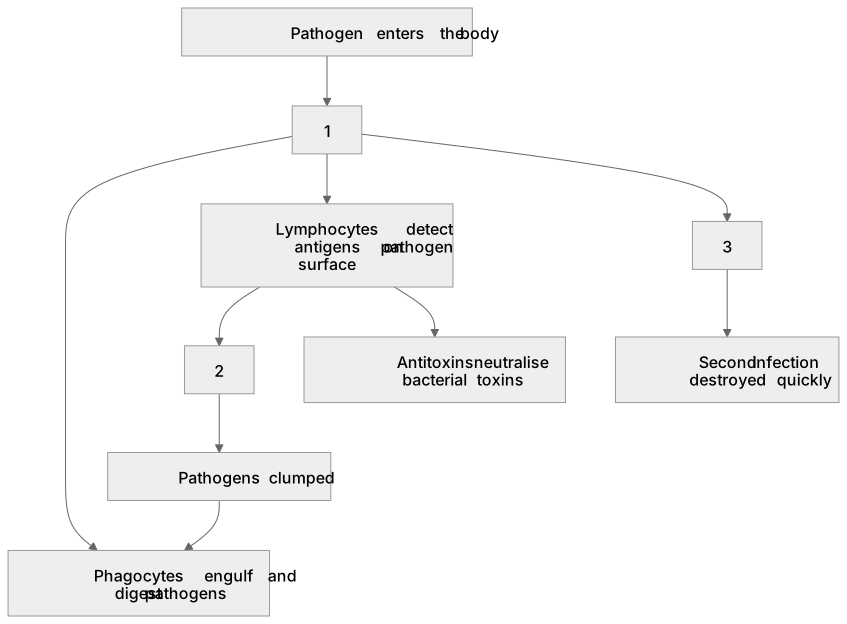
1Box 1
2Box 2
3Box 3
There is more to this lesson
The full lesson goes on to check your understanding and help you earn the marks. Create a free account to carry on, with your progress saved.
A week of Premium from your first lesson · Then the free plan continues · No card, no charge
Test your understanding of Human defence systems: If a pathogen enters the body the immune system tries to destroy the pathogen.
Active recall beats re-reading. Take an instant quiz now to test what you’ve learned and lock it into long-term memory.
A week of Premium from your first lesson · Then the free plan continues · No card, no charge