AQA · GCSE · Combined Science
Course version: 8464 · Version from Sept 2018
Human defence systems: stomach.
The stomach is a muscular organ that receives food from the oesophagus.
Checked against the AQA 8464 specification (opens in a new tab) on .
- Point 5 of 11
- 4 key terms
Study notes
From the checked teaching notes for this specification point.
The idea
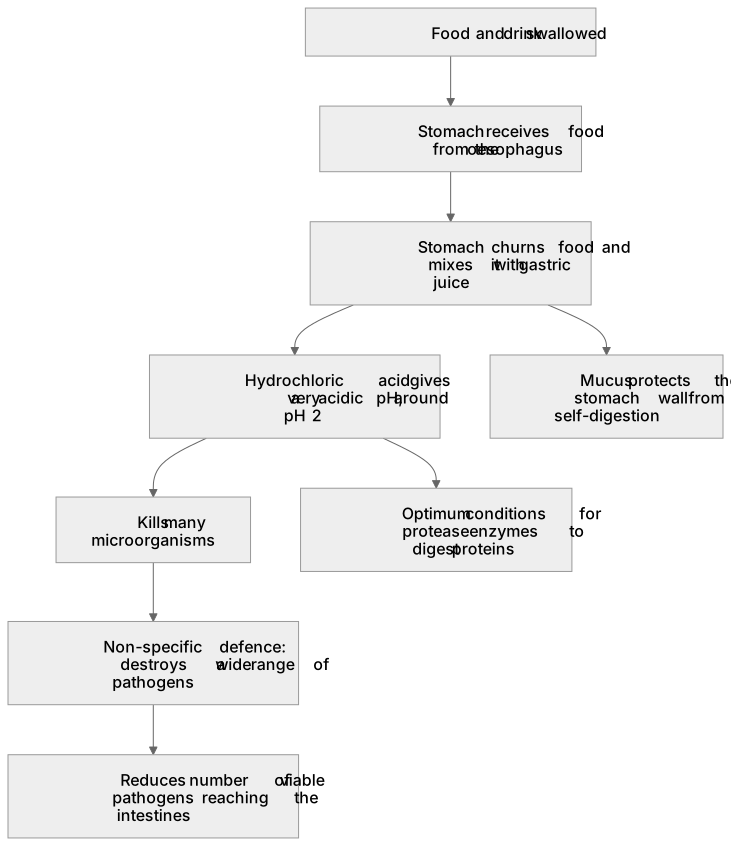
The stomach is a muscular organ that receives food from the oesophagus. It churns food and mixes it with gastric juice, which contains hydrochloric acid and enzymes such as protease. The hydrochloric acid creates a very acidic pH, typically around pH 2, which kills many microorganisms swallowed with food or drink. This is a non-specific defence because the acid destroys a wide range of pathogens, not just one type. The low pH also provides the optimum conditions for protease enzymes to digest proteins. The stomach wall is protected from self-digestion by a layer of mucus. In the context of human defence systems, the stomach is part of the first line of defence, reducing the number of viable pathogens that reach the intestines.
For example: Drinking contaminated water may introduce bacteria, but the acidic environment of the stomach often destroys them before they can cause disease.
What earns the marks
- The stomach is a muscular organ that churns food and mixes it with gastric juice.
- Gastric juice contains hydrochloric acid, which gives the stomach a low pH and kills many ingested microorganisms.
- The acid environment is a non-specific defence because it destroys a wide range of pathogens.
- The stomach wall secretes mucus, which protects the lining from damage by acid and enzymes.
- The low pH also provides optimum conditions for protease enzymes that digest proteins.
- Pathogens that survive the stomach may reach the intestines and cause infection, so the stomach reduces the risk of disease.
Common mistakes and how to put them right
Thinking that the stomach produces only enzymes.
Put it right: State that gastric juice contains both acid and enzymes.
Believing that the stomach is sterile.
Put it right: Say that the acid kills many pathogens, reducing the risk of infection.
Confusing the role of mucus in the stomach with mucus in the airways.
Put it right: Specify the protective role of mucus in each location.
Exam tips
- Link the low pH of the stomach directly to the killing of microorganisms when explaining defence.
- Use the term 'non-specific' to describe the stomach acid defence, as it acts against many pathogens.
- If asked about enzymes, remember that protease enzymes work best in acidic conditions in the stomach.
Try the lesson
The start of the Human defence systems: stomach. lesson, made from checked teaching notes for this specification point.
Have a go first
Which substance produced in the stomach helps to kill microorganisms in food?
Listen
The stomach is a muscular organ that receives food from the oesophagus. It churns food and mixes it with gastric juice, which contains hydrochloric acid and enzymes such as protease. The hydrochloric acid creates a very acidic pH, typically around pH 2, which kills many microorganisms swallowed with food or drink. This is a non-specific defence because the acid destroys a wide range of pathogens, not just one type. The low pH also provides the optimum conditions for protease enzymes to digest proteins. The stomach wall is protected from self-digestion by a layer of mucus. In the context of human defence systems, the stomach is part of the first line of defence, reducing the number of viable pathogens that reach the intestines. For example, drinking contaminated water may introduce bacteria, but the acidic environment of the stomach often destroys them before they can cause disease. A strong answer earns marks for these points. The stomach is a muscular organ that churns food and mixes it with gastric juice. Gastric juice contains hydrochloric acid, which gives the stomach a low pH and kills many ingested microorganisms. The acid environment is a non-specific defence because it destroys a wide range of pathogens. The stomach wall secretes mucus, which protects the lining from damage by acid and enzymes. A common slip: Thinking that the stomach produces only enzymes: it also produces hydrochloric acid, which is important for defence. Instead, state that gastric juice contains both acid and enzymes. Exam tip: Link the low pH of the stomach directly to the killing of microorganisms when explaining defence.
See it
Key words
Say what each word means before you turn the card.
Non-specific human defence systems
Try answering aloud or in your head before turning the card.
Role of hydrochloric acid in defence
Try answering aloud or in your head before turning the card.
Protective role of mucus
Try answering aloud or in your head before turning the card.
Digestion and defence in the stomach
Try answering aloud or in your head before turning the card.
See every definition
- Non-specific human defence systems
- A defence that destroys a wide range of pathogens, not just one type, such as the acid in the stomach.
- Role of hydrochloric acid in defence
- Gastric juice contains hydrochloric acid, which gives the stomach a low pH and kills many ingested microorganisms.
- Protective role of mucus
- The stomach wall secretes mucus, which protects the lining from damage by acid and enzymes.
- Digestion and defence in the stomach
- The low pH provides optimum conditions for protease enzymes that digest proteins, while the acid also kills many pathogens.
Label the diagram
Some boxes have lost their names. Pick the right name for each number.
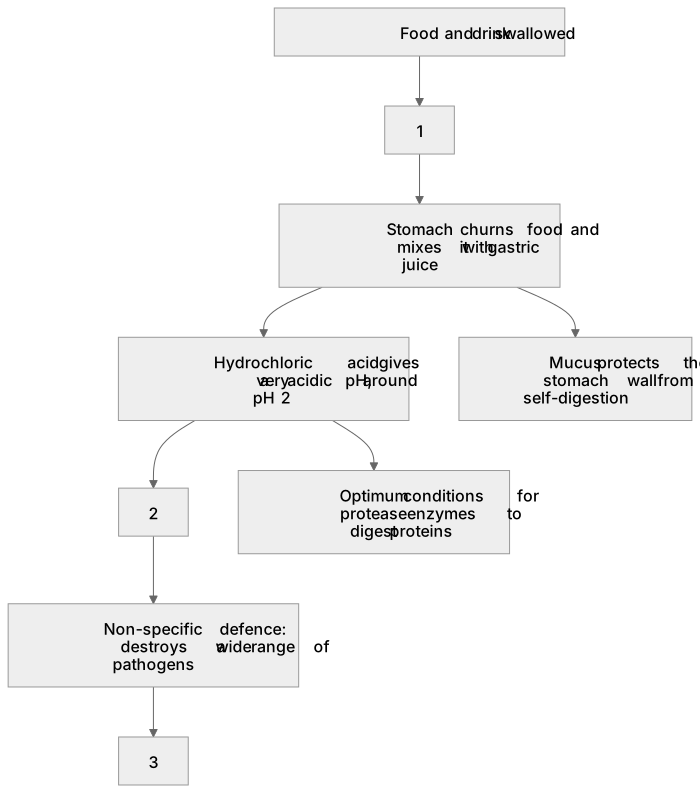
1Box 1
2Box 2
3Box 3
There is more to this lesson
The full lesson goes on to check your understanding and help you earn the marks. Create a free account to carry on, with your progress saved.
A week of Premium from your first lesson · Then the free plan continues · No card, no charge
Test your understanding of Human defence systems: stomach.
Active recall beats re-reading. Take an instant quiz now to test what you’ve learned and lock it into long-term memory.
A week of Premium from your first lesson · Then the free plan continues · No card, no charge