AQA · GCSE · Combined Science
Course version: 8464 · Version from Sept 2018
Human endocrine system: testes.
The testes are the paired male reproductive glands and also act as endocrine glands.
Checked against the AQA 8464 specification (opens in a new tab) on .
- Point 10 of 10
Study notes
From the checked teaching notes for this specification point.
The idea
The testes are the paired male reproductive glands and also act as endocrine glands. They secrete testosterone directly into the bloodstream, so testosterone travels around the body and acts on target tissues. Testosterone is the main male sex hormone: it stimulates sperm production in the testes and brings about male secondary sexual characteristics at puberty, such as deepening of the voice, growth of facial and body hair, and increased muscle development. Because the testes have both an endocrine role and a reproductive role, exam answers should distinguish hormone secretion from sperm production. When a question asks for the gland that produces testosterone, name the testes; when it asks for an effect, link testosterone to sperm production or to a named male secondary sexual characteristic.
What earns the marks
- States that the testes are endocrine glands that secrete testosterone directly into the blood.
- Names testosterone as the main hormone produced by the testes.
- Links testosterone to sperm production in the testes.
- Links testosterone to male secondary sexual characteristics such as voice deepening, facial hair growth or muscle development.
- Recognises that the testes also produce sperm, so they have a reproductive role as well as an endocrine role.
- Uses the idea of a target organ or target tissue when explaining how testosterone produces its effects.
Common mistakes and how to put them right
Writing that the testes release testosterone through a duct.
Put it right by stating that endocrine glands are ductless and secrete hormones into the bloodstream.
Confusing testosterone with oestrogen.
Put it right by naming testosterone as the main male sex hormone from the testes and oestrogen as an ovarian hormone.
Saying the testes produce sperm and testosterone in the same way.
Put it right by separating sperm production, which is a reproductive function, from hormone secretion, which is an endocrine function.
Exam tips
- If asked to name the gland that produces testosterone, answer 'testes' rather than 'testicle' or 'male gland'.
- Support each hormone with one specific effect, such as testosterone stimulating sperm production or deepening the voice.
- Use the terms endocrine gland, bloodstream and target organ to show understanding of hormone transport.
Try the lesson
The start of the Human endocrine system: testes. lesson, made from checked teaching notes for this specification point.
Have a go first
Which hormone is produced by the testes?
Listen
The testes are the paired male reproductive glands and also act as endocrine glands. They secrete testosterone directly into the bloodstream, so testosterone travels around the body and acts on target tissues. Testosterone is the main male sex hormone: it stimulates sperm production in the testes and brings about male secondary sexual characteristics at puberty, such as deepening of the voice, growth of facial and body hair, and increased muscle development. Because the testes have both an endocrine role and a reproductive role, exam answers should distinguish hormone secretion from sperm production. When a question asks for the gland that produces testosterone, name the testes; when it asks for an effect, link testosterone to sperm production or to a named male secondary sexual characteristic. A strong answer earns marks for these points. States that the testes are endocrine glands that secrete testosterone directly into the blood. Names testosterone as the main hormone produced by the testes. Links testosterone to sperm production in the testes. Links testosterone to male secondary sexual characteristics such as voice deepening, facial hair growth or muscle development. A common slip: Writing that the testes release testosterone through a duct. Instead, stating that endocrine glands are ductless and secrete hormones into the bloodstream. Exam tip: If asked to name the gland that produces testosterone, answer 'testes' rather than 'testicle' or 'male gland'.
See it
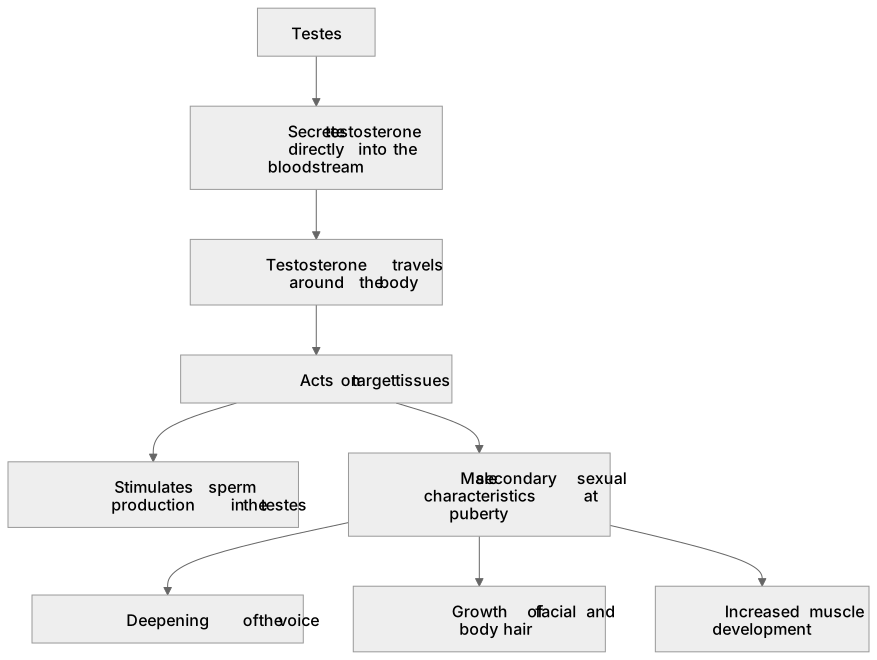
Label the diagram
Some boxes have lost their names. Pick the right name for each number.
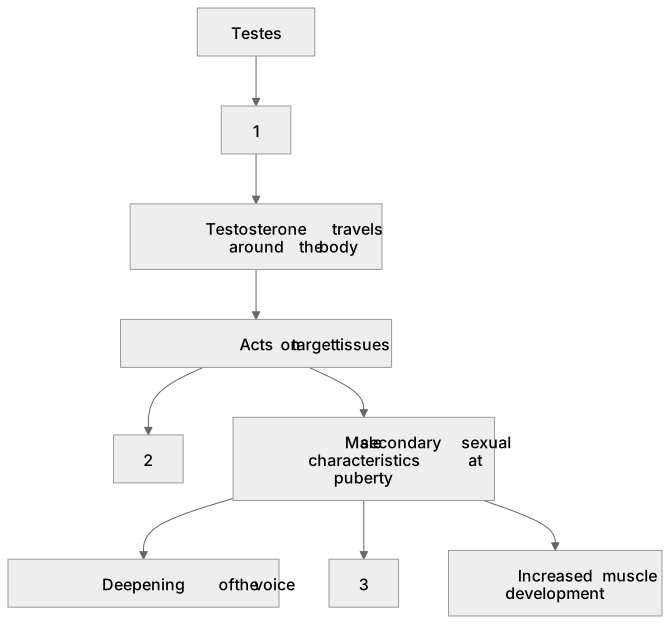
1Box 1
2Box 2
3Box 3
There is more to this lesson
The full lesson goes on to check your understanding and help you earn the marks. Create a free account to carry on, with your progress saved.
A week of Premium from your first lesson · Then the free plan continues · No card, no charge
Test your understanding of Human endocrine system: testes.
Active recall beats re-reading. Take an instant quiz now to test what you’ve learned and lock it into long-term memory.
A week of Premium from your first lesson · Then the free plan continues · No card, no charge