AQA · GCSE · Combined Science
Course version: 8464 · Version from Sept 2018
Organic compounds are used as fuels in cellular respiration to allow the…
Full specification wording
Key ideas: organic compounds are used as fuels in cellular respiration to allow the other chemical reactions necessary for life
Cellular respiration is the controlled release of energy from organic compounds such as glucose.
Checked against the AQA 8464 specification (opens in a new tab) on .
- Point 6 of 26
- 4 key terms
Study notes
From the checked teaching notes for this specification point.
The idea
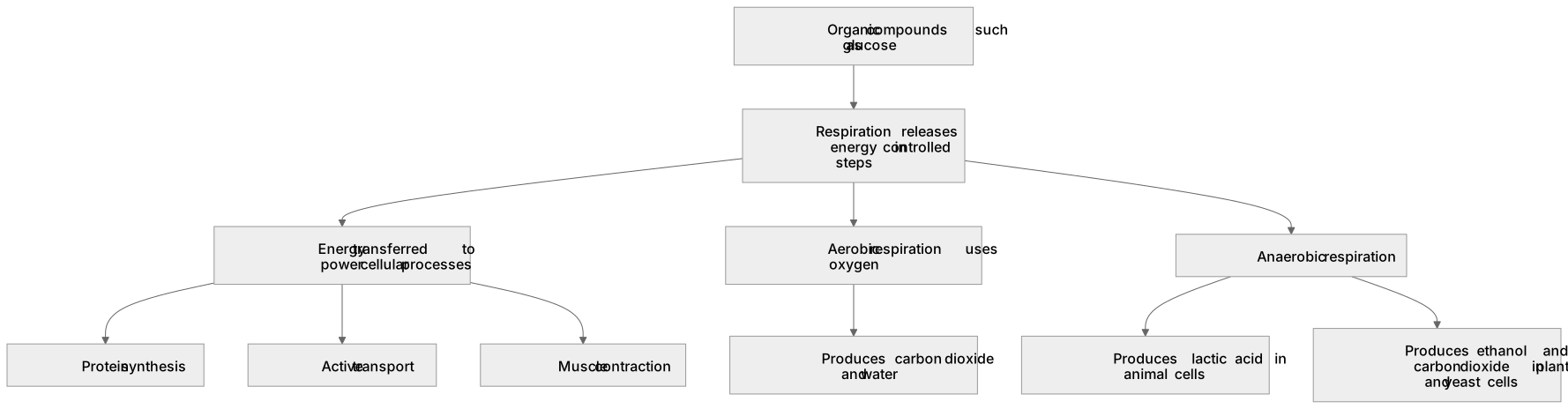
Cellular respiration is the controlled release of energy from organic compounds such as glucose. Glucose is broken down in enzyme-controlled reactions; aerobic respiration uses oxygen and yields carbon dioxide and water, while anaerobic respiration in animals yields lactic acid. The energy transferred powers the other chemical reactions necessary for life, including protein synthesis, active transport and muscle contraction. Respiration happens continuously in all living cells, including plant cells, and is not the same as breathing.
What earns the marks
- Organic compounds such as glucose act as fuels because their bonds store chemical energy that can be released in controlled steps.
- Respiration transfers the released energy to power cellular processes, rather than creating energy.
- Anaerobic respiration releases less energy per glucose molecule and produces lactic acid in animal cells or ethanol and carbon dioxide in plant and yeast cells.
- The energy supplied by respiration drives other chemical reactions necessary for life, such as protein synthesis and active transport.
- Respiration occurs in all living cells continuously, including plant cells, and is distinct from breathing or gas exchange.
Common mistakes and how to put them right
Writing that respiration is the same as breathing.
Put it right: Breathing is ventilation that brings oxygen to the lungs, whereas respiration is the chemical release of energy inside cells.
Stating that plants photosynthesise instead of respiring.
Put it right: Plants respire continuously and also photosynthesise in light.
Claiming that respiration makes energy.
Put it right: Respiration transfers energy from glucose, and energy is conserved rather than created.
Exam tips
- Learn the word equation for aerobic respiration, and if you are taking Higher Tier, learn the balanced symbol equation too.
- When asked why a cell needs respiration, link the released energy to a named process such as active transport or protein synthesis rather than saying 'for energy' alone.
- Compare aerobic and anaerobic respiration in a table of reactants, products and relative energy release to prepare for compare questions.
Try the lesson
The start of the Key ideas: organic compounds are used as fuels in cellular respiration to allow the other chemical reactions necessary for life lesson, made from checked teaching notes for this specification point.
Have a go first
Which organic compound is the fuel used in cellular respiration?
Listen
Cellular respiration is the controlled release of energy from organic compounds such as glucose. Glucose is broken down in enzyme-controlled reactions; aerobic respiration uses oxygen and yields carbon dioxide and water, while anaerobic respiration in animals yields lactic acid. The energy transferred powers the other chemical reactions necessary for life, including protein synthesis, active transport and muscle contraction. Respiration happens continuously in all living cells, including plant cells, and is not the same as breathing. A strong answer earns marks for these points. Organic compounds such as glucose act as fuels because their bonds store chemical energy that can be released in controlled steps. Respiration transfers the released energy to power cellular processes, rather than creating energy. Aerobic respiration uses oxygen and produces carbon dioxide and water; Higher Tier students should know the balanced symbol equation is C₆H₁₂O₆ + 6O₂ → 6CO₂ + 6H₂O. Anaerobic respiration releases less energy per glucose molecule and produces lactic acid in animal cells or ethanol and carbon dioxide in plant and yeast cells. A common slip: Writing that respiration is the same as breathing. Instead, breathing is ventilation that brings oxygen to the lungs, whereas respiration is the chemical release of energy inside cells. Exam tip: Learn the word equation for aerobic respiration, and if you are taking Higher Tier, learn the balanced symbol equation too.
See it
Key words
Say what each word means before you turn the card.
Cellular respiration
Try answering aloud or in your head before turning the card.
Aerobic respiration
Try answering aloud or in your head before turning the card.
Anaerobic respiration
Try answering aloud or in your head before turning the card.
Metabolic reactions
Try answering aloud or in your head before turning the card.
See every definition
- Cellular respiration
- The controlled release of energy from organic compounds such as glucose, broken down in enzyme-controlled reactions.
- Aerobic respiration
- Respiration that uses oxygen and yields carbon dioxide and water.
- Anaerobic respiration
- Respiration that releases less energy per glucose molecule and produces lactic acid in animal cells or ethanol and carbon dioxide in plant and yeast cells.
- Metabolic reactions
- The other chemical reactions necessary for life, such as protein synthesis and active transport, which are powered by the energy transferred in respiration.
Label the diagram
Some boxes have lost their names. Pick the right name for each number.
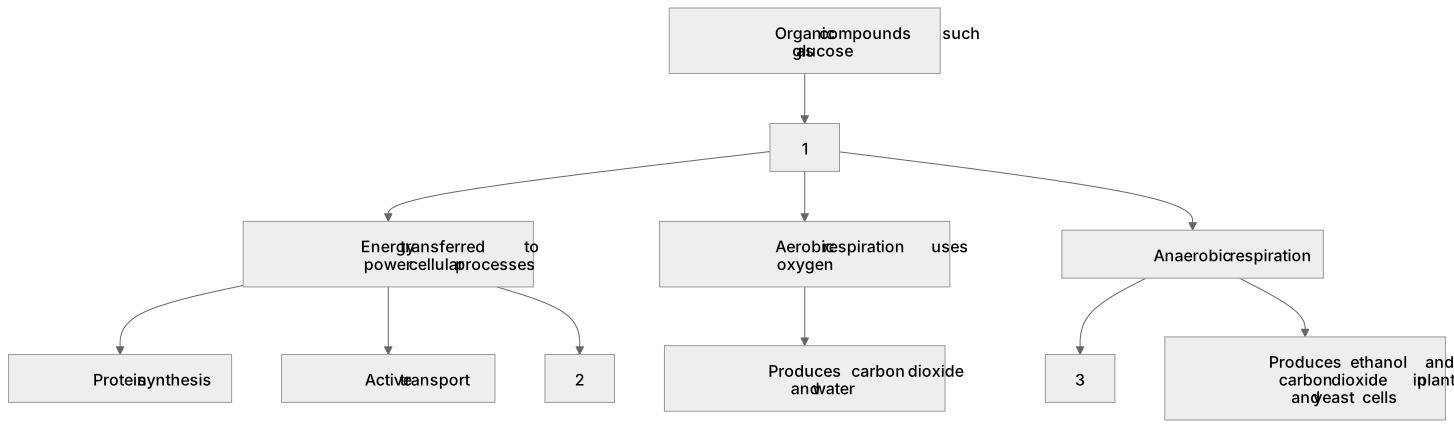
1Box 1
2Box 2
3Box 3
There is more to this lesson
The full lesson goes on to check your understanding and help you earn the marks. Create a free account to carry on, with your progress saved.
A week of Premium from your first lesson · Then the free plan continues · No card, no charge
Test your understanding of Key ideas: organic compounds are used as fuels in cellular respiration to allow the other chemical reactions necessary for life
Active recall beats re-reading. Take an instant quiz now to test what you’ve learned and lock it into long-term memory.
A week of Premium from your first lesson · Then the free plan continues · No card, no charge