AQA · GCSE · Combined Science
Course version: 8464 · Version from Sept 2018
Students should understand that photosynthetic organisms are the producers…
Full specification wording
Levels of organisation: Students should understand that photosynthetic organisms are the producers of biomass for life on Earth.
Photosynthetic organisms, such as green plants, algae and some bacteria, capture light energy and convert carbon dioxide and water into glucose and oxygen.
Checked against the AQA 8464 specification (opens in a new tab) on .
- Point 1 of 11
- 3 key terms
Study notes
From the checked teaching notes for this specification point.
The idea
Photosynthetic organisms, such as green plants, algae and some bacteria, capture light energy and convert carbon dioxide and water into glucose and oxygen. The glucose is used to build biological molecules including carbohydrates, lipids, proteins and nucleic acids, which together form biomass. Because these organisms synthesise their own organic nutrients from inorganic raw materials, they are called producers. Almost all energy in food webs enters as light energy trapped by producers, so the biomass available to consumers originates from photosynthesis. For example, a wheat plant uses glucose from photosynthesis to make starch in grains and cellulose in stems; a human eating bread obtains chemical energy stored in that biomass. Without producers, heterotrophs would have no source of organic carbon or energy.
What earns the marks
- Producers are photosynthetic organisms that synthesise organic molecules from inorganic raw materials using light energy.
- Photosynthesis converts light energy into chemical energy stored in glucose, which is then used to build biomass.
- Biomass includes the biological molecules made from glucose, such as carbohydrates, lipids, proteins and nucleic acids.
- Energy and matter pass from producers to consumers through feeding, so producer biomass is the starting point of food chains and webs.
- Examples of producers include green plants, algae and photosynthetic bacteria; not all producers are plants.
- The carbon in consumer biomass can be traced back to carbon dioxide fixed by producers during photosynthesis.
Common mistakes and how to put them right
Stating that producers are simply 'plants'.
Put it right: Producers are photosynthetic organisms and include algae and some bacteria as well as green plants.
Saying that producers 'eat' or 'absorb' food from the soil.
Put it right: Producers synthesise their own organic molecules by photosynthesis using carbon dioxide and water.
Confusing biomass with the total mass of an organism including water.
Put it right: Biomass is the mass of biological material, often considered as the organic matter built from glucose, and is not simply the fresh mass of the organism.
Claiming that energy is recycled in an ecosystem.
Put it right: Energy flows through ecosystems and is eventually lost as heat, whereas matter such as carbon is recycled.
Exam tips
- When asked why producers are essential, link your answer to the synthesis of biomass from glucose made in photosynthesis, not just to 'making oxygen'.
- Use the term 'biomass' precisely: refer to the biological molecules built from glucose rather than to the whole organism's fresh mass.
- If a question gives a food chain, identify the producer and explain that it is the only organism that synthesises organic molecules from inorganic materials.
- Practise writing a clear sequence: light energy → photosynthesis → glucose → biological molecules → biomass → available to consumers.
Try the lesson
The start of the Levels of organisation: Students should understand that photosynthetic organisms are the producers of biomass for life on Earth. lesson, made from checked teaching notes for this specification point.
Have a go first
Which type of organism produces biomass for life on Earth by photosynthesis?
Listen
Photosynthetic organisms, such as green plants, algae and some bacteria, capture light energy and convert carbon dioxide and water into glucose and oxygen. The glucose is used to build biological molecules including carbohydrates, lipids, proteins and nucleic acids, which together form biomass. Because these organisms synthesise their own organic nutrients from inorganic raw materials, they are called producers. Almost all energy in food webs enters as light energy trapped by producers, so the biomass available to consumers originates from photosynthesis. For example, a wheat plant uses glucose from photosynthesis to make starch in grains and cellulose in stems; a human eating bread obtains chemical energy stored in that biomass. Without producers, heterotrophs would have no source of organic carbon or energy. A strong answer earns marks for these points. Producers are photosynthetic organisms that synthesise organic molecules from inorganic raw materials using light energy. Photosynthesis converts light energy into chemical energy stored in glucose, which is then used to build biomass. Biomass includes the biological molecules made from glucose, such as carbohydrates, lipids, proteins and nucleic acids. Energy and matter pass from producers to consumers through feeding, so producer biomass is the starting point of food chains and webs. A common slip: stating that producers are simply 'plants'. Instead, producers are photosynthetic organisms and include algae and some bacteria as well as green plants. Exam tip: When asked why producers are essential, link your answer to the synthesis of biomass from glucose made in photosynthesis, not just to 'making oxygen'.
See it
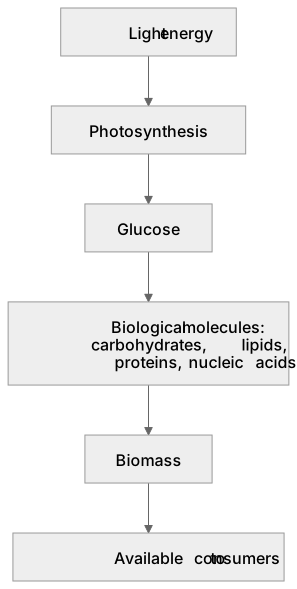
Put it in order
Put these steps in the order they happen.
- 1. Glucose
- 2. Photosynthesis
- 3. Light energy
- 4. Available to consumers
- 5. Biomass
- 6. Biological molecules: carbohydrates, lipids, proteins, nucleic acids
Key words
Say what each word means before you turn the card.
Producers
Try answering aloud or in your head before turning the card.
Biomass
Try answering aloud or in your head before turning the card.
Photosynthesis
Try answering aloud or in your head before turning the card.
See every definition
- Producers
- Photosynthetic organisms that synthesise their own organic nutrients from inorganic raw materials using light energy.
- Biomass
- Biological material formed from the biological molecules built using glucose, including carbohydrates, lipids, proteins and nucleic acids.
- Photosynthesis
- The process in which light energy is converted into chemical energy stored in glucose, which is then used to build biomass.
Label the diagram
Some boxes have lost their names. Pick the right name for each number.
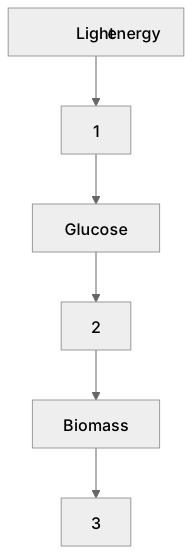
1Box 1
2Box 2
3Box 3
There is more to this lesson
The full lesson goes on to check your understanding and help you earn the marks. Create a free account to carry on, with your progress saved.
A week of Premium from your first lesson · Then the free plan continues · No card, no charge
Test your understanding of Levels of organisation: Students should understand that photosynthetic organisms are the producers of biomass for life on Earth.
Active recall beats re-reading. Take an instant quiz now to test what you’ve learned and lock it into long-term memory.
A week of Premium from your first lesson · Then the free plan continues · No card, no charge