AQA · GCSE · Combined Science
Course version: 8464 · Version from Sept 2018
The force between a magnet and a magnetic material is always one of…
Full specification wording
Magnetic fields: The force between a magnet and a magnetic material is always one of attraction.
A magnetic material is one that is attracted towards a magnet, such as iron, steel, cobalt or nickel.
Checked against the AQA 8464 specification (opens in a new tab) on .
- Point 2 of 8
- 4 key terms
Study notes
From the checked teaching notes for this specification point.
The idea
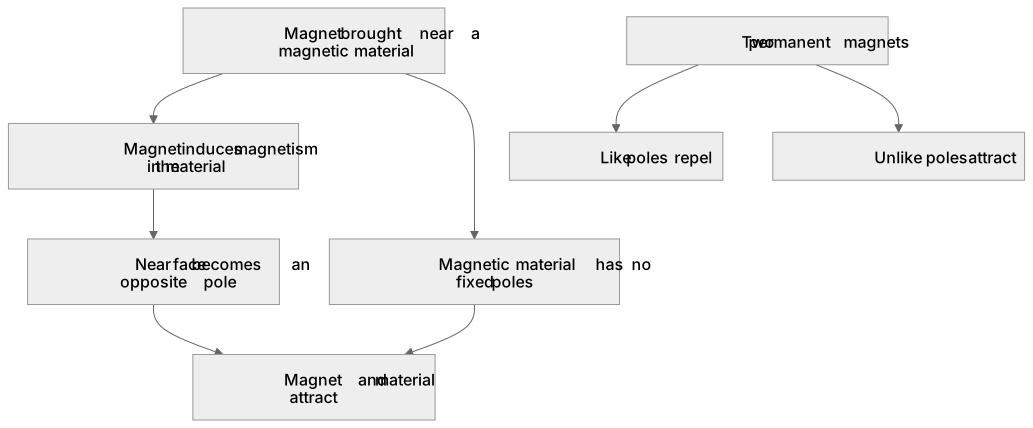
A magnetic material is one that is attracted towards a magnet, such as iron, steel, cobalt or nickel. Because such a material is not itself a permanent magnet, it has no fixed north or south pole to repel. When it is brought near a magnet, the magnet induces magnetism in it, so the near face always becomes an opposite pole and the two attract. This is why a fridge magnet clings to a steel door and why an iron nail is pulled towards either pole of a bar magnet. Contrast this with two permanent magnets, where like poles repel and unlike poles attract. The key idea is that attraction is the only possible outcome between a magnet and a magnetic material, whatever the orientation of the material.
What earns the marks
- State that magnetic materials include iron, steel, cobalt and nickel.
- Explain that a magnetic material is attracted towards a magnet, never repelled.
- Describe how a magnet induces magnetism in a magnetic material, producing an opposite pole on the near face.
- Contrast the behaviour of a magnetic material with that of a second permanent magnet, where like poles repel.
- Apply the idea to a familiar context, such as a fridge magnet holding to a steel door or an iron nail being pulled towards either pole.
Common mistakes and how to put them right
Thinking that turning a magnetic material around can make it repel a magnet.
Put it right: A magnetic material has no fixed poles, so it is always attracted.
Confusing magnetic materials with permanent magnets.
Put it right: Only a permanent magnet has fixed north and south poles that can repel another magnet.
Believing that all metals are magnetic.
Put it right: Only iron, steel, cobalt and nickel are magnetic; copper, aluminium and gold are not.
Exam tips
- Name the magnetic materials explicitly when asked to give examples, rather than saying 'metal'.
- Use the word 'induced' when explaining why attraction occurs, and link it to the opposite pole formed on the near face.
- If a question describes two objects, decide first whether both are permanent magnets or one is a magnetic material, then apply the correct rule.
Try the lesson
The start of the Magnetic fields: The force between a magnet and a magnetic material is always one of attraction. lesson, made from checked teaching notes for this specification point.
Have a go first
A bar magnet is brought close to an iron nail. Which statement describes the force between the magnet and the nail?
Listen
A magnetic material is one that is attracted towards a magnet, such as iron, steel, cobalt or nickel. Because such a material is not itself a permanent magnet, it has no fixed north or south pole to repel. When it is brought near a magnet, the magnet induces magnetism in it, so the near face always becomes an opposite pole and the two attract. This is why a fridge magnet clings to a steel door and why an iron nail is pulled towards either pole of a bar magnet. Contrast this with two permanent magnets, where like poles repel and unlike poles attract. The key idea is that attraction is the only possible outcome between a magnet and a magnetic material, whatever the orientation of the material. A strong answer earns marks for these points. State that magnetic materials include iron, steel, cobalt and nickel. Explain that a magnetic material is attracted towards a magnet, never repelled. Describe how a magnet induces magnetism in a magnetic material, producing an opposite pole on the near face. Contrast the behaviour of a magnetic material with that of a second permanent magnet, where like poles repel. A common slip: Thinking that turning a magnetic material around can make it repel a magnet. Instead, a magnetic material has no fixed poles, so it is always attracted. Exam tip: Name the magnetic materials explicitly when asked to give examples, rather than saying 'metal'.
See it
Key words
Say what each word means before you turn the card.
Magnetic materials
Try answering aloud or in your head before turning the card.
Induced magnetism
Try answering aloud or in your head before turning the card.
Attraction and repulsion
Try answering aloud or in your head before turning the card.
Poles of a magnet
Try answering aloud or in your head before turning the card.
See every definition
- Magnetic materials
- Materials such as iron, steel, cobalt or nickel that are attracted towards a magnet.
- Induced magnetism
- When a magnetic material is brought near a magnet, the magnet induces magnetism in it so the near face becomes an opposite pole.
- Attraction and repulsion
- A magnet and a magnetic material always attract, while two permanent magnets repel when like poles face each other and attract when unlike poles do.
- Poles of a magnet
- A permanent magnet has fixed north and south poles, but a magnetic material has no fixed poles to repel.
Label the diagram
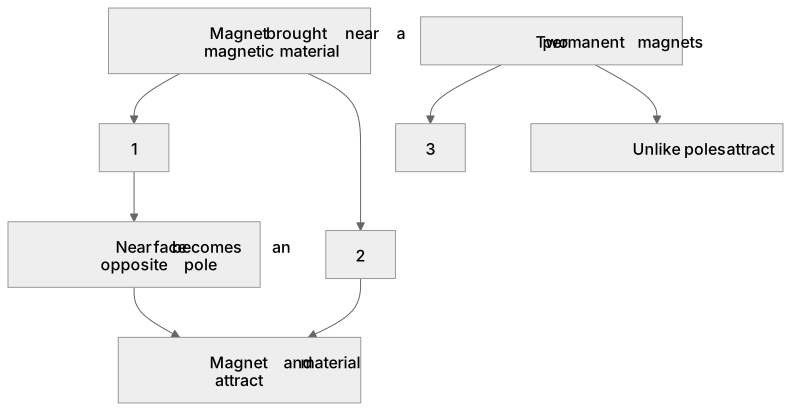
Some boxes have lost their names. Pick the right name for each number.
1Box 1
2Box 2
3Box 3
There is more to this lesson
The full lesson goes on to check your understanding and help you earn the marks. Create a free account to carry on, with your progress saved.
A week of Premium from your first lesson · Then the free plan continues · No card, no charge
Test your understanding of Magnetic fields: The force between a magnet and a magnetic material is always one of attraction.
Active recall beats re-reading. Take an instant quiz now to test what you’ve learned and lock it into long-term memory.
A week of Premium from your first lesson · Then the free plan continues · No card, no charge