AQA · GCSE · Combined Science
Course version: 8464 · Version from Sept 2018
All of these aspects are covered in more detail in the relevant…
Full specification wording
Metabolism: All of these aspects are covered in more detail in the relevant specification section but are linked together here.
This statement is a signpost: the metabolism section brings together ideas that are taught separately elsewhere, such as respiration, protein synthesis, deamination and the roles of the liver and…
Checked against the AQA 8464 specification (opens in a new tab) on .
- Point 10 of 10
- 2 key terms
Study notes
From the checked teaching notes for this specification point.
The idea
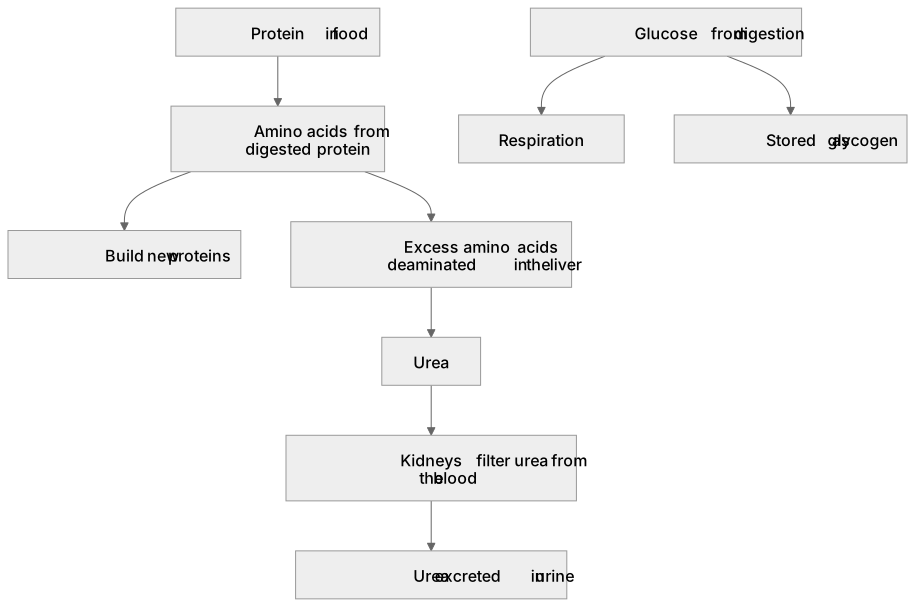
This statement is a signpost: the metabolism section brings together ideas that are taught separately elsewhere, such as respiration, protein synthesis, deamination and the roles of the liver and kidneys. Rather than learning these as isolated facts, you should connect them into one system. For example, amino acids from digested protein are used to build new proteins, but any excess is deaminated in the liver to make urea, which the kidneys excrete. Similarly, glucose from digestion is used in respiration or stored as glycogen. Revising with a flow diagram or concept map helps you see how each process supplies or removes substances from the blood.
What earns the marks
- Metabolism is the sum of all the chemical reactions in the body, including both building and breaking-down reactions.
- Ideas such as respiration, protein synthesis and deamination are taught in their own specification sections but are connected in this topic.
- Excess amino acids are deaminated in the liver to form urea, linking protein metabolism to excretion.
- The kidneys filter urea from the blood and excrete it in urine, linking metabolism to homeostasis.
- Glucose metabolism links digestion, respiration, glycogen storage and blood glucose control.
- Understanding these links helps explain how the body handles different nutrients and removes waste products.
Common mistakes and how to put them right
Treating each process as a separate fact rather than linking them.
Put it right: Build a concept map showing how digestion, liver, blood and kidneys connect.
Assuming this statement contains new content to memorise.
Put it right: It is a signpost, so revise the linked sections and practise making connections.
Confusing metabolism with digestion.
Put it right: Digestion is the breakdown of food in the gut, while metabolism covers all chemical reactions in cells and organs.
Exam tips
- Practise linking topics by writing short chains such as protein → amino acids → liver → urea → kidney → urine.
- When a question mentions more than one organ, name each organ and its role in the sequence.
- Use connectives such as 'which is then' and 'this links to' to show how processes depend on each other.
- Revise the relevant specification sections so you can recall the detail behind each link.
Try the lesson
The start of the Metabolism: All of these aspects are covered in more detail in the relevant specification section but are linked together here. lesson, made from checked teaching notes for this specification point.
Have a go first
Which of the following sets of processes are linked together because they are all part of an organism's metabolism?
Listen
This statement is a signpost: the metabolism section brings together ideas that are taught separately elsewhere, such as respiration, protein synthesis, deamination and the roles of the liver and kidneys. Rather than learning these as isolated facts, you should connect them into one system. For example, amino acids from digested protein are used to build new proteins, but any excess is deaminated in the liver to make urea, which the kidneys excrete. Similarly, glucose from digestion is used in respiration or stored as glycogen. Revising with a flow diagram or concept map helps you see how each process supplies or removes substances from the blood. A strong answer earns marks for these points. Metabolism is the sum of all the chemical reactions in the body, including both building and breaking-down reactions. Ideas such as respiration, protein synthesis and deamination are taught in their own specification sections but are connected in this topic. Excess amino acids are deaminated in the liver to form urea, linking protein metabolism to excretion. The kidneys filter urea from the blood and excrete it in urine, linking metabolism to homeostasis. A common slip: Treating each process as a separate fact rather than linking them. Instead, build a concept map showing how digestion, liver, blood and kidneys connect. Exam tip: Practise linking topics by writing short chains such as protein → amino acids → liver → urea → kidney → urine.
See it
Key words
Say what each word means before you turn the card.
Metabolism
Try answering aloud or in your head before turning the card.
Deamination
Try answering aloud or in your head before turning the card.
See every definition
- Metabolism
- The sum of all the chemical reactions in the body, including both building and breaking-down reactions.
- Deamination
- The process in which excess amino acids are broken down in the liver to form urea.
Label the diagram
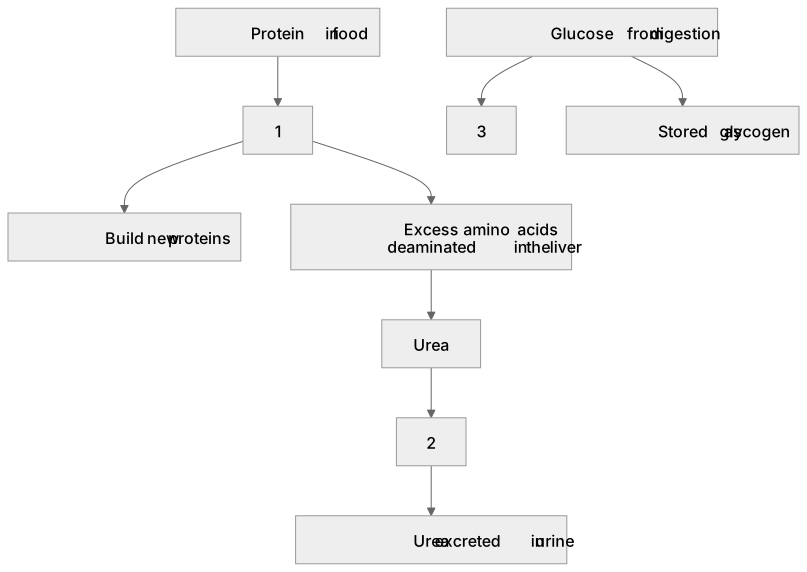
Some boxes have lost their names. Pick the right name for each number.
1Box 1
2Box 2
3Box 3
There is more to this lesson
The full lesson goes on to check your understanding and help you earn the marks. Create a free account to carry on, with your progress saved.
A week of Premium from your first lesson · Then the free plan continues · No card, no charge
Test your understanding of Metabolism: All of these aspects are covered in more detail in the relevant specification section but are linked together here.
Active recall beats re-reading. Take an instant quiz now to test what you’ve learned and lock it into long-term memory.
A week of Premium from your first lesson · Then the free plan continues · No card, no charge