AQA · GCSE · Combined Science
Course version: 8464 · Version from Sept 2018
The energy transferred by respiration in cells is used by the organism for…
Full specification wording
Metabolism: The energy transferred by respiration in cells is used by the organism for the continual enzyme controlled processes of metabolism that synthesise new molecules.
Respiration releases energy from glucose in every living cell, and that energy does not simply escape as heat: it drives the chemical work of the organism.
Checked against the AQA 8464 specification (opens in a new tab) on .
- Point 3 of 10
Study notes
From the checked teaching notes for this specification point.
The idea
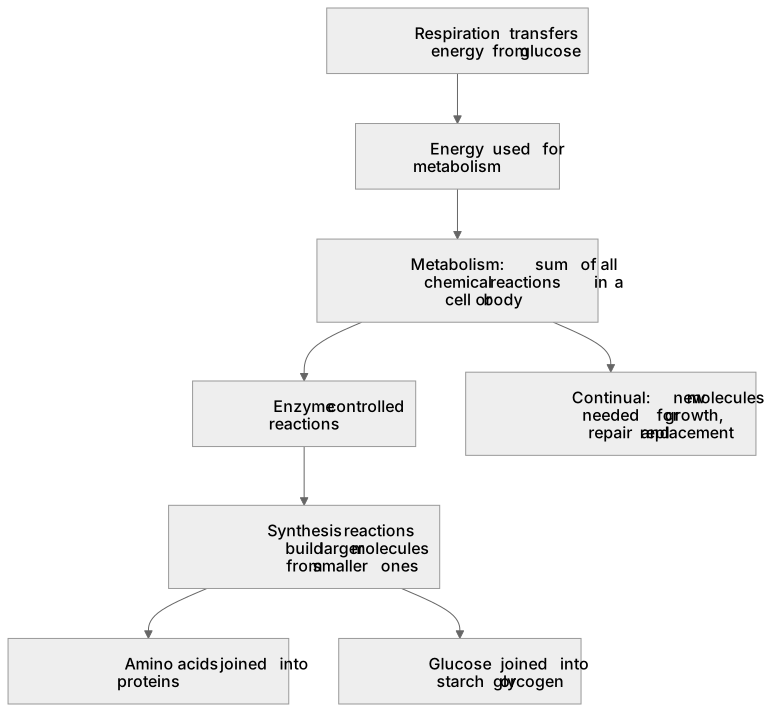
Respiration releases energy from glucose in every living cell, and that energy does not simply escape as heat: it drives the chemical work of the organism. Metabolism is the sum of all the chemical reactions in a cell or body, and many of these reactions build larger molecules from smaller ones, so they are synthesis reactions. Because these reactions would not happen quickly enough on their own, enzymes control them, lowering the activation energy needed. The reactions are continual because cells constantly need new molecules for growth, repair and replacement. For example, amino acids are joined into proteins at ribosomes, and glucose molecules are joined into starch or glycogen. Energy from respiration powers these bonds, so a cell with blocked respiration cannot keep synthesising molecules and will die.
What earns the marks
- Respiration transfers energy from glucose in cells; this energy is not used directly for movement only but also for chemical reactions.
- Metabolism is the sum of all the chemical reactions in a cell or the body, including both synthesis and breakdown reactions.
- Synthesis reactions build larger molecules from smaller ones, for example joining amino acids into proteins or glucose into starch and glycogen.
- The metabolic reactions are enzyme controlled, so each step has a specific enzyme with a complementary active site.
- The processes are continual because new molecules are needed throughout the organism's life for growth, repair and replacement.
- Energy released by respiration is used to drive synthesis, for example in forming bonds when amino acids polymerise into polypeptides.
Common mistakes and how to put them right
Saying respiration makes energy.
Put it right by stating that respiration transfers energy from glucose, since energy is not created.
Confusing metabolism only with digestion or only with breakdown.
Put it right by defining metabolism as all reactions, including synthesis of new molecules.
Writing that enzymes provide the energy for synthesis.
Put it right by explaining that enzymes lower activation energy and speed up reactions, while respiration supplies the energy.
Exam tips
- Link the statement to a named example, such as amino acids joining to form proteins, so the idea of synthesising new molecules is concrete.
- Use the phrase enzyme controlled when describing metabolic reactions, because this shows the role of enzymes in the process.
- If asked why metabolism is continual, refer to growth, repair and replacement of cells rather than saying it happens all the time without reason.
Try the lesson
The start of the Metabolism: The energy transferred by respiration in cells is used by the organism for the continual enzyme controlled processes of metabolism that synthesise new molecules. lesson, made from checked teaching notes for this specification point.
Have a go first
Which process in cells transfers the energy that is used for metabolism?
Listen
Respiration releases energy from glucose in every living cell, and that energy does not simply escape as heat: it drives the chemical work of the organism. Metabolism is the sum of all the chemical reactions in a cell or body, and many of these reactions build larger molecules from smaller ones, so they are synthesis reactions. Because these reactions would not happen quickly enough on their own, enzymes control them, lowering the activation energy needed. The reactions are continual because cells constantly need new molecules for growth, repair and replacement. For example, amino acids are joined into proteins at ribosomes, and glucose molecules are joined into starch or glycogen. Energy from respiration powers these bonds, so a cell with blocked respiration cannot keep synthesising molecules and will die. A strong answer earns marks for these points. Respiration transfers energy from glucose in cells; this energy is not used directly for movement only but also for chemical reactions. Metabolism is the sum of all the chemical reactions in a cell or the body, including both synthesis and breakdown reactions. Synthesis reactions build larger molecules from smaller ones, for example joining amino acids into proteins or glucose into starch and glycogen. The metabolic reactions are enzyme controlled, so each step has a specific enzyme with a complementary active site. A common slip: Saying respiration makes energy. Instead, stating that respiration transfers energy from glucose, since energy is not created. Exam tip: Link the statement to a named example, such as amino acids joining to form proteins, so the idea of synthesising new molecules is concrete.
See it
Label the diagram
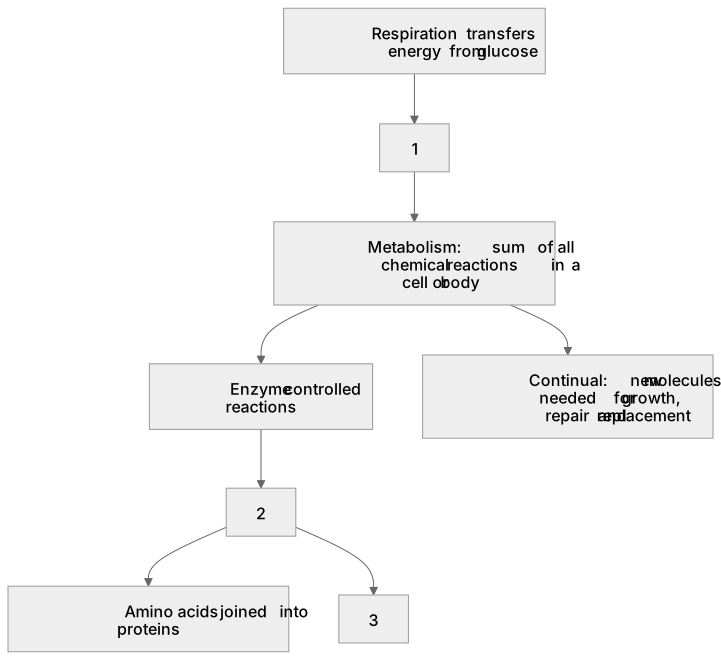
Some boxes have lost their names. Pick the right name for each number.
1Box 1
2Box 2
3Box 3
There is more to this lesson
The full lesson goes on to check your understanding and help you earn the marks. Create a free account to carry on, with your progress saved.
A week of Premium from your first lesson · Then the free plan continues · No card, no charge
Test your understanding of Metabolism: The energy transferred by respiration in cells is used by the organism for the continual enzyme controlled processes of metabolism that synthesise new molecules.
Active recall beats re-reading. Take an instant quiz now to test what you’ve learned and lock it into long-term memory.
A week of Premium from your first lesson · Then the free plan continues · No card, no charge