AQA · GCSE · Combined Science
Course version: 8464 · Version from Sept 2018
Metals are good conductors of electricity because the delocalised…
Full specification wording
Metals as conductors: Metals are good conductors of electricity because the delocalised electrons in the metal carry electrical charge through the metal. Metals are good conductors of thermal energy because energy is transferred by the delocalised electrons.
Metals have a giant lattice of positive ions with a sea of delocalised electrons.
Checked against the AQA 8464 specification (opens in a new tab) on .
- 3 key terms
Study notes
From the checked teaching notes for this specification point.
The idea
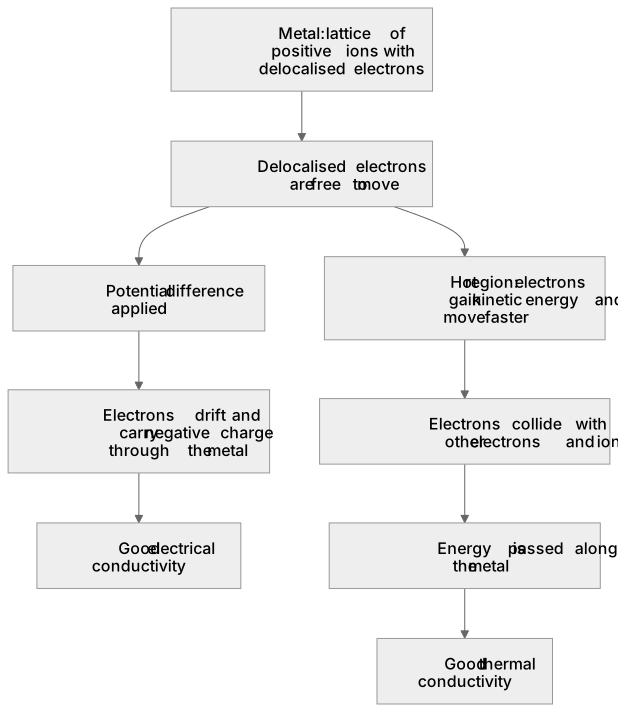
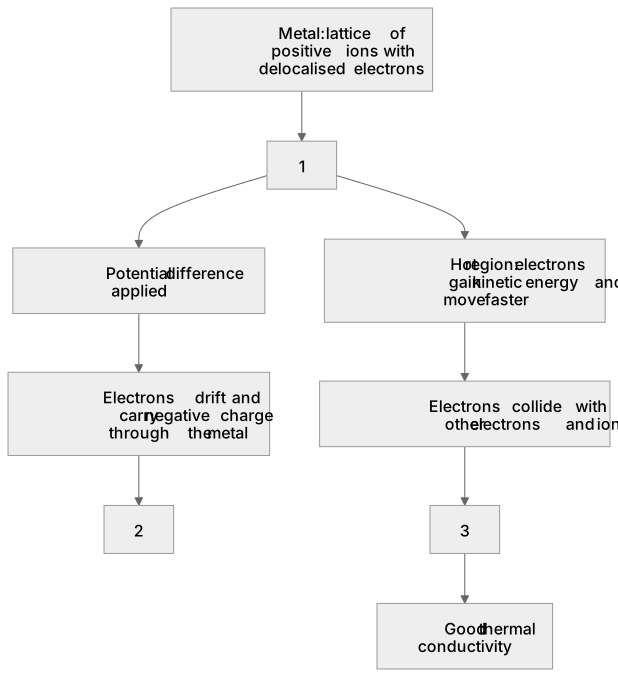
Metals have a giant lattice of positive ions with a sea of delocalised electrons. These electrons are free to move, so when a potential difference is applied they drift and carry charge through the metal, giving high electrical conductivity. The same mobile electrons also transfer thermal energy: at the hot end they gain kinetic energy, move faster, and collide with other electrons and ions, passing energy along the metal. This explains why metals conduct heat well. For example, copper is used in electrical wiring and in cooking pans because its delocalised electrons allow both charge and energy to move rapidly. Insulators lack free electrons, so they do not conduct in this way.
What earns the marks
- Metals contain a lattice of positive ions surrounded by delocalised electrons.
- Delocalised electrons are free to move throughout the metal structure.
- In electrical conduction, delocalised electrons carry negative charge through the metal when a potential difference is applied.
- In thermal conduction, delocalised electrons gain kinetic energy at the hotter region and transfer energy by moving and colliding with other particles.
- The mobility of delocalised electrons explains both high electrical and high thermal conductivity in metals.
- Metals are used for electrical wires and heat exchangers because of these properties.
Common mistakes and how to put them right
Thinking that positive ions carry the current in a metal.
Put it right by stating that it is the delocalised electrons that move and carry charge; the positive ions only vibrate about fixed positions.
Confusing electrical and thermal conduction mechanisms.
Put it right by explaining that electrical conduction involves charge transfer by electrons, while thermal conduction involves energy transfer by faster-moving electrons colliding with other particles.
Believing that heat travels through a metal as 'hot particles' moving from hot to cold.
Put it right by describing energy transfer through collisions and electron movement, not bulk movement of ions.
Exam tips
- When explaining electrical conductivity, always mention delocalised electrons and their ability to move and carry charge.
- For thermal conductivity, link the kinetic energy of delocalised electrons to collisions that transfer energy through the metal.
- Use comparative language such as 'good conductor' and refer to the absence of free electrons in insulators to contrast behaviour.
Try the lesson
The start of the Metals as conductors: Metals are good conductors of electricity because the delocalised electrons in the metal carry electrical charge through the metal. Metals are good conductors of thermal energy because energy is transferred by the delocalised electrons. lesson, made from checked teaching notes for this specification point.
Have a go first
Which particles are free to move through a metal and carry electrical charge?
Listen
Metals have a giant lattice of positive ions with a sea of delocalised electrons. These electrons are free to move, so when a potential difference is applied they drift and carry charge through the metal, giving high electrical conductivity. The same mobile electrons also transfer thermal energy: at the hot end they gain kinetic energy, move faster, and collide with other electrons and ions, passing energy along the metal. This explains why metals conduct heat well. For example, copper is used in electrical wiring and in cooking pans because its delocalised electrons allow both charge and energy to move rapidly. Insulators lack free electrons, so they do not conduct in this way. A strong answer earns marks for these points. Metals contain a lattice of positive ions surrounded by delocalised electrons. Delocalised electrons are free to move throughout the metal structure. In electrical conduction, delocalised electrons carry negative charge through the metal when a potential difference is applied. In thermal conduction, delocalised electrons gain kinetic energy at the hotter region and transfer energy by moving and colliding with other particles. A common slip: Thinking that positive ions carry the current in a metal. Instead, stating that it is the delocalised electrons that move and carry charge; the positive ions only vibrate about fixed positions. Exam tip: When explaining electrical conductivity, always mention delocalised electrons and their ability to move and carry charge.
See it
Key words
Say what each word means before you turn the card.
Delocalised electrons and metallic bonding
Try answering aloud or in your head before turning the card.
Electrical conductivity
Try answering aloud or in your head before turning the card.
Thermal conductivity
Try answering aloud or in your head before turning the card.
See every definition
- Delocalised electrons and metallic bonding
- Metals contain a lattice of positive ions surrounded by delocalised electrons, which are free to move throughout the metal structure.
- Electrical conductivity
- Delocalised electrons carry negative charge through the metal when a potential difference is applied, giving high electrical conductivity.
- Thermal conductivity
- Delocalised electrons gain kinetic energy at the hotter region and transfer energy by moving and colliding with other particles.
Label the diagram
Some boxes have lost their names. Pick the right name for each number.
1Box 1
2Box 2
3Box 3
There is more to this lesson
The full lesson goes on to check your understanding and help you earn the marks. Create a free account to carry on, with your progress saved.
A week of Premium from your first lesson · Then the free plan continues · No card, no charge
Test your understanding of Metals as conductors: Metals are good conductors of electricity because the delocalised electrons in the metal carry electrical charge through the metal. Metals are good conductors of thermal energy because energy is transferred by the delocalised electrons.
Active recall beats re-reading. Take an instant quiz now to test what you’ve learned and lock it into long-term memory.
A week of Premium from your first lesson · Then the free plan continues · No card, no charge