AQA · GCSE · Combined Science
Course version: 8464 · Version from Sept 2018
Students should be able to explain the effects of temperature, light…
Full specification wording
Rate of photosynthesis: Students should be able to explain the effects of temperature, light intensity, carbon dioxide concentration, and the amount of chlorophyll on the rate of photosynthesis.
The rate of photosynthesis is affected by limiting factors.
Checked against the AQA 8464 specification (opens in a new tab) on .
- Point 1 of 10
- 3 key terms
Study notes
From the checked teaching notes for this specification point.
The idea
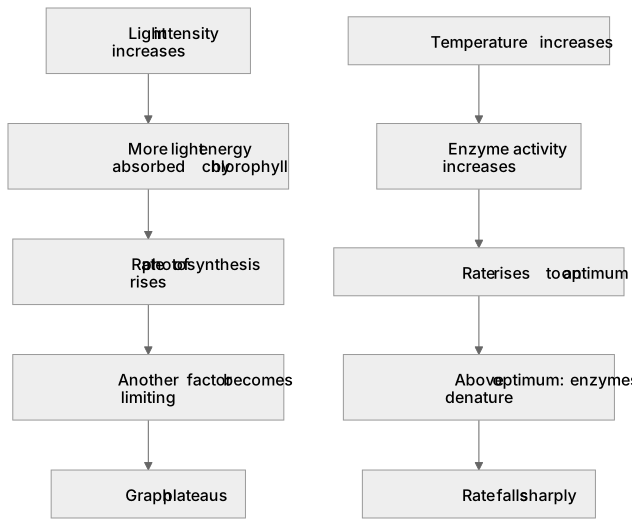
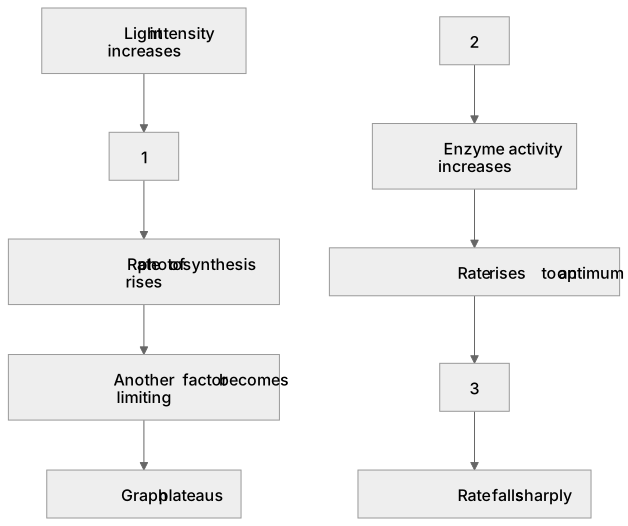
The rate of photosynthesis is affected by limiting factors. As light intensity, carbon dioxide concentration or chlorophyll amount increases, the rate rises until another factor becomes limiting, then the graph plateaus. Temperature affects enzyme-controlled reactions: the rate increases with temperature up to an optimum, then falls sharply as enzymes denature. Chlorophyll amount matters because it absorbs light; fewer chloroplasts or less chlorophyll means less light absorbed. A typical investigation uses pondweed and counts oxygen bubbles per minute at different distances from a lamp, keeping other variables constant. Explain each factor by linking it to the supply of energy or reactants, and identify the limiting factor from the shape of the graph.
What earns the marks
- Explains that increasing light intensity increases the rate because more light energy is absorbed by chlorophyll for the light-dependent stage.
- Explains that increasing carbon dioxide concentration increases the rate because CO₂ is a reactant needed to make glucose.
- Explains that temperature increases the rate up to an optimum because enzyme activity increases, but above the optimum enzymes denature and the rate falls.
- Explains that a greater amount of chlorophyll increases the rate because more light is absorbed in the chloroplasts.
- Identifies the limiting factor from a graph: the factor whose increase raises the rate before the plateau.
- Describes a valid method, such as pondweed and bubble counting, with control of other variables to test one factor at a time.
Common mistakes and how to put them right
Saying the rate keeps increasing indefinitely with light intensity.
Put it right by stating that another factor becomes limiting and the graph plateaus.
Stating that high temperature increases the rate without limit.
Put it right by explaining enzyme denaturation above the optimum.
Confusing chlorophyll amount with light intensity.
Put it right by saying chlorophyll is the pigment that absorbs light, while light intensity is the energy supply.
Exam tips
- Name the limiting factor and justify it using the graph shape, for example a plateau shows another factor is limiting.
- For temperature, always mention enzymes and denaturation above the optimum.
- When describing an investigation, state the independent variable, how the dependent variable is measured, and at least two control variables.
Try the lesson
The start of the Rate of photosynthesis: Students should be able to explain the effects of temperature, light intensity, carbon dioxide concentration, and the amount of chlorophyll on the rate of photosynthesis. lesson, made from checked teaching notes for this specification point.
Have a go first
Which factor is a limiting factor for photosynthesis when it is in short supply?
Listen
The rate of photosynthesis is affected by limiting factors. As light intensity, carbon dioxide concentration or chlorophyll amount increases, the rate rises until another factor becomes limiting, then the graph plateaus. Temperature affects enzyme-controlled reactions: the rate increases with temperature up to an optimum, then falls sharply as enzymes denature. Chlorophyll amount matters because it absorbs light; fewer chloroplasts or less chlorophyll means less light absorbed. A typical investigation uses pondweed and counts oxygen bubbles per minute at different distances from a lamp, keeping other variables constant. Explain each factor by linking it to the supply of energy or reactants, and identify the limiting factor from the shape of the graph. A strong answer earns marks for these points. Explains that increasing light intensity increases the rate because more light energy is absorbed by chlorophyll for the light-dependent stage. Explains that increasing carbon dioxide concentration increases the rate because CO₂ is a reactant needed to make glucose. Explains that temperature increases the rate up to an optimum because enzyme activity increases, but above the optimum enzymes denature and the rate falls. Explains that a greater amount of chlorophyll increases the rate because more light is absorbed in the chloroplasts. A common slip: Saying the rate keeps increasing indefinitely with light intensity. Instead, stating that another factor becomes limiting and the graph plateaus. Exam tip: Name the limiting factor and justify it using the graph shape, for example a plateau shows another factor is limiting.
See it
Key words
Say what each word means before you turn the card.
Enzyme action and denaturation
Try answering aloud or in your head before turning the card.
Experimental design and control variables
Try answering aloud or in your head before turning the card.
Interpreting rate graphs
Try answering aloud or in your head before turning the card.
See every definition
- Enzyme action and denaturation
- Temperature affects enzyme-controlled reactions, with the rate increasing up to an optimum and then falling sharply as enzymes denature above it.
- Experimental design and control variables
- A valid investigation tests one factor at a time, such as pondweed and bubble counting, keeping other variables constant.
- Interpreting rate graphs
- The limiting factor is identified from the shape of the graph as the factor whose increase raises the rate before the plateau.
Label the diagram
Some boxes have lost their names. Pick the right name for each number.
1Box 1
2Box 2
3Box 3
There is more to this lesson
The full lesson goes on to check your understanding and help you earn the marks. Create a free account to carry on, with your progress saved.
A week of Premium from your first lesson · Then the free plan continues · No card, no charge
Test your understanding of Rate of photosynthesis: Students should be able to explain the effects of temperature, light intensity, carbon dioxide concentration, and the amount of chlorophyll on the rate of photosynthesis.
Active recall beats re-reading. Take an instant quiz now to test what you’ve learned and lock it into long-term memory.
A week of Premium from your first lesson · Then the free plan continues · No card, no charge