AQA · GCSE · Combined Science
Course version: 8464 · Version from Sept 2018
Evaluate the effect of various factors on thinking distance based on given…
Full specification wording
Reaction time: evaluate the effect of various factors on thinking distance based on given data.
Thinking distance is the distance a vehicle travels during the driver's reaction time, before the brakes are applied.
Checked against the AQA 8464 specification (opens in a new tab) on .
- Point 5 of 5
- 2 key terms
Study notes
From the checked teaching notes for this specification point.
The idea
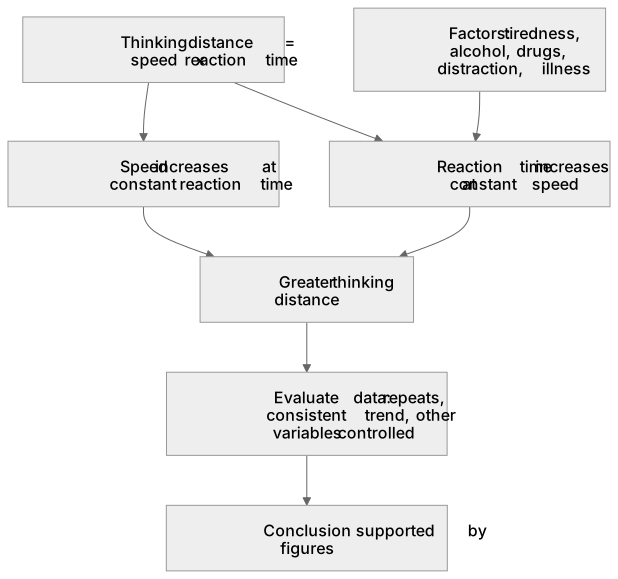
Thinking distance is the distance a vehicle travels during the driver's reaction time, before the brakes are applied. It equals speed multiplied by reaction time, so at a given reaction time a higher speed produces a proportionally greater thinking distance. Given data, you should identify the factor being varied, such as speed, reaction time, tiredness, alcohol or distraction, and judge how it changes thinking distance. For example, if a driver's reaction time doubles while speed stays constant, thinking distance doubles. If speed doubles at constant reaction time, thinking distance also doubles. Evaluating means using the data to support a conclusion, recognising trends and commenting on the reliability or limitations of the evidence.
What earns the marks
- State that thinking distance is the distance travelled during the driver's reaction time and is calculated as speed multiplied by reaction time.
- Use given data to show that thinking distance increases when speed increases at constant reaction time, and increases when reaction time increases at constant speed.
- Identify factors that increase reaction time, such as tiredness, alcohol, drugs, distraction or illness, and link each to a longer thinking distance.
- Evaluate the quality of the data by commenting on whether repeats were taken, whether the trend is consistent and whether other variables such as road or vehicle conditions were controlled.
- Draw a conclusion that is supported by the figures, for example comparing two drivers or two speeds and stating which has the greater thinking distance and by what factor.
Common mistakes and how to put them right
Confusing thinking distance with braking distance or stopping distance.
Put it right: Thinking distance occurs before the brakes act, braking distance occurs while braking, and stopping distance is the sum of the two.
Assuming that a factor such as alcohol affects braking distance directly.
Put it right: Alcohol mainly increases reaction time, so it increases thinking distance; braking distance depends on speed, mass and road conditions.
Describing a trend without using the data, for example saying 'faster means further' without quoting values.
Put it right: Support each statement with figures from the table or graph.
Exam tips
- Quote numerical values from the data when comparing thinking distances, and state the factor by which one value is larger where possible.
- Link each named factor to the mechanism: it changes reaction time, which changes thinking distance at a given speed.
- If asked to evaluate, include both a strength and a limitation of the data, such as a clear trend but few repeats or uncontrolled conditions.
Try the lesson
The start of the Reaction time: evaluate the effect of various factors on thinking distance based on given data. lesson, made from checked teaching notes for this specification point.
Have a go first
A driver's thinking distance is measured at different speeds. At 10 m/s, the thinking distance is 6 m. At 20 m/s, the thinking distance is 12 m. At 30 m/s, the thinking distance is 18 m. Based on this data, what happens to the thinking distance when the speed of the car doubles?
Listen
Thinking distance is the distance a vehicle travels during the driver's reaction time, before the brakes are applied. It equals speed multiplied by reaction time, so at a given reaction time a higher speed produces a proportionally greater thinking distance. Given data, you should identify the factor being varied, such as speed, reaction time, tiredness, alcohol or distraction, and judge how it changes thinking distance. For example, if a driver's reaction time doubles while speed stays constant, thinking distance doubles. If speed doubles at constant reaction time, thinking distance also doubles. Evaluating means using the data to support a conclusion, recognising trends and commenting on the reliability or limitations of the evidence. A strong answer earns marks for these points. State that thinking distance is the distance travelled during the driver's reaction time and is calculated as speed multiplied by reaction time. Use given data to show that thinking distance increases when speed increases at constant reaction time, and increases when reaction time increases at constant speed. Identify factors that increase reaction time, such as tiredness, alcohol, drugs, distraction or illness, and link each to a longer thinking distance. Evaluate the quality of the data by commenting on whether repeats were taken, whether the trend is consistent and whether other variables such as road or vehicle conditions were controlled. A common slip: Confusing thinking distance with braking distance or stopping distance. Instead, thinking distance occurs before the brakes act, braking distance occurs while braking, and stopping distance is the sum of the two. Exam tip: Quote numerical values from the data when comparing thinking distances, and state the factor by which one value is larger where possible.
See it
Key words
Say what each word means before you turn the card.
Thinking distance
Try answering aloud or in your head before turning the card.
Evaluating
Try answering aloud or in your head before turning the card.
See every definition
- Thinking distance
- The distance a vehicle travels during the driver's reaction time, before the brakes are applied.
- Evaluating
- Using the data to support a conclusion, recognising trends and commenting on the reliability or limitations of the evidence.
Label the diagram
Some boxes have lost their names. Pick the right name for each number.
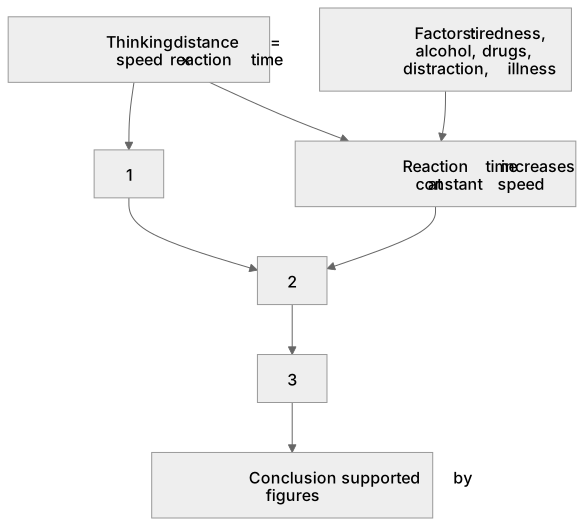
1Box 1
2Box 2
3Box 3
There is more to this lesson
The full lesson goes on to check your understanding and help you earn the marks. Create a free account to carry on, with your progress saved.
A week of Premium from your first lesson · Then the free plan continues · No card, no charge
Test your understanding of Reaction time: evaluate the effect of various factors on thinking distance based on given data.
Active recall beats re-reading. Take an instant quiz now to test what you’ve learned and lock it into long-term memory.
A week of Premium from your first lesson · Then the free plan continues · No card, no charge